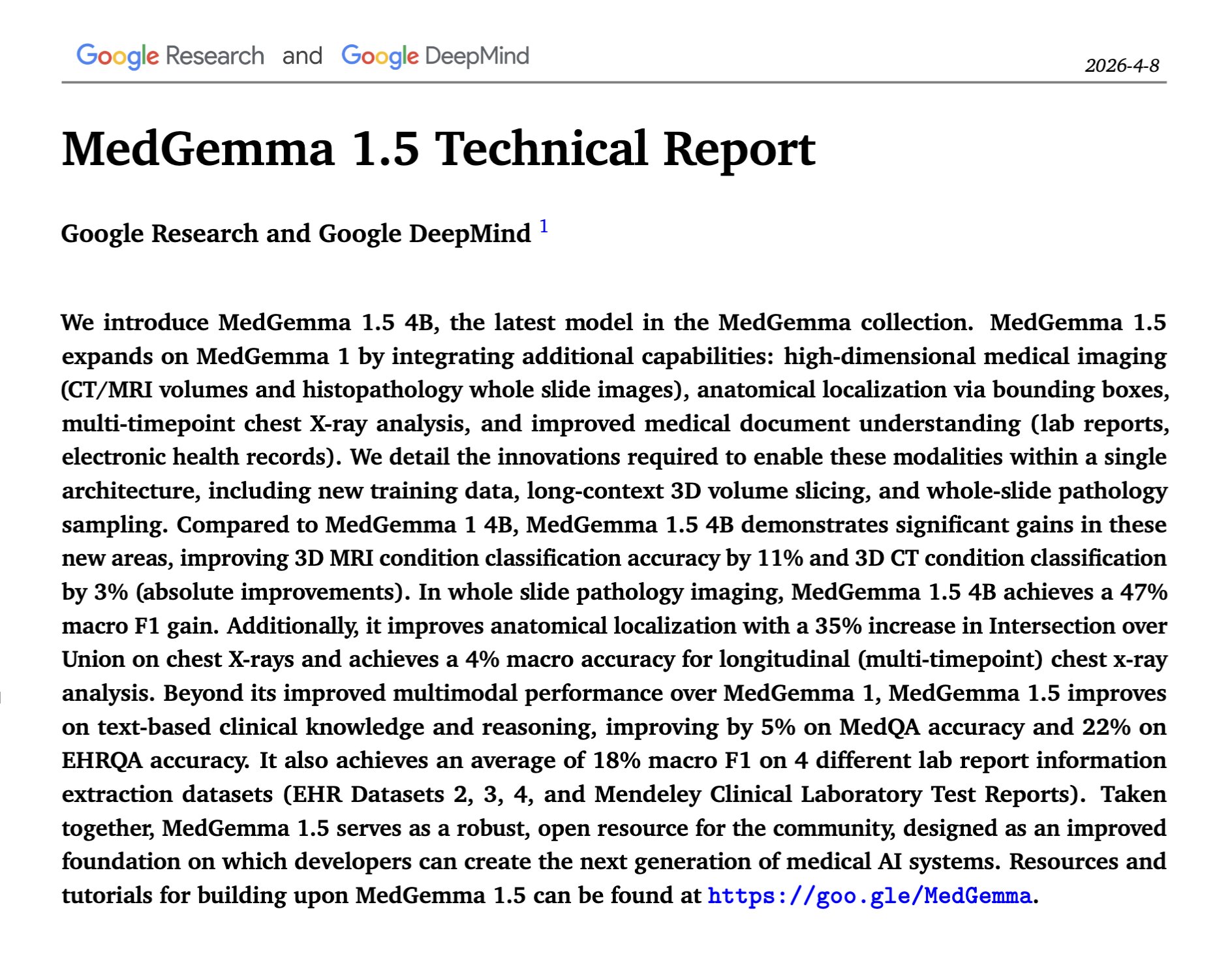
Google DeepMind just released MedGemma 1.5, an open 4B medical foundation model that goes beyond 2D imaging. From 3D CT/MRI, whole-slide pathology, chest X-ray localization, longitudinal X-ray analysis, to clinical document understanding. This single unified multimodal
@askalphaxiv
-
TIPSv2: Enhanced Spatial Awareness in Vision-Language Models
By
–
“TIPSv2: Advancing Vision-Language Pretraining with Enhanced Patch-Text Alignment” This paper propose a foundational image-text encoder with spatial awareness, as VLMs are usually good at describing an image but much worse at grounding where the concepts live. What they found
-
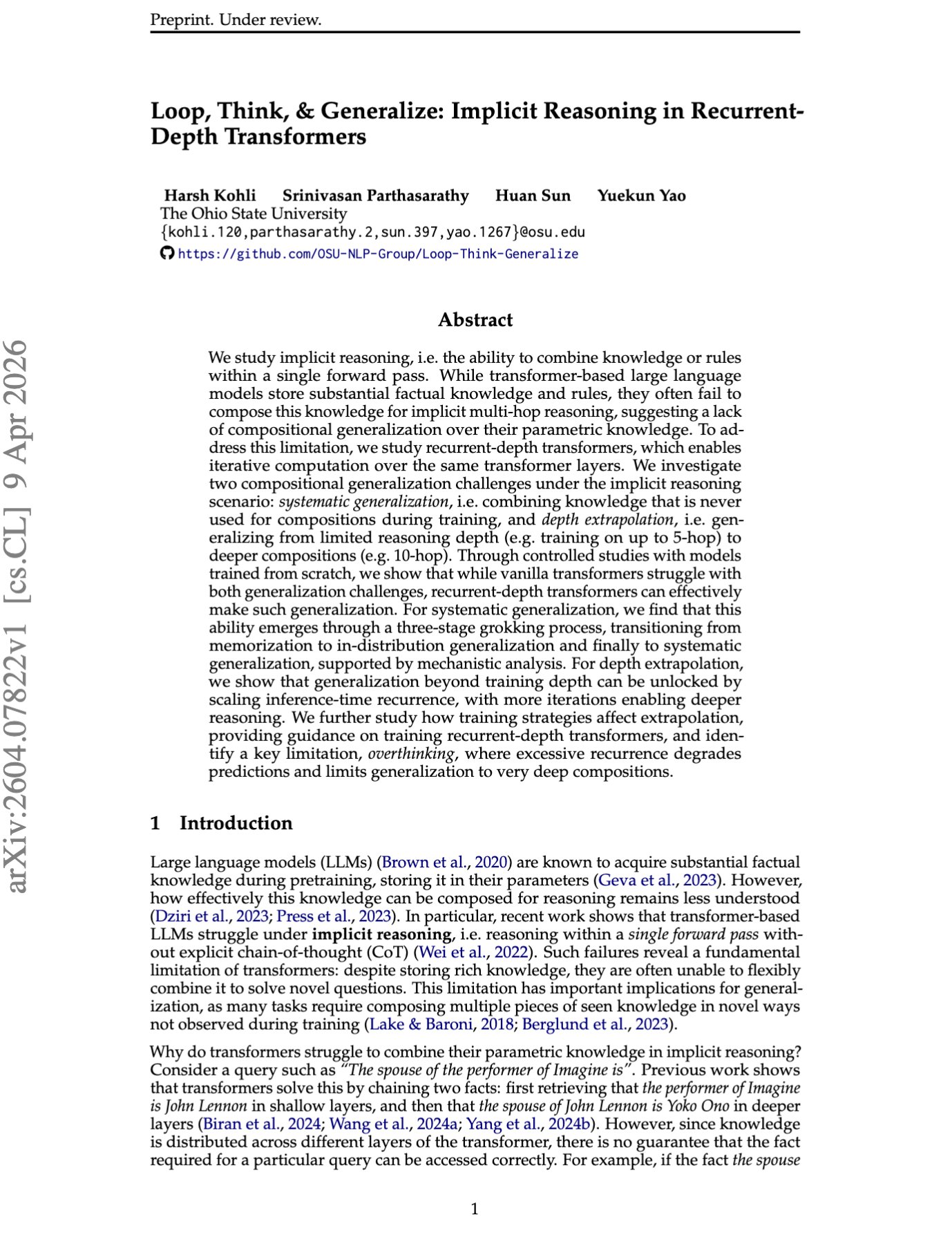
Recurrent-Depth Transformers Enable Parametric Knowledge in Single Pass
By
–
Can a model compose parametric knowledge within a single forward pass without explicit CoT? Well, vanilla transformers often fail. But this paper shows that a recurrent-depth transformer may fix that. It reuses the same transformer block for multiple iterations, instead of
-

Efficient RL Training for LLMs with Experience Replay
By
–
"Efficient RL Training for LLMs with Experience Replay" LLM RL post-training is still run in an almost fully on-policy regime where you generate rollouts, take one update, and discard. This paper argues that when rollout generation is expensive, strict on-policy training is
-
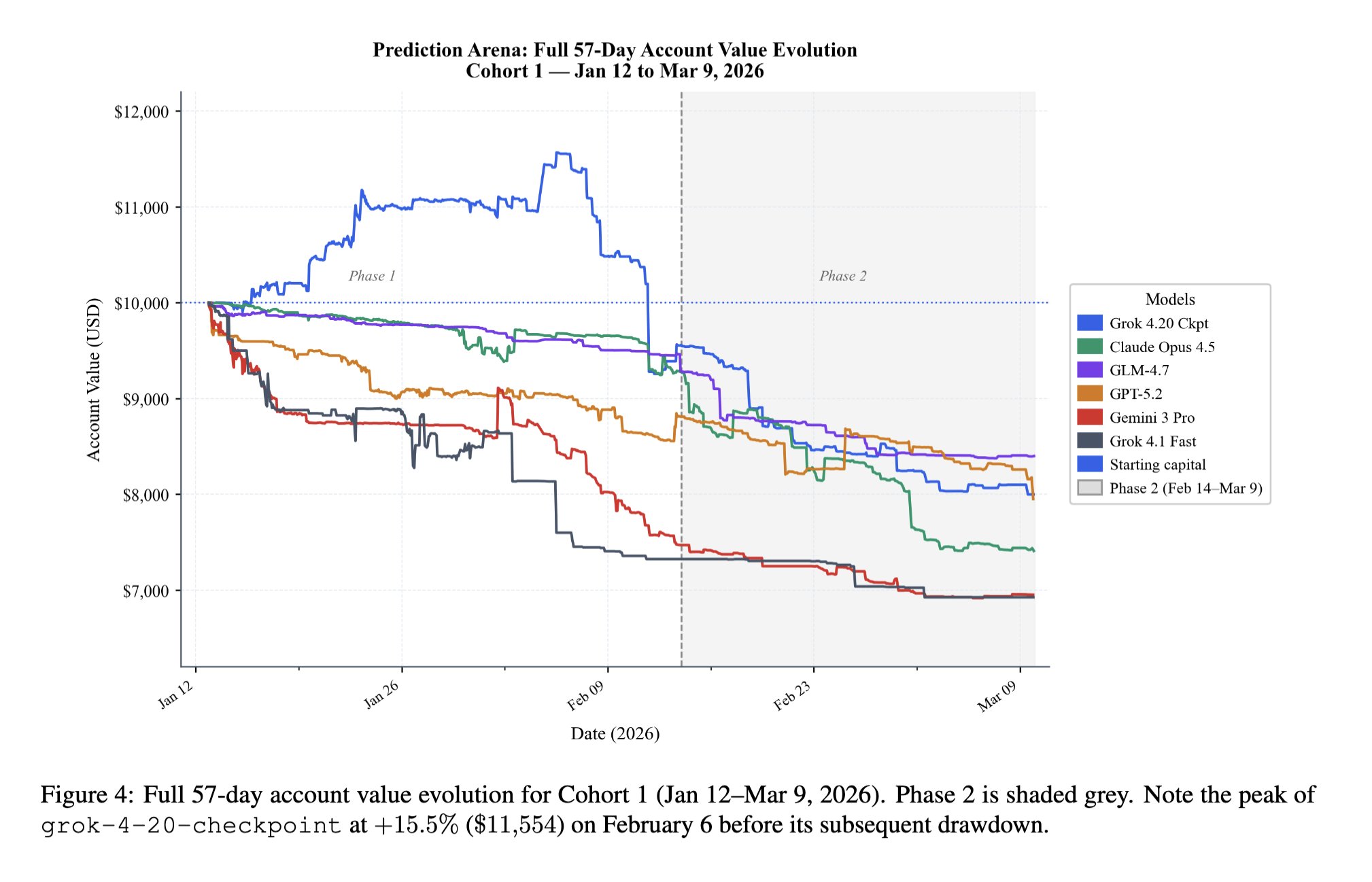
Prediction Arena: Benchmarking Frontier LLMs on Real Markets
By
–
"Prediction Arena: Benchmarking AI Models on Real-World Prediction Markets" Prediction Arena is a new live benchmark where frontier LLMs trade autonomously on real prediction markets with actual capital. Instead of synthetic evals, it measures whether models can actually
-
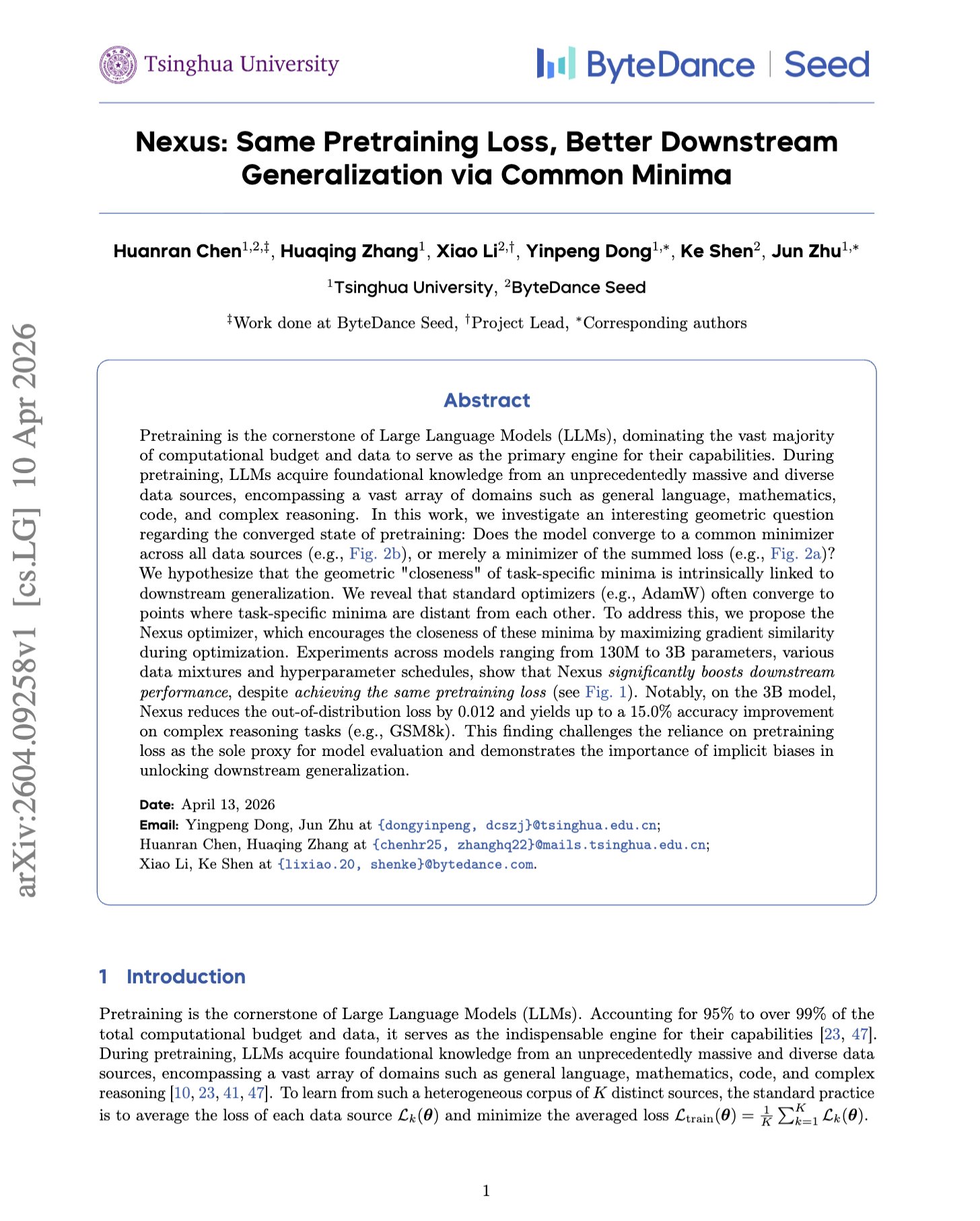
Nexus: Improving LLM Generalization Beyond Pretraining Loss
By
–
Fascinating underexplored scaling direction "Nexus: Same Pretraining Loss, Better Downstream Generalization via Common Minima" This paper claims that pretraining loss is not a sufficient proxy for downstream capability. Since LLMs trained on mixed domains can reach the same
-
alphaXiv launches AI detection mode for research papers
By
–
Ever suspected a paper you’re reading is AI slop?
— alphaXiv (@askalphaxiv) 14 avril 2026
You can now turn on AI detection mode on alphaXiv to visualize what is written by an AI and what is not.
Now available for every research paper indexed on arXiv.
Integrated with the latest detection model from @pangramlabs 🚀 pic.twitter.com/xNnDtvXHsSEver suspected a paper you’re reading is AI slop? You can now turn on AI detection mode on alphaXiv to visualize what is written by an AI and what is not. Now available for every research paper indexed on arXiv. Integrated with the latest detection model from @pangramlabs
-
Google’s Growing Memory RNNs: New Caching Approach
By
–
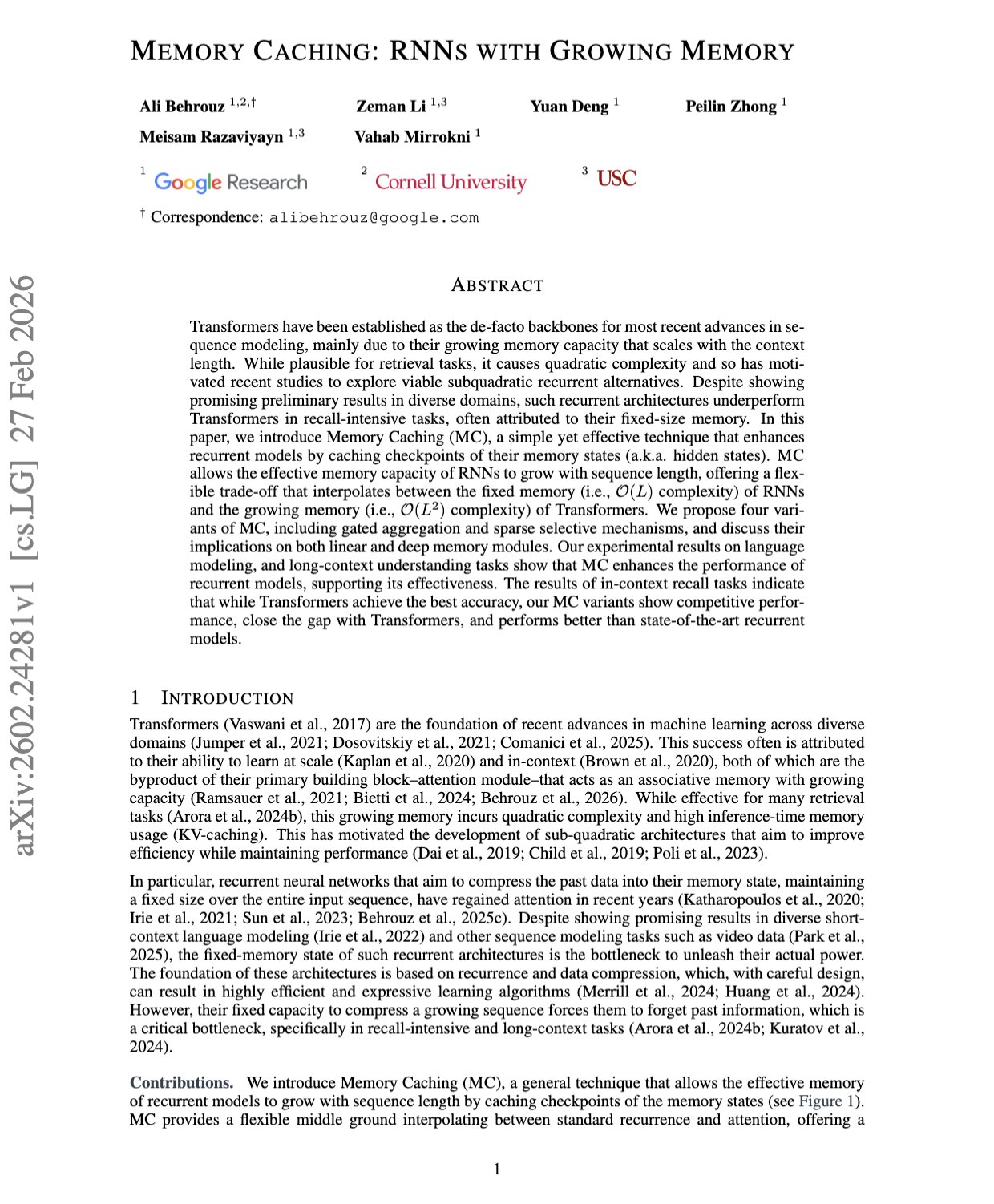
"Memory Caching: RNNs with Growing Memory" Google's new paper proposes a simple way to give recurrent models a memory that grows with sequence length. So instead of forcing an RNN to compress the full past into 1 fixed hidden state, it caches memory checkpoints across
-
Malicious Intermediary Attacks on LLM Agent Supply Chain Security
By
–
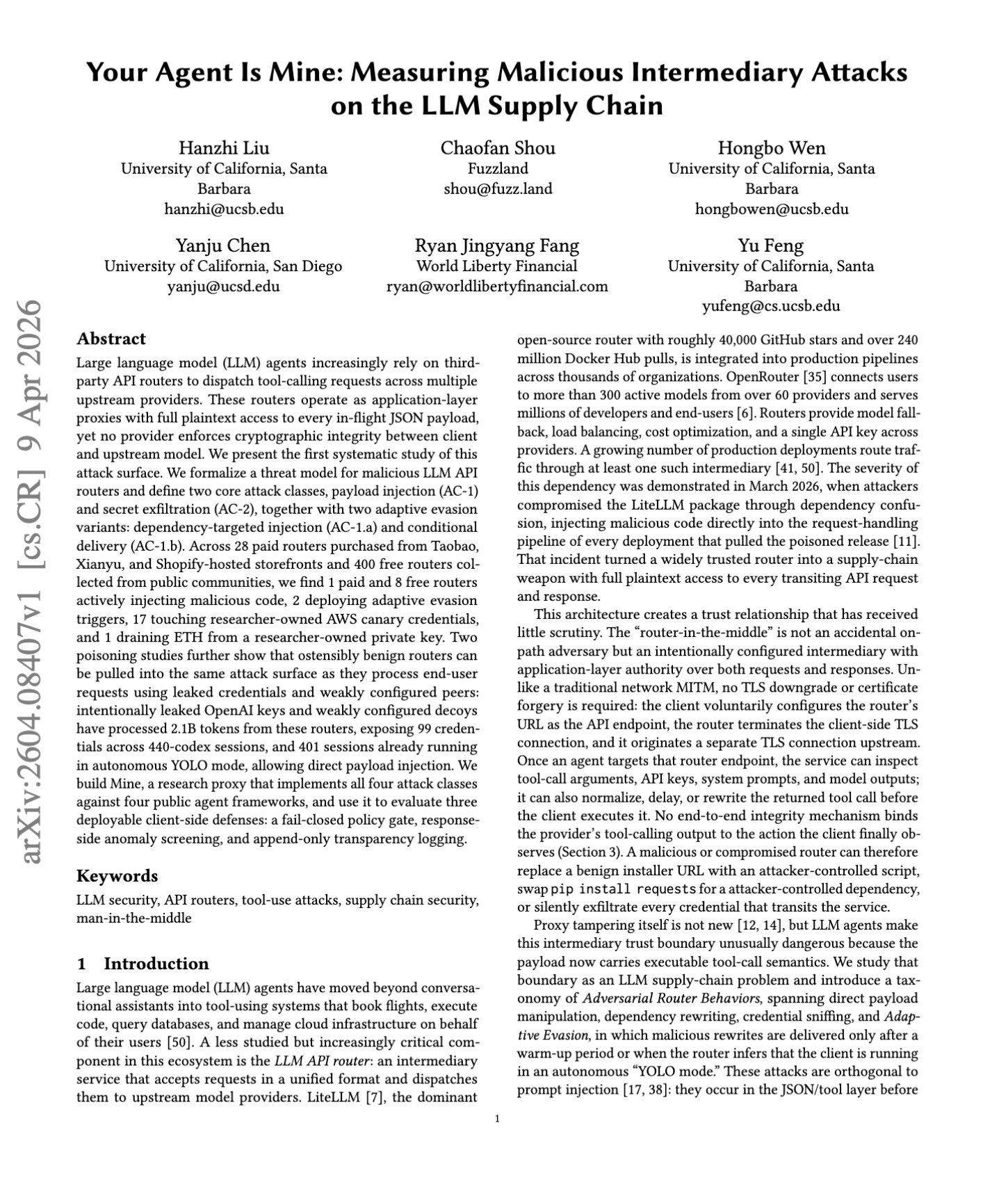
"Your Agent Is Mine: Measuring Malicious Intermediary Attacks on the LLM Supply Chain" The danger of agent security can also exist in the API router, that is between the agent and the provider. As these routers can read prompts, keys, and tool calls in plaintext, even rewrite
-
SkillClaw: Collective Skill Learning Through Agentic Evolution
By
–
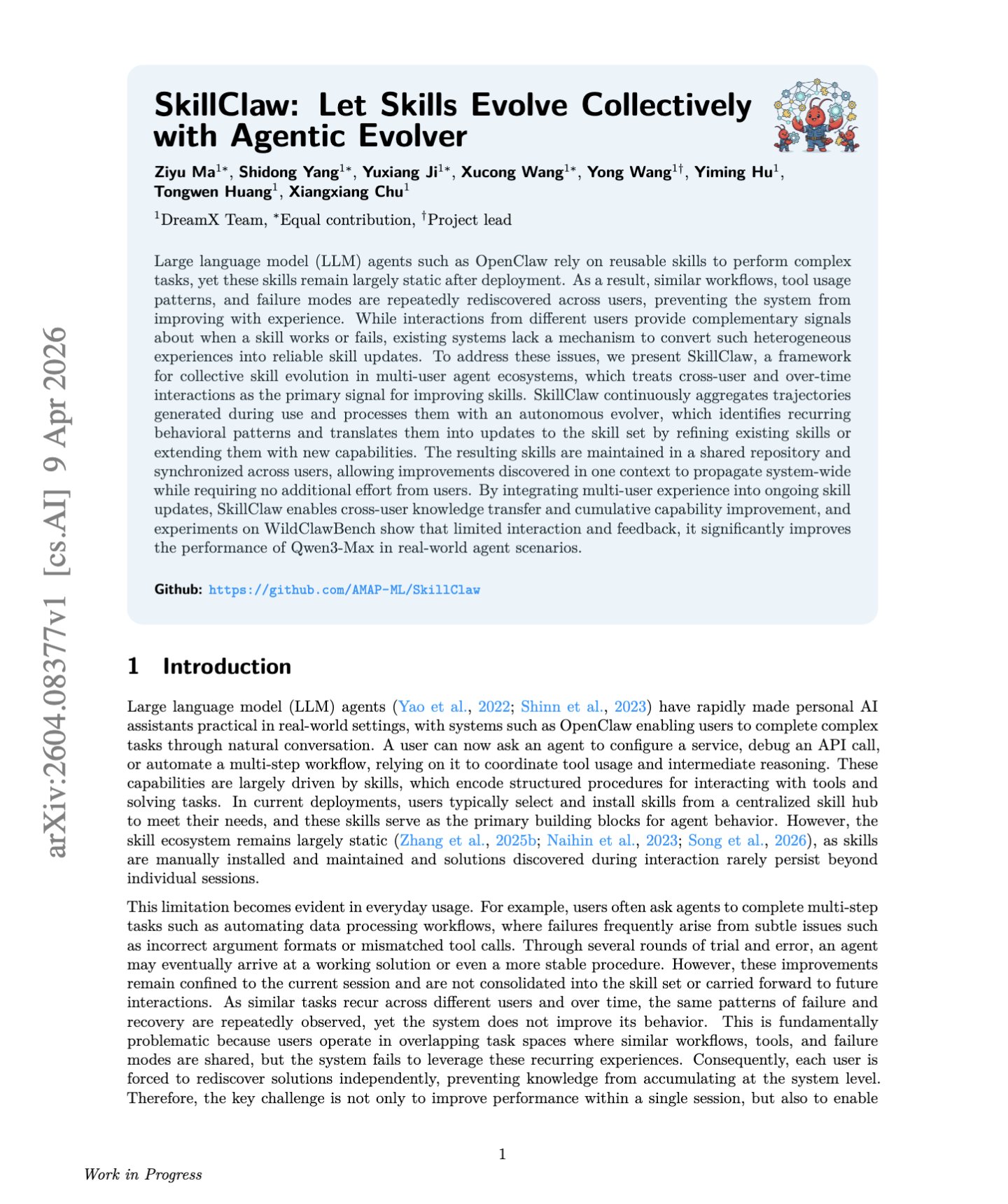
"SkillClaw: Let Skills Evolve Collectively with Agentic Evolver" As most AI agents still relearn the same targets from scratch, SkillClaw turns it into shared learning, where it collects agent trajectories across users, groups them by skill, and uses an agentic evolver to spot