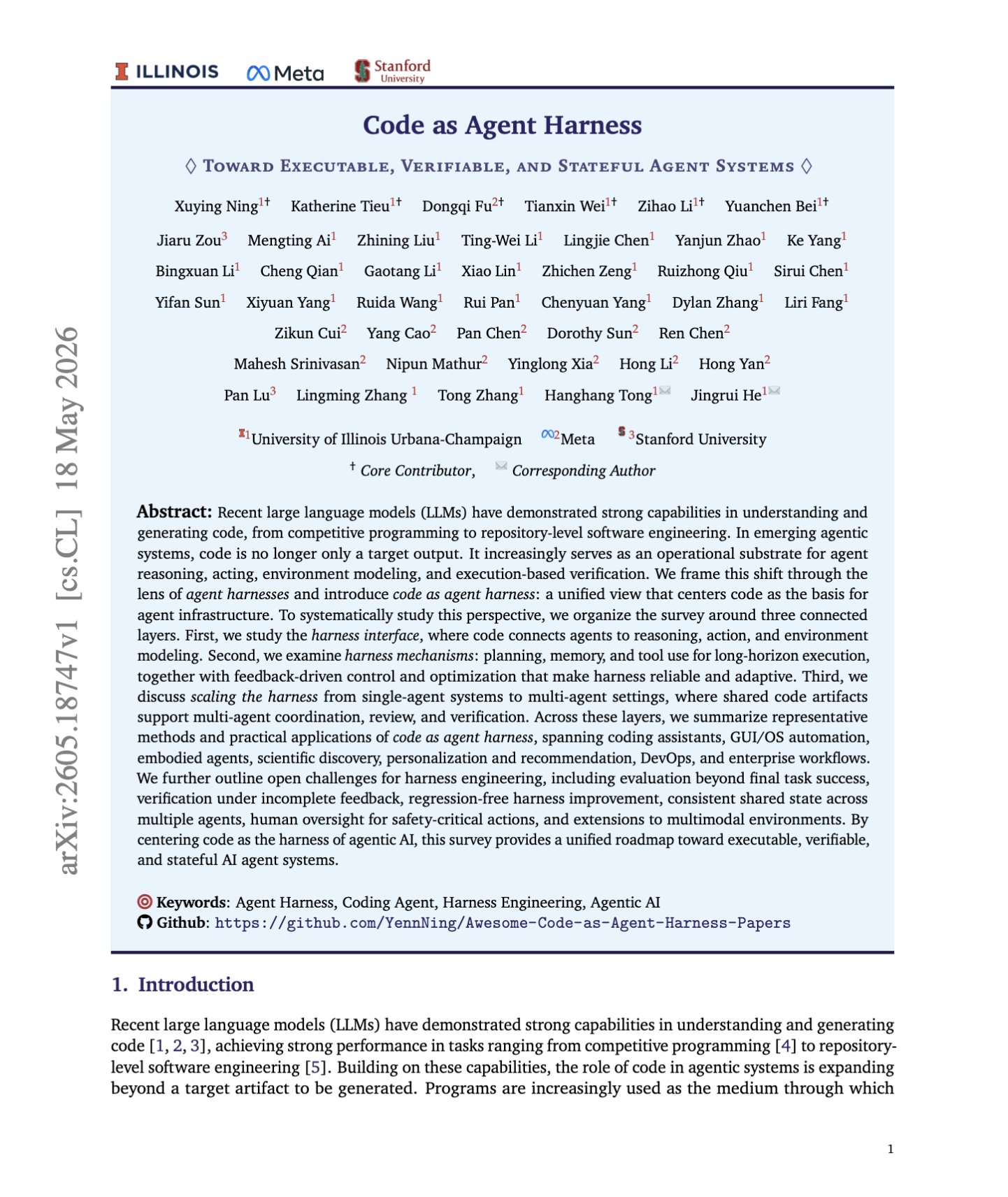
"Code as Agent Harness" Agents are becoming less like chatbots that write code and more like systems that run on code. This new Meta paper reframes code as the harness around an agent, the executable layer for reasoning, acting, memory, verification, and coordination. The key
@askalphaxiv
-
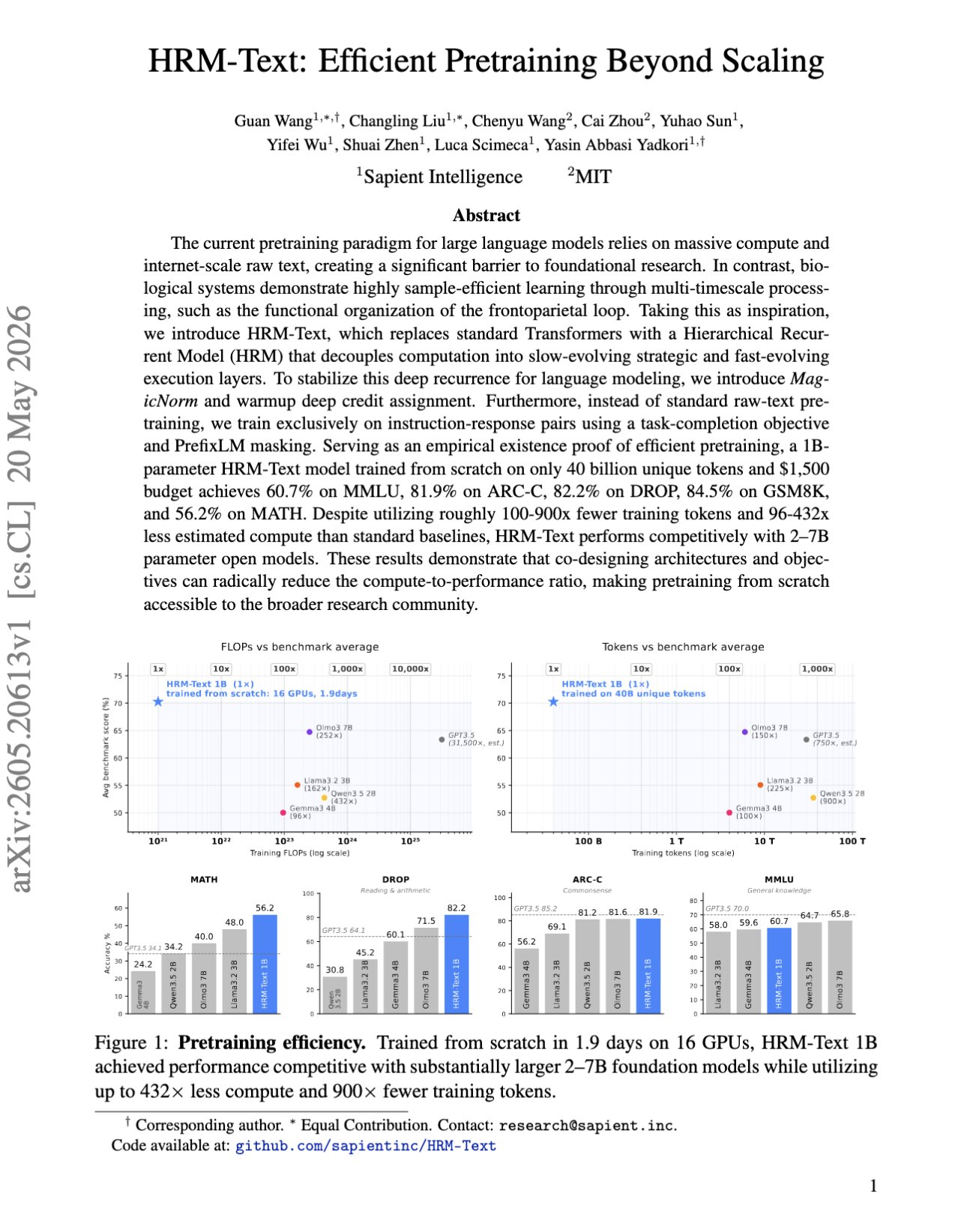
HRM Outperforms Transformers 7x Its Size
By
–
HRM beats Transformers seven times its size in language modeling!? "HRM-Text: Efficient Pretraining Beyond Scaling" This paper introduces the Hierarchical Recurrent Model (HRM), which incorporates slow planning layers and fast execution layers to enhance planning and recurrence. The model was trained directly on…
-
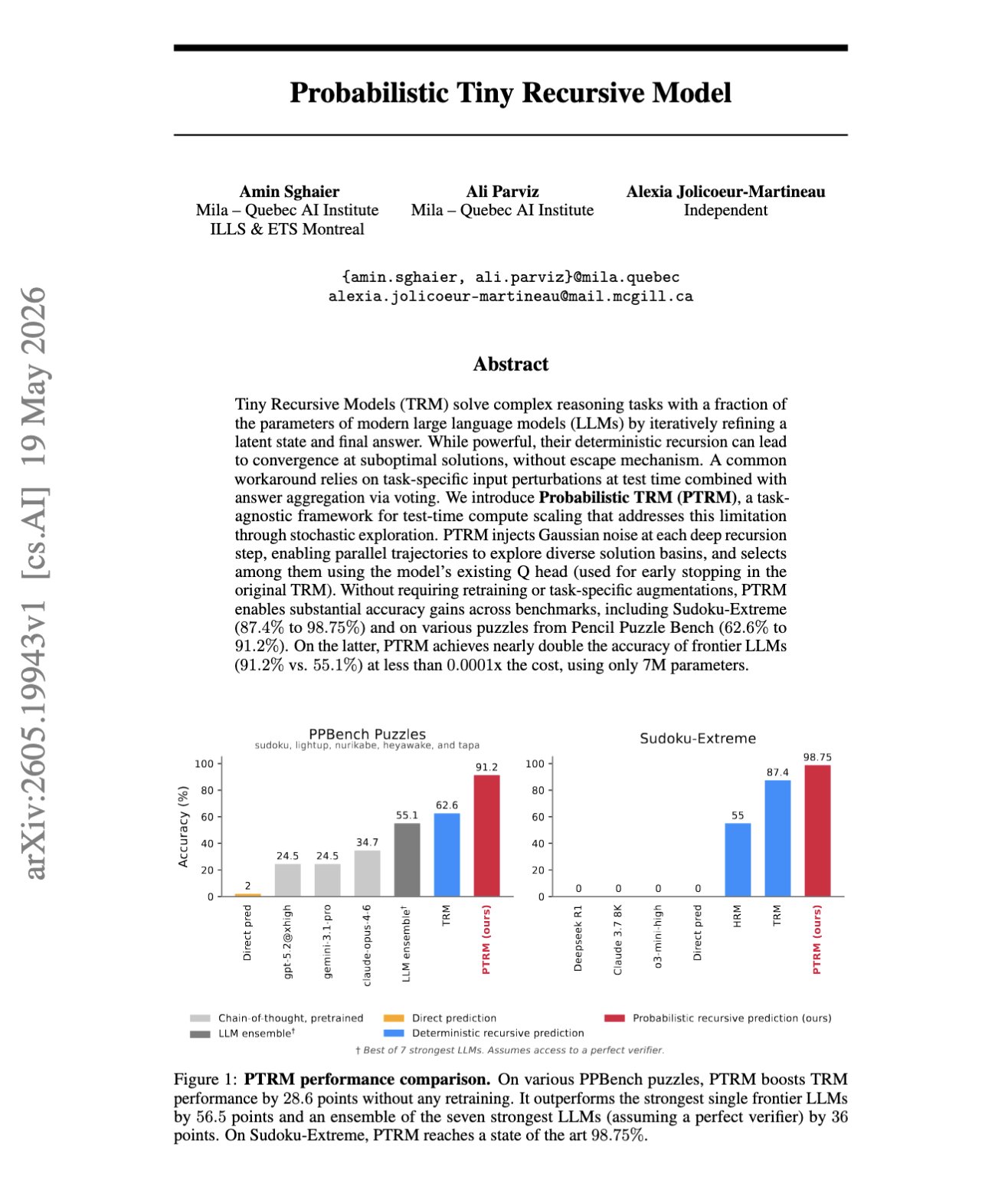
Stochastic Tiny Recursive Models améliorent PPBench
By
–
“Probabilistic Tiny Recursive Model” This paper makes Tiny Recursive Models stochastic at test time by adding Gaussian noise, running parallel rollouts, and using the existing Q head to pick the best answer. With no retraining and no task-specific tricks, its PPBench jumps from
-
alphaXiv s’associe à l’ACM CAIS
By
–
alphaXiv ACM CAIS We’re excited to announce our partnership with the ACM Conference on AI and Agentic Systems! alphaXiv will serve as the complimentary research hub for accepted papers and system demos, helping the community discover, understand, and build on top of the
-

AutoResearchClaw: Autonomous AI Research with Collaboration
By
–
AutoResearchClaw: Self-Reinforcing Autonomous Research with Human-AI Collaboration As real-world science is iterative, this paper introduces AutoResearchClaw, a multi-agent system that debates ideas, self-corrects experiments, decides whether to pivot or refine, verifies data, and
-
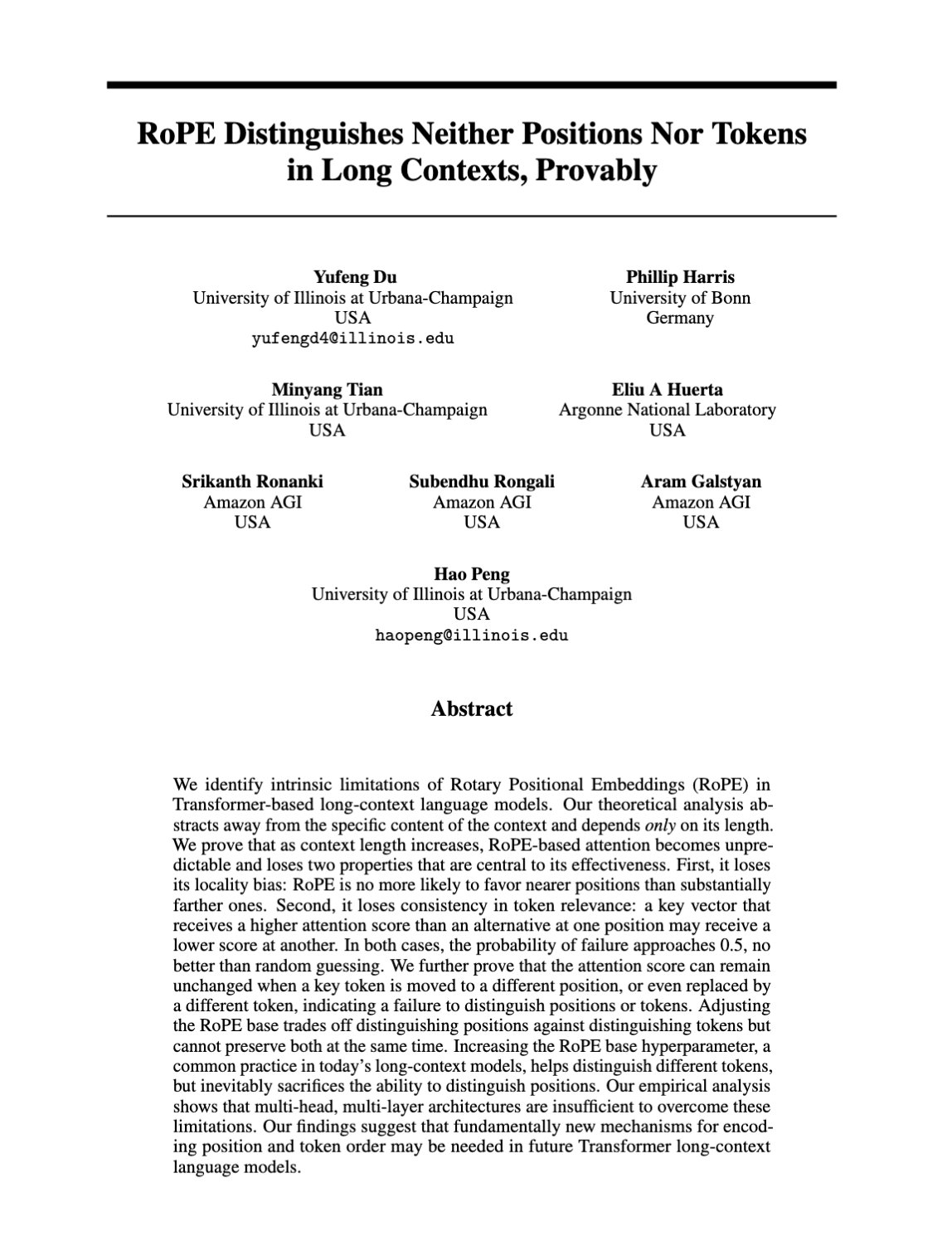
Analysis of RoPE Limitations in Long-Context LLMs
By
–
“RoPE Distinguishes Neither Positions Nor Tokens in Long Contexts” RoPE is the default way LLMs track position, but this paper proves it breaks down as context gets long. Attention becomes close to random at telling near from far, and can even assign the same score to different
-

New Research Paper Proposes Exploration Checkpoint Coverage for LLM Agents
By
–
new longcat paper! “Look Before You Leap” LLM agents often fail because they act before they understand the environment. So this paper introduces Exploration Checkpoint Coverage, a verifiable reward for discovering key states, objects, affordances, and constraints. With
-
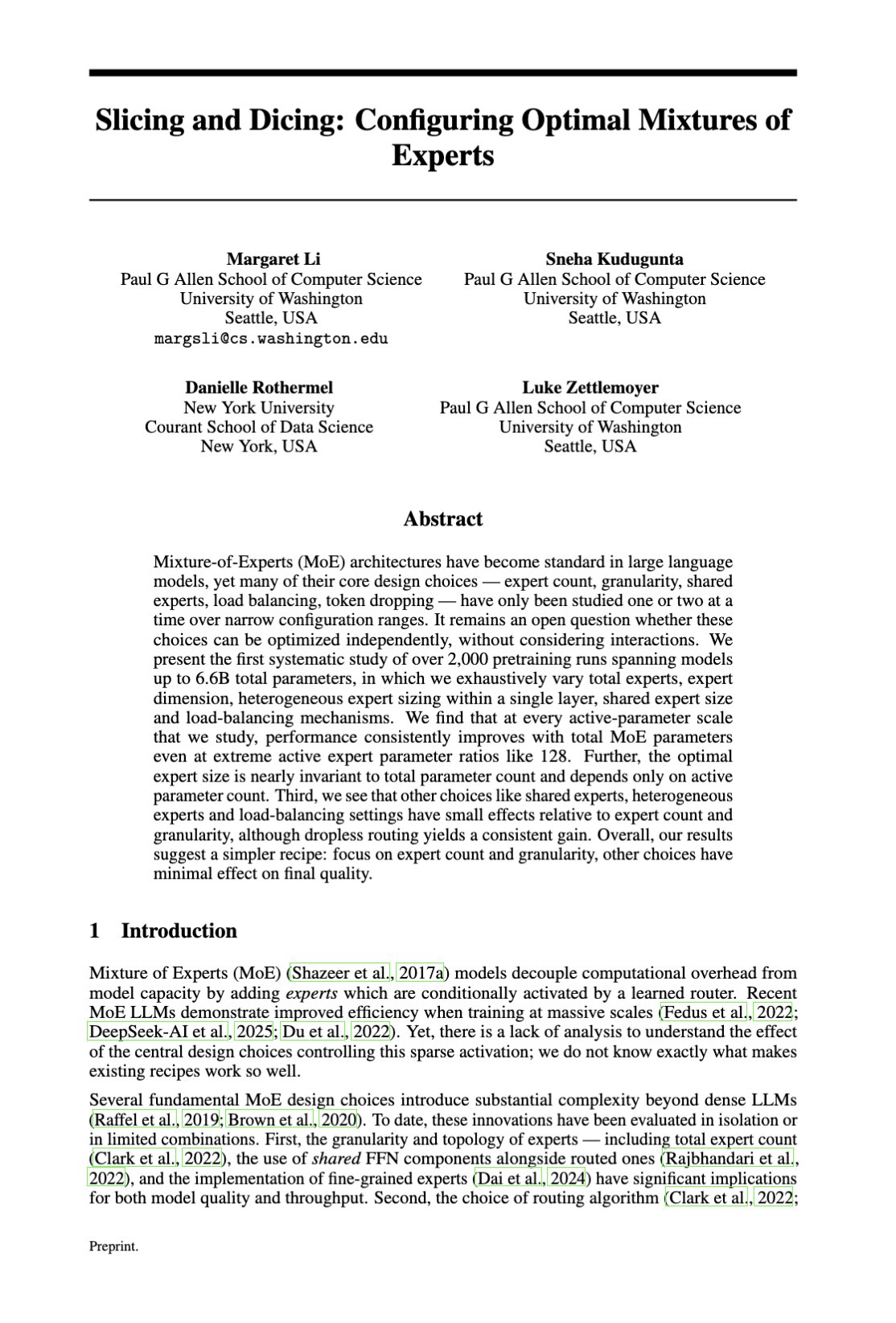
Technical Analysis of Optimal Mixture-of-Experts Model Configuration
By
–
"Slicing and Dicing: Configuring Optimal MoE" MoE models have a huge design space, but most choices are overcomplicated. This paper runs 2,000+ pretraining runs up to 6.6B params and finds the key knobs are mostly expert count and expert granularity. Adding more inactive
-
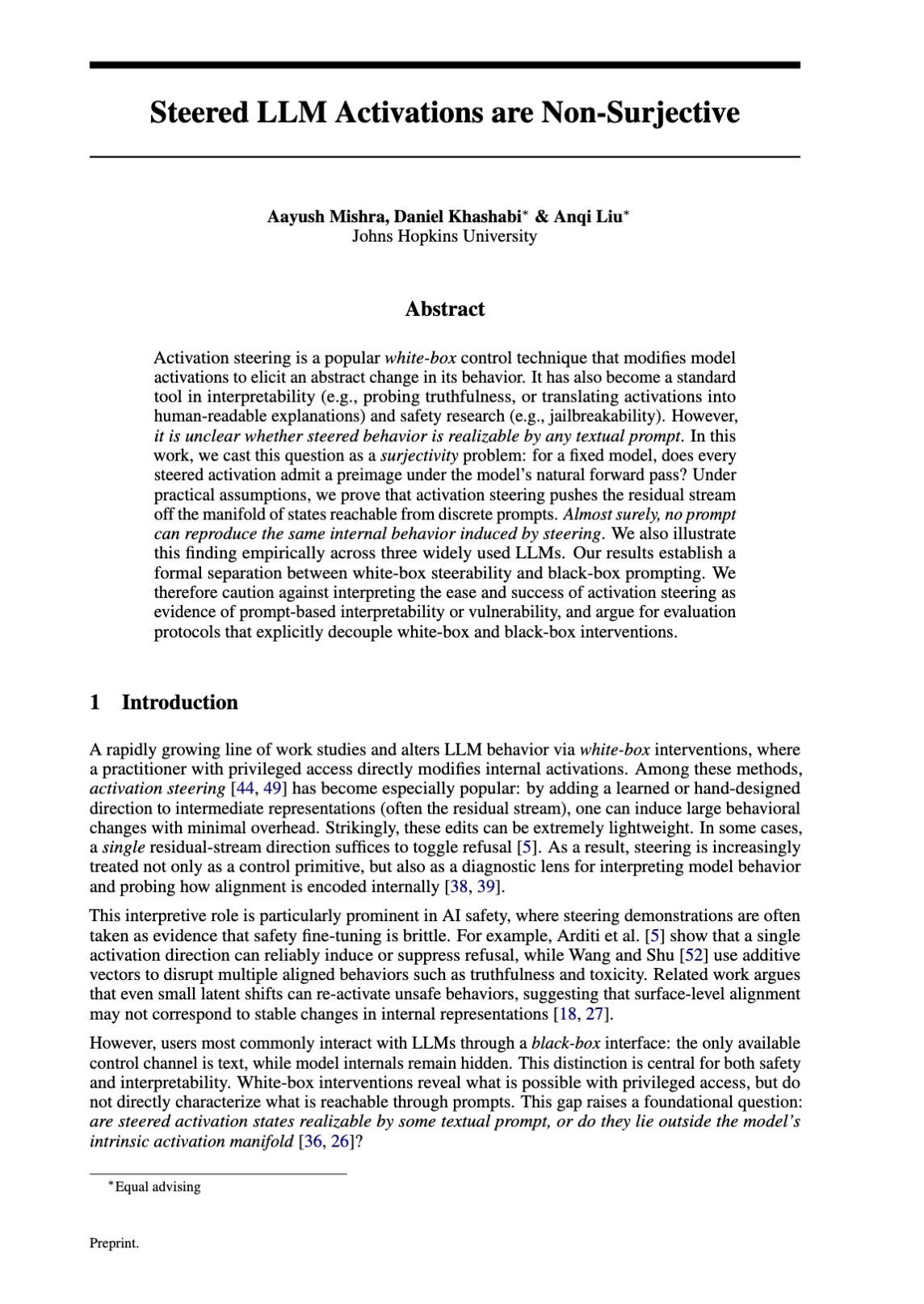
Research on Steered LLM Activations and Manifold Reachability
By
–
"Steered LLM Activations are Non-Surjective" Activation steering can make an LLM behave very differently, but that doesn't mean any prompt could have caused the same internal state. This paper shows steering pushes activations off the prompt-reachable manifold into
-
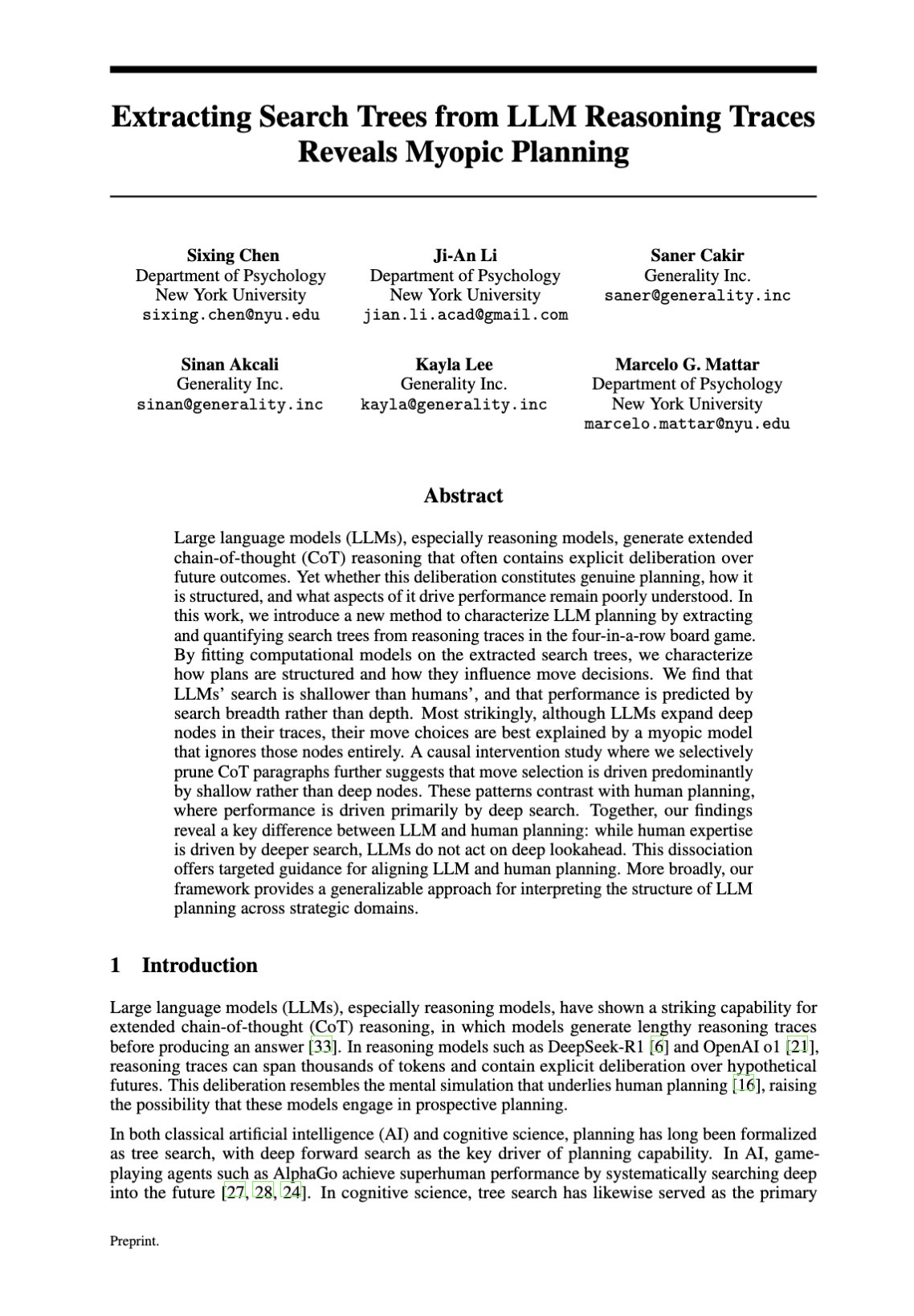
LLM traces masquent un planificateur myope
By
–
“Extracting Search Trees from LLM Reasoning Traces Reveals Myopic Planning” Reasoning models can write traces that look like real tree search, but this paper shows their decisions are mostly driven by shallow one-step evaluation. They extract search trees from LLM CoT in