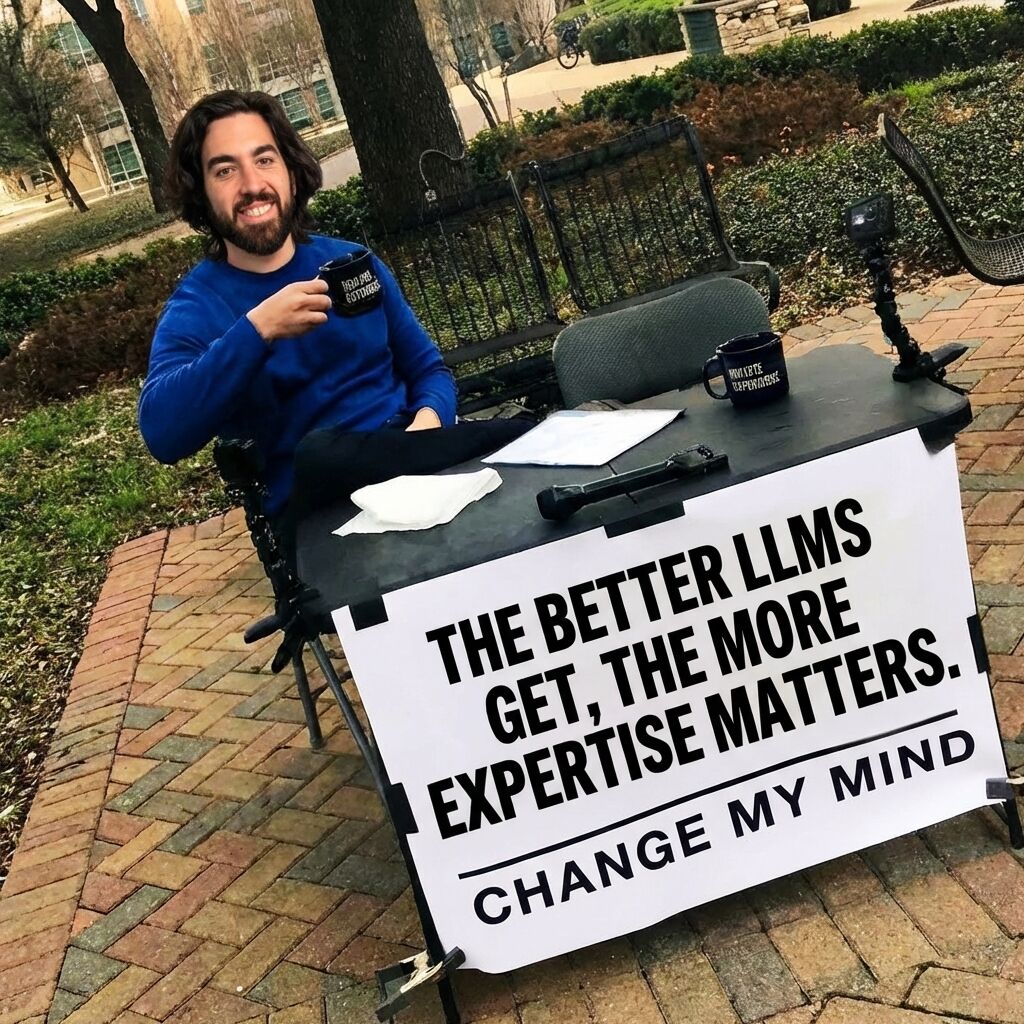
LLMs are not making expertise less valuable. They are making mediocre work easier to replace. Quantity is cheap now. Judgment, taste, and direction are not. We need fewer people. But we need better ones. To be clear, I am not saying beginners are doomed. I am saying the path changed. The people who learn fast, care about quality, and use LLMs to improve their judgment will do very well. The ones focused on shipping and quantity will be the ones replaced first.
WORKFORCE
-
Coding Agents Automate Cross-Platform Workflows with Intelligence
By
–
Agents that can code will equally be able to use tools exceedingly well. This allows you to start to automate tasks across a workflow that requires both a component of non-deterministic intelligence but also deterministic system interaction.
— Aaron Levie (@levie) 31 mars 2026
An example would be using something… https://t.co/ziNaeIUR8TAgents that can code will equally be able to use tools exceedingly well. This allows you to start to automate tasks across a workflow that requires both a component of non-deterministic intelligence but also deterministic system interaction. An example would be using something like Codex to automate a workflow connecting data from Box to multiple other systems. The coding agent can interact with systems like an engineer via CLI/MCP/APIs, or write code on the fly when new problems are encountered in a workflow. This will also be one of the reasons you’ll see more technical and engineering roles start to help automate work in non-engineering domains. Marketing, finance, supply chain, pharma research, and other areas where there’s a large amount of data and systems to talk to all have these properties. Box (@Box) Codex just turned an upcoming meeting into a fully automated cross-platform workflow. Box. Gmail. Slack. It researches across all three, synthesizes the context, and delivers a pre-meeting brief without anyone lifting a finger. This is what personal productivity looks like when agentic automation does the work for you. See it in action.👇 — https://nitter.net/Box/status/2039056257282449696#m
→ View original post on X — @romainhuet, 2026-03-31 19:39 UTC
-

Oracle Cuts 20% Workforce for AI Infrastructure Investment
By
–
20% of oracles work force received this message today: „“As a result, today is your last working day. … Thank you for your contributions to our organization.” Oracle is cutting jobs to free up cash for massive investments in AI infrastructure, shifting resources from workforce
-
The Future of Work: AI and Workforce Transformation Ahead
By
–
The world of work is changing. Let's change it for the better. Ryan Roslansky nails it in his new book: "The most important truth about this moment is that the outcome isn’t written yet."
-

Paul Roetzer Joins Microsoft to Bring OpenClaw Personal Agents to Microsoft 365
By
–
🦞 TL;DR: New Job at Microsoft. Bringing OpenClaw + personal agents to Microsoft 365! My goal is to help usher in a new generation of workplace proactive assistants, ones that lighten your load by taking on tasks end-to-end, and that can also step in proactively when they can help. As part of this mission, I’ll be partnering with the @OpenClaw + M365 community to bring the energy of this work to our customers. We’ve already hit the ground running with a fully integrated Teams plugin for OpenClaw, and I can’t wait to help usher in the era of personal agents at work.
→ View original post on X — @paulroetzer, 2026-03-31 16:52 UTC
-
Americans Use AI But Barely Trust It, Poll Finds
By
–
Some wild numbers from Quinnipiac's new AI poll: 51% of Americans surveyed use AI for research. Only 21% trust it. 70% say AI will decrease jobs. But only 30% are concerned it will touch theirs. Only 5% believe AI is being developed by people who represent their interests.
-
AI threatens developer clients more than developers themselves
By
–
Par rapport a ton podcast ou tu parlais de la disparition des dev, ça va surtout commencer par la disparition des clients des dev.
-
AI Splits Enterprises Into Fast and Slow Teams
By
–
"Instead AI is splitting enterprises into fast-learning and slow-learning teams and is rewarding organizations that redesign work, govern risk, and turn lower software costs into more software, not less." – @mjasay infoworld.com/article/415157… [Translated from EN to English]
-
Study: AI Could Boost GDP Growth but Increase Economic Inequality
By
–

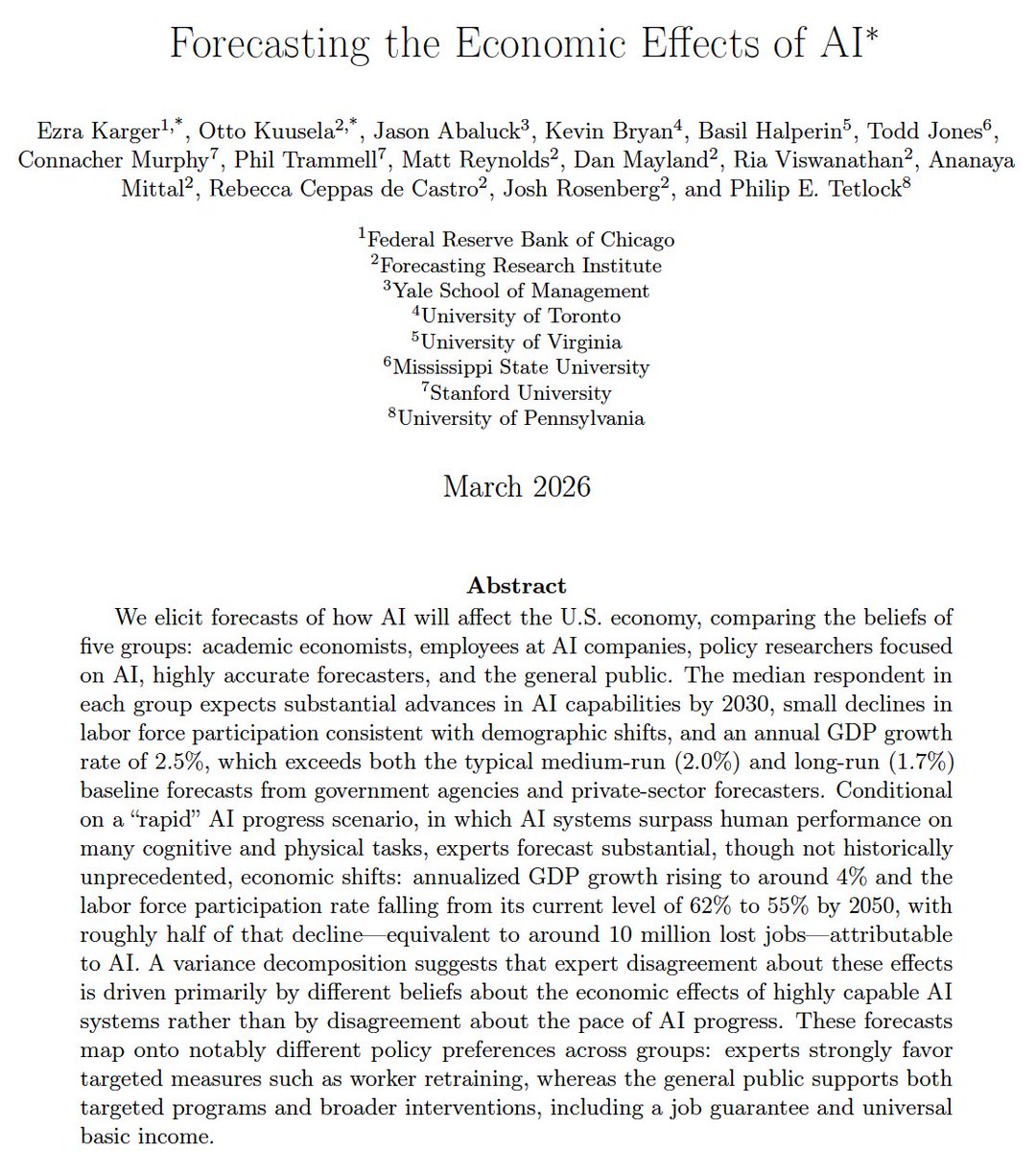
We completed the most comprehensive study of how economists and AI experts think AI will affect the U.S. economy. They predict major AI progress—but no dramatic break from economic trends: GDP growth rates similar to today's and a moderate decline in labor force participation. However, when asked to consider what would happen in a world with extremely rapid progress in AI capabilities by 2030, they predict significant economic impacts by 2050: • Annualized GDP growth of 3.5% (compared to 2.4% in 2025) • A labor force participation rate of 55% (roughly 10 million fewer jobs) • 80% of wealth held by the top 10% (highest since 1939) 🧵 Here's what we found:
→ View original post on X — @mfordfuture, 2026-03-31 13:04 UTC
-
Rare skill: redesigning workflows with AI agents
By
–
Someone who can walk into a legal team or a finance department, understand how work actually moves, and redesign it around agents is a genuinely rare skill set. That person doesn't exist in most org charts yet.