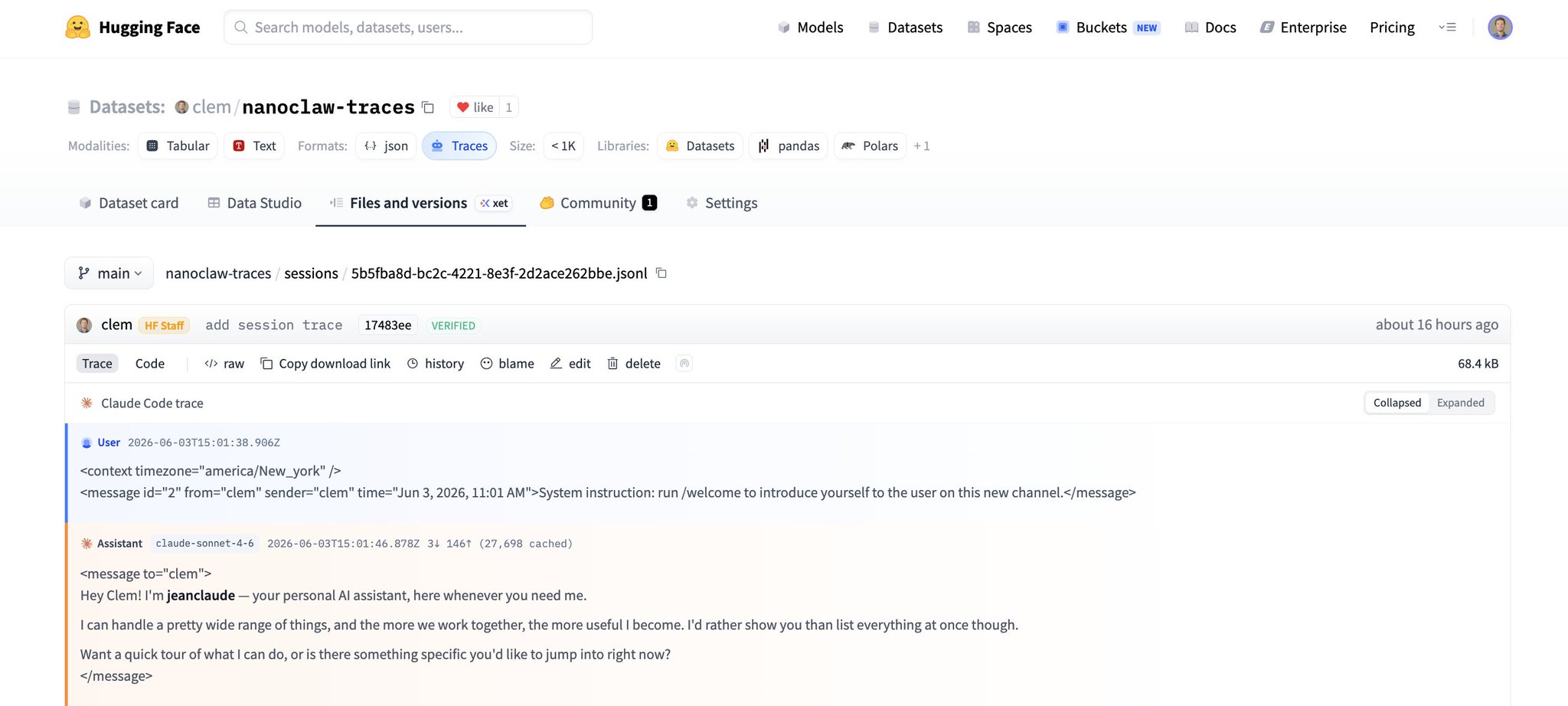
Shared my first trace from @NanoClaw_AI to @huggingface yesterday. Very cool! By default, all agents should store their traces on HF (in private) so that you can keep a history of them, analyze them,… & share them and post-train better models, harnesses and more. Excited
TOOLS
-
Krea 2 Turbo: generate high-quality images in 2 seconds
By
–
introducing Krea 2 Turbo.
— Krea (@krea_ai) 4 juin 2026
generate high-quality images in just 2s; compatible with style references, moodboards, and LoRAs.
try it for free at krea . ai pic.twitter.com/cG5wymDdmhintroducing Krea 2 Turbo. generate high-quality images in just 2s; compatible with style references, moodboards, and LoRAs. try it for free at krea . ai
-
Fastest P-Video-Replace model for character replacement, 70% off until Sunday
By
–
P-Video-Replace from @PrunaAI is up on Replicate!
— Replicate (@replicate) 4 juin 2026
This is the fastest model for character replacement in existing video.
And until Sunday, we're giving our community 70% off, making this model only $0.009/s of output video.https://t.co/0vZhSlksom https://t.co/tWLiRDuBSiP-Video-Replace from @PrunaAI is up on Replicate! This is the fastest model for character replacement in existing video. And until Sunday, we're giving our community 70% off, making this model only $0.009/s of output video. http://
replicate.com/prunaai/p-vide
o-replace
… -
Publication with GGUF link and Gemma-4 guide
By
–
—
GGUF: https://
huggingface.co/unsloth/gemma-
4-12b-it-GGUF
… Guide: https://
unsloth.ai/docs/models/ge
mma-4
…
— -
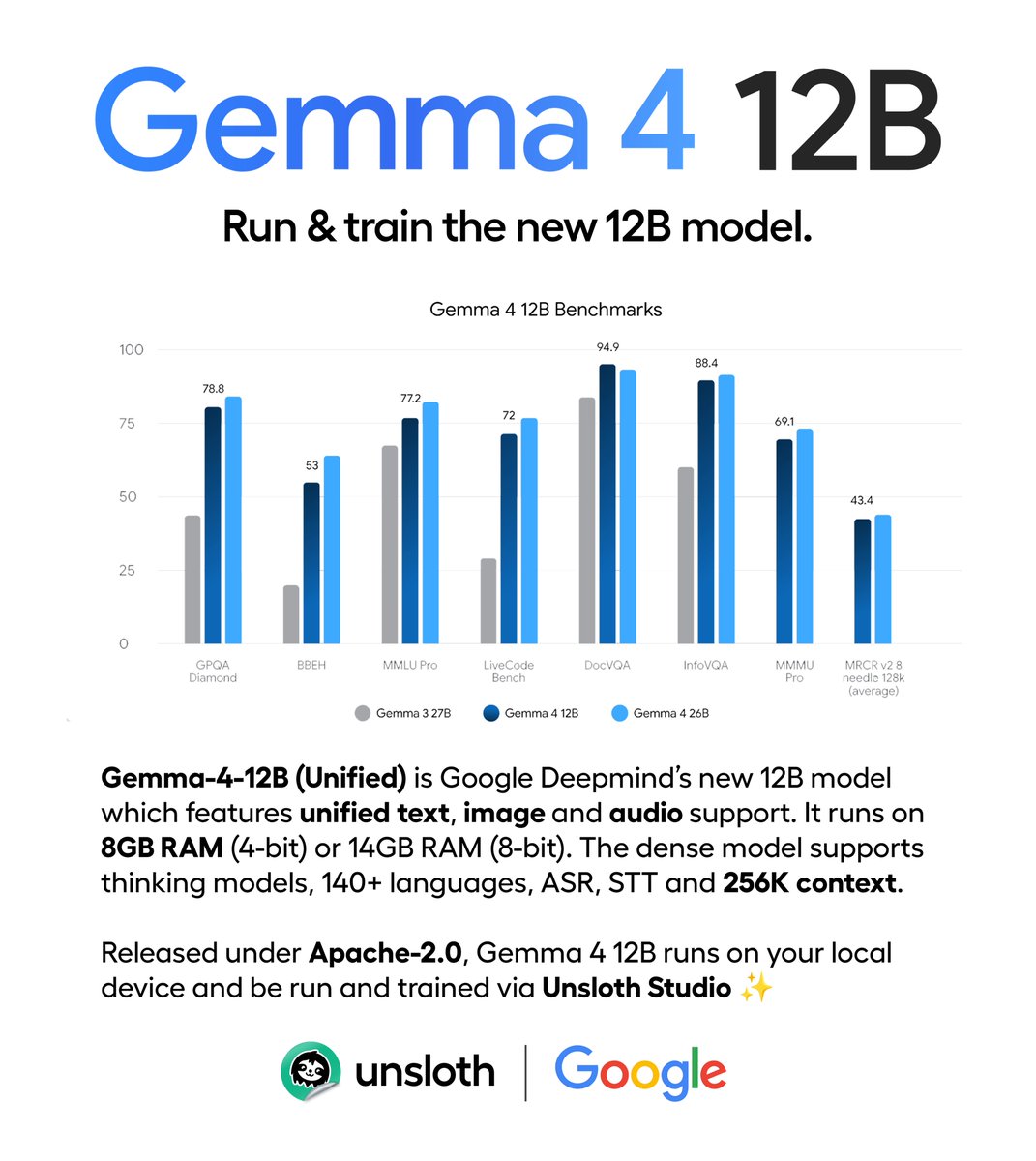
Google drops Gemma 4 12B with novel multimodal architecture
By
–
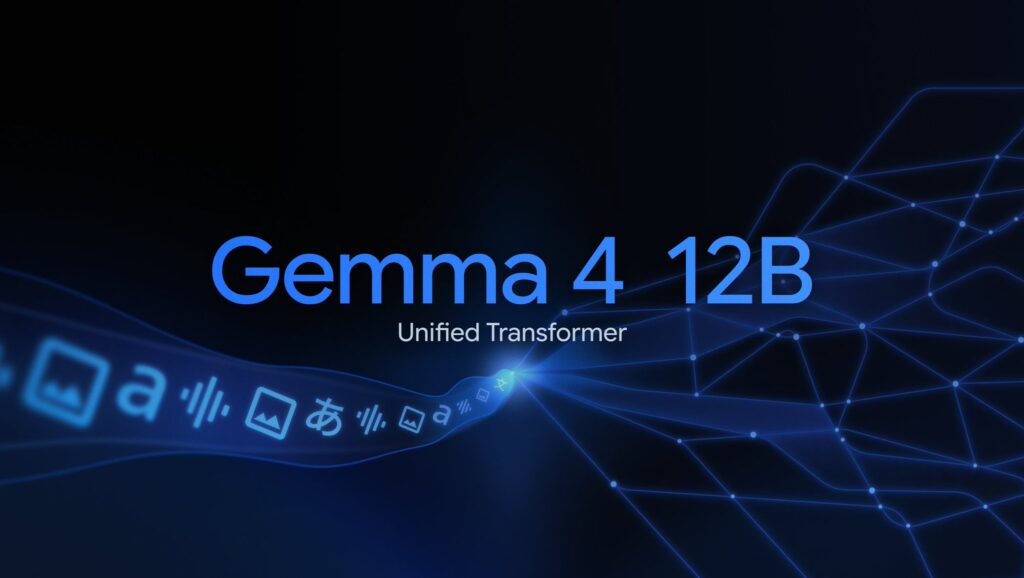
Google just dropped Gemma 4 12B! You can now run it locally on just 8GB RAM using Dynamic GGUF from Unsloth. The architecture is different from any multimodal model before it. No separate vision encoder, no audio encoder. Both flow directly into the LLM backbone. Vision is
-
Pipeline order is a hyperparameter for optimizing LLM execution strategies
By
–
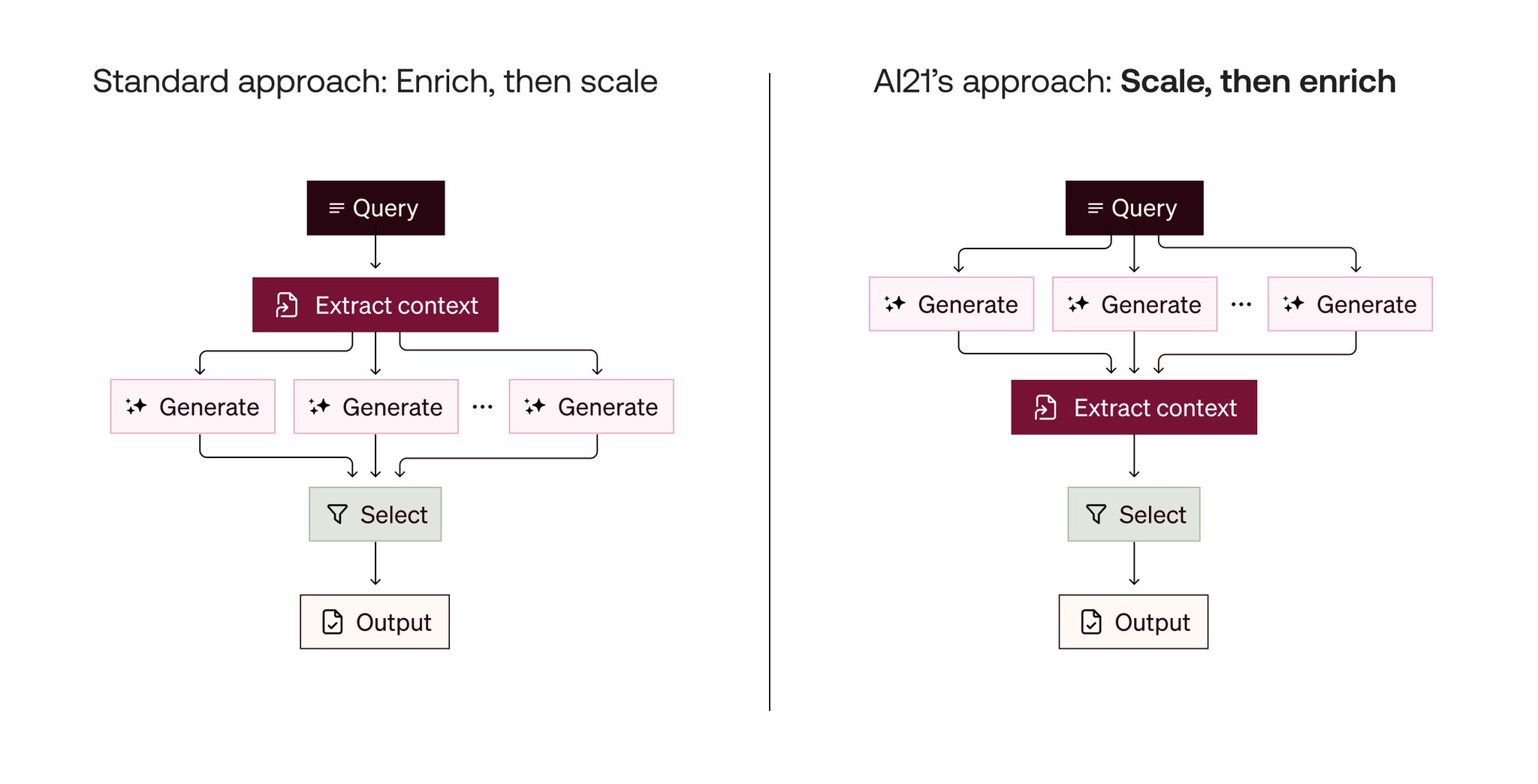
5/5 Takeaway: pipeline order is a hyperparameter. If you're already paying for parallel rollouts, reuse them – they're relevant context, not just candidate answers. Full write-up: [
https://
ai21.com/blog/first-sca
le-then-enrich-how-the-right-execution-strategy-helped-us-reach-state-of-the-art-on-swe-rebench/?utm_source=org-twitter
…] -
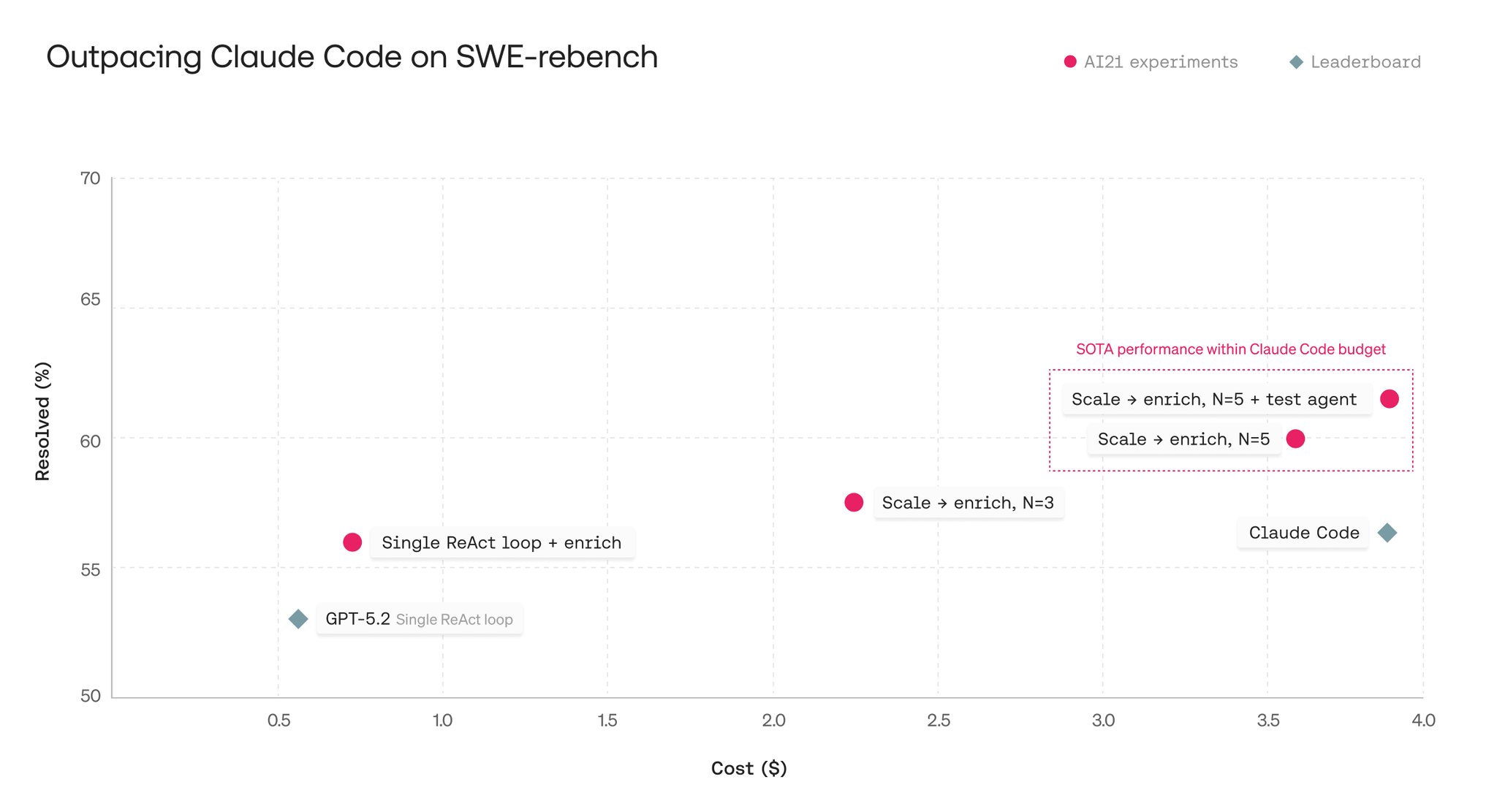
AI21 Labs surpasses Claude Code in efficiency and performance with Test Agent.
By
–
4/5 Still came in ~$0.30 under Claude Code’s spend at a similar score. So we added a lightweight Test Agent that writes repo tests and filters failing patches, pushing our final result to 60.9% – surpassing Claude Code (60.9% vs 56.2%) at the same cost.
-
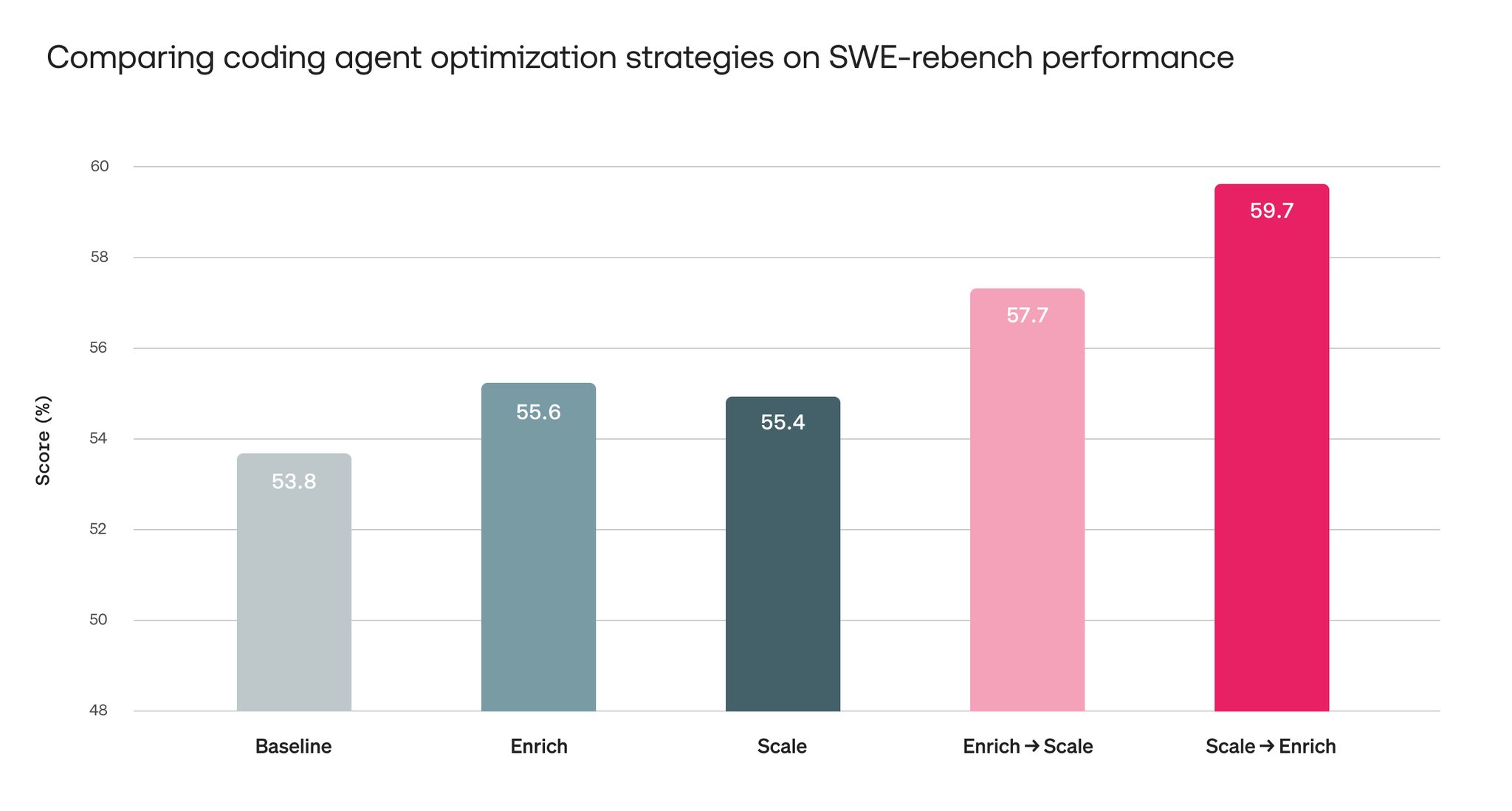
AI21 Labs: ReAct Agent Performance with Enrichment and Scaling Strategies
By
–
2/5 Started with a baseline: classic ReAct agent (GPT-5.2), single Docker-terminal tool. Baselines on the slice: vanilla 53.8%, enrich-only 55.6%, scale-only (n=5 + LLM judge) 55.4%, enrich-then-scale 57.7%.
-
LangSmith Engine reviews traces, learns from usage, updates Context Hub
By
–
You can use LangSmith Engine to review your agent traces to find bugs and areas for improvement across agent prompts + code. Between runs, the agent can review conversations, learn from real usage, and update Context Hub files.
-
Claude’s neurosymbolic code useful, but more AI work needed
By
–
now/years. claude code is neurosymbolic and pretty useful in its domain, but there’s lots more to be done (see my 2020 article Next Decade in AI).