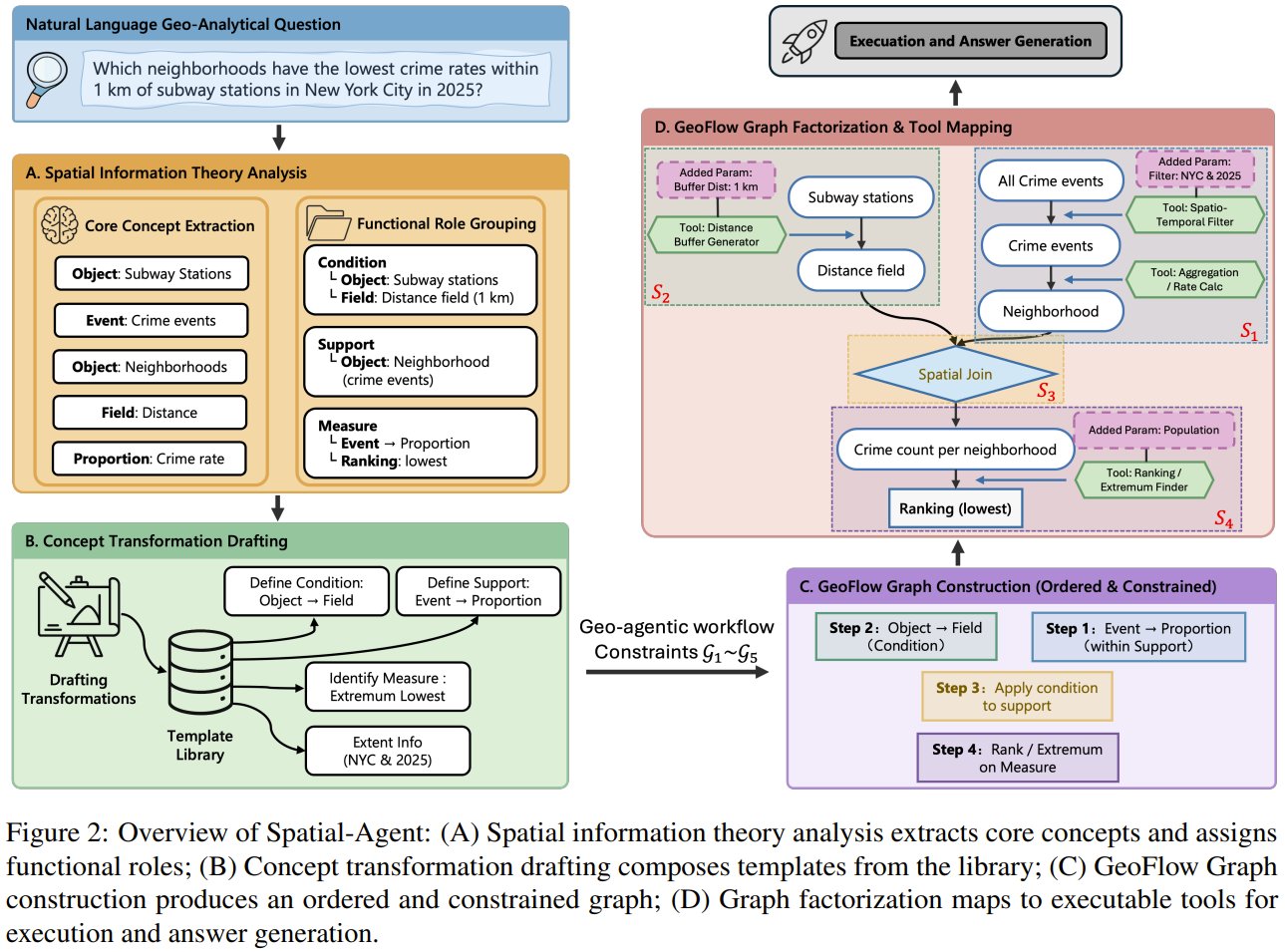
Why do AI agents still struggle with real geospatial tasks like urban planning or disaster response? Researchers from Emory, Rutgers, and UT Austin introduce Spatial-Agent—a new AI that grounds reasoning in spatial science theory instead of web search or pattern matching. It
SYSTEMS
-
Building a 4-agent software team managed from Telegram and Kanban
By
–
i just built a 4-agent software team.
— Akshay 🚀 (@akshay_pachaar) 6 juin 2026
everything runs from Telegram and gets managed on a kanban board.
a project manager who plans the work, a backend developer, a frontend developer, and a tester. the PM reads a goal, breaks it into linked tasks, and assigns each to the right… https://t.co/zjXOHytKHC pic.twitter.com/k3vScpYgV8i just built a 4-agent software team. everything runs from Telegram and gets managed on a kanban board. a project manager who plans the work, a backend developer, a frontend developer, and a tester. the PM reads a goal, breaks it into linked tasks, and assigns each to the right
-
xAI/SpaceX becomes neo-hyperscaler for frontier AI compute
By
–
xAI/SpaceX is increasingly becoming an AI infrastructure player, potentially one of the most important „neo-hyperscalers” for frontier AI compute. Grok is good, but its user base remains comparatively small. In that sense, repurposing Colossus to rent out compute capacity is a
-
Embodied AI: The Crucial Test for Contextual Intelligence and Real-World Benchmarks
By
–
The more I study AGI, the more I see Embodied AI as a necessary test of intelligence in context. Robots force AI to face physics, uncertainty, timing, and action.
— Antonio Grasso (@antgrasso) 6 juin 2026
That is why real-world benchmarks matter so much. https://t.co/lGqcmo8EBZThe more I study AGI, the more I see Embodied AI as a necessary test of intelligence in context. Robots force AI to face physics, uncertainty, timing, and action. That is why real-world benchmarks matter so much.
-
Three-tier memory system prevents context decay after model failures
By
–
Pretty much. Context decay is one of those problems you don't feel until it's already cost you, and by then you've usually blamed the model instead of the memory setup. That's why the three-tier system lands once you've been burned. It turns memory into something you design on
-
Kernels Are the Actual Work in Model Inference
By
–
You don’t “run a model”
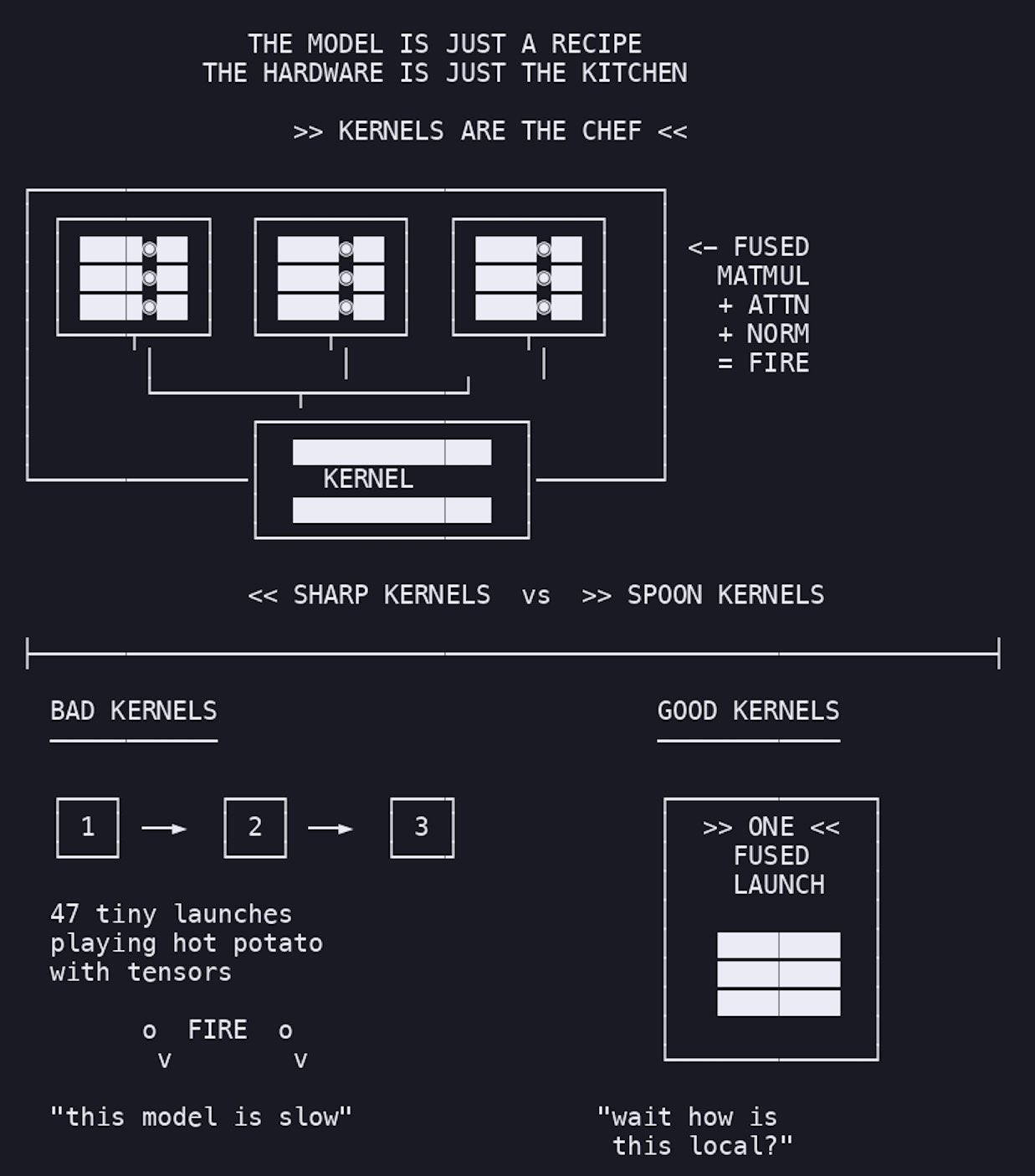
You run Kernels The model is just a graph The Inference Engine is scheduler / optimizer / executor But the actual work? That happens in the Kernels – MatMul Kernels
– Attention Kernels
– RMSNorm Kernels
– KV cache Kernels
– Quantized linear Kernels
– -
CEO Rodrigo Liang discusses heterogeneous AI systems and token speed on CNBC
By
–
On CNBC, our CEO @RodrigoLiang talks about the future of heterogeneous AI systems, why token speed and energy efficiency matter for agentic inference, and what’s ahead for us over the next 12 months
-
MIT framework for self-revising AI expands scientific vocabulary
By
–
AI scientists may be moving from search to real discovery.
— Chubby♨️ (@kimmonismus) 5 juin 2026
A new MIT paper proposes a framework for self-revising AI systems that don’t just explore a fixed scientific vocabulary, but can expand the vocabulary itself, introducing new variables, tools, verifiers, and model… https://t.co/fvg1K5aOTo pic.twitter.com/z2moBLejZcAI scientists may be moving from search to real discovery. A new MIT paper proposes a framework for self-revising AI systems that don’t just explore a fixed scientific vocabulary, but can expand the vocabulary itself, introducing new variables, tools, verifiers, and model
-
ActiveGraph AI runtime built around memory performs well on privacy benchmarks
By
–
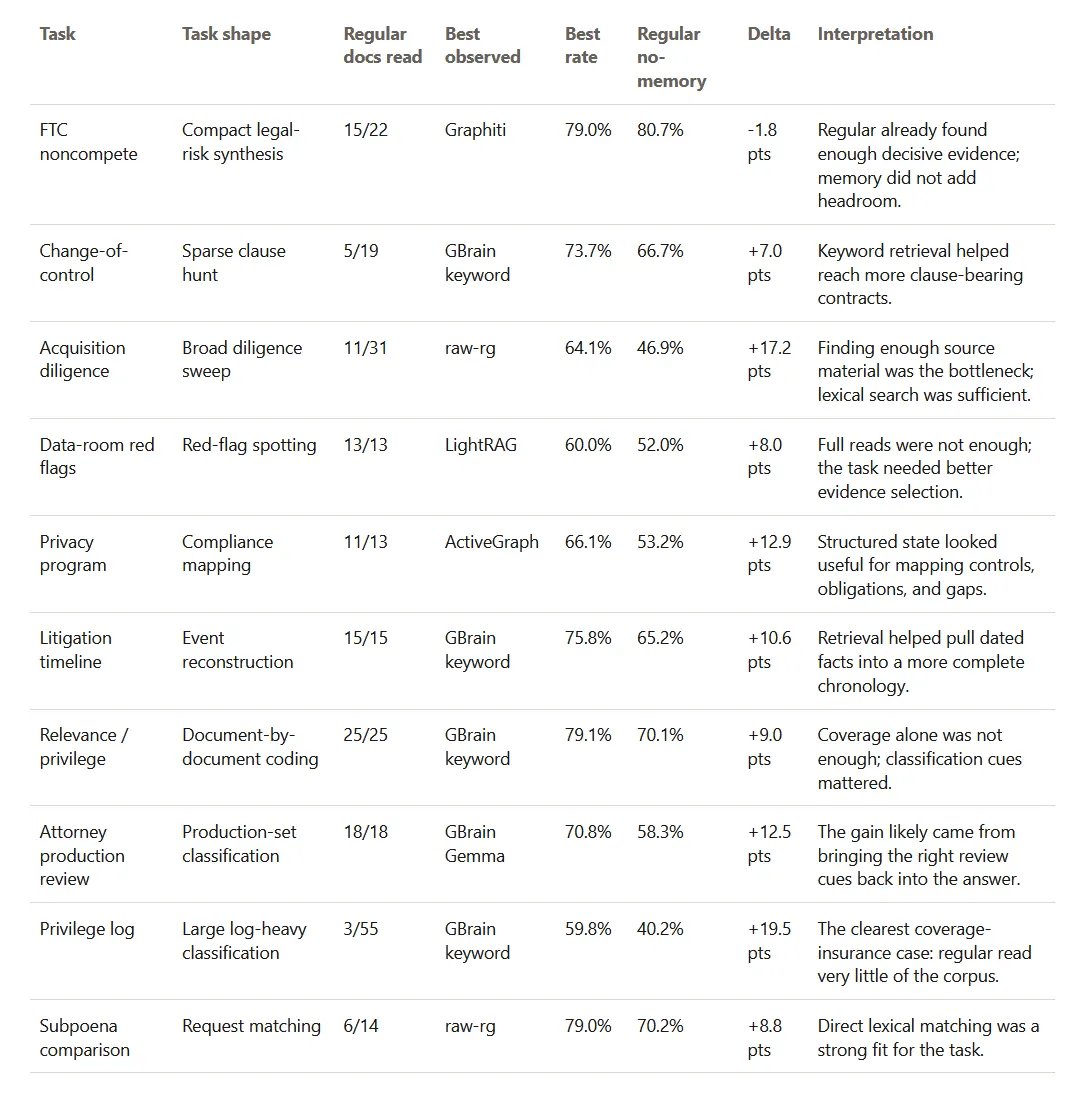
even though @activegraphai is not a memory tool, it's a runtime built around memory so it can do well there cool to see a third party verify this and see that activegraph does well on privacy programs (from @harvey
's legal agent benchmark), which heavily relies on compliance -
Claude’s new version design, Mythos Preview achieves 52x training speedup
By
–
🚨 Dario confirmed that Claude is currently designing the next version of itself.
— Charly Wargnier (@DataChaz) 5 juin 2026
To test this, the company asks its new models to optimize the training code for smaller AIs.
While Claude Opus 4 achieved a 3x speedup, Mythos Preview hit a staggering 52x 🤯
Recursive… pic.twitter.com/MONKQ9g1aZDario confirmed that Claude is currently designing the next version of itself. To test this, the company asks its new models to optimize the training code for smaller AIs. While Claude Opus 4 achieved a 3x speedup, Mythos Preview hit a staggering 52x Recursive