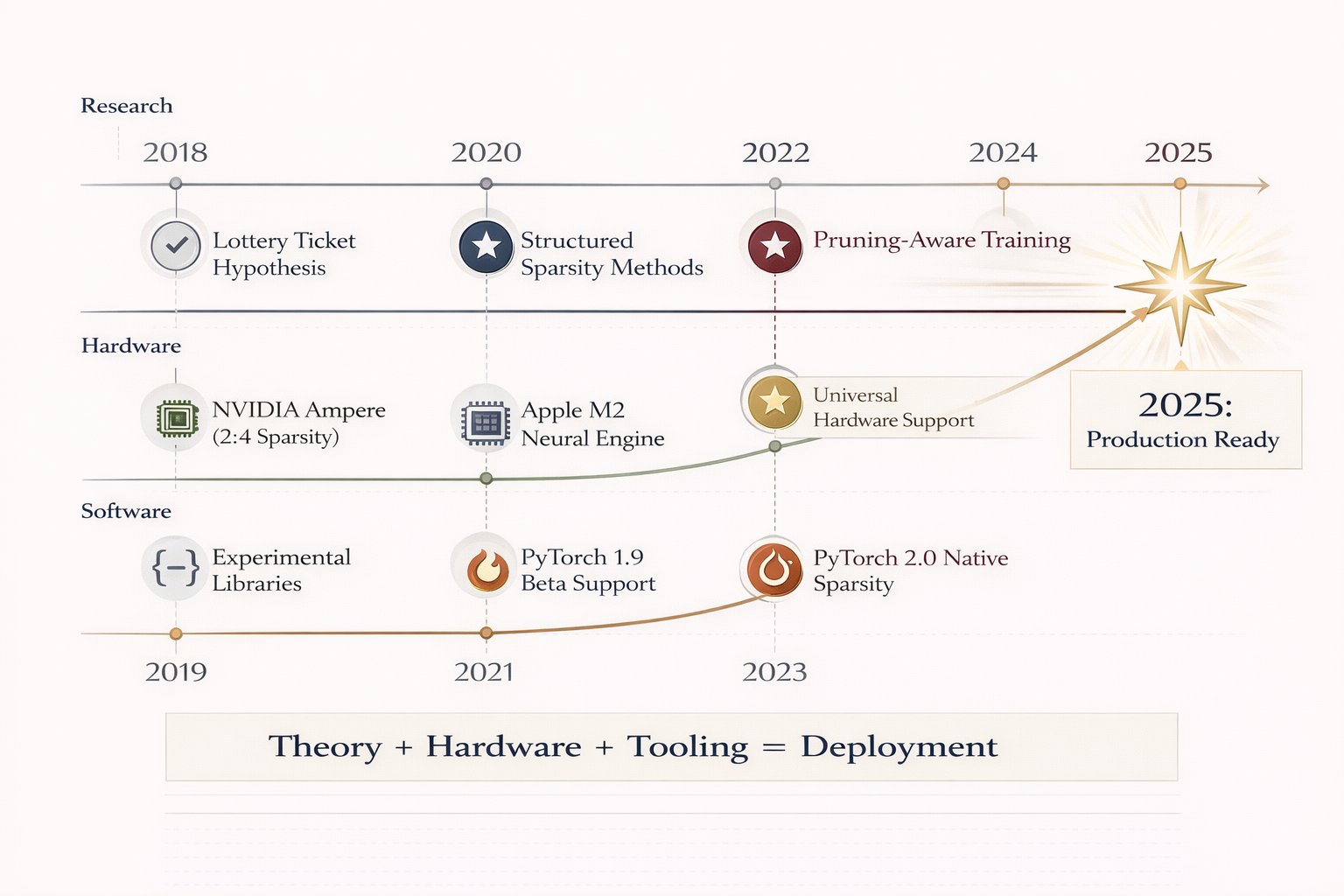
Three breakthroughs made this production-ready in 2026: 1. Pruning-aware training (train sparse from the start)
2. Hardware support (NVIDIA Ampere+, Apple Neural Engine)
3. Framework integration (PyTorch 2.0 native sparsity) The tooling finally caught up to the theory.
SOFTWARE
-
2026 Breakthroughs Made AI Production-Ready
By
–
-
Optimizing models with pruning, patterns, and quantization
By
–
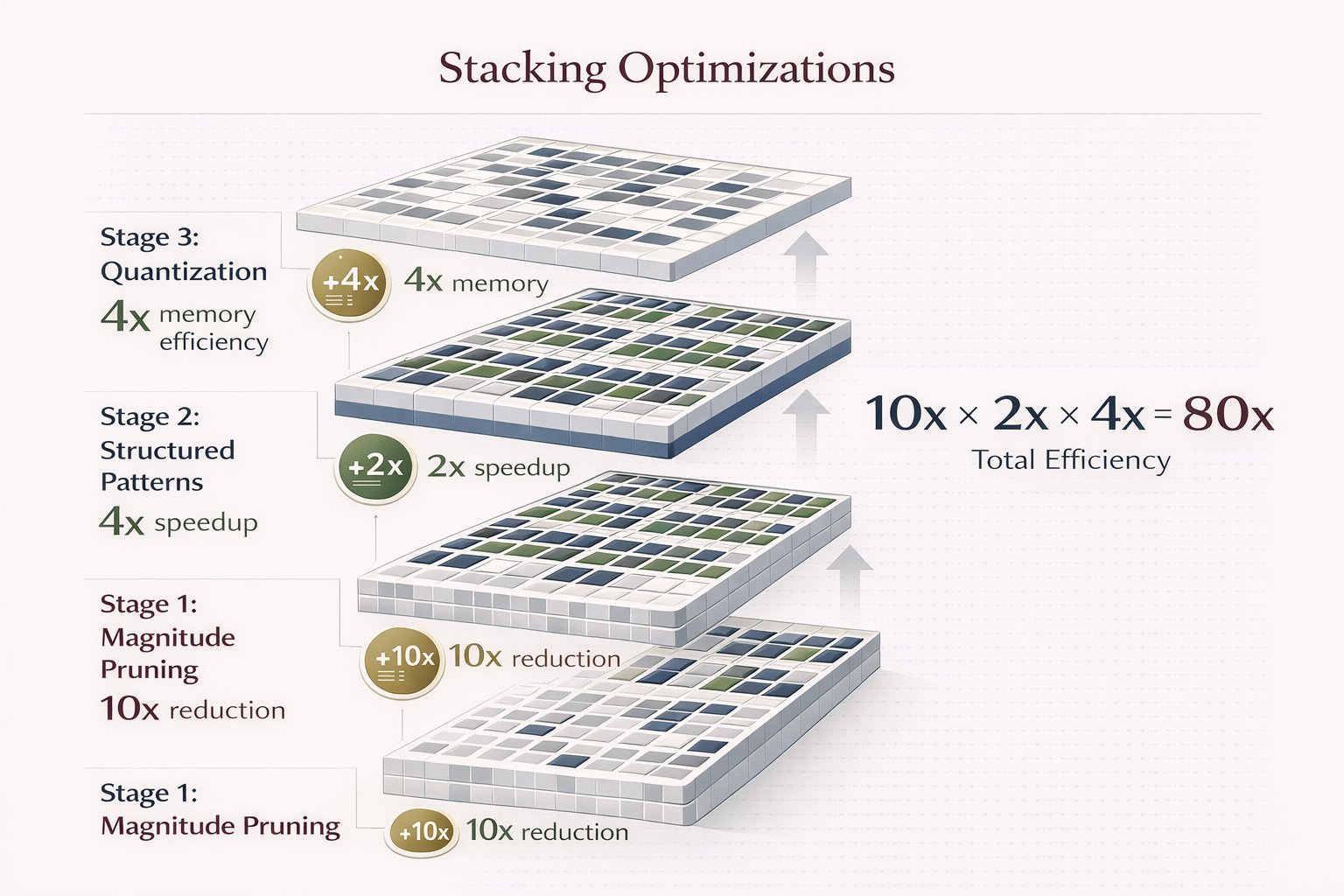
But magnitude pruning alone isn't enough. The real magic happens when you combine: → Magnitude pruning (remove smallest weights)
→ Structured patterns (2:4 blocks for GPU)
→ Quantization (INT8 instead of FP32) Stack all three and you get 20-50x deployment efficiency. -
GPU Tensor Cores Accelerate Sparse Networks
By
–
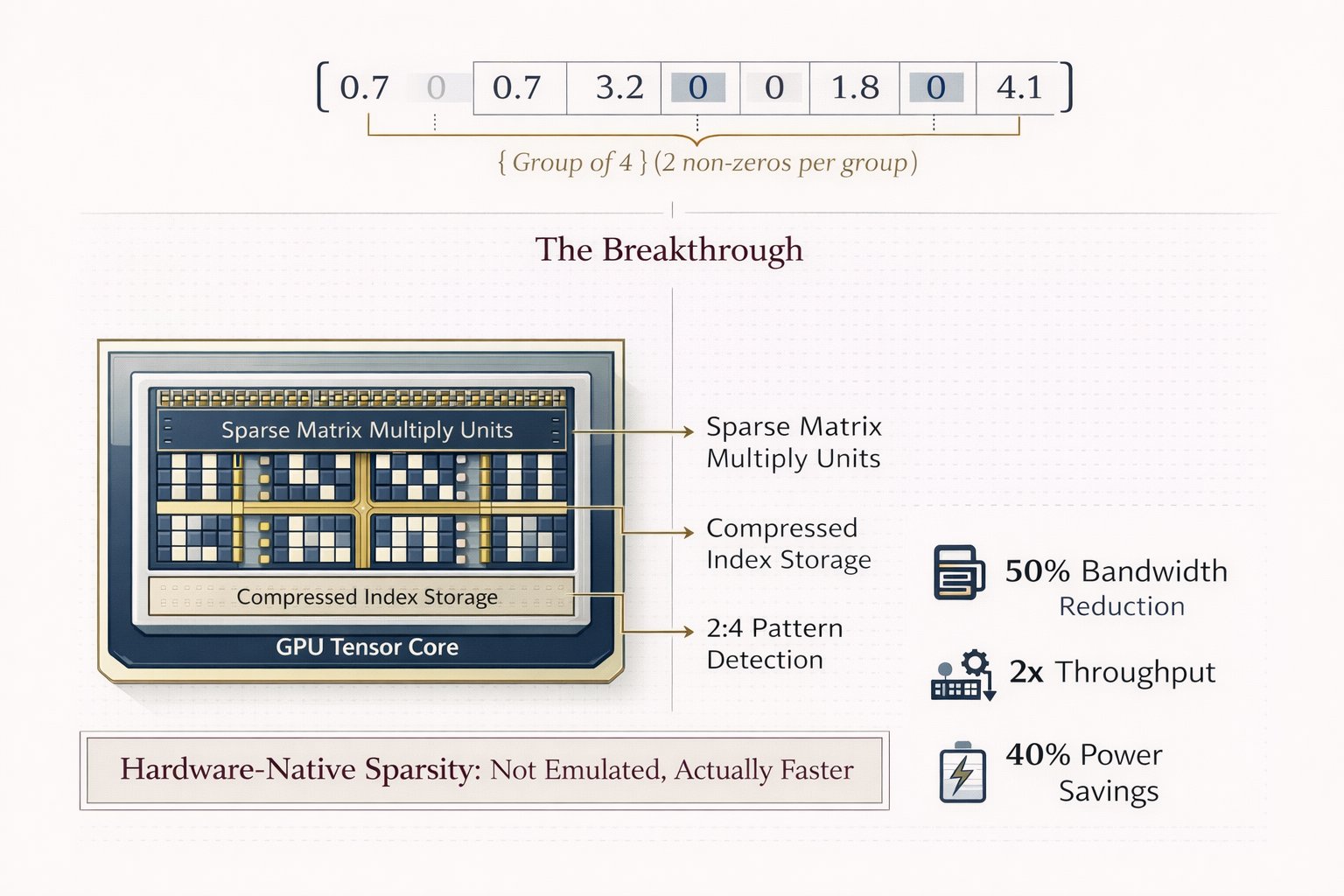
Here's the math that makes it work: Modern GPUs have specialized Tensor Cores optimized for 2:4 sparsity (2 non-zero values per 4 elements). This isn't emulated. It's silicon-level acceleration. 90% sparse network = 50% memory bandwidth + 2x compute throughput. Real speed,
-
NVIDIA’s Block Sparsity Breakthrough Speeds AI
By
–
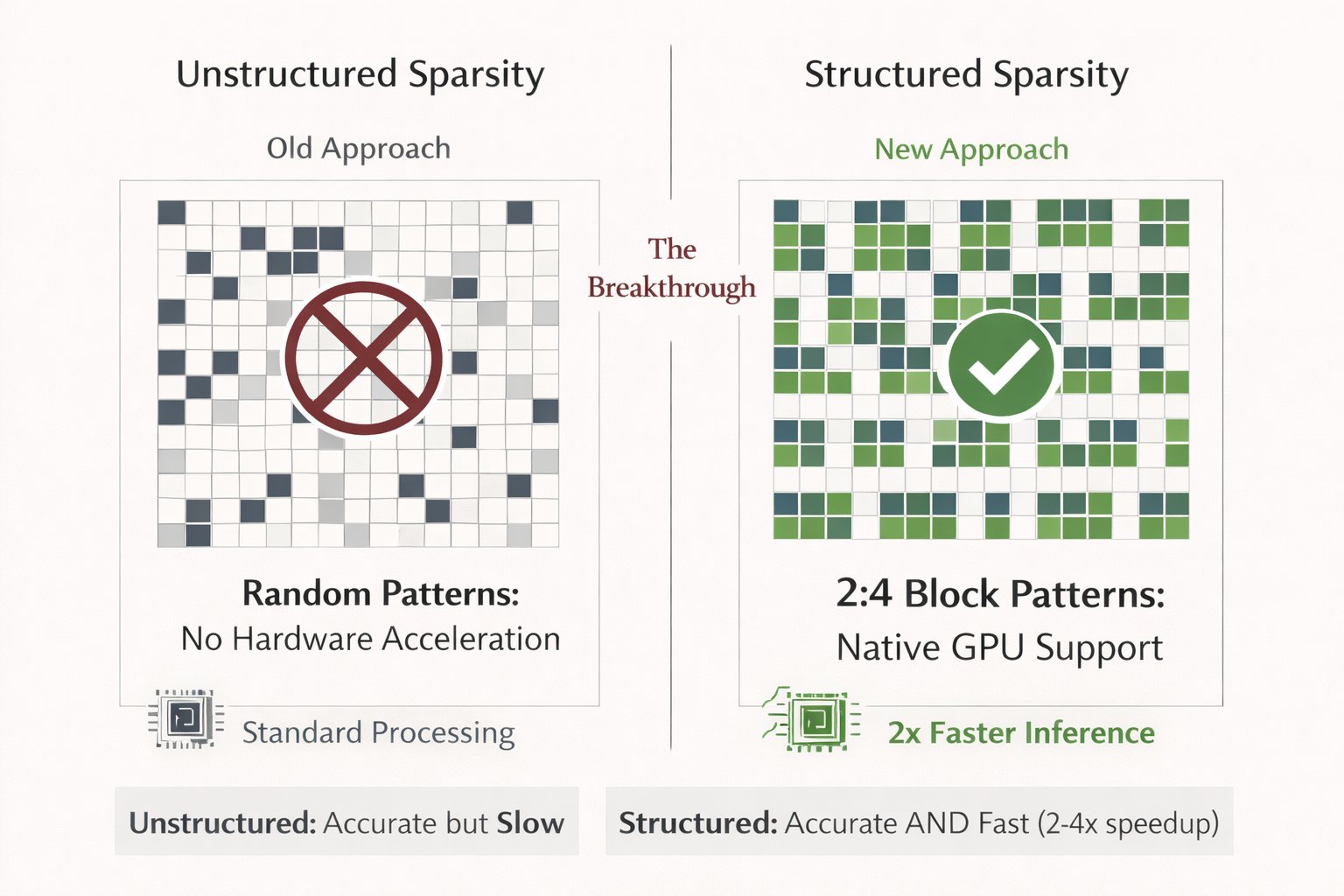
Then came the breakthrough nobody expected: Structured sparsity + modern hardware. NVIDIA proved you don't need random sparse patterns. Block sparsity (2:4, 4:8 patterns) runs NATIVELY on modern GPUs. Suddenly the lottery ticket isn't just accurate. It's actually faster.
-
2018 Paper: Pruning Neural Networks Without Accuracy Loss
By
–
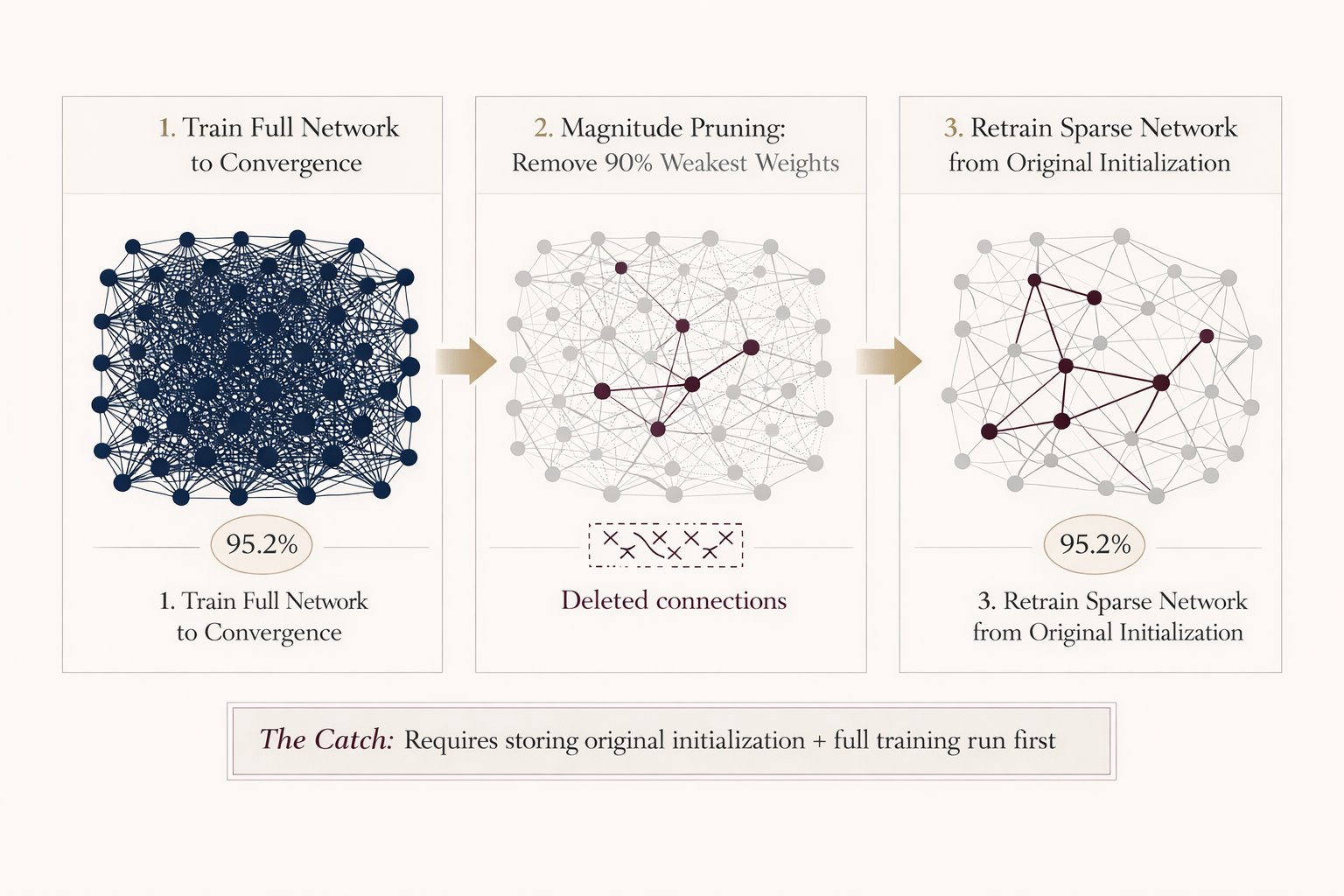
The original 2018 paper was mind-blowing: Train a massive neural network. Delete 90% of it based on weight magnitudes. Retrain from scratch with the same initialization. Result: The pruned network matches the original's accuracy. But there was a catch that killed adoption.
-

MIT’s 90% Neural Network Deletion Breakthrough Ignored
By
–
MIT proved you can delete 90% of a neural network without losing accuracy. Five years later, nobody implements it. "The Lottery Ticket Hypothesis" just went from academic curiosity to production necessity, and it's about to 10x your inference costs. Here's what changed (and
-
AI engines build mind-blowing software, but search engine creation is hard
By
–
Software engineers are already telling me that their AI engines, like Anthropic's Claude Opus or ChatGPT's advanced models, are building software so advanced that it would blow your mind. So, just build your own search engine. Well, except that's not really possible that easily
-
Grok in new Teslas enables voice-controlled driving
By
–
Grok is already in new Teslas. It's really amazing—you talk to it and tell it what you want to do, and it takes you there
-
2026 AI Predictions: Code Generation Becomes Key Benchmark
By
–
Alright, here's my 2026 AI Predictions (What did I miss?): -All meaningful progress benchmarks shift to code gen capabilities. Models write looong systems, debug themselves, and ship real applications. Your dad will proudly show you an app he made. Short prompts expand into
-
Self-hosted Gmail, Docs, Drive alternatives emerging through code
By
–
Soon people will vibe code their own self-hosted GMail, Google Docs, GDrive, etc. https://t.co/69C2WyNOrh
— Marek Rosa | European🇪🇺 | South African🇿🇦 (@marek_rosa) 1 janvier 2026Soon people will vibe code their own self-hosted GMail, Google Docs, GDrive, etc.