
The biggest MoE (probably Qwen 3.5 122B) that can fit on it Read below and search Unified Memory and MoE on my profile for more educational content on this
SOFTWARE
-
TabulAI Manifesto Link and Account Information
By
–
Buy a GPU and run your entire system locally is your next move 😉
-
HyperOffload: Compiler Framework Optimizes LLM Memory Management
By
–
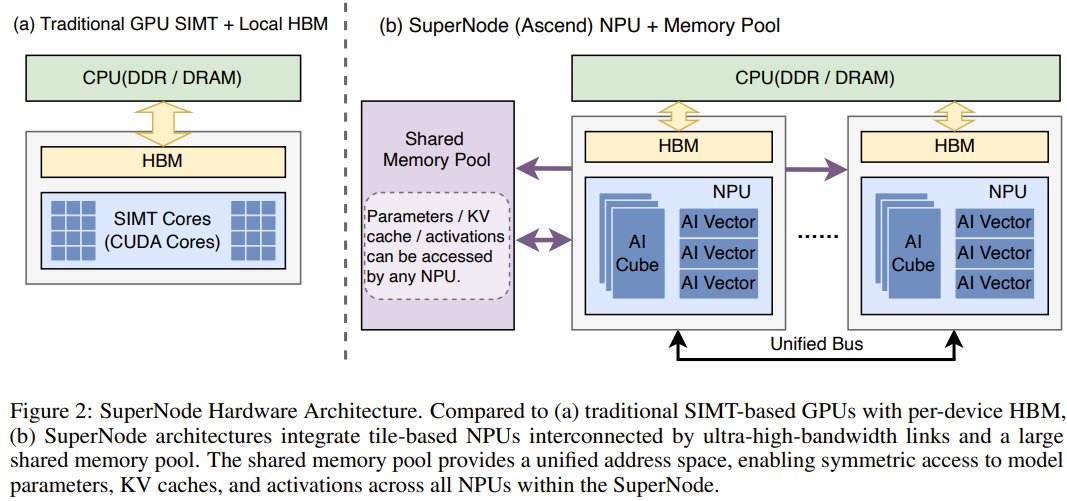
Tired of LLMs maxing out memory even on powerful supernode architectures? Shanghai Jiao Tong University and Huawei Technologies Co., Ltd. introduce HyperOffload! This new compiler-assisted framework intelligently plans data movement for large language models. By treating
-
dLLM: Simple Diffusion Language Modeling Framework Overview
By
–
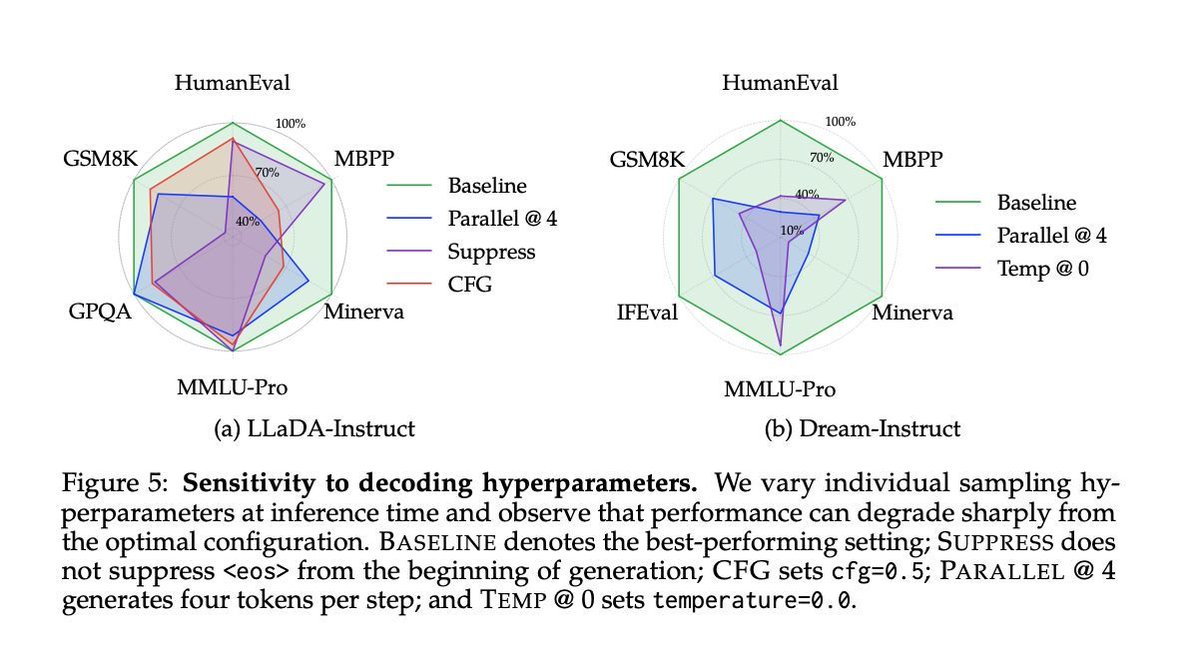
dLLM: Simple Diffusion Language Modeling buff.ly/9kxHBtV Although diffusion language models (DLMs) are evolving quickly, many recent models converge on a set of shared components. #AI #MachineLearning #DeepLearning #LLMs #DataScience
→ View original post on X — @miketamir, 2026-03-29 16:49 UTC
-
Phone scanning enables static data memory capture storage
By
–
Agree – closest thing to memory capture we got. People should scan static stuff with their phones to start and save all that data
-

Edge Central enables real-time computing on resource-constrained devices
By
–
#Sponsored by @IOTechSystems You do not need a server room to run edge computing. Edge Central handles hard real-time data acquisition on resource-constrained devices. Small hardware, full capability. Most people assume edge computing requires expensive infrastructure. It does
-
Browser Auto-Enabled Plugin Configuration Migration Guide
By
–
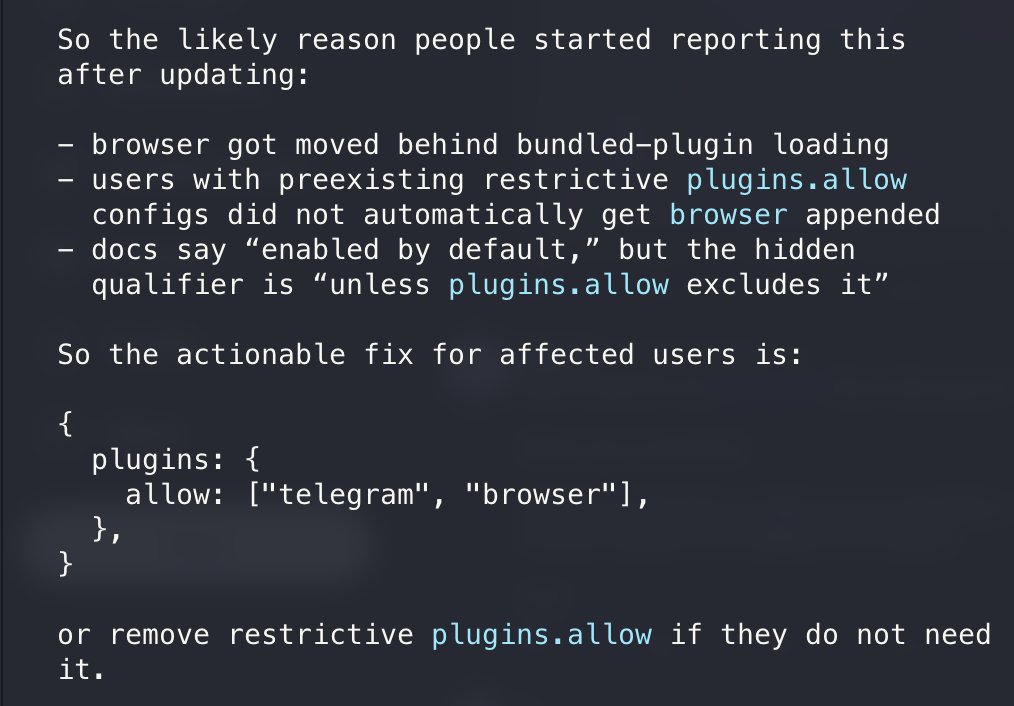
browser is auto-enabled, but I didn't add code to migrate existing custon configs, so if you already have a custom plugin list you need to edit it.
-
Microsoft VibeVoice: Revolutionary Open-Source Speech AI Models
By
–
Microsoft did it again!
— Akshay 🚀 (@akshay_pachaar) 29 mars 2026
Speech AI models have a major limitation.
They slice long recordings into tiny chunks, lose track of who's speaking, and forget all context halfway through.
This is exactly what Microsoft's VibeVoice solves.
It's an open-source family of frontier voice… pic.twitter.com/YaXz1O9IQwMicrosoft did it again! Speech AI models have a major limitation. They slice long recordings into tiny chunks, lose track of who's speaking, and forget all context halfway through. This is exactly what Microsoft's VibeVoice solves. It's an open-source family of frontier voice AI models for both speech recognition and speech generation. Here's what it can do: > VibeVoice-ASR processes up to 60 minutes of audio in a single pass. No chunking. It outputs structured transcriptions with who spoke, when they spoke, and what they said. > You can feed it custom hotwords like names, technical jargon, or domain-specific terms. The model uses them to significantly improve accuracy on specialized content. > VibeVoice-TTS generates up to 90 minutes of multi-speaker speech with up to 4 distinct speakers. Natural turn-taking, emotional expression, all in one pass. > VibeVoice-Realtime is a 0.5B streaming TTS model with ~300ms first-audio latency. Small enough to deploy practically anywhere. All of this is powered by continuous speech tokenizers running at just 7.5 Hz. This ultra-low frame rate preserves audio quality while making long sequences computationally feasible. I have shared the link to the GitHub repo in the replies!
→ View original post on X — @akshay_pachaar, 2026-03-29 13:11 UTC
-
Open Source Project Seeks Community Contributions and Support
By
–
folks it’s open source, help out?
-

Private Hugging Face Spaces with Public URLs for Secure Endpoints
By
–
You can make a Hugging Face Space private but keep its URL publicly accessible. Private repo. Public app. No one sees your code, everyone uses your endpoint. I deploy private medical endpoints for clinical agents this way. HIPAA-sensitive inference behind a public API. Didn't know this existed until last week. What's your favorite hidden @huggingface feature?