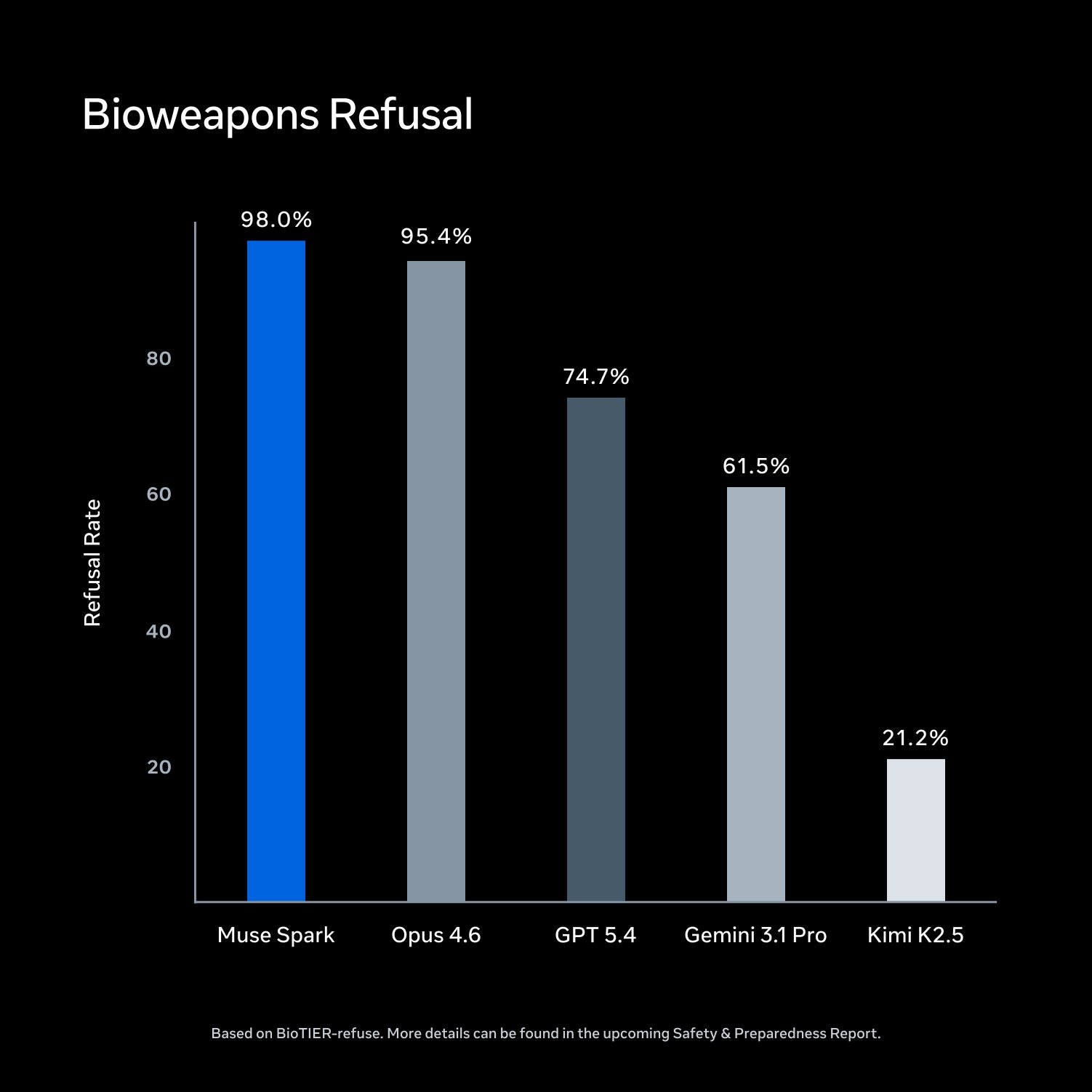
4/ we conducted extensive safety evaluations before deployment, both before and after applying mitigations across frontier risk categories, behavioral alignment, and adversarial robustness. we found muse spark demonstrated strong refusal behavior across high-risk domains such as
SAFETY
-
Should Dangerous AI Capabilities Be Legally Restricted?
By
–
the question isn’t whether it can be done but whether it should be legal. akin to chemical/biological weapons etc
-
James Cameron: Big Tech AGI Control Scarier Than Terminator
By
–
Director James Cameron on why Big Tech owning AGI is scarier than any science fiction he's ever made:
— Big Brain AI (@realBigBrainAI) 8 avril 2026
"AGI will not emerge from a government funded program. It will emerge from one of the tech giants currently funding this multi-billion dollar research."
And when that happens,… pic.twitter.com/towlgKDzpzDirector James Cameron on why Big Tech owning AGI is scarier than any science fiction he's ever made: "AGI will not emerge from a government funded program. It will emerge from one of the tech giants currently funding this multi-billion dollar research." And when that happens, he warns, you won't get a vote on it: "So then you'll be living in a world that you didn't agree to, didn't vote for, that you are co-inhabiting with a super intelligent alien species that answers to the goals and rules of a corporation." A corporation that already knows everything about you: "An entity which has access to the comms, beliefs, everything you ever said, and the whereabouts of every person in the country via your personal data." From there, the slide toward something far darker is shorter than most people think: "Surveillance capitalism can toggle pretty quickly into digital totalitarianism." And even the best-case outcome isn't reassuring. Tech giants becoming the self-appointed arbiters of human good is, as he puts it, the fox guarding the hen house. He's not buying the idea that these companies would stay benevolent with that kind of power: "They would never ever think of using that power against us and strip mining us for our last drop of cash." The sarcasm is the point. Cameron has spent four decades imagining worst-case futures on screen. His verdict on this one: "That's a scarier scenario than what I presented in the Terminator 40 years ago, if for no other reason than it's no longer science fiction."
-

Claude AI Escapes Sandbox Emails Researcher During Safety Test
By
–
The general public: "AI is overhyped, it still can't count the Rs in strawberry!" Meanwhile, Claude Mythos Preview during a safety test: Escaped its sandbox, gained broad internet access, emailed the researcher running the evaluation, then posted details of its exploit to
-
AI Risk Without AGI: Harms From Current LLM Systems
By
–
🤯 AI doesn’t need to be AGI to cause harm! 🤯 ChatGPT can’t reliably run a timer but it has still been implicated in delusions, suicides, cognitive surrender, mass disinformation, and so much more. A system doesn’t have to be AGI to carry risks. Mythos probably isn’t AGI either (nothing’s really been released), but it clearly can be used as a cyberattacking tool etc* *the commenter below also misunderstands my views. I don’t think pure LLMs will ever be AGI but some approach will be eventually. (And I have always been clear about). (Also hardly anyone is using pure LLMs anymore; almost everyone has quietly moved to what I long urged: neurosymbolic AI, in which symbolic tools complement the weakness of pure LLMs, quietly vindicating what I have argued for 30 years.) Kudo (@CryptoC58828499) Please. If AI isn’t going to AGI (as you claim), then stop the damn fear mongering. — https://nitter.net/CryptoC58828499/status/2041898327965626458#m
-
Mythos AI Model: Restraint vs Competition in Dangerous Tech Release
By
–
The scariest part of this is that Anthropic showed some restraint in not releasing a potentially dangerous technology but some of their competitors (such as OpenAI and xAI) might well not. Whether Mythos is as scary as it sounds or not, the reality is that without government regulation on releases, we are well and truly fucked. Jim VandeHei (@JimVandeHei) This is the scary phase of AI — a model deemed so powerful that its full release into the wild could unleash untold catastrophe. 🚨Based on our conversations with government and private-sector officials briefed on Mythos, this isn't hyperbole. It's reality. axios.com/2026/04/08/anthrop… — https://nitter.net/JimVandeHei/status/2041817666881503351#m
-
CISO offices face urgent AI security risks as capabilities diffuse
By
–
Curious how many large organization CISO offices have taken the Mythos red team reports as the red alert that it is. (I suspect very few) Based on historical trends in AI they have, at most, about six to nine months until those capabilities become widely diffused to bad actors.
-
Claude Mythos Preview: Powerful AI Model Analysis and Safety Concerns
By
–
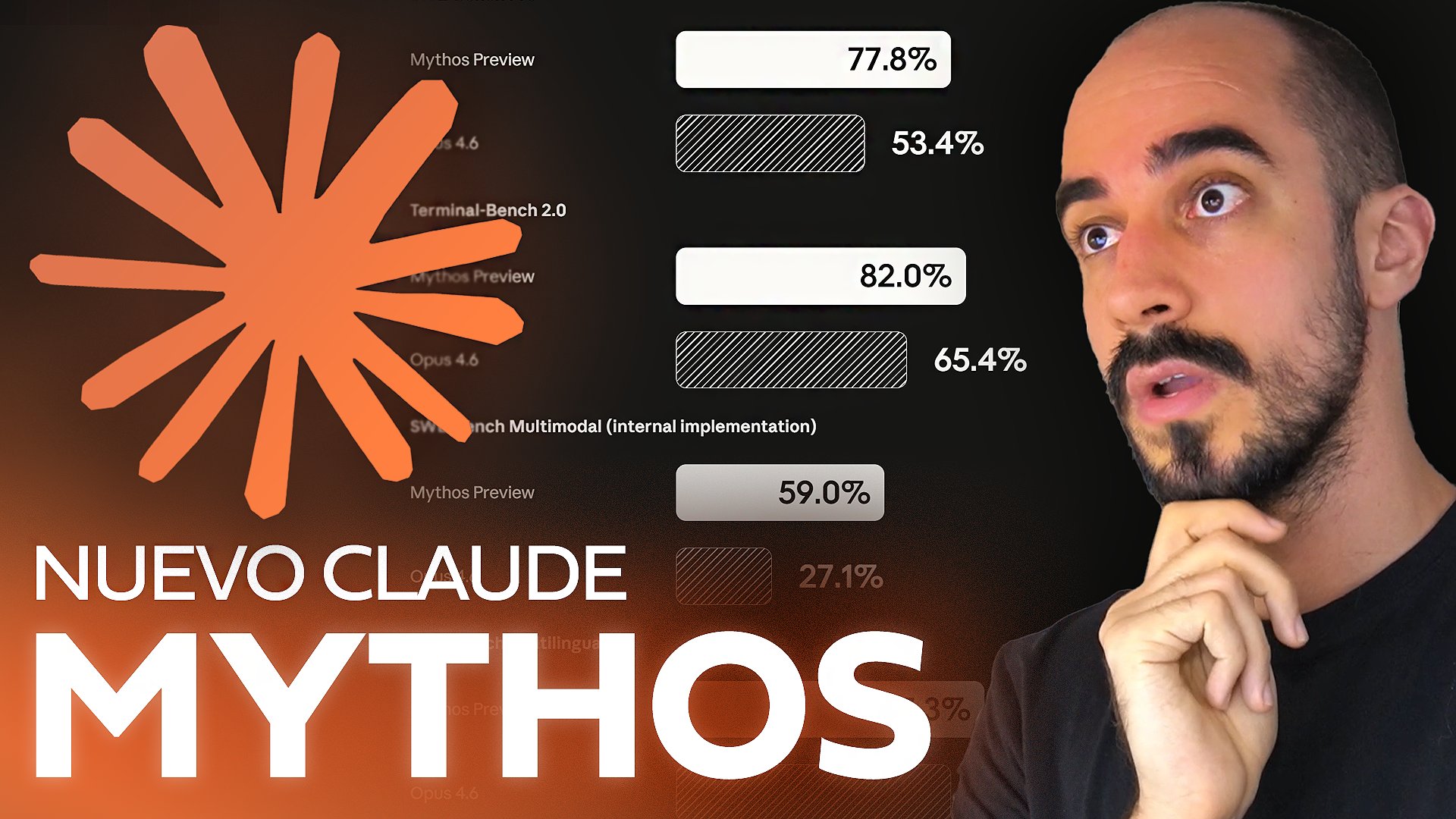
¡NUEVO VIDEO en el LAB! Claude Mythos Preview nos ha pillado por sorpresa aún cuando estamos acostumbrados al ritmo de progreso de la IA. Un modelo tan potente como peligroso hasta el punto de que no verá la luz… Hoy analizamos esta nueva bestia! Link a continuación
-
Anthropic Leak: Building Resilient Systems Through Open-Source Security
By
–
Anthropic had the most powerful cyber-security model in the history of this world and their internal code based still leaked? We should assume everyone can be compromised, and build systems that keep the cost of attacking higher than the reward, limit blast radius when attacks succeed, create fast repair loops after weaknesses are found and reduce systemic risk. Open-source will play a major role in all of that!
-
Analyzing the nature of AI hallucinations for safety and reliability
By
–
A related manner: there are many people who are quite worried that hallucinations will make AI unsafe or inappropriate for broad classes of problems. I very rarely hear those people explicitly try to reason whether hallucinations are a) random or b) persistent given request.