AI Dynamics

Global AI News Aggregator

About

RESEARCH

  • Sebastian Raschka’s LLM Architecture Gallery: Essential Reference for AI
    Sebastian Raschka’s LLM Architecture Gallery: Essential Reference for AI

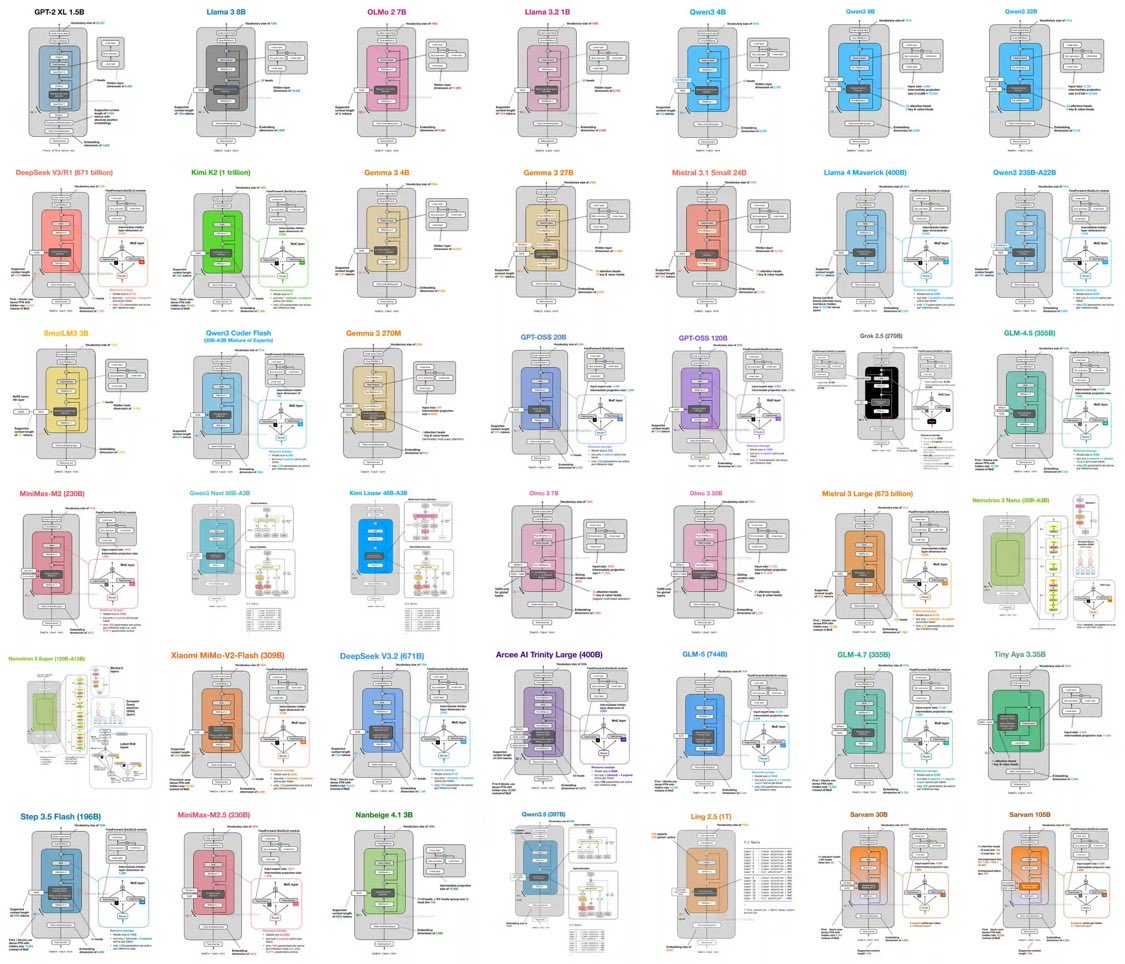
    Sebastian Raschka is one of the most respected voices in ML/AI education. And he just shipped something quietly brilliant. 👉 An LLM Architecture Gallery — a single, browsable reference that maps the internal design of modern open-weight models. This isn’t a blog post. This is a research-grade artifact, made freely accessible. 🔍 What’s inside? A structured breakdown of architectures across the frontier: 🔹 GPT-2 XL (1.5B) 🔹 Llama 3 / 3.2 / 4 Maverick 🔹 Qwen family (4B → 997B) 🔹 DeepSeek V3 / R1 (671B) 🔹 Gemma 3, Mistral variants, Grok 2.5 🔹 GLM series, MiniMax, Kimi, Nemotron 🔹 …and many more scaling up to trillion-parameter regimes 🧠 What makes this exceptional? For each model, you get: → Original technical reports → Verified config.json files (no guesswork) → From-scratch implementations where available This is not curated hype — it’s verifiable, inspectable engineering detail. ⚙️ The real differentiator He doesn’t stop at diagrams. He layers in concept explainers so you actually understand what you’re seeing: • GQA (Grouped Query Attention) • MLA (Multi-head Latent Attention) • SWA (Sliding Window Attention) • QK-Norm • NoPE (No Positional Encoding) • Gated DeltaNet This turns the gallery into a learning system, not just a reference. 🏗️ Why this matters We’ve moved from: → isolated model papers to: → an ecosystem of architectural patterns This resource makes that evolution legible. It compresses what used to take: 📚 multiple textbooks 📄 dozens of papers ⏳ countless hours of reverse engineering …into a single navigable interface. 💡 Bottom line If you're: • building LLM systems • researching architectures • or trying to understand where this field is heading 👉 This is a must-bookmark resource. 🔗 Follow my communities and personal initiatives: • Amazing AI, Data, Quantum Computing & Emerging Technologies — drdebashisdutta.com/ • Research & Innovation – Quantum, AI & Advanced Systems — researchedge.org/ #AI #LLM #MachineLearning #DeepLearning #AIResearch #GenAI #ArtificialIntelligenc

    → View original post on X — @debashis_dutta, 2026-03-29 16:02 UTC
  • Google’s TimesFM: Foundation Model Revolutionizing Time Series Forecasting
    Google’s TimesFM: Foundation Model Revolutionizing Time Series Forecasting

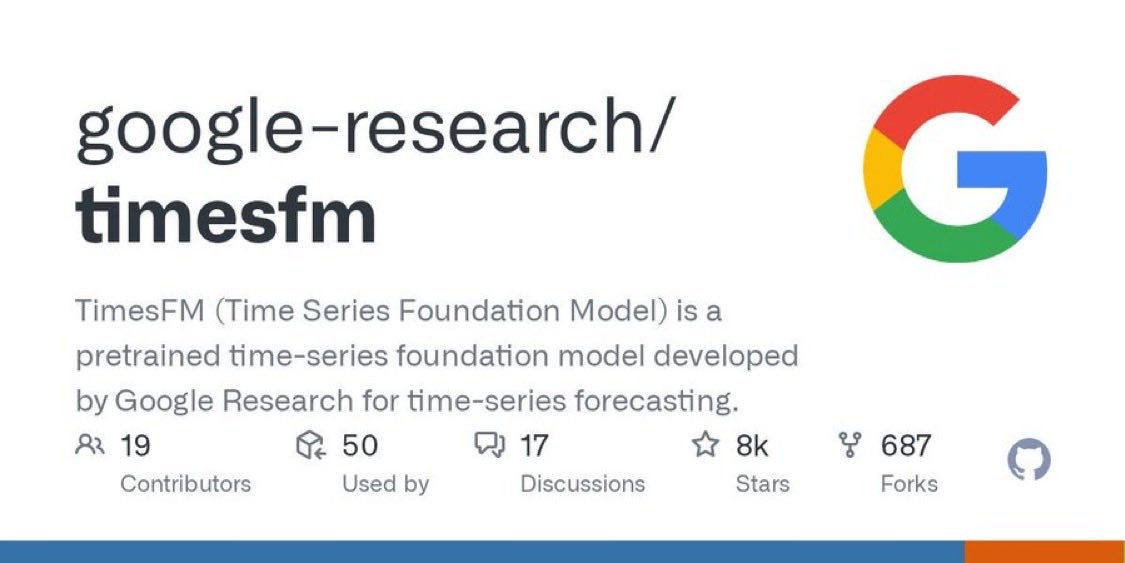
    🚀 Google just open-sourced a Time Series Foundation Model — and this changes forecasting as we know it. Meet TimesFM. Unlike traditional time-series models that require: • dataset-specific training • feature engineering • constant retraining 👉 TimesFM works out of the box — with any time-series data. No fine-tuning. No custom pipelines. Just plug and forecast. 🔍 What makes this a breakthrough? 🧠 Foundation model for time series Trained on 100B real-world time-points across: • traffic patterns • weather systems • demand forecasting ⚡ Zero-shot forecasting Generalizes across domains without retraining. 📈 Production-ready from day one Eliminates the heavy overhead of building bespoke models per dataset. 🏗️ Architecture Takeaways • Shift from model-per-dataset → generalized forecasting models • Pretraining at scale enables cross-domain pattern learning • Signals a move toward “forecasting as a service” abstraction layer • Reduces dependency on feature engineering pipelines 💡 Why this matters We’re witnessing the “GPT moment” for time series. The implication is massive: → Faster deployment cycles → Lower ML engineering cost → Democratized forecasting capabilities This could fundamentally reshape industries like: • supply chain • finance • energy • climate analytics 🔗 Explore the repo: github.com/google-research The big question now: 👉 Will domain-specific models survive… or will foundation models dominate forecasting too? 🔗 Follow my communities and personal initiatives: • Amazing AI, Data, Quantum Computing & Emerging Technologies — drdebashisdutta.com/ • Research & Innovation – Quantum, AI & Advanced Systems — researchedge.org/ #AI #MachineLearning #TimeSeries #GenerativeAI #DataScience #Forecasting #Innovation:

    → View original post on X — @debashis_dutta, 2026-03-29 15:54 UTC

  • Code Quality Concerns: Is It Real Implementation or Just Links?

    Have a look at the code, my bet that is has no real code and just a link to Wikipedia or something

    → View original post on X — @petergostev

  • SWE-Vision: Teaching AI to Code Visual Intelligence
    SWE-Vision: Teaching AI to Code Visual Intelligence

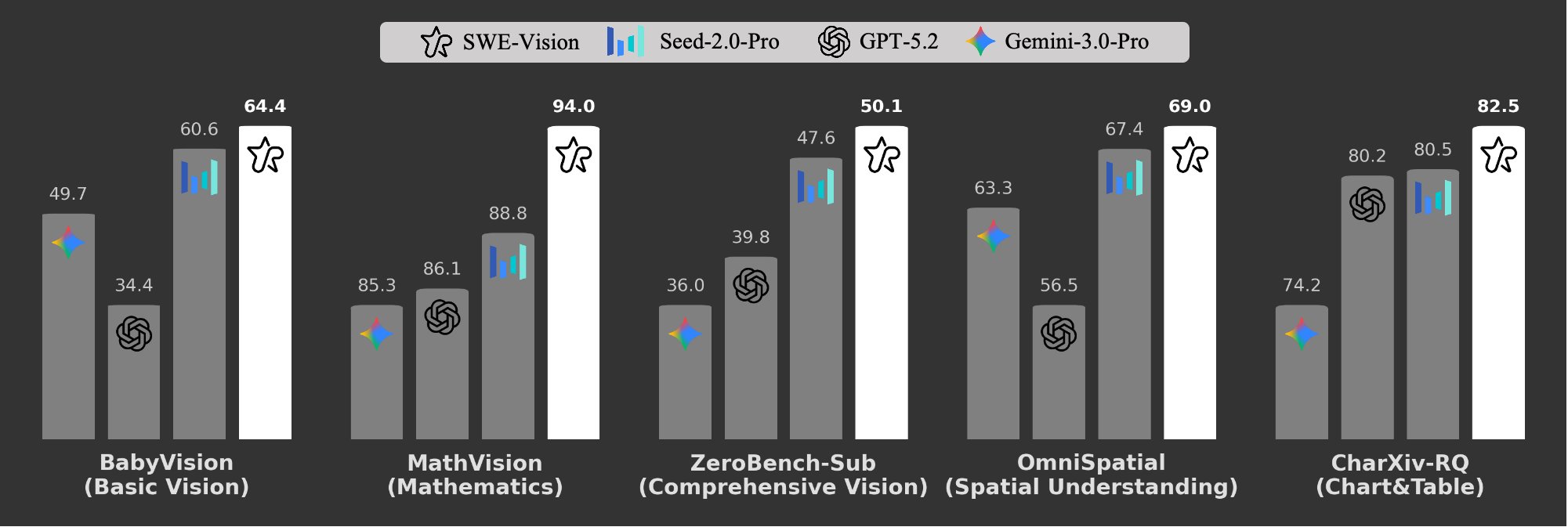
    Can we unlock unprecedented visual intelligence in AI by teaching it to code what it sees? Researchers from UniPat AI and Michigan State University introduce SWE-Vision. This innovative agent allows vision-language models to write and execute Python code, using libraries like

    → View original post on X — @jiqizhixin

  • Artificial Biological Intelligence: Genome Writing and Species Future
    Artificial Biological Intelligence: Genome Writing and Species Future

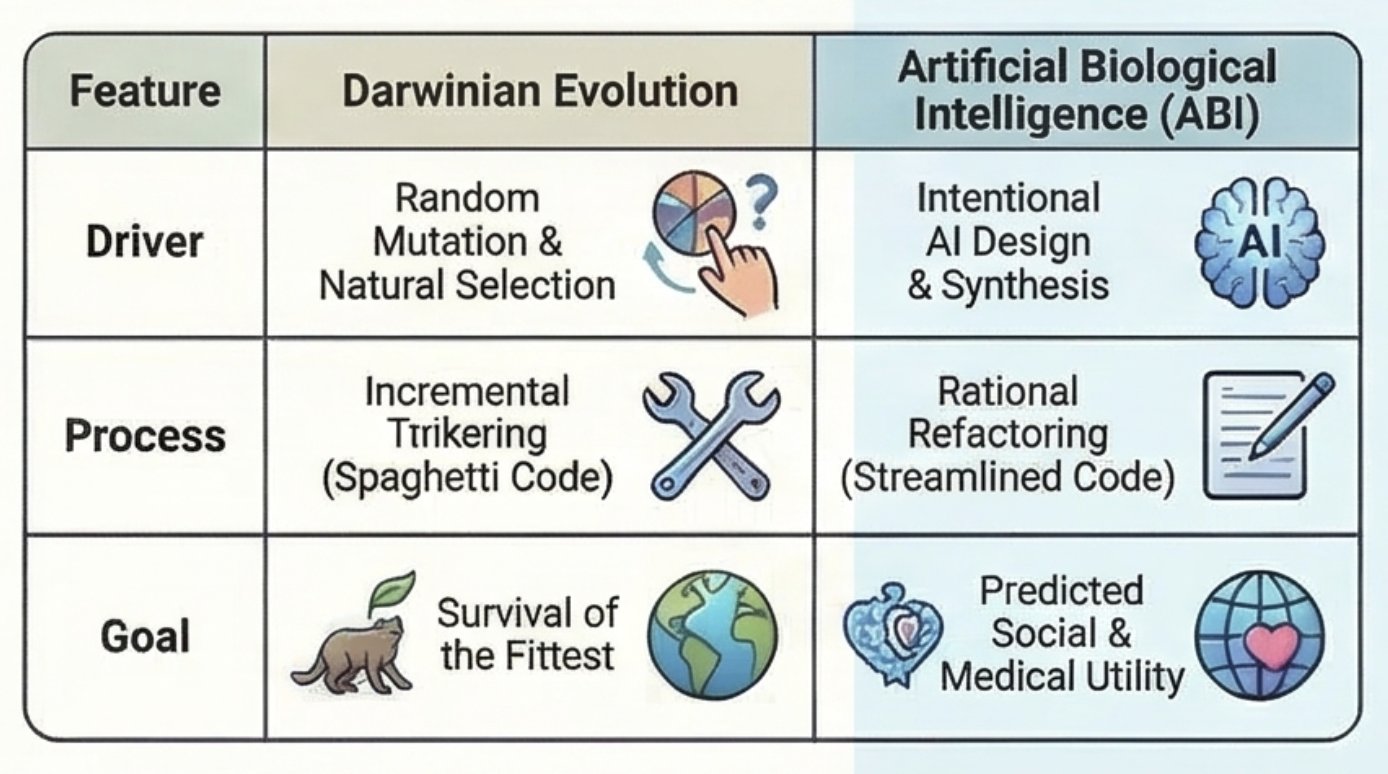
    Artificial Biological Intelligence (ABI) In a post-Darwinian era of being able to write genomes, the implications—both for good and harm—are profound. In conversation with @AdrianWoolfson on his new book On the Future of Species https://
    erictopol.substack.com/p/on-the-futur
    e-of-species

    → View original post on X — @erictopol

  • Reasoning Models: Why Listed Prices Don’t Match Actual Costs
    Reasoning Models: Why Listed Prices Don’t Match Actual Costs

    // When Cheaper Reasoning Models End Up Costing More // The model you think is cheaper might actually cost you more. New research quantifies exactly how misleading listed API prices are. Across 8 frontier reasoning models and 9 tasks, 21.8% of model-pair comparisons exhibit pricing reversal, where the cheaper-listed model costs more in practice. The magnitude reaches up to 28x. Gemini 3 Flash is listed 78% cheaper than GPT-5.2, yet its actual cost is 22% higher. Claude Opus 4.6 is listed at 2x Gemini 3.1 Pro but actually costs 35% less. The root cause: thinking token heterogeneity. On the same query, one model may use 900% more thinking tokens. Why does it matter? Anyone choosing reasoning models for production needs to benchmark actual costs, not listed prices. Removing thinking token costs reduces ranking reversals by 70%. The authors release code and data for per-task cost auditing. Paper: arxiv.org/abs/2603.23971 Learn to build effective AI agents in our academy: academy.dair.ai/

    → View original post on X — @dair_ai, 2026-03-29 15:07 UTC

  • Training AI on Your Own Data Isn’t Generative AI

    If you think training AI (or even a process very similar to AI training) on YOUR OWN DATA is a problem – you have lost the plot my friends. This is the furthest thing from generative ai and the criticisms around it.

    → View original post on X — @bilawalsidhu

  • OpenResearcher: An Open-Source Offline-Trained Research Agent

    You can now train a deep research agent without a single API call. OpenResearcher is a new open-source repo that's trained entirely offline. A 10-billion-token corpus generates 100+ turn research trajectories. All offline. Zero API costs. It learns three browsing actions

    → View original post on X — @alphasignalai

  • Knuth’s Hamiltonian Decomposition Problem Solved Using AI
    Knuth’s Hamiltonian Decomposition Problem Solved Using AI

    Legendary Don Knuth has now used AI to fully solve his Hamiltonian decomposition problem for odd and even cases. Opus 4.6 / 5.4 Pro solved the even case, wrote a proof in Lean and a “apparently flawless 14 page paper” Knuth: “We are living in very interesting times indeed.”

    → View original post on X — @debashis_dutta, 2026-03-29 15:00 UTC

  • ARC-AGI-3: New Benchmark Resets AI Scoreboard to Near Zero
    ARC-AGI-3: New Benchmark Resets AI Scoreboard to Near Zero

    Humans: 100% Gemini 3.1 Pro: 0.37% GPT 5.4: 0.26% Opus 4.6: 0.25% Grok-4.20: 0.00% François Chollet just released ARC-AGI-3 — the hardest AI test ever created. 135 novel game environments. No instructions. No rules. No goals given. Figure it out or fail. Untrained humans solved every single one. Every frontier AI model scored below 1%. Each environment was handcrafted by game designers. The AI gets dropped in and has to explore, discover what winning looks like, and adapt in real time. The scoring punishes brute force. If a human needs 10 actions and the AI needs 100, the AI doesn't get 10%. It gets 1%. You can't throw more compute at this. For context: ARC-AGI-1 is basically solved. Gemini scores 98% on it. ARC-AGI-2 went from 3% to 77% in under a year. Labs spent millions training on earlier versions. ARC-AGI-3 resets the entire scoreboard to near zero. The benchmark launched live at Y Combinator with a fireside between Chollet and Sam Altman. $2M in prizes on Kaggle. All winning solutions must be open-sourced. Scaling alone will not close this gap. We are nowhere near AGI. (Link in the comments)

    → View original post on X — @ken_goldberg, 2026-03-29 14:46 UTC