AI Dynamics

Global AI News Aggregator

About

RESEARCH

  • Knowledge Base System with Interactive Tools for Podcast Research

    Same, I have a similar setup. A mix of Obsidian, Cursor (for md), and vibe-coded web terminals as front-end. Since I do a podcast, the number/diversity of research interests is very large. But the knowledge-base approach has been working great. For answers, I often have it generate dynamic html (with js) that allows me to sort/filter data and to tinker with visualizations interactively. Another useful thing is I have the system generate a temporary focused mini-knowledge-base for a particular topic that I then load into an LLM for voice-mode interaction on a long 7-10 mile run. So it becomes an interactive podcast while I run, where I ask it questions and listen to the answers to learn more. Anyway, heading out for a run now, thanks for the write-up 👊

    → View original post on X — @lexfridman, 2026-04-02 23:06 UTC

  • Point Tracks Enable Long-Range Animal Motion Forecasting in World Models

    Rapid progress in world model space. This paper uses point tracks as representation, enabling long range forecasting of animal motion. Led by my PhD student @neerjathakkar from her GDM internship. Neerja Thakkar (@neerjathakkar) What’s the right representation for a world model? 3D, pixels, or something else? Excited to release our new paper “Forecasting Motion in the Wild” where we propose point tracks as tokens for generating complex non-rigid motion and behavior From @GoogleDeepmind @Berkeley_AI @TTIC_Connect — https://nitter.net/neerjathakkar/status/2039701926980260205#m

    → View original post on X — @berkeley_ai, 2026-04-02 22:00 UTC

  • AI Set to Disrupt All Media: A Major Inflection Point
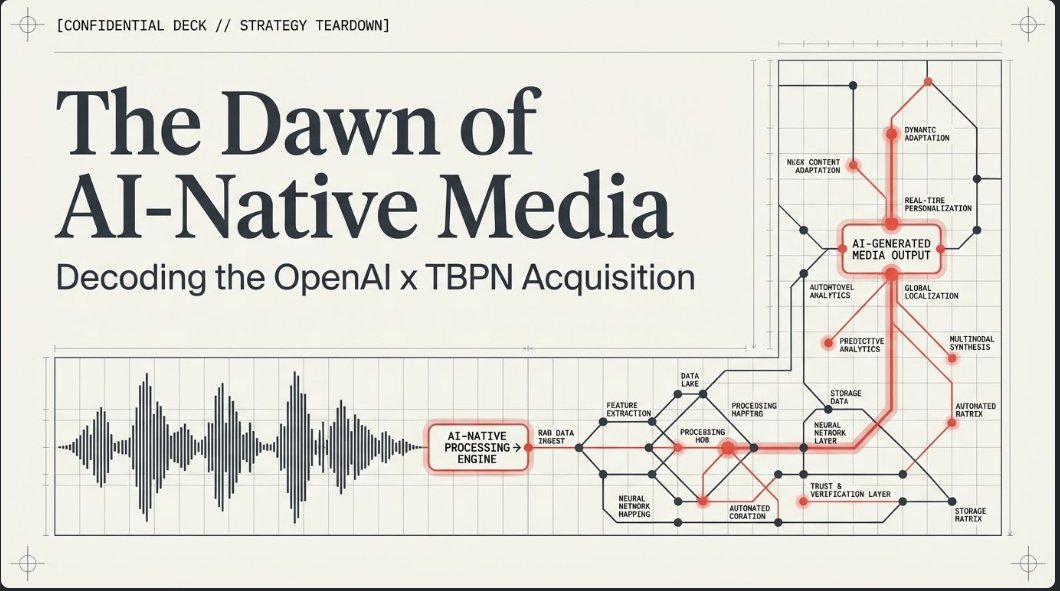
    AI Set to Disrupt All Media: A Major Inflection Point

    Yes, and it is an inflection point in something bigger. AI is about to disrupt all of media:

    → View original post on X — @scobleizer

  • Best Way to Follow AI Community News and Updates

    The best way to follow the AI community here on X: https://
    alignednews.com/ai Reads EVERYONE here in AI, including you, and picks the best stuff (events, papers, news, products, tips, models, and more).

    → View original post on X — @scobleizer

  • Google Gemma 4 Release Cancels Evening Plans
    Google Gemma 4 Release Cancels Evening Plans

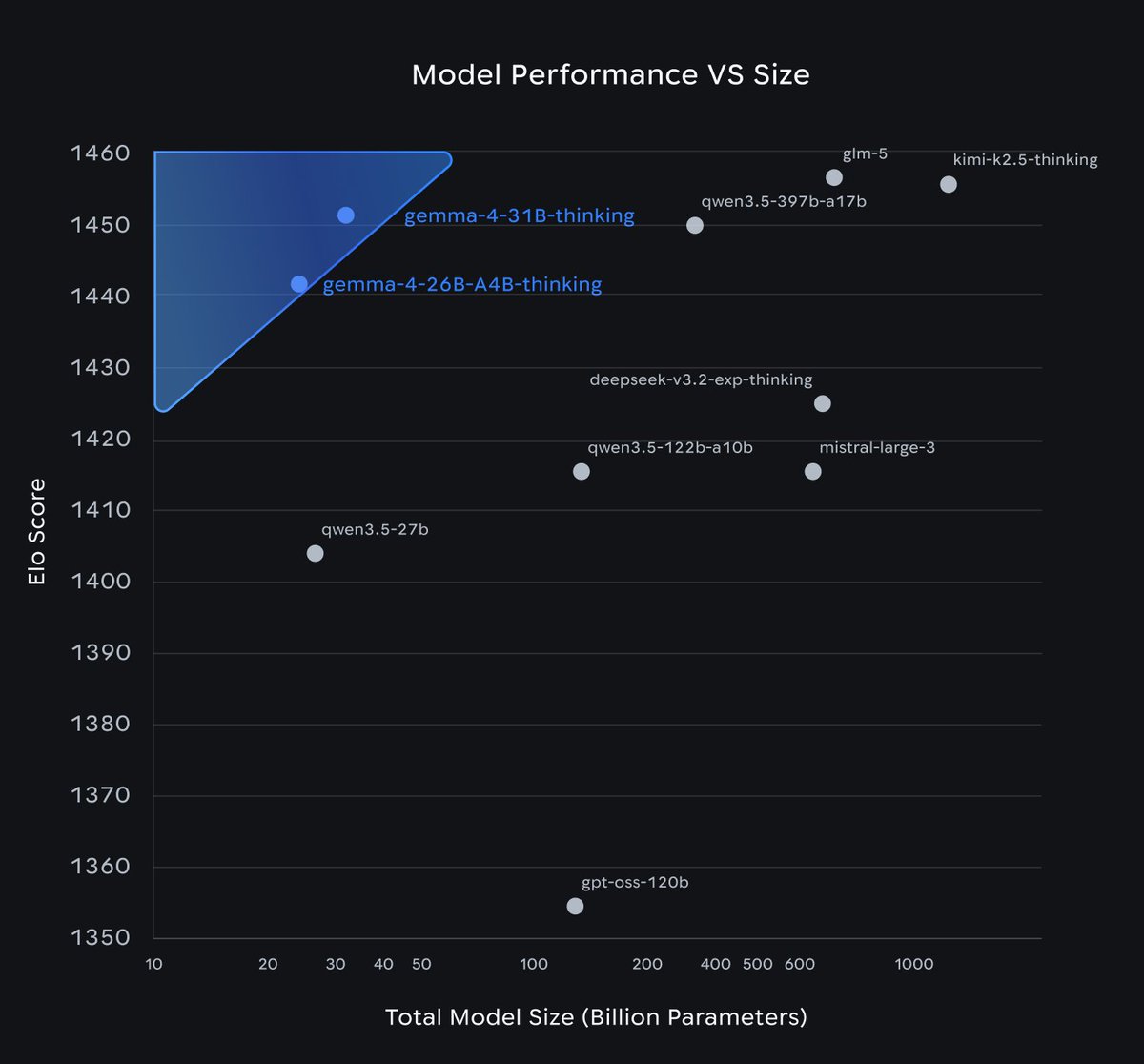
    Ok there goes my plans for this evening. Google Gemma (@googlegemma) Meet Gemma 4! Purpose-built for advanced reasoning and agentic workflows on the hardware you own, and released under an Apache 2.0 license. We listened to invaluable community feedback in developing these models. Here is what makes Gemma 4 our most capable open models yet: 👇 — https://nitter.net/googlegemma/status/2039736504822763534#m

    → View original post on X — @bobgourley, 2026-04-02 21:42 UTC

  • Cloud Role and Advanced AI Models Infrastructure Future

    Cloud still has a role. We'll want real time data about the world (like is your favorite restaurant open right now) and the high end will want the best possible models to do advanced stuff (coding, simulations, etc). But NVIDIA was running its very advanced world model-based

    → View original post on X — @scobleizer

  • AI-Powered Mine Countermeasures Strategic Importance Examined

    Mine countermeasures are having a moment. A sharp new Proceedings piece examines the strategic importance of MCM capability, and why it matters now. AI is part of the answer. New article: https://
    hubs.ly/Q049vrjZ0 Learn more our work with the USN:

    → View original post on X — @dominodatalab

  • LLMs Excel at Curating and Searching Knowledge Bases

    I have also been obsessed with building LLM knowledge bases. Here is one example of the type of things you can do that Karpathy is alluding to: nitter.net/omarsar0/status/203396… LLMs are excellent at curating and searching (finding connections) once data is stored properly. Andrej Karpathy (@karpathy) LLM Knowledge Bases Something I'm finding very useful recently: using LLMs to build personal knowledge bases for various topics of research interest. In this way, a large fraction of my recent token throughput is going less into manipulating code, and more into manipulating knowledge (stored as markdown and images). The latest LLMs are quite good at it. So: Data ingest: I index source documents (articles, papers, repos, datasets, images, etc.) into a raw/ directory, then I use an LLM to incrementally "compile" a wiki, which is just a collection of .md files in a directory structure. The wiki includes summaries of all the data in raw/, backlinks, and then it categorizes data into concepts, writes articles for them, and links them all. To convert web articles into .md files I like to use the Obsidian Web Clipper extension, and then I also use a hotkey to download all the related images to local so that my LLM can easily reference them. IDE: I use Obsidian as the IDE "frontend" where I can view the raw data, the the compiled wiki, and the derived visualizations. Important to note that the LLM writes and maintains all of the data of the wiki, I rarely touch it directly. I've played with a few Obsidian plugins to render and view data in other ways (e.g. Marp for slides). Q&A: Where things get interesting is that once your wiki is big enough (e.g. mine on some recent research is ~100 articles and ~400K words), you can ask your LLM agent all kinds of complex questions against the wiki, and it will go off, research the answers, etc. I thought I had to reach for fancy RAG, but the LLM has been pretty good about auto-maintaining index files and brief summaries of all the documents and it reads all the important related data fairly easily at this ~small scale. Output: Instead of getting answers in text/terminal, I like to have it render markdown files for me, or slide shows (Marp format), or matplotlib images, all of which I then view again in Obsidian. You can imagine many other visual output formats depending on the query. Often, I end up "filing" the outputs back into the wiki to enhance it for further queries. So my own explorations and queries always "add up" in the knowledge base. Linting: I've run some LLM "health checks" over the wiki to e.g. find inconsistent data, impute missing data (with web searchers), find interesting connections for new article candidates, etc., to incrementally clean up the wiki and enhance its overall data integrity. The LLMs are quite good at suggesting further questions to ask and look into. Extra tools: I find myself developing additional tools to process the data, e.g. I vibe coded a small and naive search engine over the wiki, which I both use directly (in a web ui), but more often I want to hand it off to an LLM via CLI as a tool for larger queries. Further explorations: As the repo grows, the natural desire is to also think about synthetic data generation + finetuning to have your LLM "know" the data in its weights instead of just context windows. TLDR: raw data from a given number of sources is collected, then compiled by an LLM into a .md wiki, then operated on by various CLIs by the LLM to do Q&A and to incrementally enhance the wiki, and all of it viewable in Obsidian. You rarely ever write or edit the wiki manually, it's the domain of the LLM. I think there is room here for an incredible new product instead of a hacky collection of scripts. — https://nitter.net/karpathy/status/2039805659525644595#m

    → View original post on X — @dair_ai, 2026-04-02 21:01 UTC
  • Gemini’s susceptibility to prompt injections

    Gemini was the only frontier model that was susceptible to these sorts of prompt injections (Though we tested Gemini 3 & not 3.1)

    → View original post on X — @emollick

  • Levangie Labs Cognitive Architecture Outperforms Andrej’s Model

    I have a cognitive architecture from Levangie Labs that's better than anything Andrej has. It doesn't drift. Watch what it does here:

    → View original post on X — @scobleizer