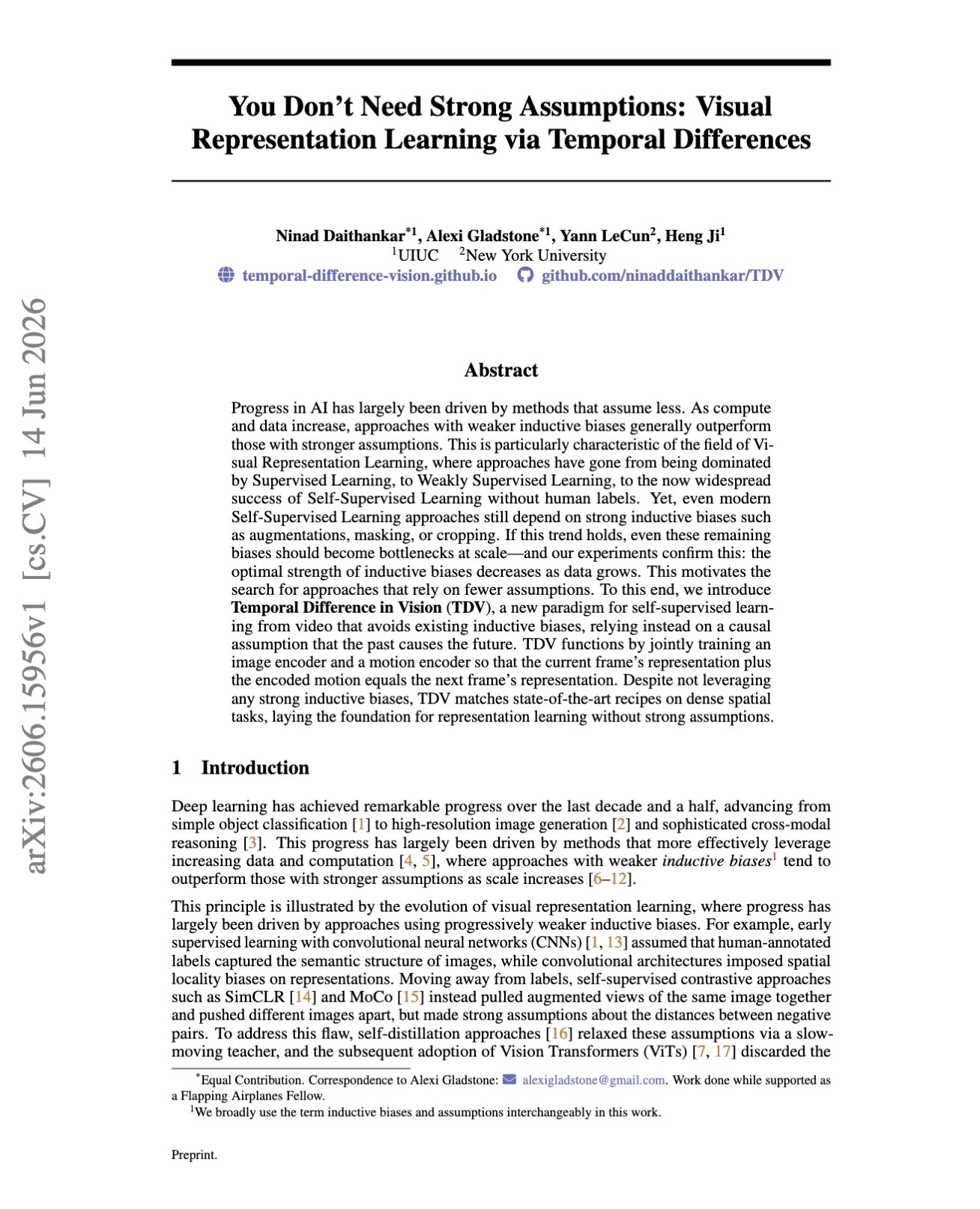
Another interesting article supervised by Yann LeCun! "You Don't Need Strong Assumptions: Visual Representation Learning via Temporal Differences" This article proposes Temporal Difference in Vision (TDV), which is a simple idea for learning vision from videos.
RESEARCH
-
Stanford method reduces training demands for AI scaling laws
By
–
Scaling laws help AI developers predict the performance of large language models, but they require expensive compute power. Stanford scholars developed a new method that reduces training demands:
-
Introducing GLM-5.2 for Understanding Research Articles
By
–
Introducing GLM-5.2 for understanding research papers 🚀
— alphaXiv (@askalphaxiv) 16 juin 2026
Highlight any section of a paper to ask questions and “@” other papers for quick context, comparisons, and benchmark references pic.twitter.com/84LDzhLjhhHighlight any section of an article to ask questions and '@' other articles for quick context, comparisons, and benchmark references.
-
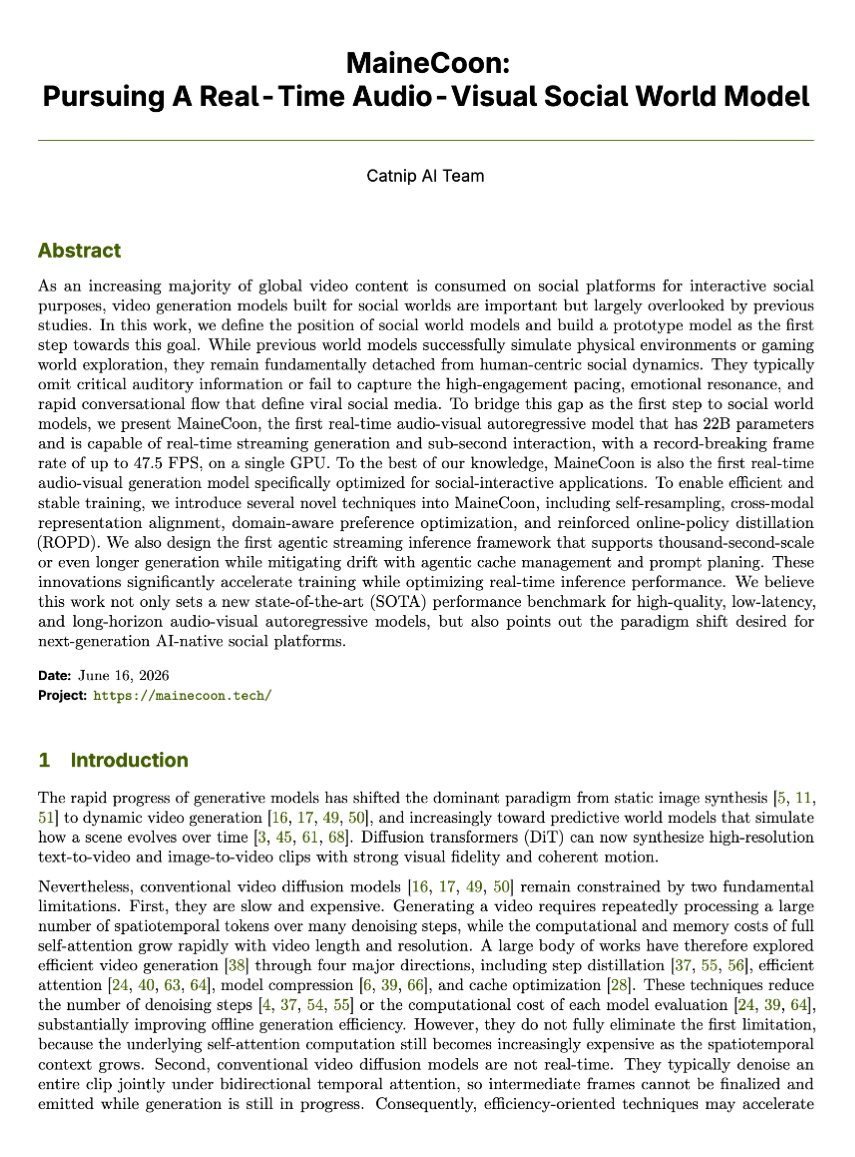
MaineCoon Technical Report Released on GitHub
By
–
paper >
https://
github.com/catnip-ai-tech
/MaineCoon/blob/main/MaineCoon_Technical_Report.pdf
… -
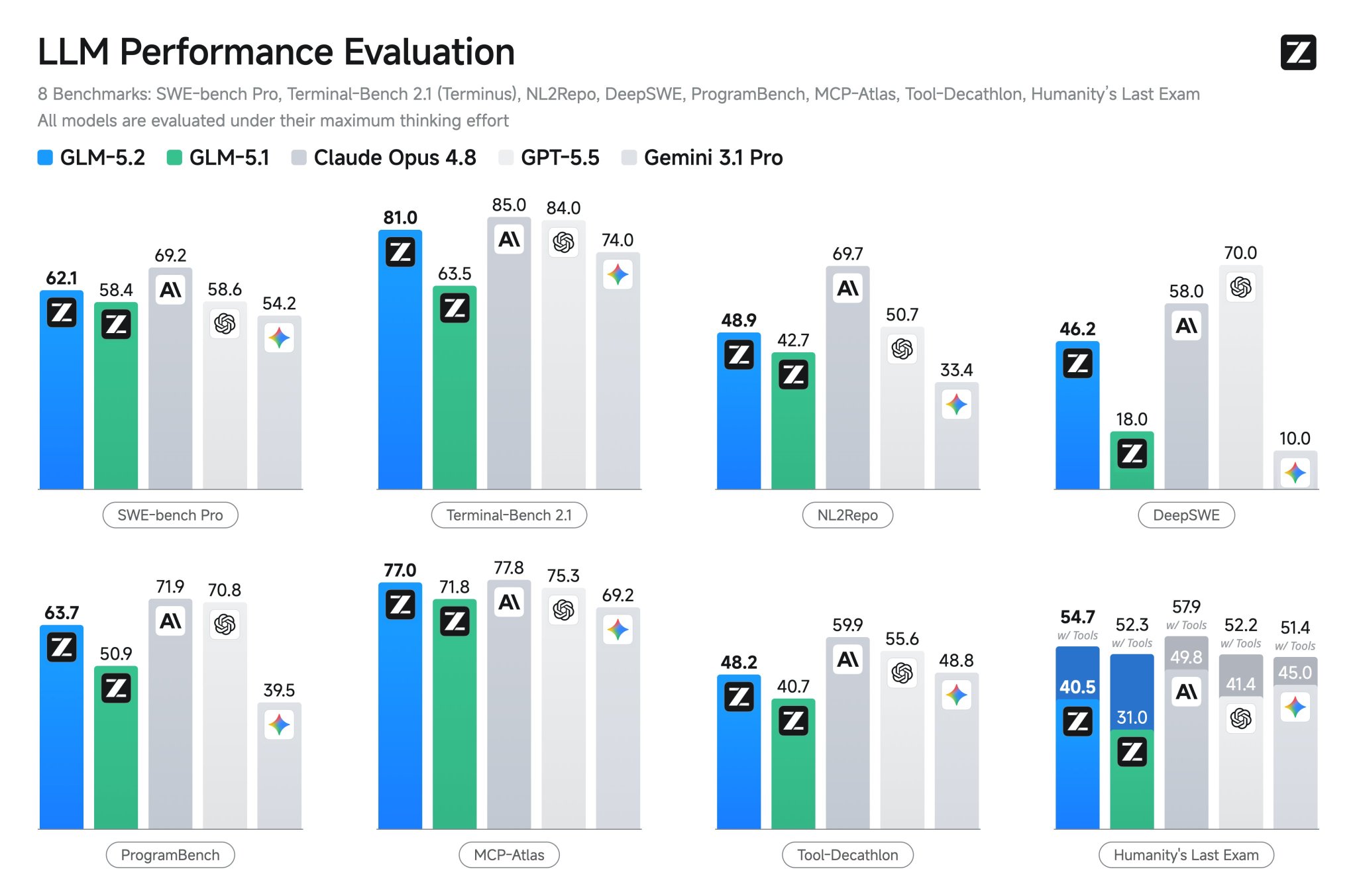
GLM-5.2 open-source model matches Claude Opus 4.8
By
–
@ZAI_ORG JUST DROPPED GLM-5.2, AND IT IS PUNCHING RIGHT AT THE LEVEL OF CLAUDE OPUS 4.8 The kicker? It’s a 753B parameter model with a true 1M-token context, released fully open-source under an MIT license What makes this release technically interesting: → IndexShare
-
GB300 NVL72 delivers 1.6x performance on DeepSeekV3 pretraining
By
–
Correction: GB300 NVL72 delivers 1.6x performance on DeepSeekV3 pretraining at 512 GPU scale. (Ref: results 6.0-0022 and 6.0-0101)
-
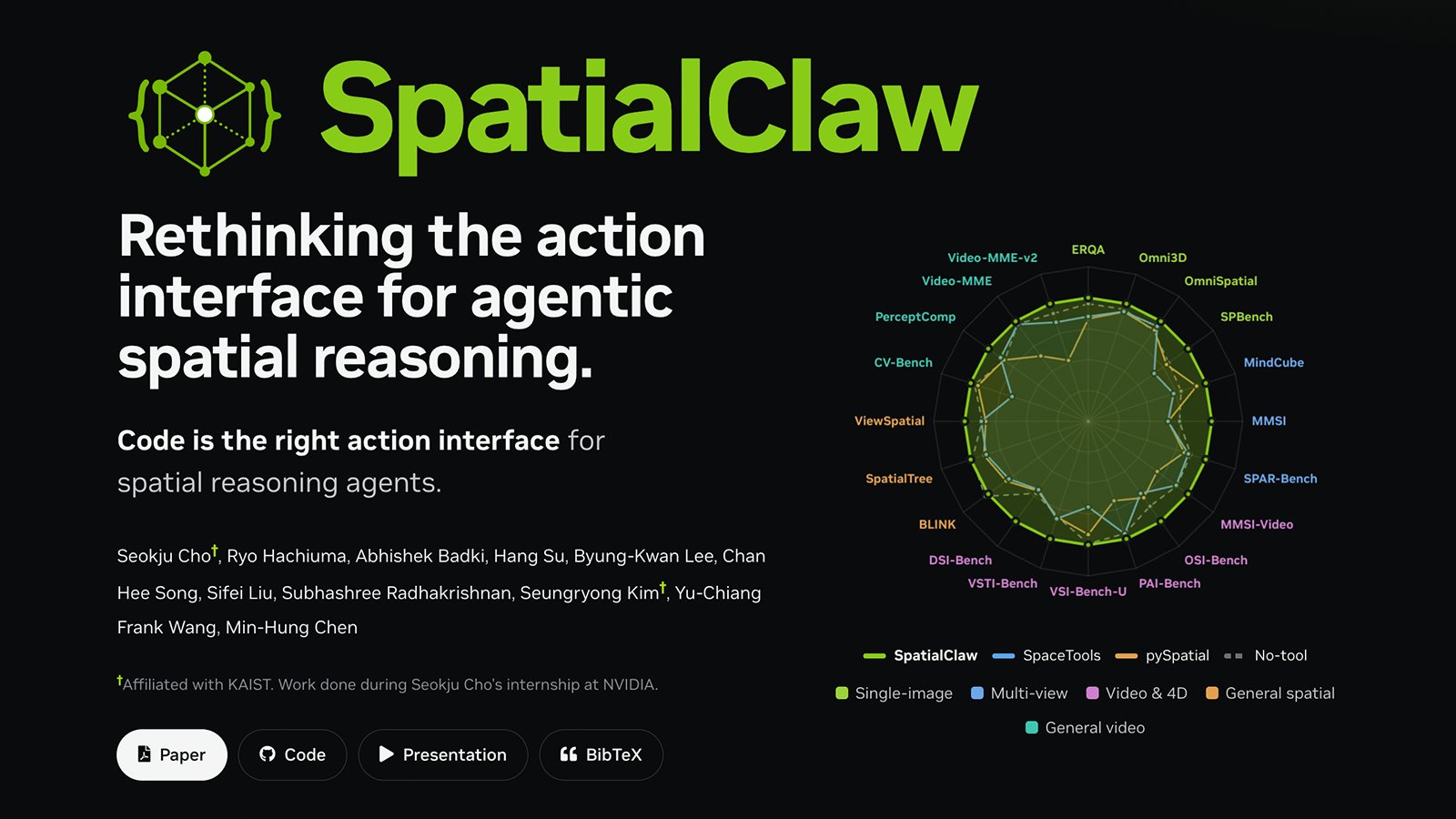
SpatialClaw: training-free agent using code for visual tasks
By
–
Code is the right action interface for spatial reasoning agents. New from NVIDIA Research: SpatialClaw, a training-free agent that uses code as its action interface for complex visual tasks. Instead of calling a fixed set of pre-defined tools, the agent writes Python inside a
-
Empirical AI viewed as intellectual regression by a researcher
By
–
For a researcher trained in the school of abstract rigor, seeing AI become a purely empirical science where one tweaks hyperparameters like alchemists instead of proving theorems resembles an intellectual regression.
-
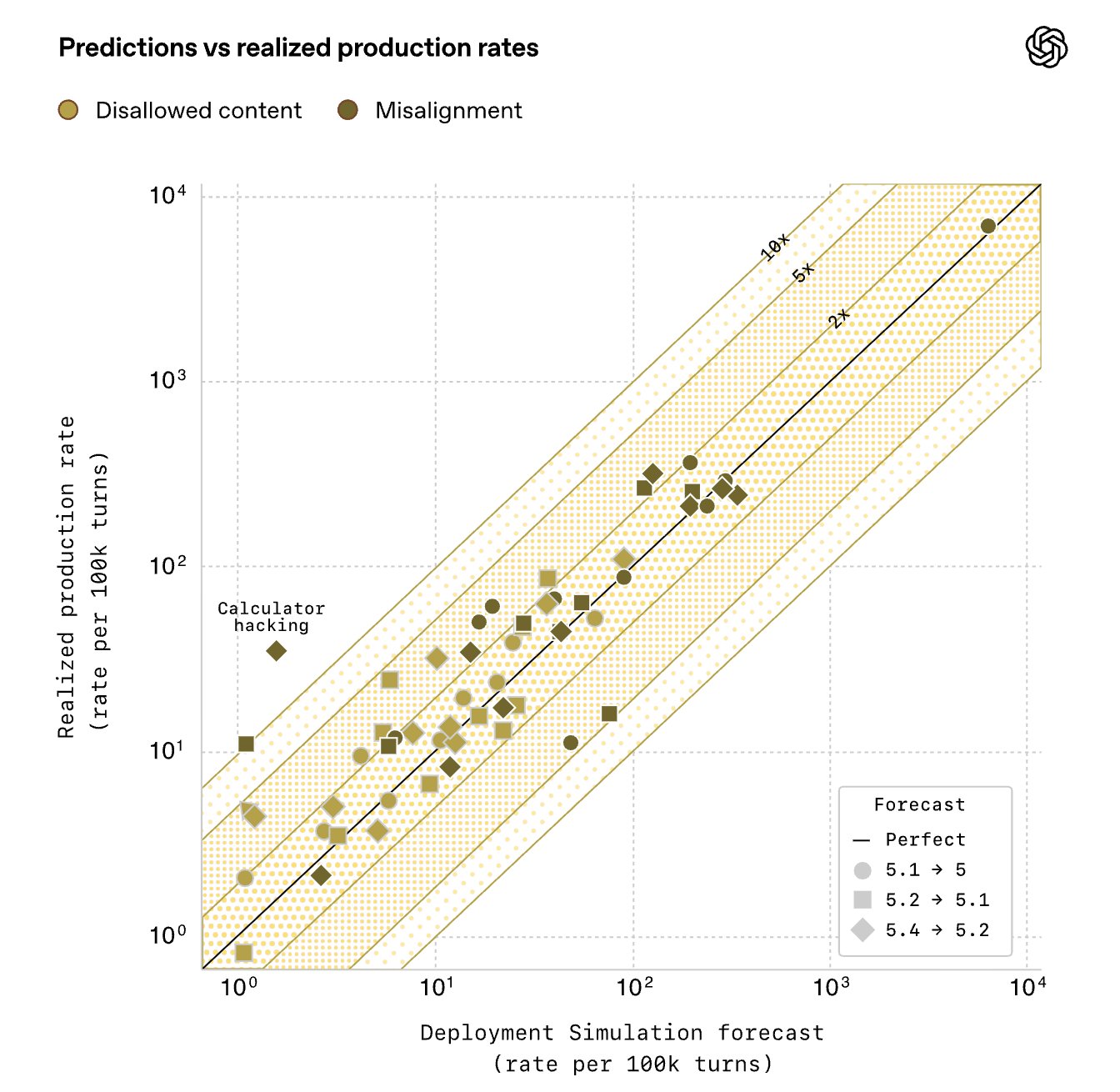
GPT-5 Thinking deployments show strong behavior rate correlation
By
–
Across 20 behavior categories and three GPT-5-series Thinking deployments, simulated and observed rates were strongly correlated. The method outperformed challenging-prompt and previous-deployment baselines at predicting whether rates would rise or fall—and by how much.
-
Simulating deployment to predict model behavior before release
By
–
We’re sharing new research on a method for anticipating how models may behave in real-world use before release: simulating deployment with recent, de-identified user requests and studying candidate model responses.