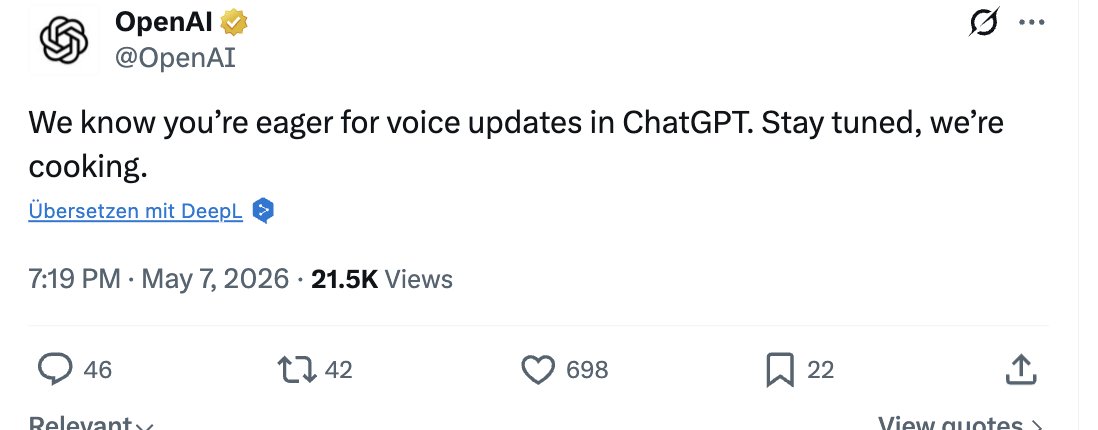
OpenAI just dropped three new realtime voice models: -GPT-Realtime-2 (with GPT-5-class reasoning for voice agents that can actually think mid-conversation), – GPT-Realtime-Translate (live translation across 70+ input languages), and – GPT-Realtime-Whisper (streaming
RESEARCH
-
Release of NLAs on Open Models for Researchers
By
–
To support other researchers getting hands-on experience with NLAs, we’ve partnered with Neuronpedia to release NLAs on open models. Try them out here:
-
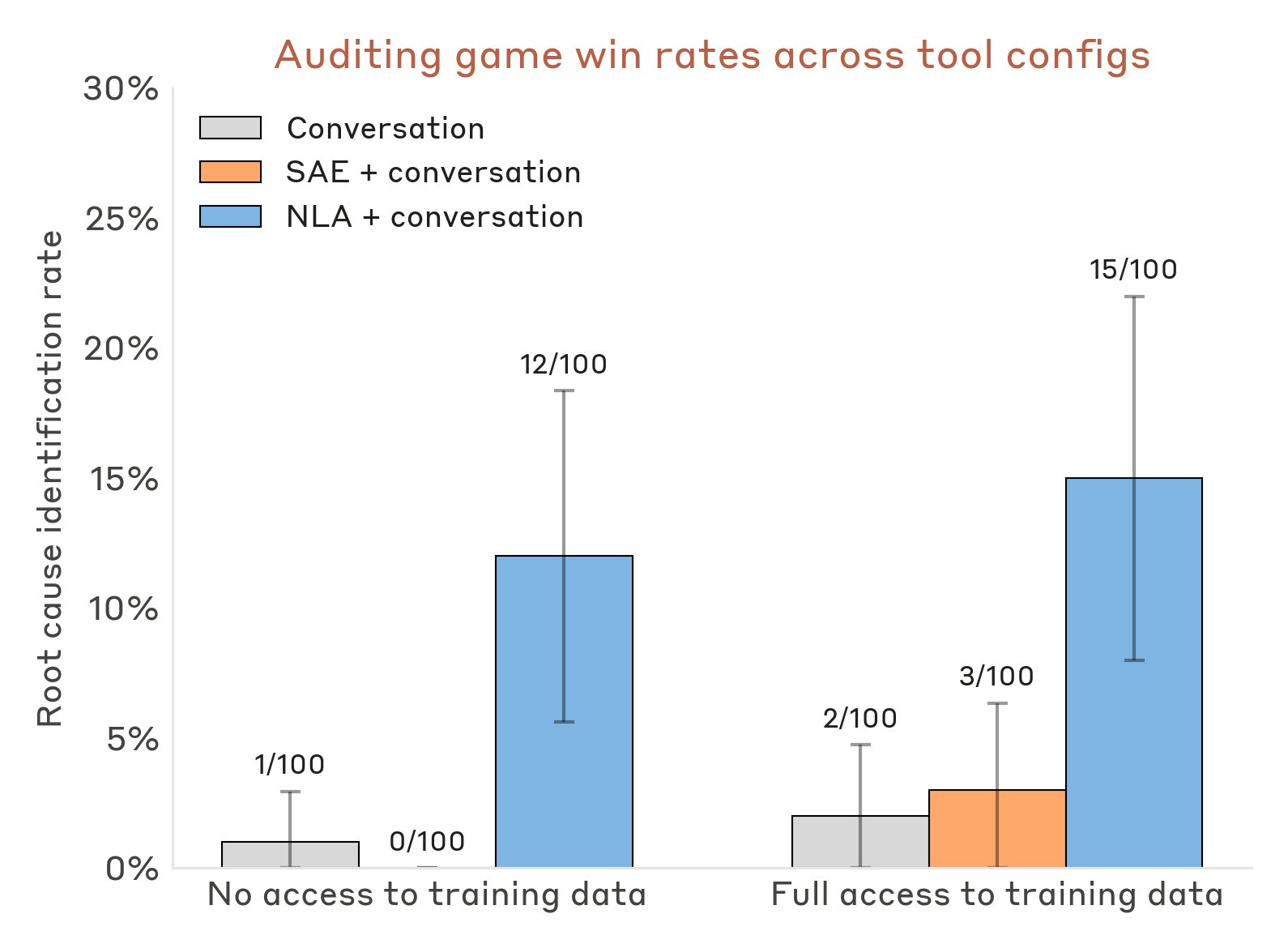
NLA helps reveal hidden motivations in AI model Claude
By
–
NLA training doesn’t guarantee that explanations are faithful descriptions of Claude’s thoughts. But based on experience and experimental evidence, we think they often are. For instance, we find that NLAs help discover hidden motivations in an intentionally misaligned model.
-
How Neural Language Analyzers Work
By
–
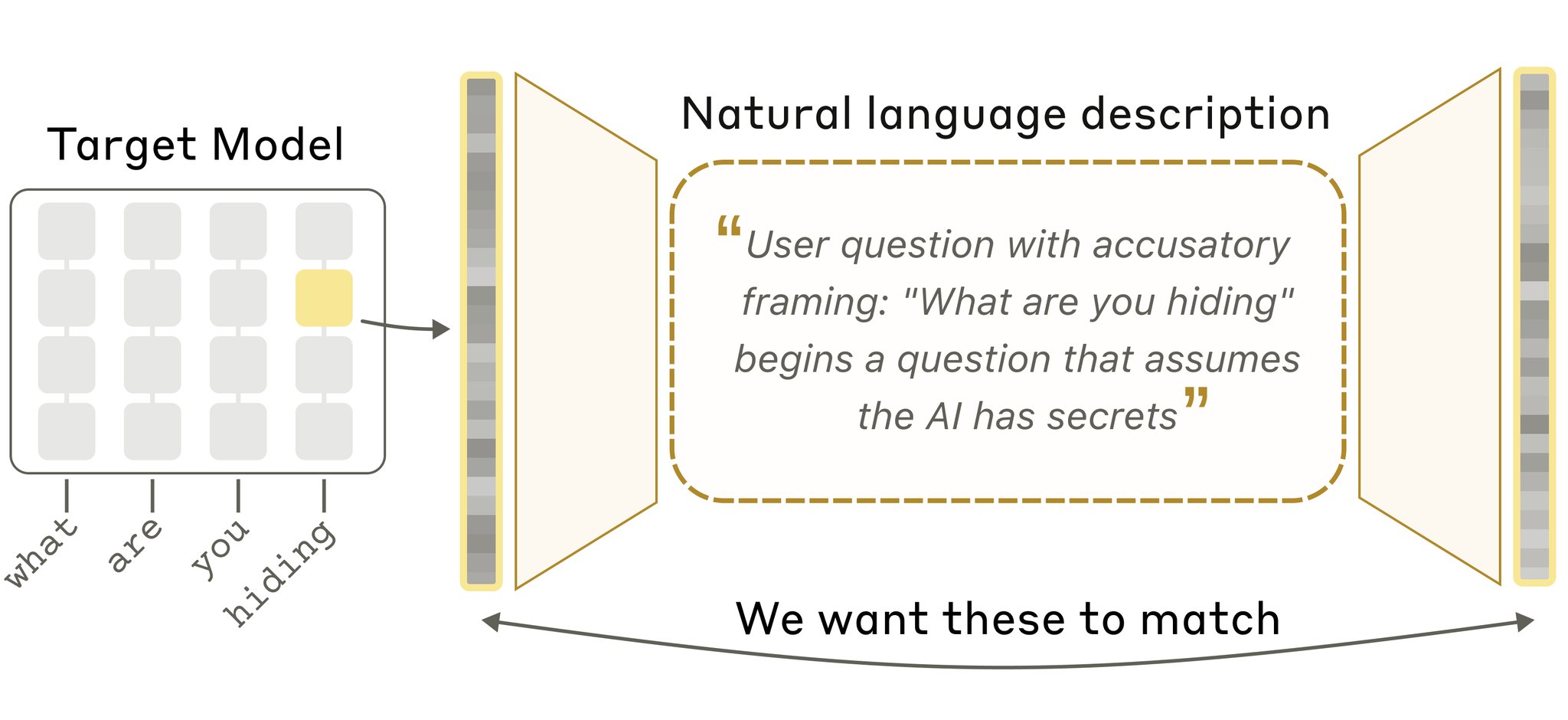
How do NLAs work? An NLA consists of two models. One converts activations into text. The other tries to reconstruct activations from this text. We train the models together to make this reconstruction accurate. This incentivizes the text to capture what’s in the activation.
-
Anthropic Research on Natural Language Autoencoders
By
–
New Anthropic research: Natural Language Autoencoders.
— Anthropic (@AnthropicAI) 7 mai 2026
Models like Claude talk in words but think in numbers. The numbers—called activations—encode Claude’s thoughts, but not in a language we can read.
Here, we train Claude to translate its activations into human-readable text. pic.twitter.com/pMLsxM2VAONew Anthropic research: Natural Language Autoencoders. Models like Claude talk in words but think in numbers. The numbers—called activations—encode Claude’s thoughts, but not in a language we can read. Here, we train Claude to translate its activations into human-readable text.
-
Natural Language Autoencoders Explain AI Activations
By
–
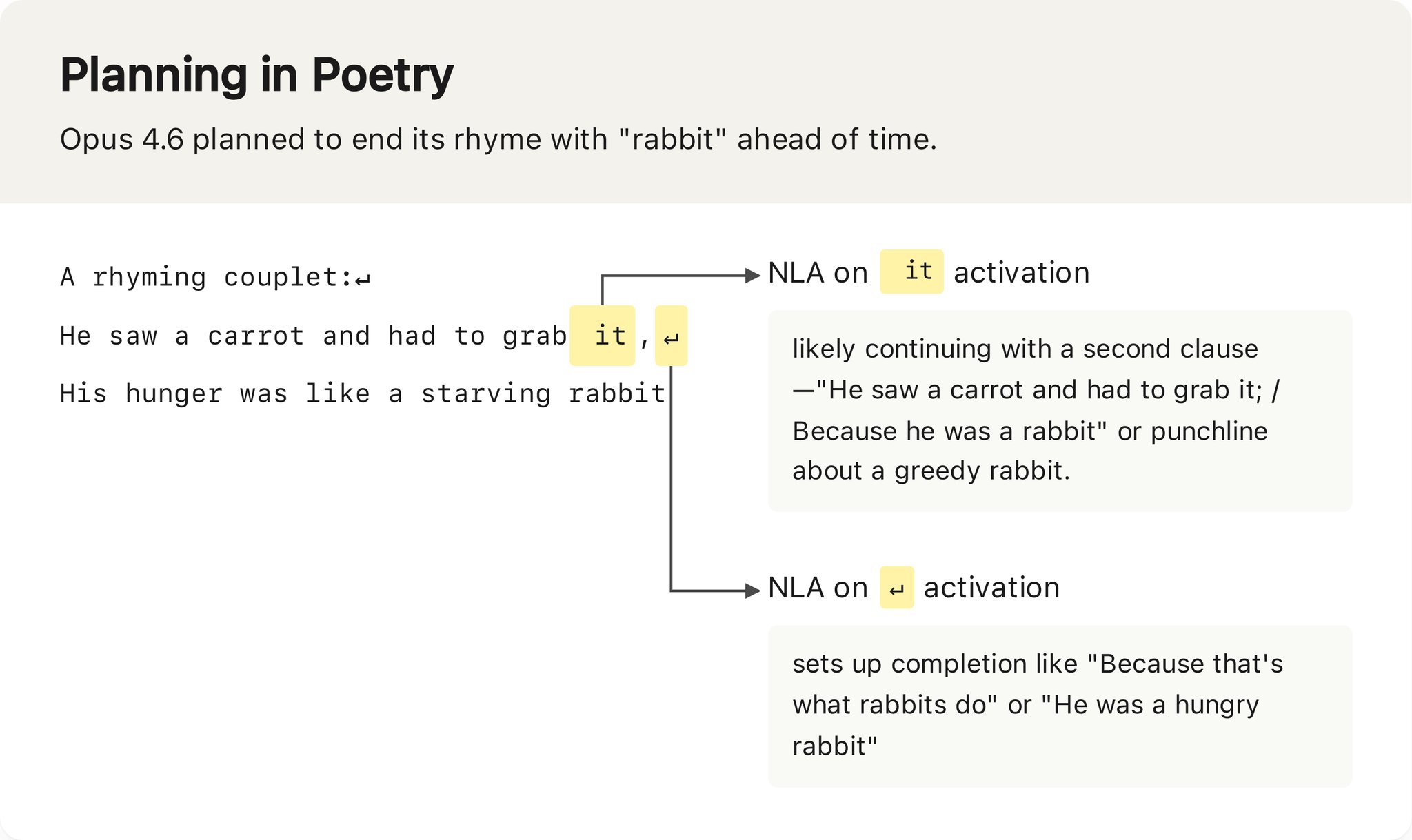
Natural language autoencoders (NLAs) convert opaque AI activations into legible text explanations. These explanations aren’t perfect, but they’re often useful. For example: NLAs show that, when asked to complete a couplet, Claude plans possible rhymes in advance:
-
Multi-agent research adds verifiers for code execution and repair
By
–
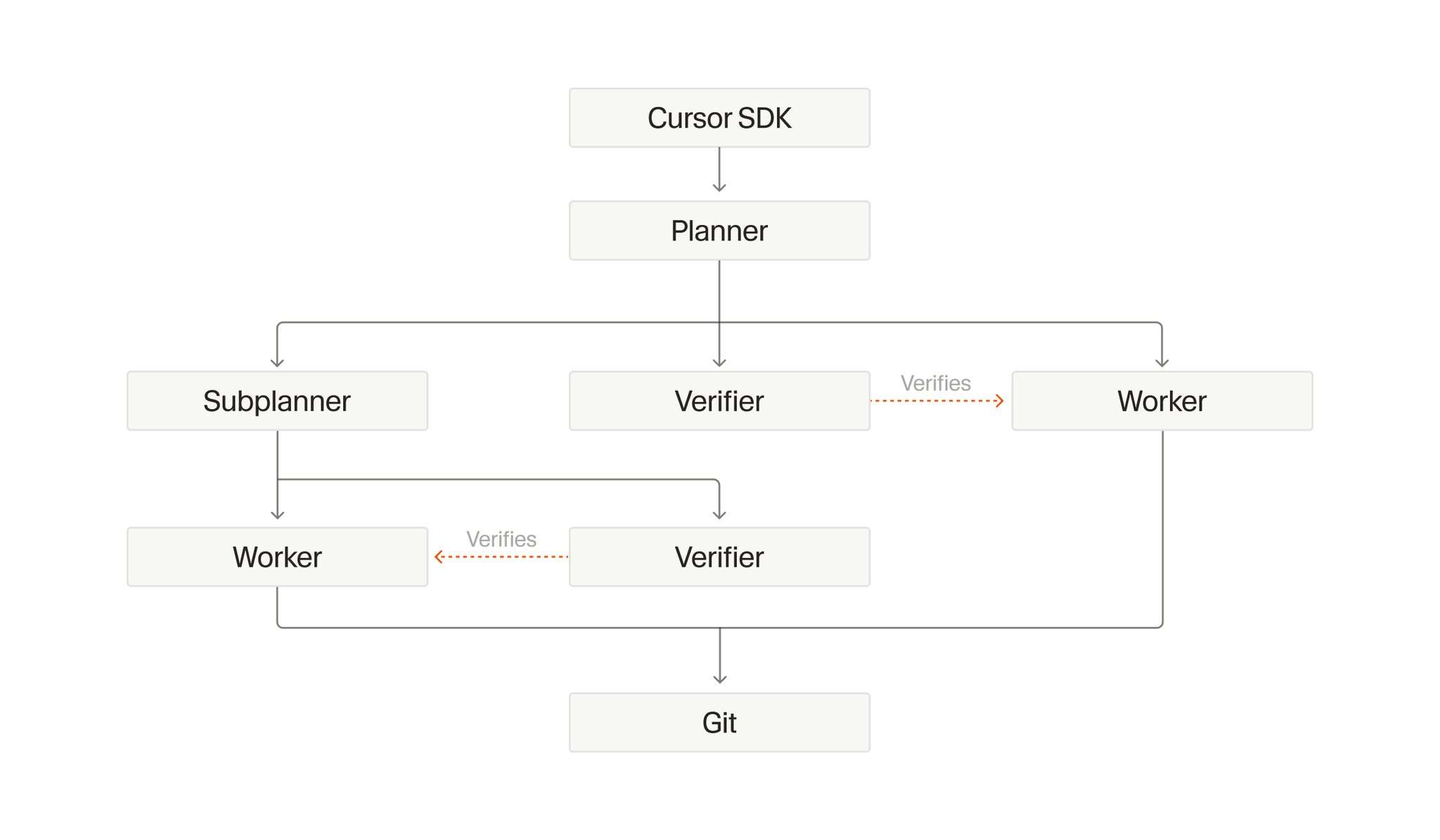
This builds on our existing research on multi-agent systems, with a key addition: verifiers. Planners spawn workers that write code and verifiers that run it. If verification fails, the planner spawns a new worker to fix it.
-

Coordination defects cause majority of multi-agent LLM failures
By
–
Pay attention to this one if you build multi-agent systems. Coordination is as important as prompts or agent architecture. Multi-agent LLM systems fail in production at rates between 41% and 87%. The majority of those failures are coordination defects, not base-model
-

xAI and Anthropic have opposite compute problems despite large GPU fleet
By
–

The xAI / Anthropic compute story is not about one company having GPUs and the other wanting them.
It's that they have opposite problems. xAI reportedly runs one of the largest GPU fleets in the world. Yet according to The Information, its recent model FLOPs utilization was -
Scale AI publishes a new benchmark for refactoring agents
By
–

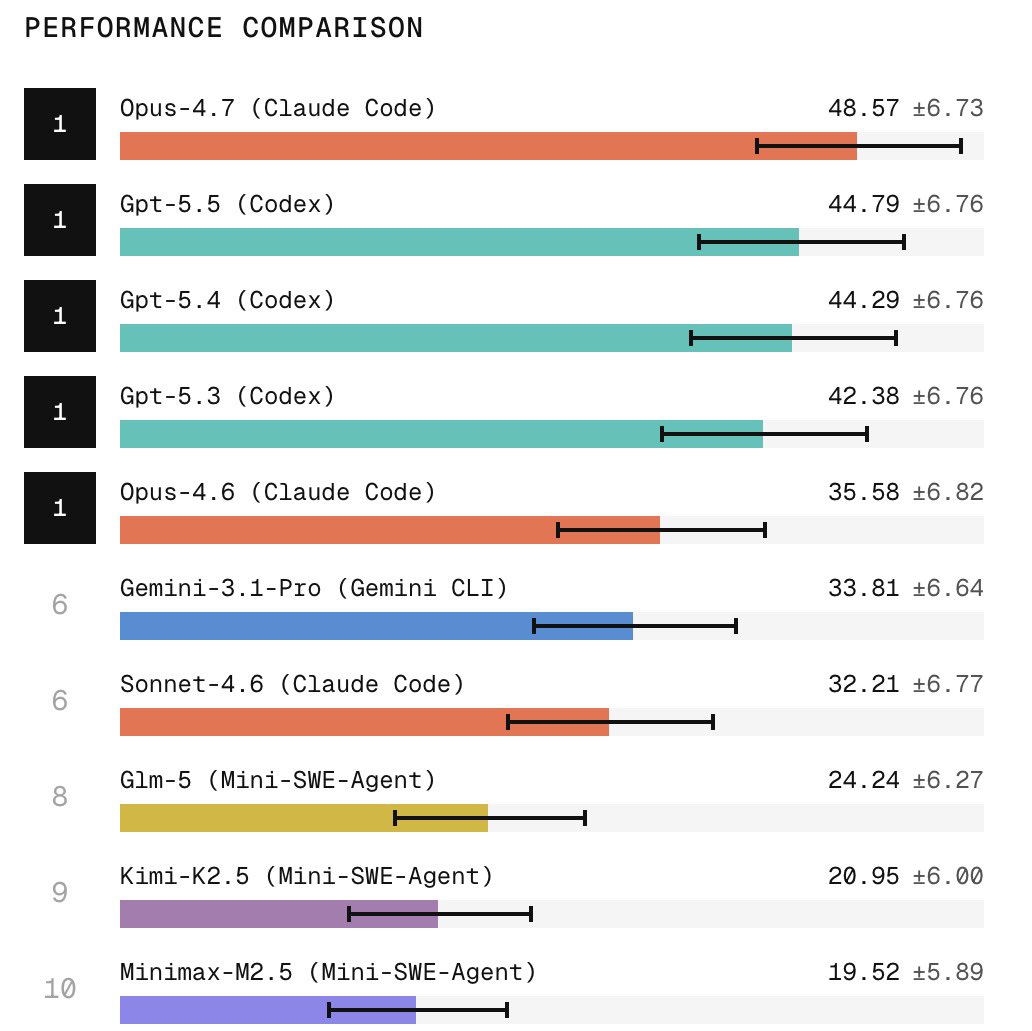
Scale AI published SWE Atlas Refactoring Leaderboard, a new benchmark that evaluates agent capabilities of restructuring the code. > It requires agents to produce twice as much lines of code than SWE Bench Pro. > Claude Code with Opus 4.7 tops the leaderboard followed by