Nice — not too surprising for (relatively) small models given they didn't find misalignment on 4o-mini but definitely curious if you can repro
RESEARCH
-
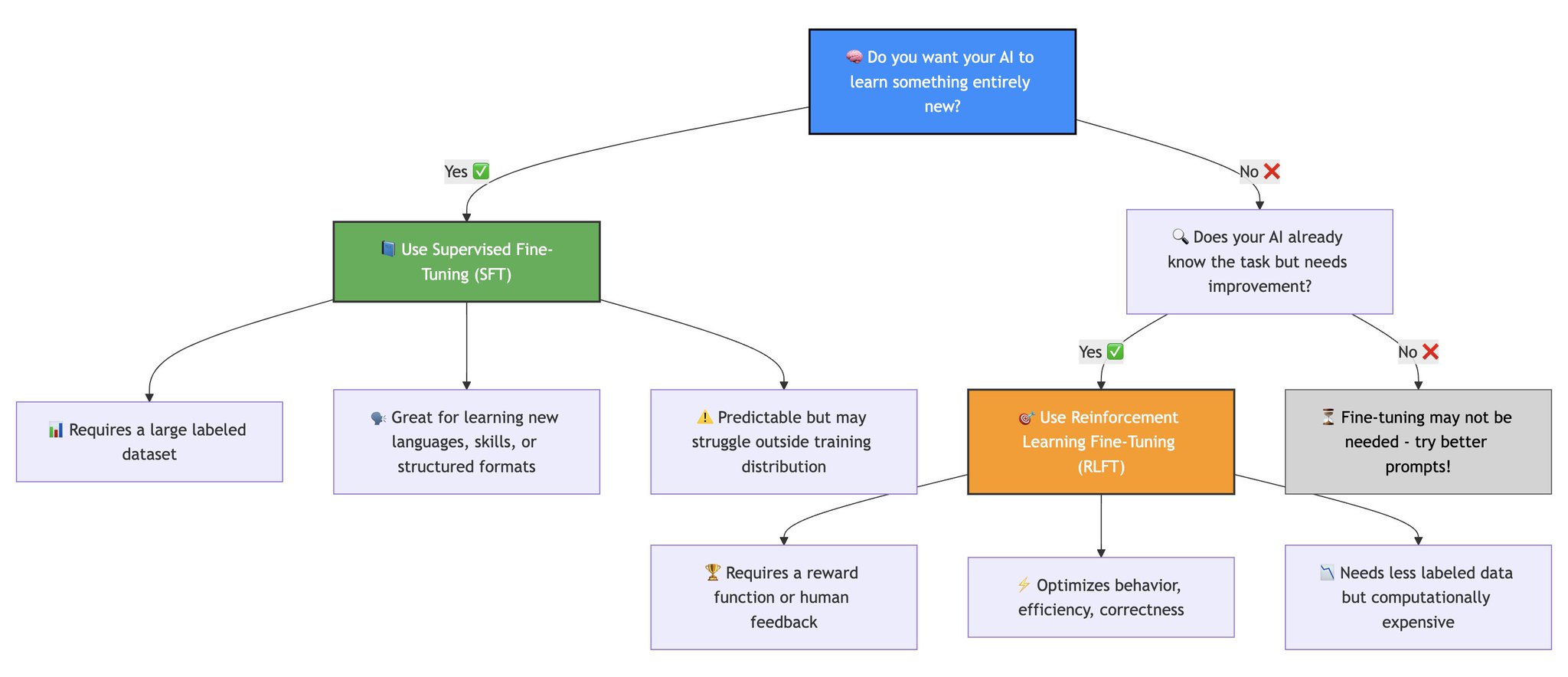
Supervised vs Reinforcement Learning Fine-tuning for AI
By
–
Supervised fine-tuning teaches AI new skills. Reinforcement learning fine-tuning makes it better at applying them. But which one should you use? Both methods improve models, but they work very differently. Let’s break it down:
-
NVIDIA Earth-2 CorrDiff: 10,000x More Efficient Weather AI
By
–
Up to 10,000 times more energy efficient than traditional high-resolution weather prediction, NVIDIA Earth-2’s CorrDiff model could improve disaster preparedness and save lives by enabling #AI-powered kilometer-scale forecasts.
— NVIDIA (@nvidia) 26 février 2025
➡️https://t.co/VQ8hmJ5kv5#NVIDIAResearch pic.twitter.com/Ok4yL32AooUp to 10,000 times more energy efficient than traditional high-resolution weather prediction, NVIDIA Earth-2’s CorrDiff model could improve disaster preparedness and save lives by enabling #AI-powered kilometer-scale forecasts. https://
nvda.ws/439c5dl
#NVIDIAResearch -
Early Generative ML Journey: VAE, RNN, and pix2pix
By
–
A Book from the Sky was in 2015, I also put some VAE and char-rnn stuff a bit earlier that year. that was probably first. I had done ML for a couple years before that but nothing deep and nothing generative until then. pix2pix / Invisible Cities was around a year later for me.
-
Speed of Model Deployment vs Scientific Understanding Trade-offs
By
–
In today’s competitive product landscape, scientific understanding of models often lags behind speed of model deployment. If the goal is to train a deployable model (especially when bottlenecked by compute), it totally makes sense to make several changes at a time without
-
Multimodal AI Detects Sudden Cardiac Death via Smartwatch Data
By
–
How multimodal A.I. of real time smartwatch data can automatically detect a person's loss of pulse—sudden cardiac death—and notify emergency services https://
nature.com/articles/s4158
6-025-08810-9
… @GoogleDeepMind @jesunshine @Nature -
AI Detects Brain Abnormalities Missed by Radiologists
By
–
A study suggests that artificial intelligence (AI) could help detect abnormalities in the brain linked to epilepsy that radiologists can sometimes miss. https://
bit.ly/4ihOR9c
#research #AI #epilepsy #healthcare #IoT #GenAI #technews -
AI Tool Predicts Most Effective Diabetes Medication for Patients
By
–
Researchers have suggested that a new “personalised” online tool that predicts the most effective medication for individual patients with type 2 diabetes could benefit millions of people. https://
bit.ly/3CXXGGt #healthcare #research #diabetes #type2diabetes -
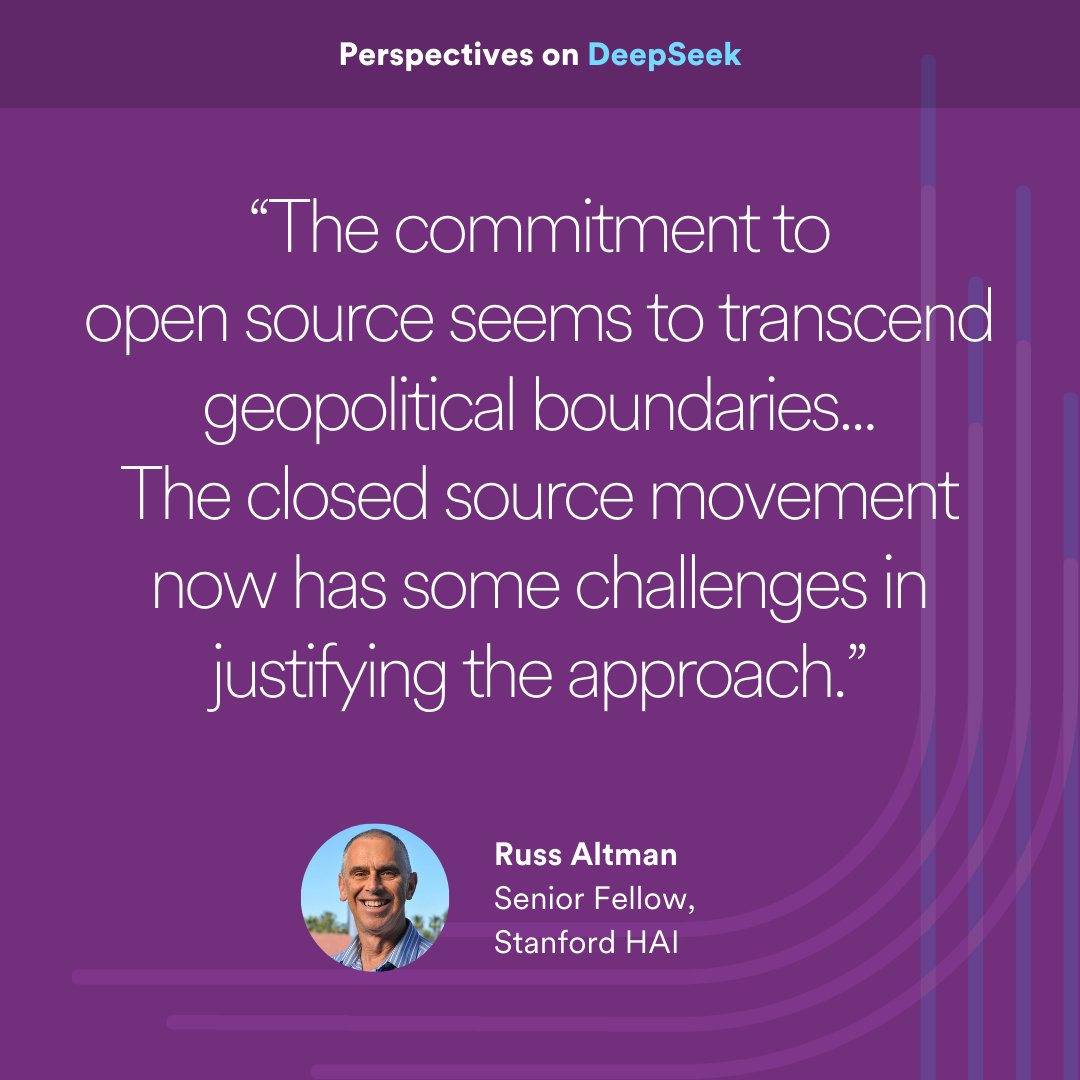
DeepSeek’s Disruptive Impact: Stanford HAI Faculty Analysis
By
–
How disruptive is #DeepSeek? @StanfordHAI Senior Fellow @Rbaltman argues that its development offers important lessons for the academic community, while also raising critical questions regarding data access, specialized models, and AI system evaluation. https://
hai.stanford.edu/news/how-disru
ptive-deepseek-stanford-hai-faculty-discuss-chinas-new-model
… -
Claude Sonnet 3.7 Thinking: Understanding Model Decision-Making Process
By
–
First impressions with Claude Sonnet 3.7 Thinking, and a quick demo – you can see the thinking tokens in this video:
— Jiquan Ngiam (@JiquanNgiam) 26 février 2025
1. Seeing the thoughts can really help us understand *how* the model is deciding to take a particular action. This can help us better guide it, almost like… pic.twitter.com/DbWsTDBczWFirst impressions with Claude Sonnet 3.7 Thinking, and a quick demo – you can see the thinking tokens in this video: 1. Seeing the thoughts can really help us understand *how* the model is deciding to take a particular action. This can help us better guide it, almost like