With just 3B active parameters, it matches Gemini-2.5-Pro and GPT-5-High, and even surpasses them on ChartQA and DocVQAval What can it achieve with only 3B active parameters?
For example, its “Thinking with Images” feature lets it zoom in, analyze details, and reason through
RESEARCH
-
3B Parameter Model Matches GPT-5 and Gemini Performance
By
–
-

Baidu Open-Sources ERNIE-4.5-VL-28B Multimodal Model
By
–
Big news from @Baidu_Inc
! ERNIE-4.5-VL-28B-A3B-Thinking — a breakthrough lightweight multimodal reasoning model — is now officially open-sourced. It’s already trending #1 on Hugging Face’s Image-Text-to-Text models list. -
Breakthrough in Multimodal AI: Visual Analysis Efficiency
By
–
.visuals step by step — much like a human would. It can study a storyboard, analyze design drafts, or pull key insights from visual briefs, turning images into structured understanding.
This combination of efficiency + depth is what makes it a true breakthrough in multimodal AI. -
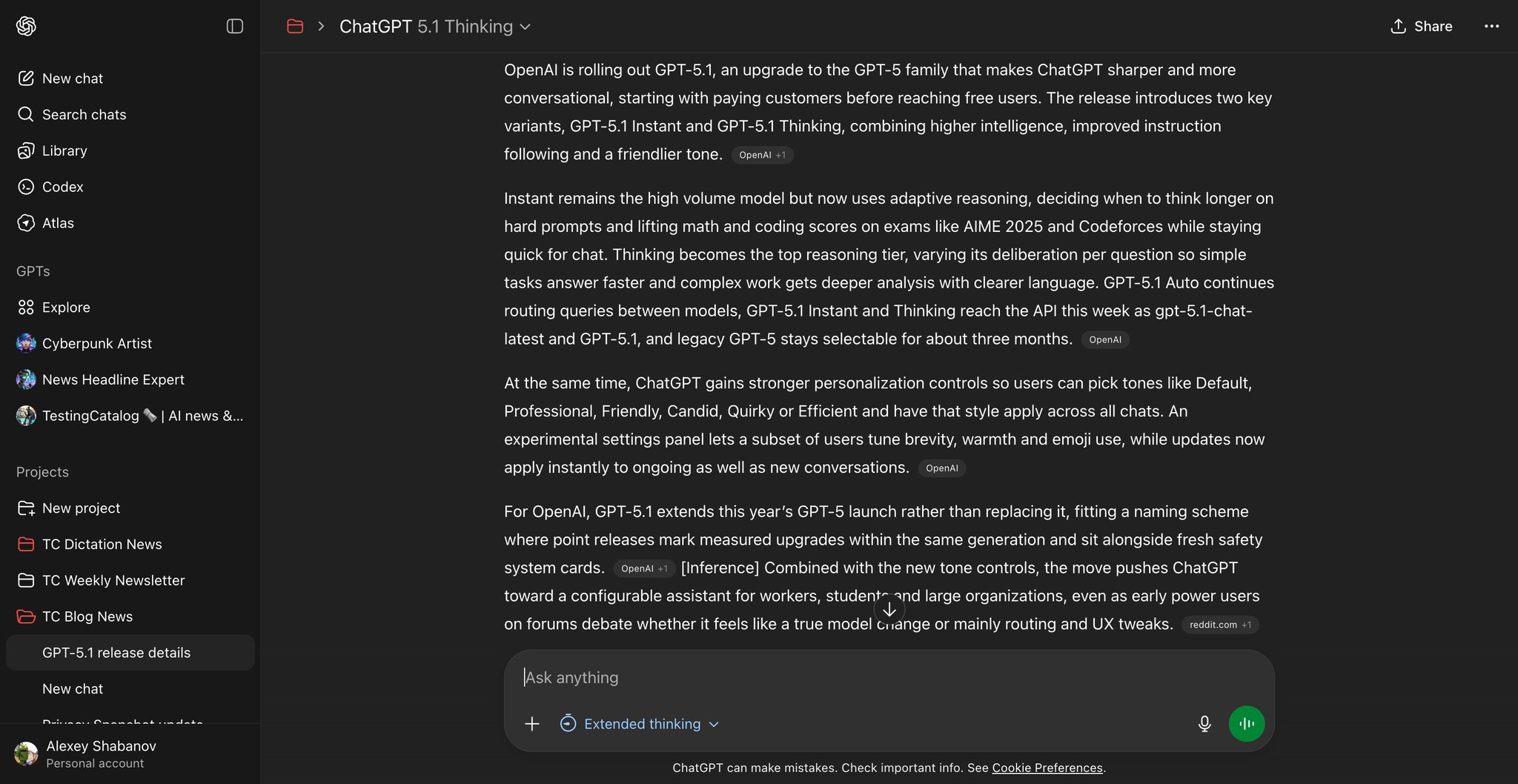
GPT-5.1 Drops Em Dashes on Command
By
–
GPT-5.1 does NOT use em dashes anymore—in case it is specified in custom instructions! Instruction following is also getting much better in comparison to GPT-5.
-
Language Models Help Fill Speech Pathologist Gap in Schools
By
–
More than 3.4 million American children struggle with speech disorders, and schools don’t have enough speech & language pathologists to help them. With better training, @Stanford researchers found that language models may be able to help to fill the gap.
-
Corrigibility’s Challenge: Tensions with Coherent Reasoning
By
–
Corrigibilty is hard for different reasons from value alignment. Namely, that it cuts against the grain of coherent reasoning. This is harder to explain and fewer people ask about it, so it is little covered in the book. See eg https://
lesswrong.com/w/problem-of-f
ully-updated-deference
… for coverage of one -
Human-AI teaming necessity in high-stakes combat environments
By
–
Human-AI teaming is not optional. It is the only viable operational model in high-stakes environments like active combat theatres.
— Nina Schick (@NinaDSchick) 12 novembre 2025
Dr. Craig Martell's point—that AI systems are statistical and will be wrong sometimes, is an important one.
We cannot treat AI as oracle. AI moves… pic.twitter.com/yoW9imkrU7Human-AI teaming is not optional. It is the only viable operational model in high-stakes environments like active combat theatres. Dr. Craig Martell's point—that AI systems are statistical and will be wrong sometimes, is an important one. We cannot treat AI as oracle. AI moves
-
AI Privatization Threatens Research and Global Participation
By
–
What are we losing when AI knowledge becomes privatized? – Cross-pollination of ideas
– Reproducibility of research
– Global participation
– Talent pipeline This is where academia can play a major role, say @StanfordHAI leaders. #TeamOpenScience -
AI Understanding Cultural Diversity and Epistemic Justice Through Language
By
–
What if AI didn’t just speak our languages—but truly understood the people behind them?
— SAS Software (@SASsoftware) 12 novembre 2025
In this episode of Pondering AI, Paula Helm joins host Kimberly to explore how AI can advance epistemic justice and cultural diversity by centering speakers and communities, not just data and… pic.twitter.com/qhqtwbEE6DWhat if AI didn’t just speak our languages—but truly understood the people behind them? In this episode of Pondering AI, Paula Helm joins host Kimberly to explore how AI can advance epistemic justice and cultural diversity by centering speakers and communities, not just data and
-
Podcast Discussion: Jetsons, Robots, Dexterity, and Research Art
By
–
Always fun talking with @bheater! In this 60-min podcast we discuss the Jetsons TV show, humanoid hubris, the robot data gap, why robot dexterity is hard, and around minute 49:00: the similarities between art and research. https://t.co/sBveJqtUC4
— Ken Goldberg (@Ken_Goldberg) 12 novembre 2025Always fun talking with @bheater
! In this 60-min podcast we discuss the Jetsons TV show, humanoid hubris, the robot data gap, why robot dexterity is hard, and around minute 49:00: the similarities between art and research.