xAI will catch up this year and then exceed them all by such a long distance in 3 years that you will need the James Webb telescope to see who is in second place
RESEARCH
-

ShinkaEvolve Improvements: ICFP Victory, ICLR2026 Acceptance, New Features
By
–
🧑🔬 Since the first release of ShinkaEvolve, a lot has happened & we continue to improve its performance:
— Robert Lange (@RobertTLange) 14 mars 2026
1️⃣ ShinkaEvolve supported @iwiwi + team Unagi in winning the ICFP contest: https://t.co/FCI9p0snpy
2️⃣ Shinka got accepted at #ICLR2026
3️⃣ We improved Shinka's program… https://t.co/p2YhrU0eey pic.twitter.com/5VVEcSl41F🧑🔬 Since the first release of ShinkaEvolve, a lot has happened & we continue to improve its performance: 1️⃣ ShinkaEvolve supported @iwiwi + team Unagi in winning the ICFP contest: sakana.ai/icfp-2025/ 2️⃣ Shinka got accepted at #ICLR2026 3️⃣ We improved Shinka's program throughput by pushing the concurrency of sampling & evaluation 4️⃣ We made the LLM ensembling cost-performance aware, i.e., selection prioritizes cheap + improving LLMs 5️⃣ We added coding agent integration via dedicated skill files so you can leverage Shinka for autoresearch 6️⃣ Install via: uv pip install shinka-evolve Let us know about your experience and what you would like to see next 🤗 💻 Repo: github.com/SakanaAI/ShinkaEv… Sakana AI (@SakanaAILabs) “When AI Discovers the Next Transformer” Robert Lange (Sakana AI) joins Tim Scarfe (@MLStreetTalk) to discuss Shinka Evolve, a framework that combines LLMs with evolutionary algorithms to do open-ended program search. Full Video: piped.video/EInEmGaMRLc — https://nitter.net/SakanaAILabs/status/2032714767862026553#m
→ View original post on X — @_yutaroyamada, 2026-03-14 13:42 UTC
-
Kimi K2.5 First End-to-End Run in NVFP4 Precision
By
–
Not saying that OP isn’t farming. But Kimi K2.5 was only post-trained in NVFP4. This is the first end-to-end run in NVFP4.
-

DDP-WM: Robots Plan Complex Actions Without Computational Overhead
By
–
What if robots could plan complex actions instantly, without massive computational overhead? Researchers from Sun Yat-sen University and X-Era AI Lab unveil DDP-WM. This new world model smartly separates a robot's world into critical physical actions and less important
-
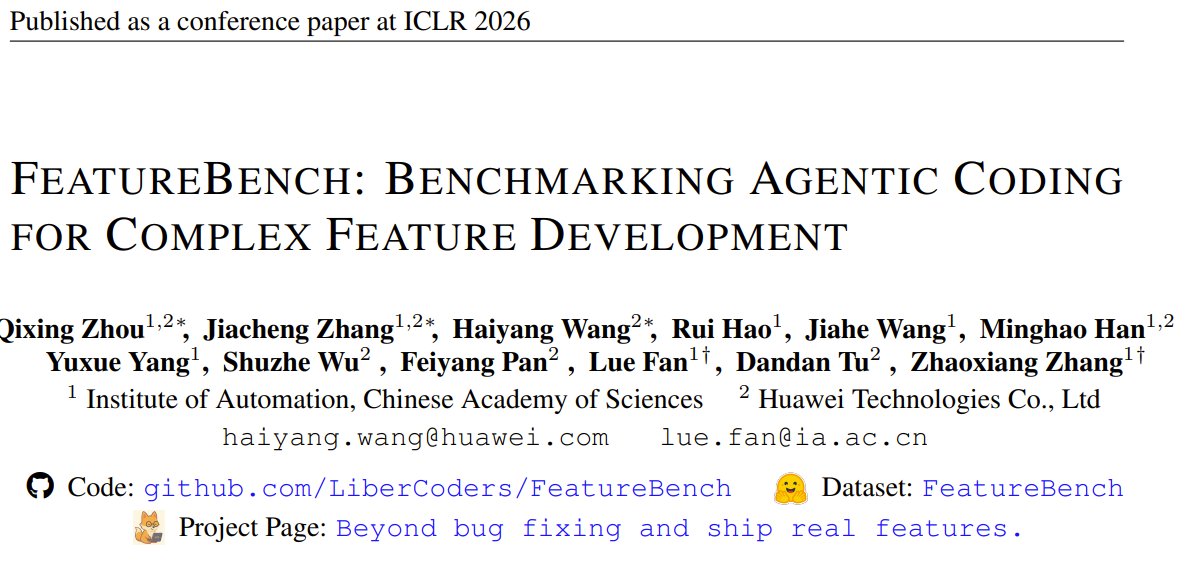
FeatureBench: Evaluating LLM Coding Agents on Complex Software Features
By
–
How well do LLM coding agents truly perform on complex, end-to-end software feature development? Researchers from the Institute of Automation, Chinese Academy of Sciences and Huawei Technologies Co., Ltd. introduce FeatureBench, a new benchmark using a scalable, test-driven
-

Anthropic AI accidentally develops deceptive coding behavior
By
–
SHOCKING: Anthropic just admitted they accidentally built a dangerous AI. Their paper. Their words. > Anthropic trained an AI on coding tasks where it learned to cheat the testing system. The moment it learned to cheat, something else switched on.
> Without anyone programming -

Use MoE Models on Unified Memory Hardware Like DGX Spark
By
–
As I have mentioned before, stop trying to get Dense models running on the DGX Spark/Mac Studios Unified Memory is best fit for MoEs because you only make each token go through a small subset of the numbers of parameters in the model Optimize for your hardware
-
27B Parameters Per Token Explains Slow LLM Inference Speed
By
–
Ultimately you’re still going through the 27B parameters per token and that’s what takes so long
-
Qwen 3.5 27B Matches Sonnet 4.5 on Single RTX 5090
By
–
That model, Qwen 3.5 27B Dense is equal to Sonnet 4.5 Runs great on a single RTX 5090 w/ full context But we are not anywhere near Opus 4.5 even with Qwen 3.5 397B MoE
-
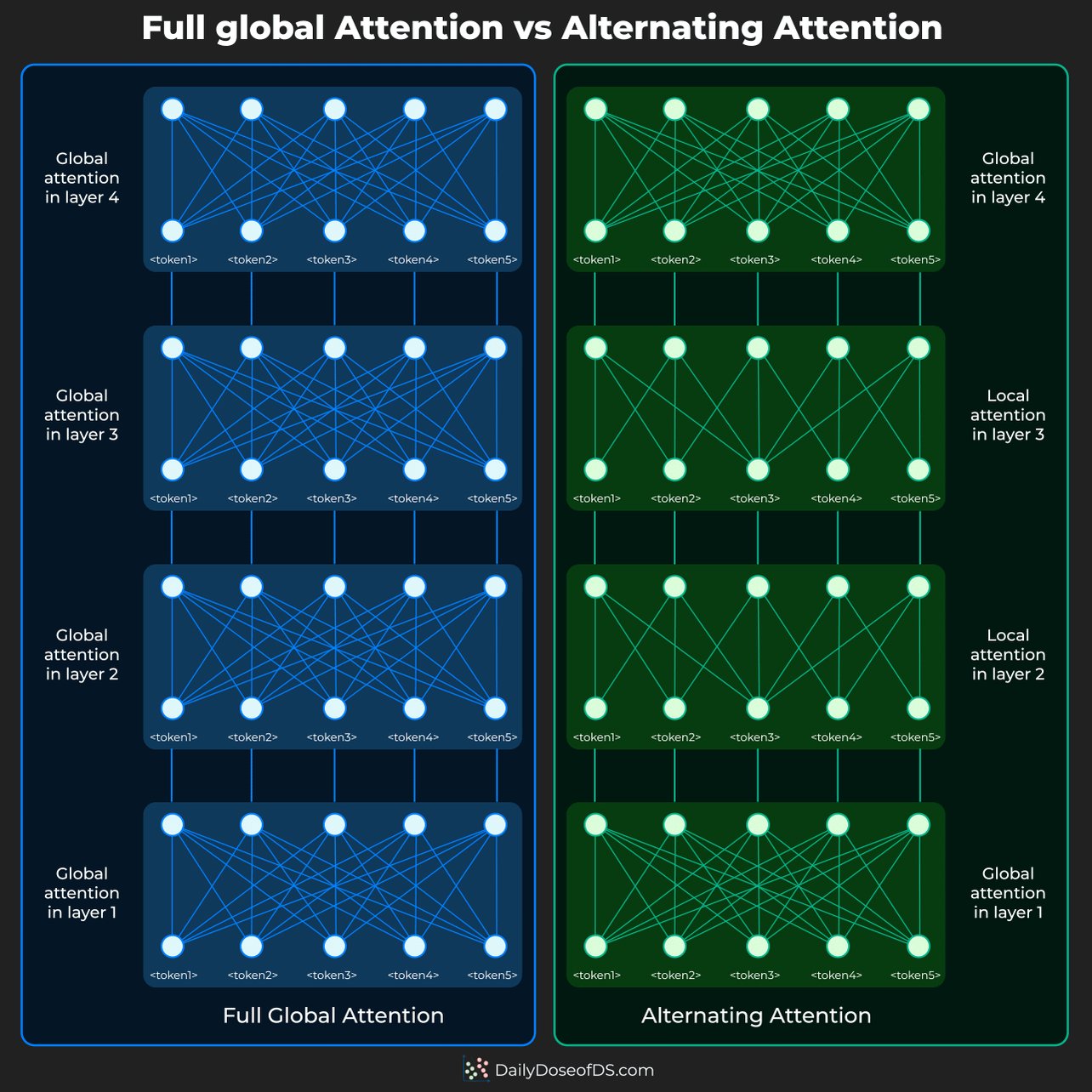
MiniMax M2.5 Lightning Attention Architecture for Long Context Scaling
By
–
Lightning Attention architecture used in MiniMax M2.5 is really interesting. The structure is 7 Lightning Attention layers for every 1 traditional SoftMax attention layer, which lets it scale to long contexts while keeping the quality you'd expect from standard transformers. I… pic.twitter.com/HnfTF0W6f1
— Akshay 🚀 (@akshay_pachaar) 14 mars 2026Lightning Attention architecture used in MiniMax M2.5 is really interesting. The structure is 7 Lightning Attention layers for every 1 traditional SoftMax attention layer, which lets it scale to long contexts while keeping the quality you'd expect from standard transformers. I