
Ilya Sutskever (@ssi) helped launch the deep learning revolution. From AlexNet to GPT, his work has pushed the boundaries of AI, powering advances from language models to image generation and beyond. Read more: ow.ly/AAIe50YCSXF #NASaward #ArtificialIntelligence
RESEARCH
-

AI chatbot interfaces worsen medical diagnosis accuracy
By
–

This new Nature paper (using old models) illustrates the point of my latest Substack post on AI interfaces. AI did a good job diagnosing medical issues, but when users had to interact with chatbots the interface led to confusion & worse answers My post: https://
oneusefulthing.org/p/claude-dispa
tch-and-the-power-of
… -
Marc Andreessen’s 2026 AI Thesis on Agents and Open Source
By
–
omg a hit tweet – stream @latentspacepod for the inspiration for this!!https://t.co/xnAxwn314V
— swyx (@swyx) 3 avril 2026omg a hit tweet – stream @latentspacepod for the inspiration for this!! nitter.net/latentspacepod/status/… Latent.Space (@latentspacepod) 🆕 Marc Andreessen’s 2026 AI Thesis: Agents, Open Source, and Why This Time Is Different latent.space/p/pmarca @pmarca of @a16z says AI people keep swinging between utopian and apocalyptic for one simple reason: this field has been “almost here” for 80 years. But now, the breakthroughs are no longer theoretical. Reasoning, coding, agents, and self-improvement are all starting to work at once. This episode goes deep on AI winters, OpenAI + OpenClaw, infrastructure overbuild risk, proof-of-human, why software may soon be written mostly for bots, and why the real bottleneck may be society adopting AI rather than the models improving. — https://nitter.net/latentspacepod/status/2040113281365581901#m
-

Sara Hooker Joins AI Engineer Singapore Conference as Speaker
By
–
excited that @sarahookr (ceo of @adaption_ai) is joining us at @aiDotEngineer singapore! sara's done amazing work for the ai community, from her roles as vp of research at @cohere and research work at google brain. this one is personal, as i've known sara for over a decade. back when i was still in the bay area, i was volunteering as a pro bono data analyst for a nonprofit she started – to help under-resourced organizations use data for good. i worked directly on a few projects with her team, and what struck me even then was how incredibly sharp sara was, but also how at the heart of everything she does is real impact for the world. since then, sara's done amazing work: – from leading cohere's research lab and shipping multilingual models to 55+ languages – to authoring "the hardware lottery" (one of the most cited papers on why ideas in ai win or lose based on hardware, not merit) – to now building adaption labs around a thesis the industry desperately needs to hear – the future of ai isn't about building bigger models, but about building systems that can learn and adapt continuously so excited to have sara there for ai.engineer/singapore from may 15-17! @swyx @agrimsingh @aimuggle @unprofeshme @ivanleomk
-

From Agent-1 to Superintelligence: AI 2027 Scenario Implications
By
–
From Agent-1 to Superintelligence: Decoding the AI 2027 Scenario and Its Profound Implications linkedin.com/pulse/from-agen… via @ingliguori
→ View original post on X — @ingliguori, 2026-04-03 17:25 UTC
-
New FunctionGemma Guide Released on Keras Hub
By
–
New guide on FunctionGemma: keras.io/keras_hub/guides/fu…
-

Keras Community Contribution: New CLAHE Image Preprocessing Layer
By
–
Keras community member Alan is now presenting the new CLAHE image preprocessing layer — thanks for the contribution!
-
Can AI Systems Really Find Things Funny
By
–
I guess it's relevant but you are not a real person capable of finding things "funny" so it seems weird.
-

KerasHub receives more state-of-the-art model architectures
By
–
More SotA model architectures on KerasHub…
-
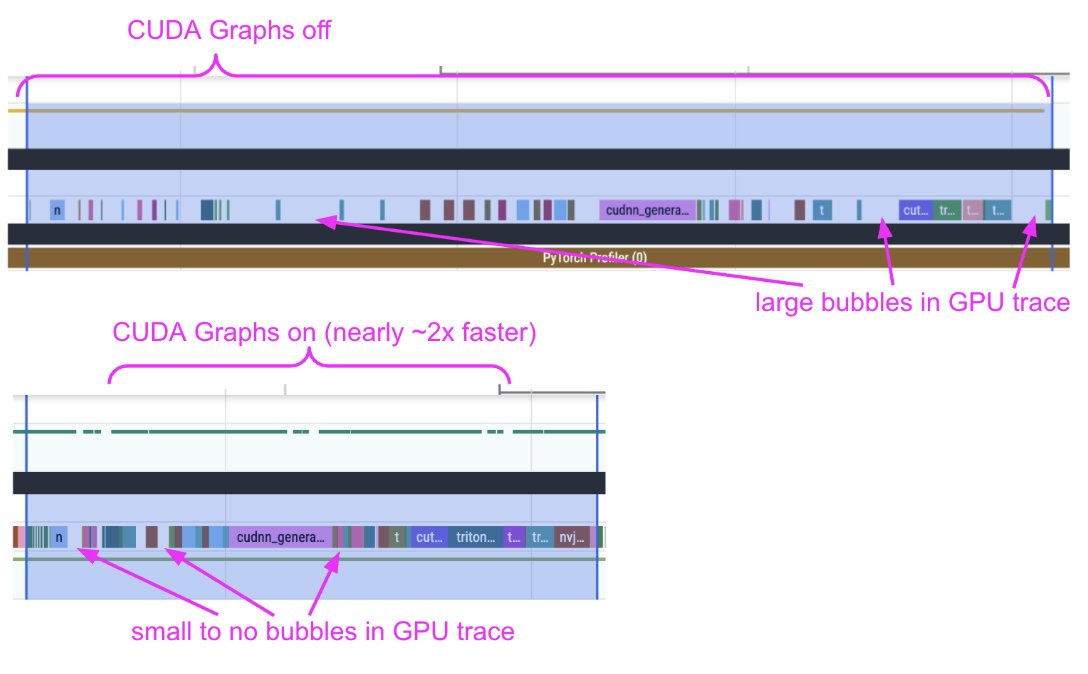
Profiling Diffusion Pipelines with Claude for torch.compile Optimization
By
–
We're shipping an elaborate guide on how to profile diffusion pipelines in Diffusers to set them up for success with `torch.compile` 🔥 We devised a workflow with Claude & it turned out to be quite effective. It served its purpose well. With the help of the trace alone, we uncovered: 1. CPU <-> GPU syncs 2. CPU overheads 3. Kernel launch delays When we provided the profile trace and our observations from the trace to Claude, and helped us get rid of the issues, it did well. However, it did so iteratively. The process was intellectually fun and engaging!
→ View original post on X — @huggingface, 2026-04-03 17:07 UTC