With curve-fitting, you are recording a lossy approximation of the output of some generative program. With symbolic learning, you are losslessly reverse-engineering the source code of the generative program. Symbolic learning won't be the best fit for all problems, but for the ones where the latent program is reasonably simple, it will outperform by many orders of magnitude.
RESEARCH
-
Self-Improvement in AI Research Versus Biology Discussion
By
–
when do we see self-improvement in AI research vs. biology? @LiamFedus, Cofounder @periodiclabs and former lead of post-training OpenAI, on @NoPriorsPod pic.twitter.com/NdyTDy1ynR
— sarah guo (@saranormous) 6 avril 2026when do we see self-improvement in AI research vs. biology? @LiamFedus, Cofounder @periodiclabs and former lead of post-training OpenAI, on @NoPriorsPod
→ View original post on X — @ceobillionaire, 2026-04-06 21:44 UTC
-
Artificial Intelligence Detects Heart Failure Through Voice Analysis
By
–
Source: https://pudgycat.io/ai-voice-heart-failure-detection-noah-labs-vox/ [Translated from EN to English]
→ View original post on X — @kimmonismus, 2026-04-06 21:31 UTC
-
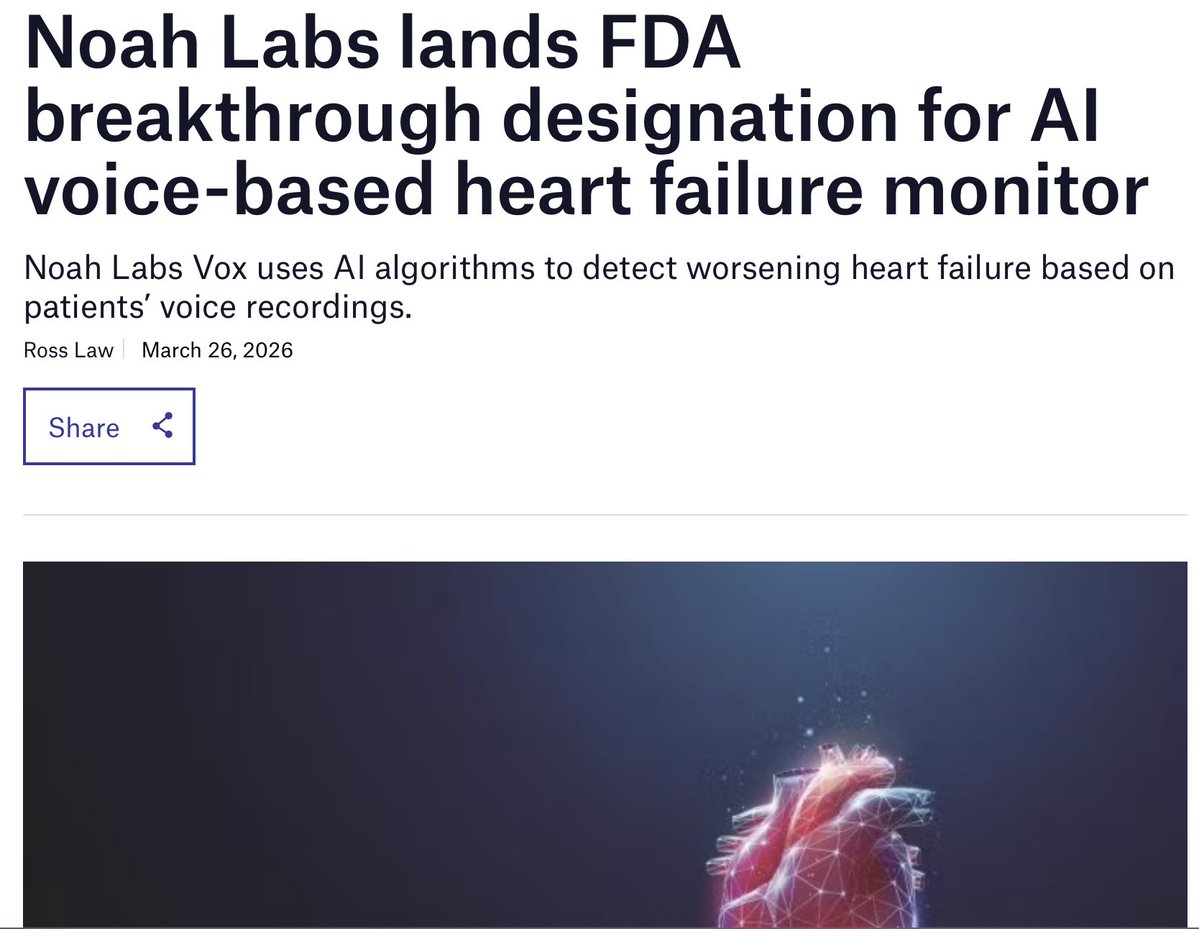
FDA AI Tool Vox Detects Heart Failure from Voice Analysis
By
–
Very exciting breaktrough: An FDA-designated AI tool called Vox can analyze just five seconds of a patient’s voice to detect signs of worsening heart failure, using patterns linked to fluid buildup that humans cannot hear. Trained on more than 3 million voice samples and supported by five clinical trials, it points to a huge shift in healthcare: cheaper, earlier, phone-based detection for a disease affecting 64 million people worldwide and costing the U.S. over $30 billion a year. I love it.
→ View original post on X — @kimmonismus, 2026-04-06 21:31 UTC
-
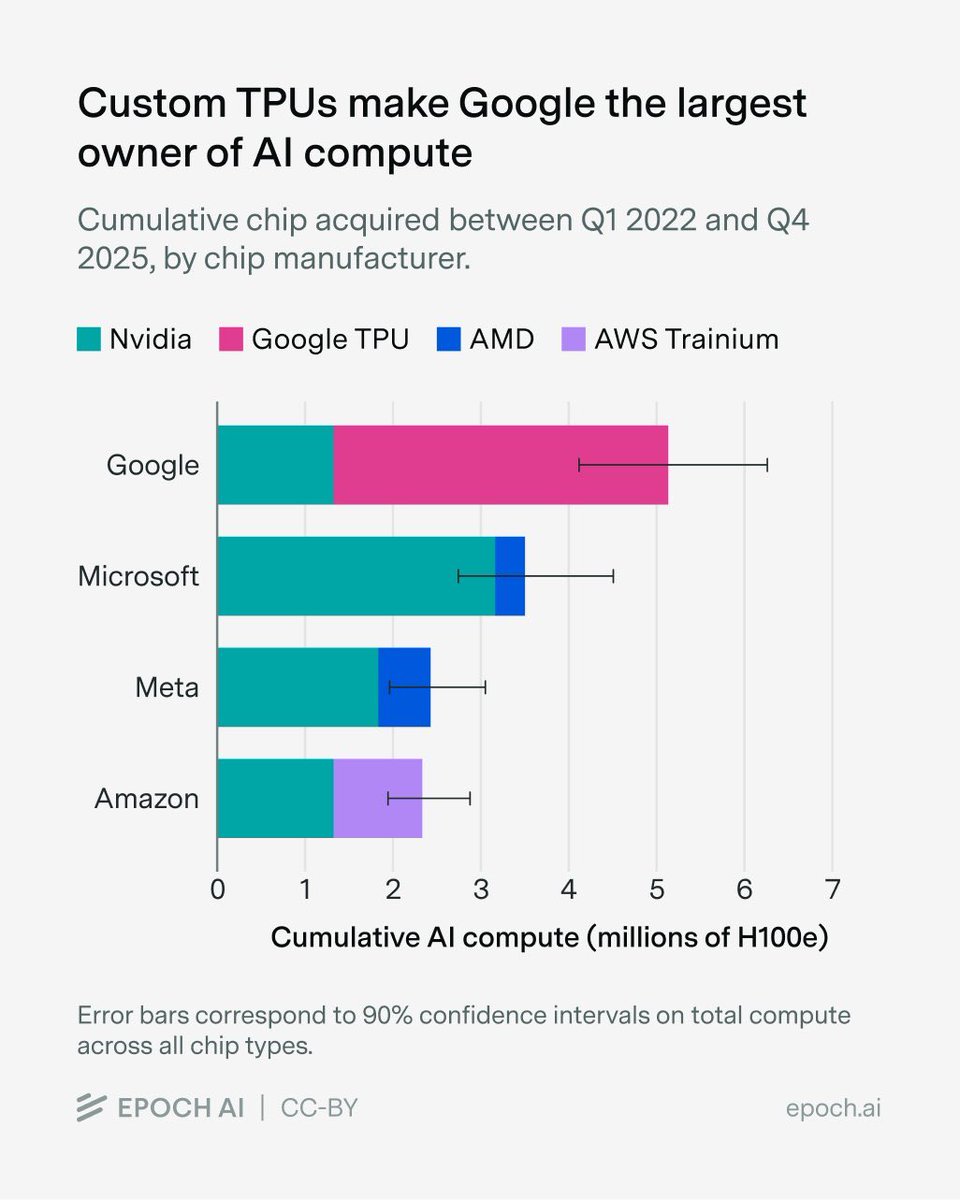
Google’s Strategic Advantage: TPU Dominance and AI Compute Leadership
By
–
Google had the foresight to develop TPUs back in 2012. Today, they have by far the most compute. In the long term, Google is in one of the best starting positions: a solid revenue and product base, compute, and above all: distribution. Epoch AI (@EpochAIResearch) We estimate that over 60% of global AI compute is owned by the top US hyperscalers, led by Google with the equivalent of roughly 5 million Nvidia H100 GPUs! Unlike the other hyperscalers, which rely primarily on Nvidia, Google’s fleet is dominated by its custom TPU chips. — https://nitter.net/EpochAIResearch/status/2041241217334419851#m
→ View original post on X — @kimmonismus, 2026-04-06 21:13 UTC
-
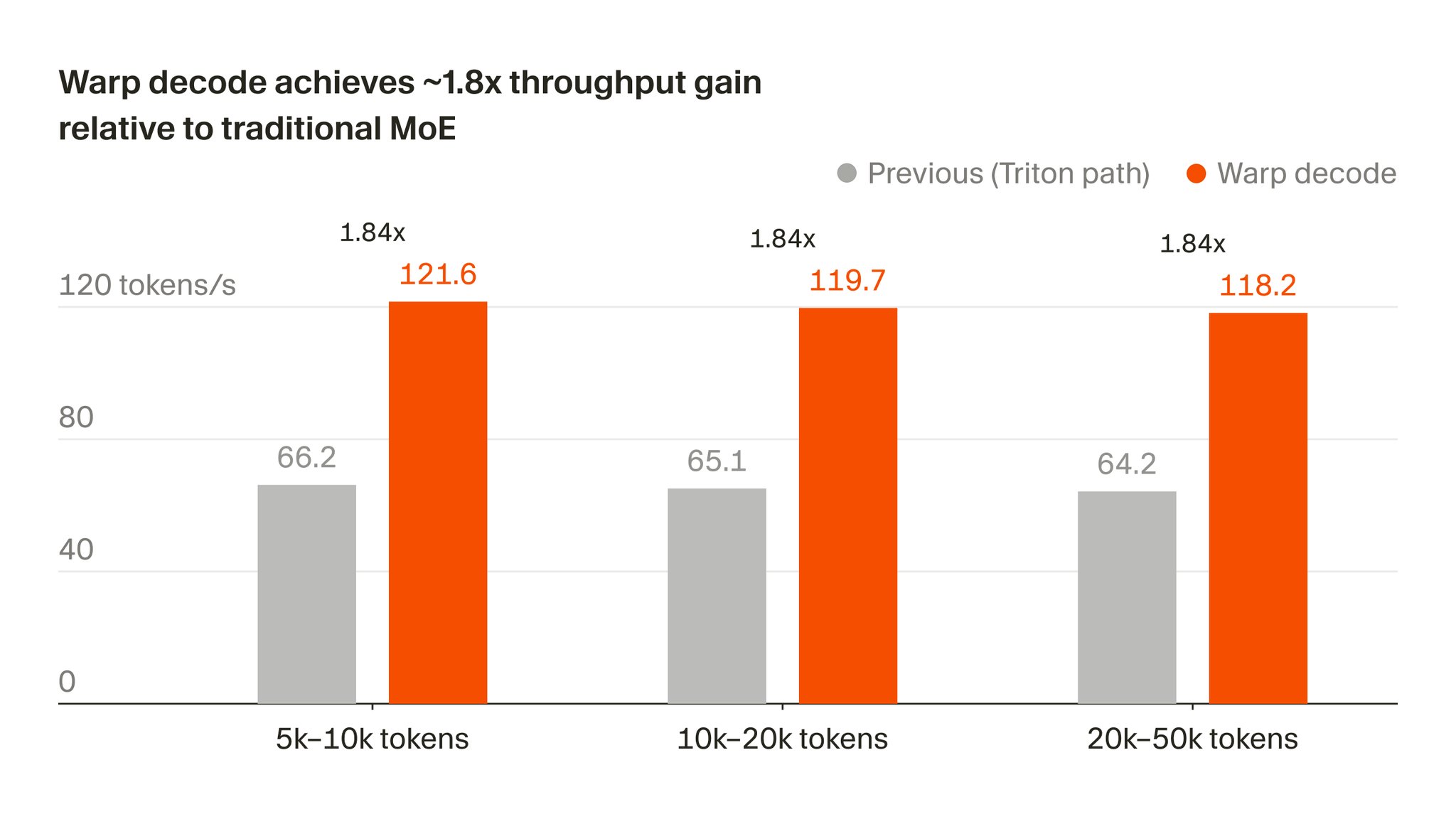
MoE Token Generation 1.84x Faster on Blackwell GPUs
By
–
We rebuilt how MoE models generate tokens on Blackwell GPUs, resulting in 1.84x faster inference and more accurate outputs. These improvements directly contribute to how we train Composer, allowing us to ship improved versions of the model more often.
-
Recent Reasoning Models Still Hallucinate According New Data
By
–
here’s an example where pretty recent reasoning models still hallucinate according to at least one measure where there is actual data. I think you owe me an apology.
-
Gemini 3 Pro excels in reliability but hallucinations persist
By
–
the-decoder.com/gemini-3-pro… [Translated from EN to English]
→ View original post on X — @garymarcus, 2026-04-06 20:47 UTC
-
Neuro-symbolic AI efficiency breakthrough beyond robotics applications
By
–
5/ If neuro-symbolic AI scales beyond robotics into language models and search, we could see a future where powerful AI no longer requires a power plant behind it. The paper drops in May at ICRA Vienna. The efficient AI era might be closer than we think.
→ View original post on X — @kimmonismus, 2026-04-06 20:42 UTC