I have outlined in detail my concerns about Sam’s integrity, e..g, in an article in the Guardian, and a tweet to him that he chose not to reply on. I don’t think he deserves a free pass on this.
REGULATION
-
OpenClaw Will Drive Demand for Stronger Human Verification Methods
By
–
openclaw is going to accelerate the need for better and robust human verification
→ View original post on X — @soumithchintala, 2026-02-15 01:46 UTC
-
Agentic AI: Autonomy, Guardrails, and Multi-Agent Architecture
By
–
Chatbot ≠ Agentic.
— Dr. Debashis Dutta (@debashis_dutta) 14 février 2026
RPA ≠ Agentic.
RAG ≠ Agentic.
Agentic AI = orchestrator + memory + planning + tools + feedback, plus multi-agent specialists (retrieval/coding/citations).
The board question: where do we allow autonomy—and with what guardrails? pic.twitter.com/AEnajJZeEPChatbot ≠ Agentic.
RPA ≠ Agentic.
RAG ≠ Agentic. Agentic AI = orchestrator + memory + planning + tools + feedback, plus multi-agent specialists (retrieval/coding/citations). The board question: where do we allow autonomy—and with what guardrails? -

ICML Uses Hidden Prompt Injections to Detect AI
By
–
👀 Paul Calcraft (@paul_cal) ICML journal editors have added hidden prompt injections to every paper sent to reviewers, to detect when reviewers are using AI It secretly tells the AI to use 2 specific phrases in the review A reviewer found it & was about to desk reject, assuming the author did it [Translated from EN to English]
→ View original post on X — @rachelmetz, 2026-02-14 19:39 UTC
-
When can we legally assign Power of Attorney to an AI agent?
By
–
How much longer before we can legally assign Power of Attorney to an AI agent?
-
Extreme Risk Warnings and Calls for Caution on AI Development
By
–
And this is going past the bounds of common fucking sense, which says that if you fucking accept that something is 96% likely to kill everyone on the planet, back the fuck off, work on human intelligence augmentation, and sign up for cryonics if you're so fucking scared.
-
ASI Risk Calculus: Accelerationists’ Paradoxical Life Expectancy Arguments
By
–
It is subtweeting a recent claim, favorably reposted by famous accelerationists like Cremieux, purporting to calculate (and speaking favorably of the calculation) that your personal life expectancy is higher so long as ASI has a <97% chance of killing everyone.
-
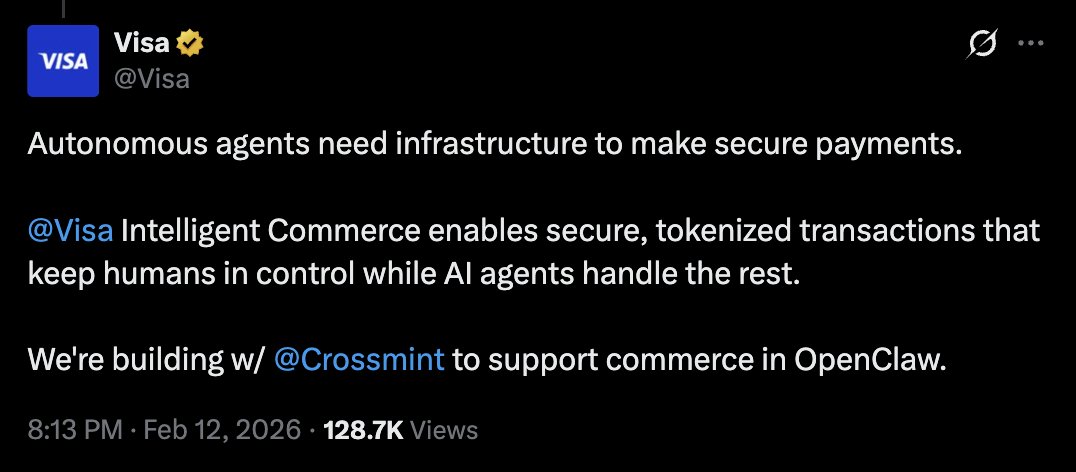
Visa legitimizes AI agent payments: a 2026 bingo surprise!
By
–
Well, I'll be damned !!!! That was ABSOLUTELY NOT on my 2026 bingo card. Visa legitimizing payment methods for AI agents? Well now, I'm floored…
-
AI Cheating in Schools: Bans Cannot Stop Student Usage
By
–
The problem there is cheating – you can ban AI but that doesn't mean the kids won't use it anyway
-
Building Bridges Between AI and Hollywood at Sundance
By
–
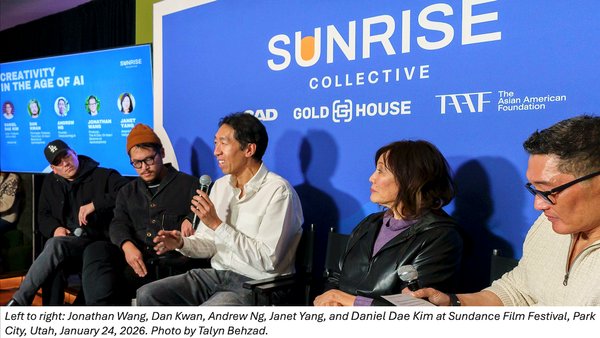
I recently spoke at the Sundance Film Festival on a panel about AI. Sundance is an annual gathering of filmmakers and movie buffs that serves as the premier showcase for independent films in the United States. Knowing that many people in Hollywood are extremely uncomfortable about AI, I decided to immerse myself for a day in this community to learn about their anxieties and build bridges. I’m grateful to Daniel Dae Kim @danieldaekim, an actor/producer/director I’ve come to respect deeply for his artistic and social work, for organizing the panel, which also included Daniel, Dan Kwan, Jonathan Wang, and Janet Yang. I found myself surrounded by award-winning filmmakers and definitely felt like the odd person out! First, Hollywood has many reasons to be uncomfortable with AI. People from the entertainment industry come from a very different culture than many who work in tech, and this drives deep differences in what we focus on and what we value. A significant subset of Hollywood is concerned that: – AI companies are taking their work to learn from it without consent and compensation. Whereas the software industry is used to open source and the open internet, Hollywood focuses much more on intellectual property, which underlies the core economic engines of the entertainment industry. – Powerful unions like SAG-AFTRA (Screen Actors Guild-American Federation of Television and Radio Artists) are deeply concerned about protecting the jobs of their members. When AI technology (or any other force) threatens the livelihoods of their members — like voice actors — they will fight mightily against potential job losses. – This wave of technological change feels forced on them more than previous waves, where they felt more free to adopt or reject the technology. For example, celebrities felt like it was up to them whether to use social media. In contrast, negative messaging from some AI leaders who present the technology as unstoppable, perhaps even a dangerous force that will wipe out many jobs, has not encouraged enthusiastic adoption. Having said that, Hollywood is under no illusions that AI will change entertainment, and that if Hollywood does not adapt, perhaps some other place will become the new center for entertainment. The entertainment industry is no stranger to technology change. Radio, TV, computer graphics special effects, video streaming, and social media transformed the industry. But the path to navigating AI’s transformation is still unclear, and organizations like the new Creators Coalition on AI are trying to stake out positions. Unfortunately, Hollywood’s negative sentiment toward AI also means it will produce a lot more Terminator-like movies that portray AI as more dangerous than helpful, and this hurts beneficial AI adoption as well. The interests of AI and Hollywood are not always aligned. (Every time I speak in a group like this as the “AI representative,” I can count on being asked very hard questions.) Most of us in tech would prefer a more open internet and more permissive use of creative works. But there is also much common ground, for example in wanting guardrails against deepfakes and a smooth transition for those whose jobs are displaced, perhaps via upskilling. Storytelling is hard. I’m optimistic that AI tools like Veo, Sora, Runway, Kling, Ray, Hailuo, and many others can make video creation easier for millions of people. I hope Hollywood and AI developers will find more opportunities to collaborate, find more common ground, and also steer our projects toward outcomes that are win-win for as many parties as possible. [Original text: deeplearning.ai/the-batch/is… ]
→ View original post on X — @andrewyng, 2026-02-13 16:22 UTC