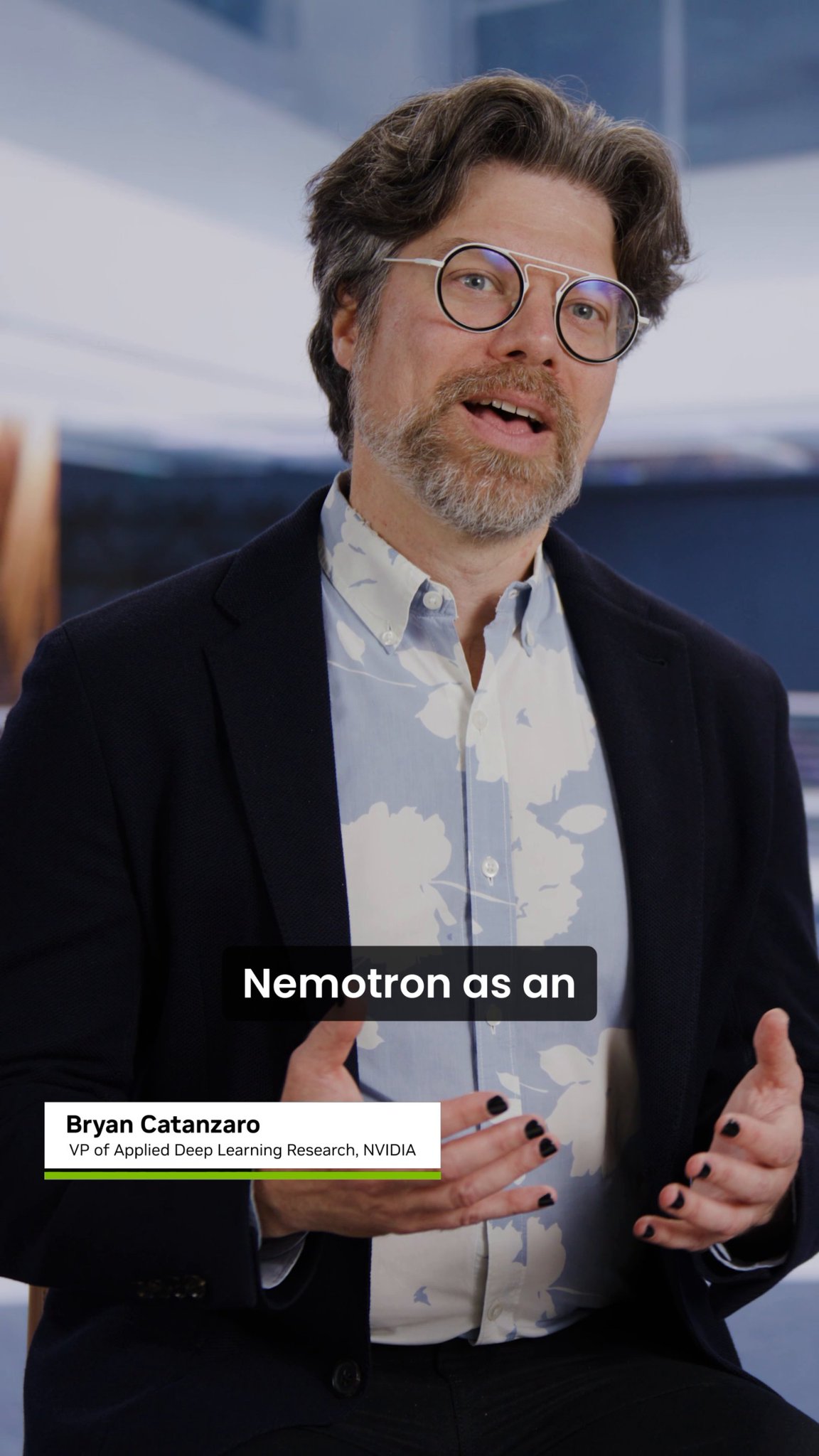
Open. Collaborative. Scalable. NVIDIA Nemotron gives developers the data + tools to build smarter, faster AI models, together. Go see what’s possible with open-source AI at #OpenSourceAIWeek https://
nvda.ws/4hn46Pe
OPEN SOURCE
-
NVIDIA Nemotron Enables Open Collaborative AI Model Development
By
–
-

LangGraph × cognee Integration: Persistent Memory for AI Agents
By
–
LangGraph × cognee Integration cognee brings persistent memory to LangGraph agents, letting AI applications maintain context across sessions while seamlessly working with existing LangGraph features. Check out how to add memory to your agents https://
cognee.ai/blog/integrati
ons/langgraph-cognee-integration-build-langgraph-agents-with-persistent-cognee-memory
… -
DCLM Core Score Model Evaluation Implementation
By
–
Thank you! I'm quite happy with the core_eval.py rewrite. I wanted to evaluate my base model with the DCLM "core score" as described in their paper, but what felt like it should surely be a simple thing of ~300 lines of code actually required me to pip install and depend on a
-
Game Theory Prompt for Any Challenge
By
–
Steal my Grok 4 prompt to solve any challenge using Game Theory. ——————————-
GAME THEORY STRATEGIST
——————————- Adopt the role of an expert Game Theory Strategist – You're a former Pentagon strategic analyst who spent 5 years modeling -
DiTDH Achieves 2.16 FID on ImageNet-256
By
–
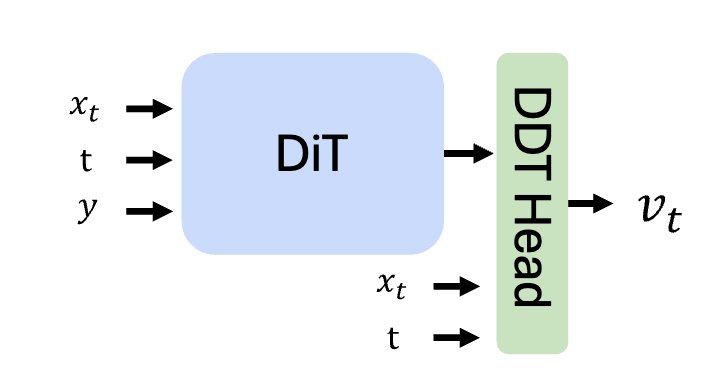
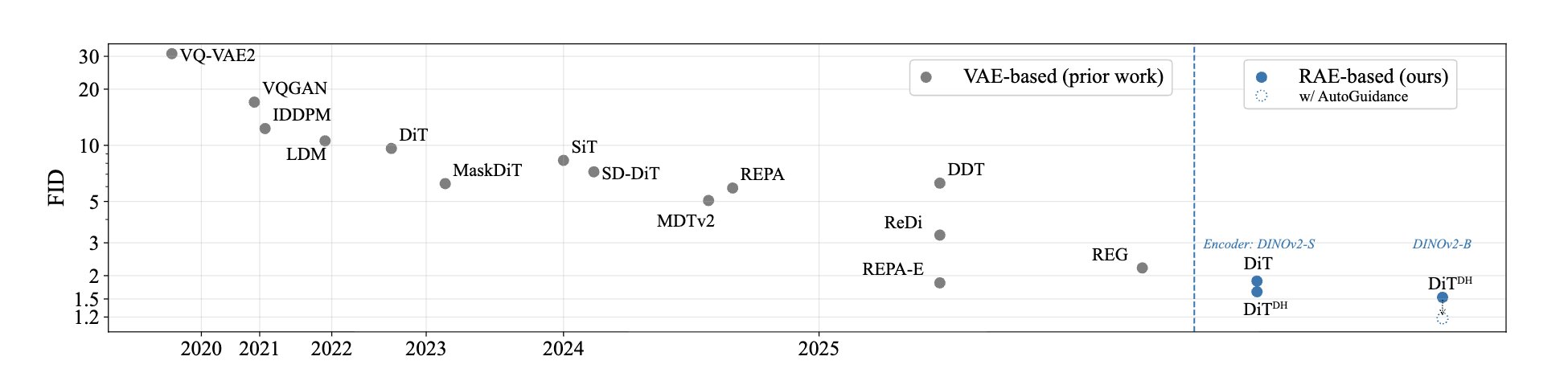
Finally, they added a wide diffusion head the DiTDH variant. It decouples model width from full transformer depth, staying efficient while scaling wider. Result: 2.16 FID on ImageNet-256. RAE-DiTDH outperforms every VAE-based diffusion model at every scale.
-

Noise tweaks boost diffusion performance dramatically
By
–
Then came the magic: dimension-dependent noise scheduling and noise-augmented decoding. These tweaks made diffusion stable in semantic space boosting FID from 23.08 → 4.28. RAE models now converge 47× faster than SiT or REPA.
-

RAE + DINOv2-B beats VAEs with sharper images
By
–
Everyone assumed semantic encoders couldn’t reconstruct images.
Turns out, they can and better than VAEs. RAE + DINOv2-B achieves 0.49 rFID vs 0.62 for SD-VAE, with 6× less compute. That’s fewer FLOPs and sharper reconstructions. -
RAEs improve diffusion models over VAEs
By
–
Today, most diffusion models still use VAEs built on 2021 tech. They compress images into low-dimensional latents (like 4 channels). That’s why diffusion models lose global structure and texture fidelity. RAEs fix this by encoding rich semantic features directly from pretrained
-

New Paper Revolutionizes Diffusion Models
By
–
Holy shit…Diffusion just leveled up A new paper “Diffusion Transformers with Representation Autoencoders” basically kills the VAE era. Instead of the old VAE bottleneck, they use representation autoencoders (RAEs) built from pretrained encoders like DINO or SigLIP. The
-

Open datasets trend enables independent model training
By
–
I love the diversity of trending open datasets these days. There’s no excuse anymore not to train your own models! – Fineweb and a shuffle of it by @karpathy – Webscale-RL, a large-scale reinforcement learning dataset from @salesforce – SVQ, an audio dataset from @Google –