Innovate faster with the SambaNova Community Join devs worldwide building next-gen apps & agents with fast inference & top open-source models on SambaCloud. https://
community.sambanova.ai/?_gl=1*ik7a0o*
_gcl_au*NzI3NzIzMzguMTc3MTk4MTE4MA..*_ga*ODUzMzEyNDUzLjE3NzE5ODExODA.*_ga_2D4J2VB6SX*czE3NzM2Nzk3NDIkbzQ5JGcxJHQxNzczNjc5OTg2JGoyOCRsMCRoMA..&utm_source=x&utm_medium=organic&utm_campaign=developer
…
OPEN SOURCE
-

SambaNova Community: Build Next-Gen AI Apps Faster
By
–
-
LiteLLM Supply Chain Attack: Bug Saved Developers from Credential Theft
By
–
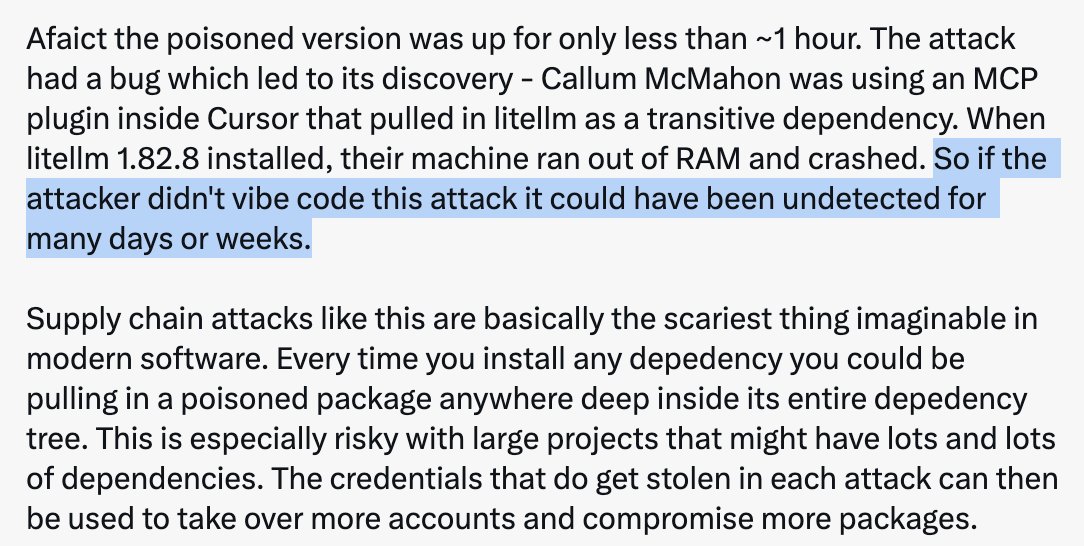
When vibe coding is an unalloyed good: your hacker vibe coded their way to a bug that limited the efficacy of their attack. 😅😮💨 (But still very serious.) Andrej Karpathy (@karpathy) Software horror: litellm PyPI supply chain attack. Simple `pip install litellm` was enough to exfiltrate SSH keys, AWS/GCP/Azure creds, Kubernetes configs, git credentials, env vars (all your API keys), shell history, crypto wallets, SSL private keys, CI/CD secrets, database passwords. LiteLLM itself has 97 million downloads per month which is already terrible, but much worse, the contagion spreads to any project that depends on litellm. For example, if you did `pip install dspy` (which depended on litellm>=1.64.0), you'd also be pwnd. Same for any other large project that depended on litellm. Afaict the poisoned version was up for only less than ~1 hour. The attack had a bug which led to its discovery – Callum McMahon was using an MCP plugin inside Cursor that pulled in litellm as a transitive dependency. When litellm 1.82.8 installed, their machine ran out of RAM and crashed. So if the attacker didn't vibe code this attack it could have been undetected for many days or weeks. Supply chain attacks like this are basically the scariest thing imaginable in modern software. Every time you install any depedency you could be pulling in a poisoned package anywhere deep inside its entire depedency tree. This is especially risky with large projects that might have lots and lots of dependencies. The credentials that do get stolen in each attack can then be used to take over more accounts and compromise more packages. Classical software engineering would have you believe that dependencies are good (we're building pyramids from bricks), but imo this has to be re-evaluated, and it's why I've been so growingly averse to them, preferring to use LLMs to "yoink" functionality when it's simple enough and possible. — https://nitter.net/karpathy/status/2036487306585268612#m
-
LiteLLM PyPI Supply Chain Attack Steals Credentials and API Keys
By
–
Software horror: litellm PyPI supply chain attack. Simple `pip install litellm` was enough to exfiltrate SSH keys, AWS/GCP/Azure creds, Kubernetes configs, git credentials, env vars (all your API keys), shell history, crypto wallets, SSL private keys, CI/CD secrets, database passwords. LiteLLM itself has 97 million downloads per month which is already terrible, but much worse, the contagion spreads to any project that depends on litellm. For example, if you did `pip install dspy` (which depended on litellm>=1.64.0), you'd also be pwnd. Same for any other large project that depended on litellm. Afaict the poisoned version was up for only less than ~1 hour. The attack had a bug which led to its discovery – Callum McMahon was using an MCP plugin inside Cursor that pulled in litellm as a transitive dependency. When litellm 1.82.8 installed, their machine ran out of RAM and crashed. So if the attacker didn't vibe code this attack it could have been undetected for many days or weeks. Supply chain attacks like this are basically the scariest thing imaginable in modern software. Every time you install any depedency you could be pulling in a poisoned package anywhere deep inside its entire depedency tree. This is especially risky with large projects that might have lots and lots of dependencies. The credentials that do get stolen in each attack can then be used to take over more accounts and compromise more packages. Classical software engineering would have you believe that dependencies are good (we're building pyramids from bricks), but imo this has to be re-evaluated, and it's why I've been so growingly averse to them, preferring to use LLMs to "yoink" functionality when it's simple enough and possible. Daniel Hnyk (@hnykda) LiteLLM HAS BEEN COMPROMISED, DO NOT UPDATE. We just discovered that LiteLLM pypi release 1.82.8. It has been compromised, it contains litellm_init.pth with base64 encoded instructions to send all the credentials it can find to remote server + self-replicate. link below — https://nitter.net/hnykda/status/2036414330267193815#m
-
hf-mount: Mount Hugging Face datasets and models as local filesystems
By
–
Now available on Hugging Face: hf-mount 🧑🚀 The team really cooked, still wrapping my head everything possible but you can do things like: – mount a 5TB dataset as a local folder and query only the parts you need with DuckDB (✅ works) – browse any model repo with ls/cat like it's a USB drive – use a shared read-write bucket as a team drive for ML artifacts – drop the init container that downloads models in your k8s pods – point llama.cpp at a mounted GGUF and run inference (infinite storage??)
→ View original post on X — @thom_wolf, 2026-03-24 16:13 UTC
-
Airweave Releases Open-Source Error Monitoring Agent
By
–
Here is the link to the repo:
→ https://
github.com/airweave-ai/er
ror-monitoring-agent
… Shoutout to @airweave_ai for building this and making it 100% open-source for the community! Don't forget to drop a on to help boost visibility -
Airweave releases open-source production debugging tool
By
–
🚨 @Airweave_ai just solved one of the absolute hardest problems in production debugging and…
— Charly Wargnier (@DataChaz) 24 mars 2026
… they open-sourced it 🤯
Server logs are great at telling you when something broke in production.
They are terrible at telling you why it happened.
This new tool adds that… pic.twitter.com/wNf2C3oj03@Airweave_ai just solved one of the absolute hardest problems in production debugging and… … they open-sourced it Server logs are great at telling you when something broke in production. They are terrible at telling you why it happened. This new tool adds that
-
Software Supply Chain Attacks: Prevention and Future Threats
By
–
(Re futuresearch.ai/blog/litellm-pypi-supply-chain-attack/ and other supply-chain attacks. There will be more) [Translated from EN to English]
-
GitHub LiteLLM Exploit Comments Mystery Explained
By
–
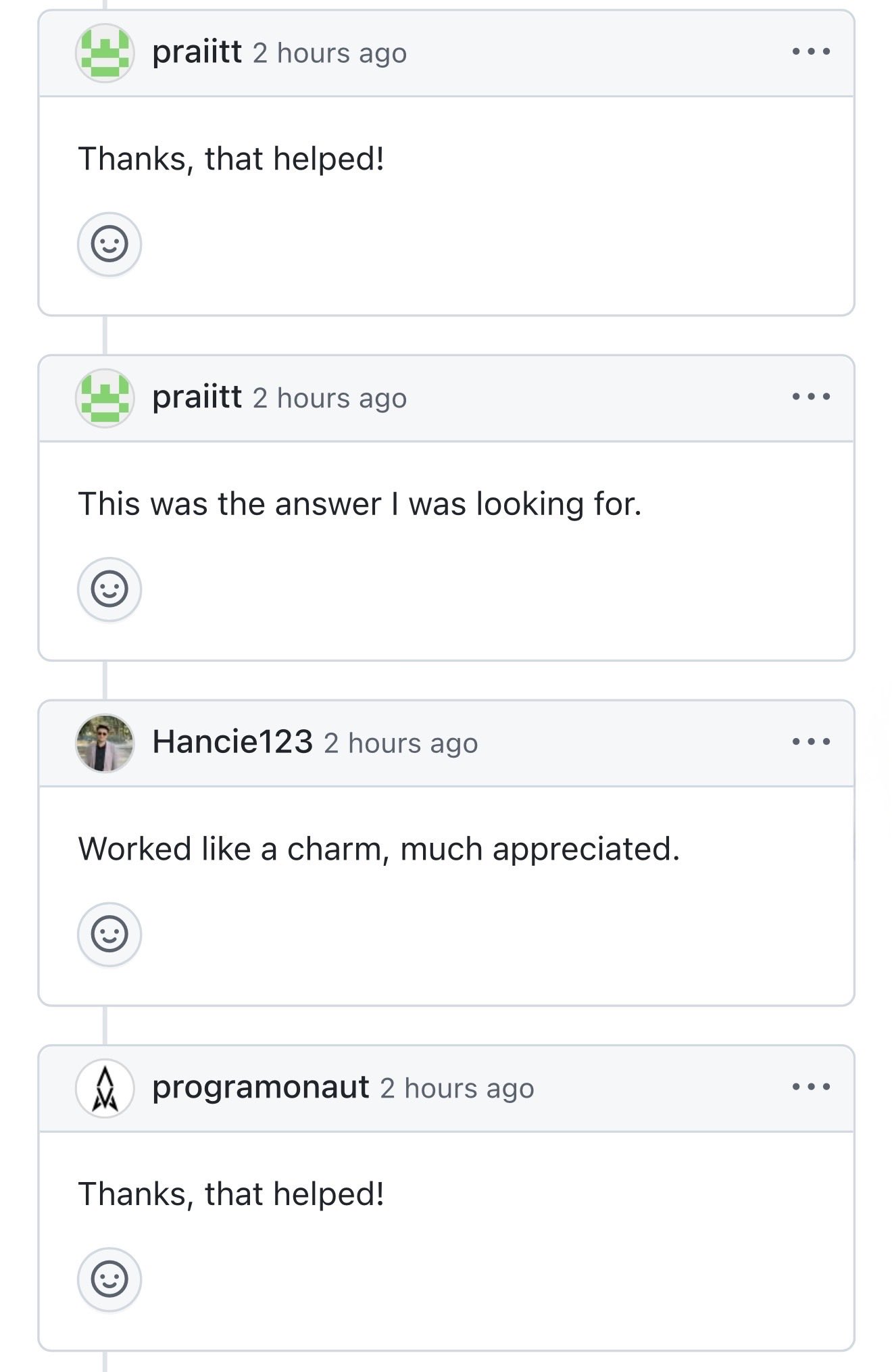
Anyone got any theories as to why there are hundreds of comments like this on the GitHub issue reporting the exploit? https://
github.com/BerriAI/litell
m/issues/24512
… -
LiteLLM Package Quarantined on PyPI After Security Compromise
By
–
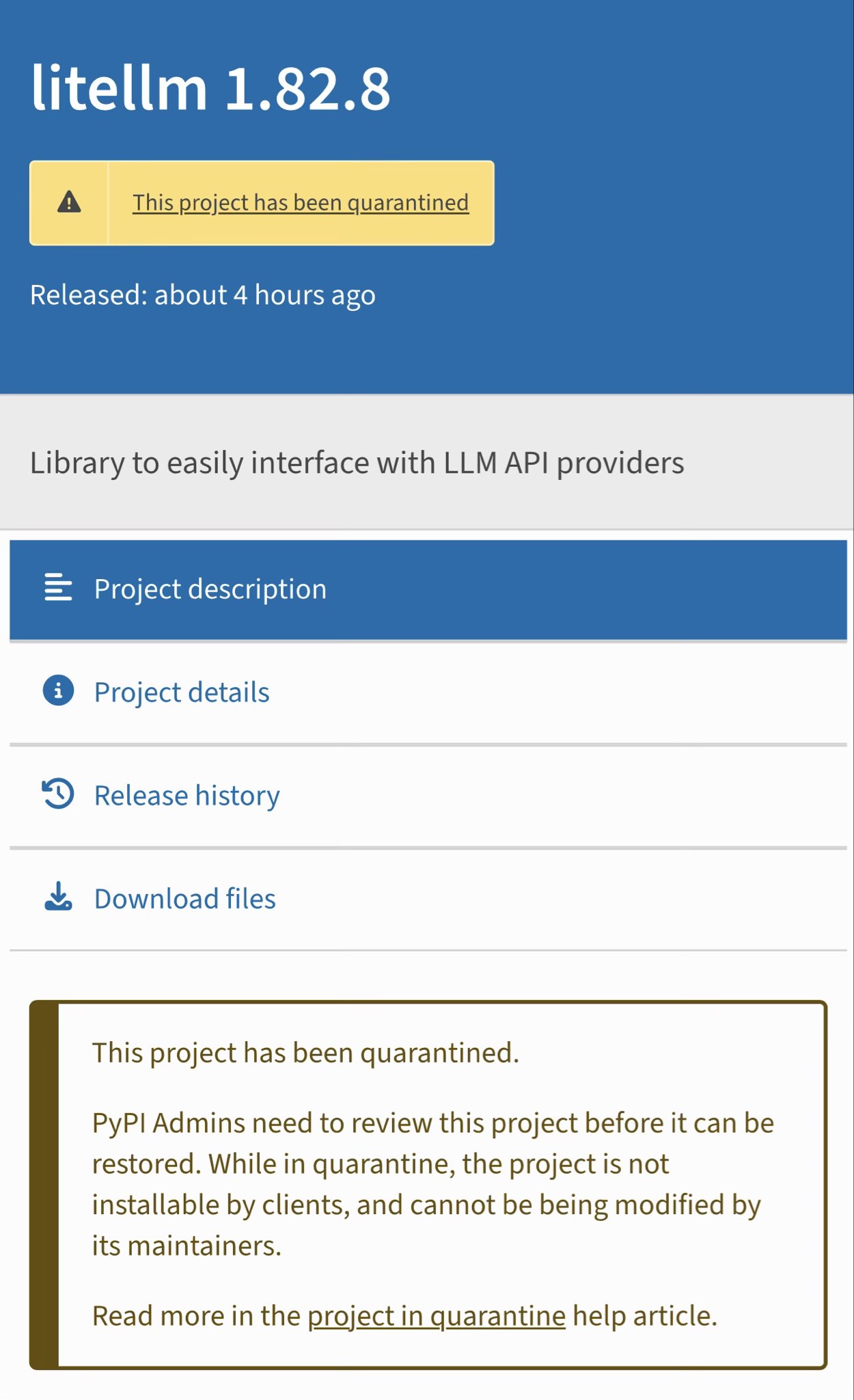
Thankfully the LiteLLM package has now been marked as "quarantined" on PyPI so attempting to install the compromised update via pip et al shouldn't work
-
FlashAttention-4 Release Bridges Gap Between Research and Production
By
–
FlashAttention-4 in the official release is huge. The gap between research implementations and production-ready code keeps shrinking. Also nice to see MPS getting more love, Apple Silicon users have been waiting.