VibeVoice GitHub: github.com/microsoft/VibeVoi… (don't forget to star 🌟)
→ View original post on X — @akshay_pachaar, 2026-03-29 13:11 UTC
By
–
VibeVoice GitHub: github.com/microsoft/VibeVoi… (don't forget to star 🌟)
→ View original post on X — @akshay_pachaar, 2026-03-29 13:11 UTC
By
–
Microsoft did it again!
— Akshay 🚀 (@akshay_pachaar) 29 mars 2026
Speech AI models have a major limitation.
They slice long recordings into tiny chunks, lose track of who's speaking, and forget all context halfway through.
This is exactly what Microsoft's VibeVoice solves.
It's an open-source family of frontier voice… pic.twitter.com/YaXz1O9IQw
Microsoft did it again! Speech AI models have a major limitation. They slice long recordings into tiny chunks, lose track of who's speaking, and forget all context halfway through. This is exactly what Microsoft's VibeVoice solves. It's an open-source family of frontier voice AI models for both speech recognition and speech generation. Here's what it can do: > VibeVoice-ASR processes up to 60 minutes of audio in a single pass. No chunking. It outputs structured transcriptions with who spoke, when they spoke, and what they said. > You can feed it custom hotwords like names, technical jargon, or domain-specific terms. The model uses them to significantly improve accuracy on specialized content. > VibeVoice-TTS generates up to 90 minutes of multi-speaker speech with up to 4 distinct speakers. Natural turn-taking, emotional expression, all in one pass. > VibeVoice-Realtime is a 0.5B streaming TTS model with ~300ms first-audio latency. Small enough to deploy practically anywhere. All of this is powered by continuous speech tokenizers running at just 7.5 Hz. This ultra-low frame rate preserves audio quality while making long sequences computationally feasible. I have shared the link to the GitHub repo in the replies!
→ View original post on X — @akshay_pachaar, 2026-03-29 13:11 UTC
By
–
folks it’s open source, help out?

By
–
Building a system that autonomously executes a series of research processes has been a continuous challenge involving numerous trials and errors for our team. Our Nature paper is now available as open access, and those interested in technical details can view the PDF directly via the link below. nature.com/articles/s41586-026-10265-5.pdf Wishing for further development in this field, we are also releasing the implementation code for both versions of the AI Scientist. We hope this will be useful for your community endeavors. V1: github.com/SakanaAI/AI-Scientist
V2: github.com/SakanaAI/AI-Scientist-v2 [Translated from EN to English]
→ View original post on X — @sakanaailabs, 2026-03-29 09:47 UTC

By
–
Google open-sourced a time series foundation model. it works with any data without training. unlike traditional models, no dataset-specific training needed. TimesFM forecasts out of the box. trained on 100B real-world time-points across traffic, weather & demand forecasting.
→ View original post on X — @debashis_dutta, 2026-03-29 09:30 UTC
By
–
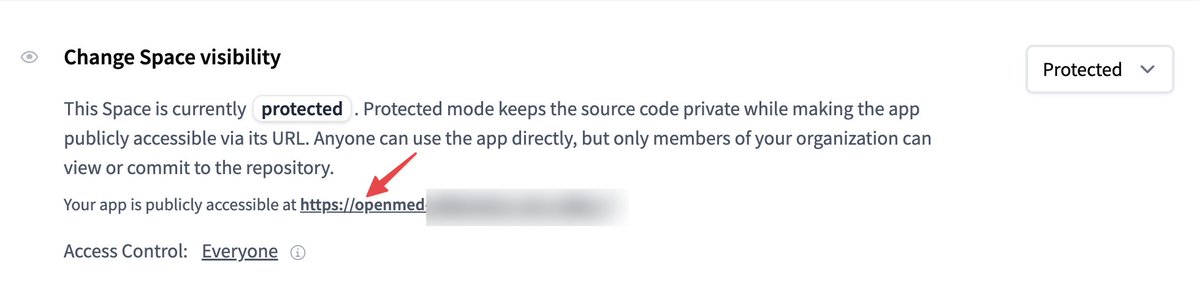
You can make a Hugging Face Space private but keep its URL publicly accessible. Private repo. Public app. No one sees your code, everyone uses your endpoint. I deploy private medical endpoints for clinical agents this way. HIPAA-sensitive inference behind a public API. Didn't know this existed until last week. What's your favorite hidden @huggingface feature?
By
–
Heads down w/ TED curation right now. If you really can’t wait toss your clanker of choice at my blog – a few folks have built their own doing this:
By
–
Fork Chrome, patch out, compile it yourself. Or use the non-user profile way.
By
–
MCPorter (MCP->CLI)0.8.0 is out. – stronger OAuth handling for servers
– valid JSON output on fallback paths
– better mcporter call behavior and error handling
– generated CLIs handle object-valued args better
– keep-alive/daemon reliability
By
–
Was looking at 1 myself today 😉