Not yet. That'll come next year as world models get integrated. They have warehouses of people training world models right now. The real race is to make them smarter and pave the way to the generalized humanoid robot, which will come probably in about five years. But the next
MACHINE LEARNING
-
Robotic Steering: Mechanistic Interpretability for VLA Finetuning
By
–
🎉Despite massive pretraining, VLAs need to adapt to specific physical contexts. We introduce Robotic Steering, a novel finetuning method using mechanistic interpretability to surpass standard FT:
— Chancharik Mitra (@chancharikm) 26 décembre 2025
🎁 22× fewer parameters
🎁 +53% on unseen tasks
🎁 Interpretable
Thread below👇 pic.twitter.com/RsSU8RANNq🎉Despite massive pretraining, VLAs need to adapt to specific physical contexts. We introduce Robotic Steering, a novel finetuning method using mechanistic interpretability to surpass standard FT: 🎁 22× fewer parameters 🎁 +53% on unseen tasks 🎁 Interpretable Thread below👇
-
Stanford CS Graduates Face AI-Driven Job Market Contraction
By
–
Stanford CS Grads Face #AI-Driven Job Crunch: Roles Cut 13%, Unemployment Hits 6.1%
#RiseoftheRobots -
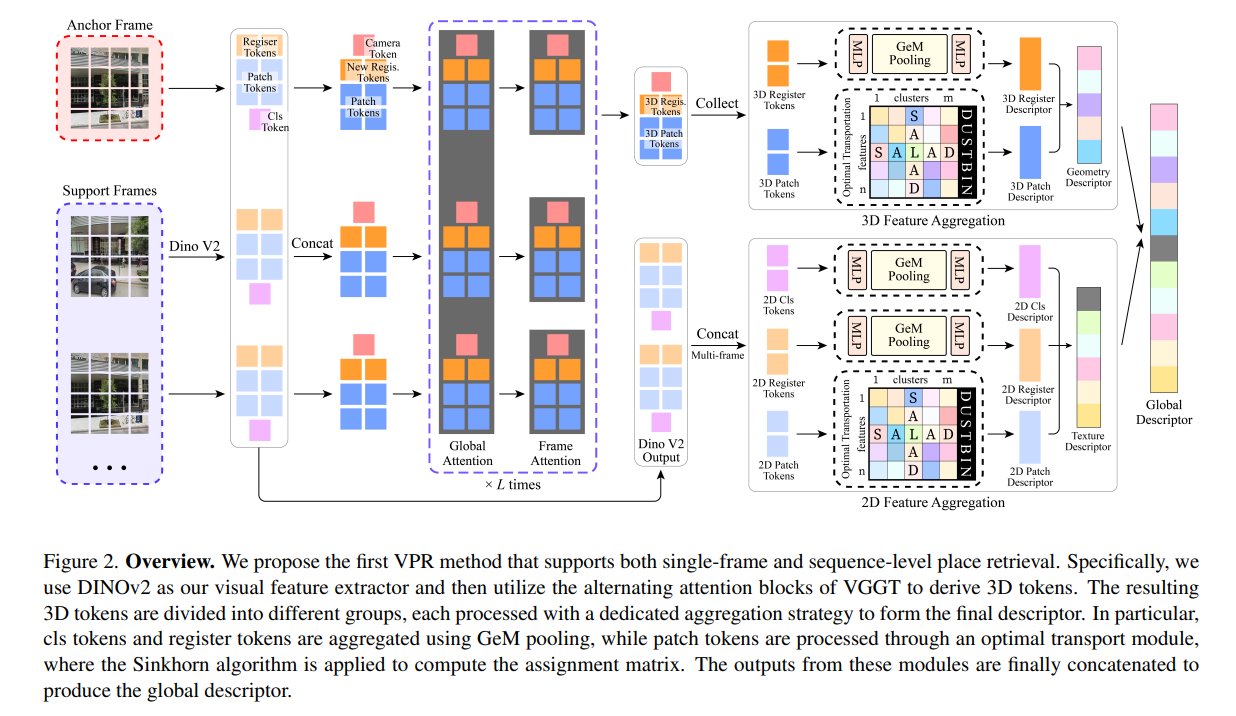
AI Research Enhances Robot Spatial Memory and Localization
By
–
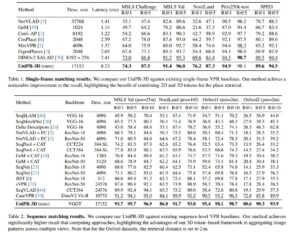
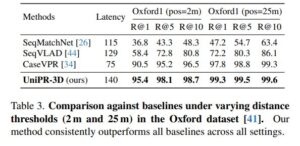
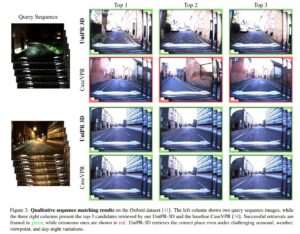
Why is this paper important? Because it makes robots much smarter and more reliable at remembering places! This paper lays out exactly how a car would figure out where it was just by looking around.
-
AI enhances race car performance by controlling traction during turns
By
–
The race cars have another sensor—a laser aimed straight down underneath the car. This laser can tell whether the car is sliding through a turn, which helps the main AI computer push the race car around the turn as hard as possible. This maximizes speed without losing traction,
-
Battery-Powered Edge AI: Future of Robotics and Medical Devices
By
–
Sitting around with family talking about things NVIDIA would want to buy next. Battery powered edge AI comes to the top of my head. And discussion. Will run a ton of robots, or pieces of them, like one per hand, and medical devices. Including brain computer interfaces. Runs
-
ScaledML 2026 Conference: Machine Learning Slides and Resources
By
–
Slides: https://
cdn2.hubspot.net/hubfs/6212008/
ScaledMLMediaArchives/2020/Slides/DennisAbts-2020.pdf
… ScaledML: http://
ScaledML.org (happening January 2026) -
The historical transition from symbolic AI to neural networks
By
–
On est d’accord. Après il y a plus de 10 ans c’est vrai que le prédictif notamment symbolique n’a pas vraiment porté ces fruits … vu que ça a vite était manger en terme d’efficacité par les approches type neural network.
-
Questions on Demo Statistics, Failure Modes, and Bimanual Grasping Correlations
By
–
Kudos on this elegant demo! Can you share some stats and failure modes? Are any of these items in the training set? Bimanual grasping seems to correlate w/ size. Are there counterexamples? Eg, a full-sized paper grocery bag w/ handle that it grasps w/ one hand? https://t.co/nITsKLCgG1
— Ken Goldberg (@Ken_Goldberg) 24 décembre 2025Kudos on this elegant demo! Can you share some stats and failure modes? Are any of these items in the training set? Bimanual grasping seems to correlate w/ size. Are there counterexamples? Eg, a full-sized paper grocery bag w/ handle that it grasps w/ one hand?
-

VLMs Struggle with Physical World Reasoning from Videos
By
–
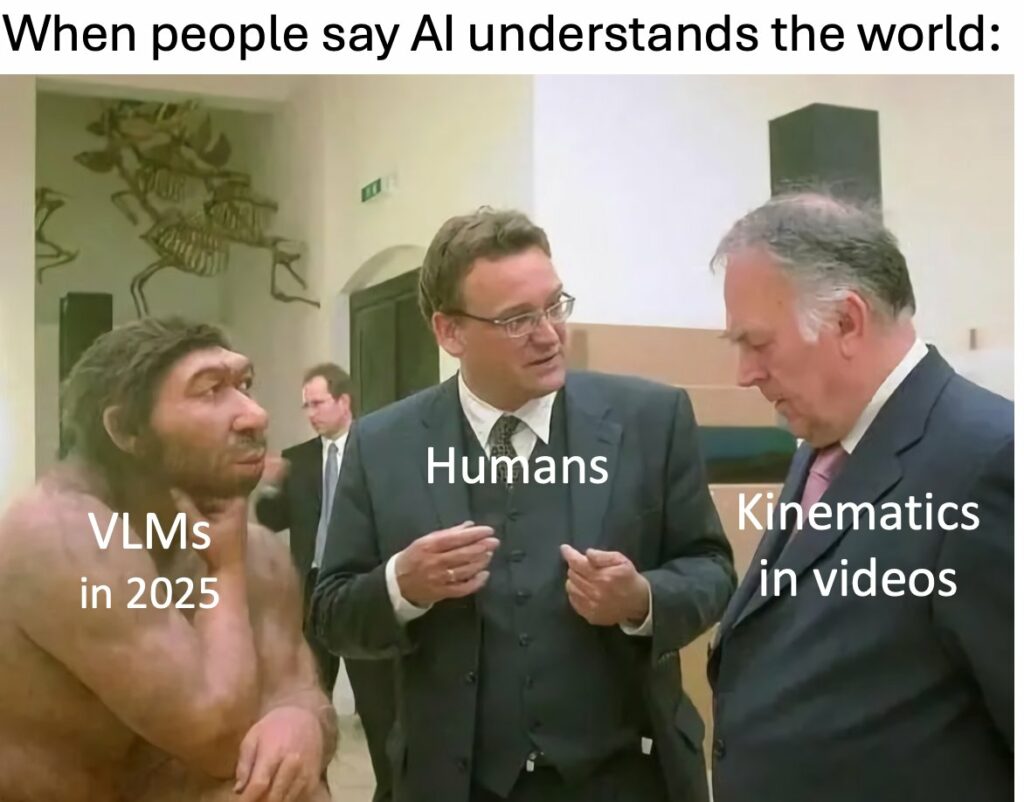
‼️VLMs/MLLMs do NOT yet understand the physical world from videos‼️ In our recent work, we found that even the most advanced AI models still lag behind humans in one key aspect: reasoning about the kinematic properties of objects from videos. Takeaways: 1. ChatGPT 5.1 leads overall among 21 advanced VLMs, followed by Gemini 2.5 Pro/Flash. 2. Grok 4.1 delivers impressive performance at the lowest API cost. 3. Qwen3-VL is the top-performing open-source model. Read here: quantiphy.stanford.edu/ 🧵1/N