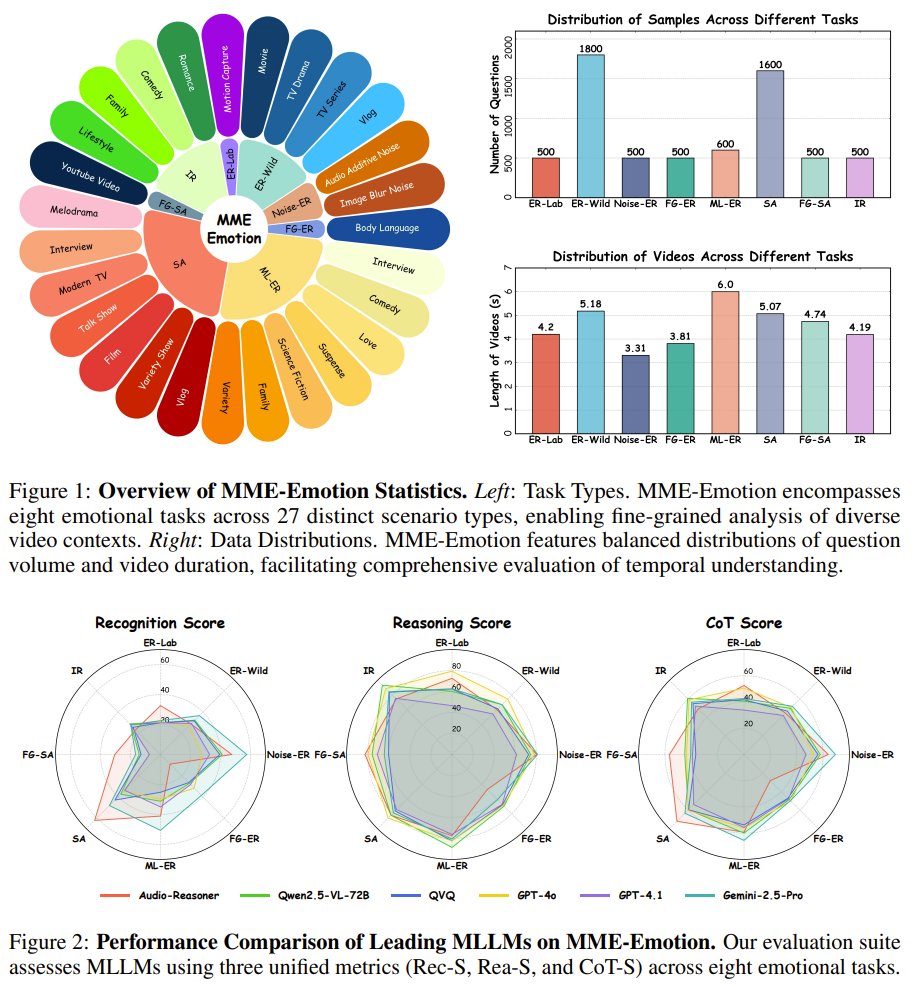
How truly emotionally intelligent are our most advanced AI models? A massive collaboration led by Fan Zhang et al. from The Chinese University of Hong Kong, Tongyi Lab, SZTU, and Tencent, introduces MME-Emotion. This groundbreaking benchmark, the largest of its kind, uses over
MACHINE LEARNING
-
Qwen 3.5 27B with Hermes Agent is Highly Rated
By
–
Qwen 3.5 27B (Dense) with Hermes Agent is REALLY GOOD
-
Running Native Keras Code Locally with PyTorch
By
–
afaik you can use Keras with PyTorch, but I've never tried it, and I just want to run some native Keras code smoothly on my local machine
-
Automated Sandwich Production Line by Bizerba
By
–
#Automated Sandwich Production Line by Bizerba
— Ronald van Loon (@Ronald_vanLoon) 28 mars 2026
by @MachinePix#Robotics #MachineLearning #ArtificialIntelligence #ML #Innovation #FoodTech pic.twitter.com/cvrdWsq4rs#Automated Sandwich Production Line by Bizerba
by
@MachinePix #Robotics #MachineLearning #ArtificialIntelligence #ML #Innovation #FoodTech -
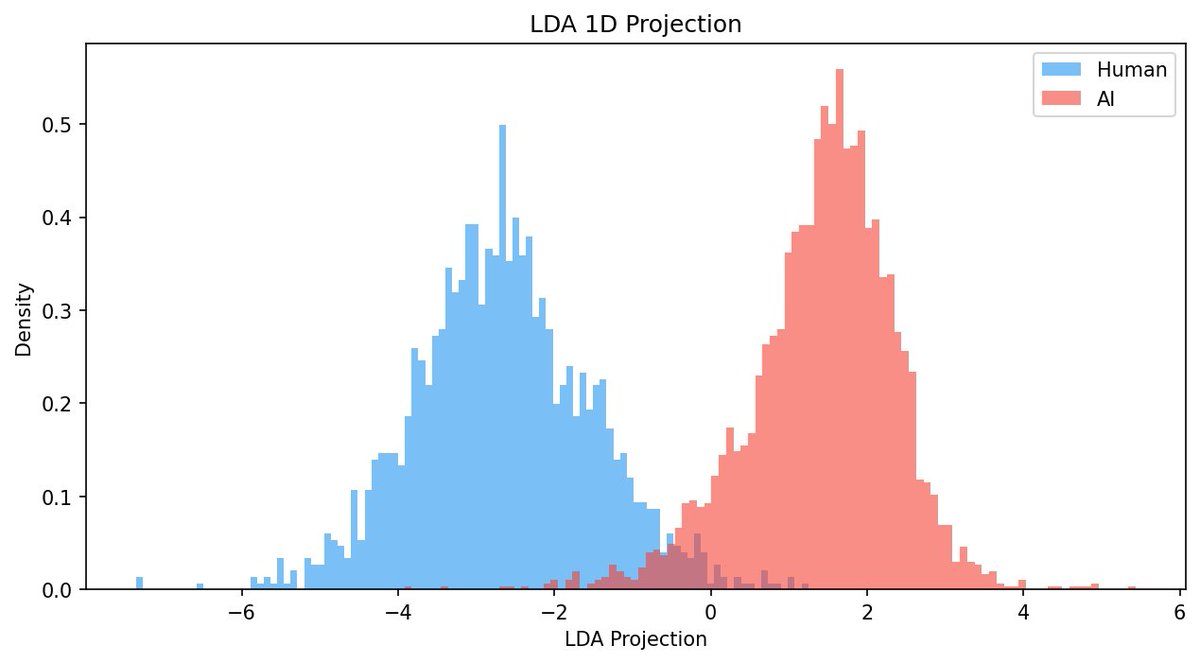
Training AI Detection Model to Identify LLM-Generated Text
By
–
In an effort to try stop seeing so much slop I've been trying to train my own AI detection model. Found something incredibly interesting. for the most part LLM generated text and human written text are linearly separable.
-
Meta Open-Sources TRIBE v2 Brain Response Foundation Model
By
–
🧠 Meta just open-sourced TRIBE v2 – a foundation model that simulates how the human brain responds to sight, sound & language.
— Futurepedia – Learn to Leverage AI (@futurepedia_io) 28 mars 2026
Months of lab work. Now done in seconds.
Here's what makes it different:
🔹 Predicts fMRI-style brain responses across 70,000 neural points
🔹 Often… pic.twitter.com/lul9VgwjhmMeta just open-sourced TRIBE v2 – a foundation model that simulates how the human brain responds to sight, sound & language. Months of lab work. Now done in seconds. Here's what makes it different: Predicts fMRI-style brain responses across 70,000 neural points Often
-
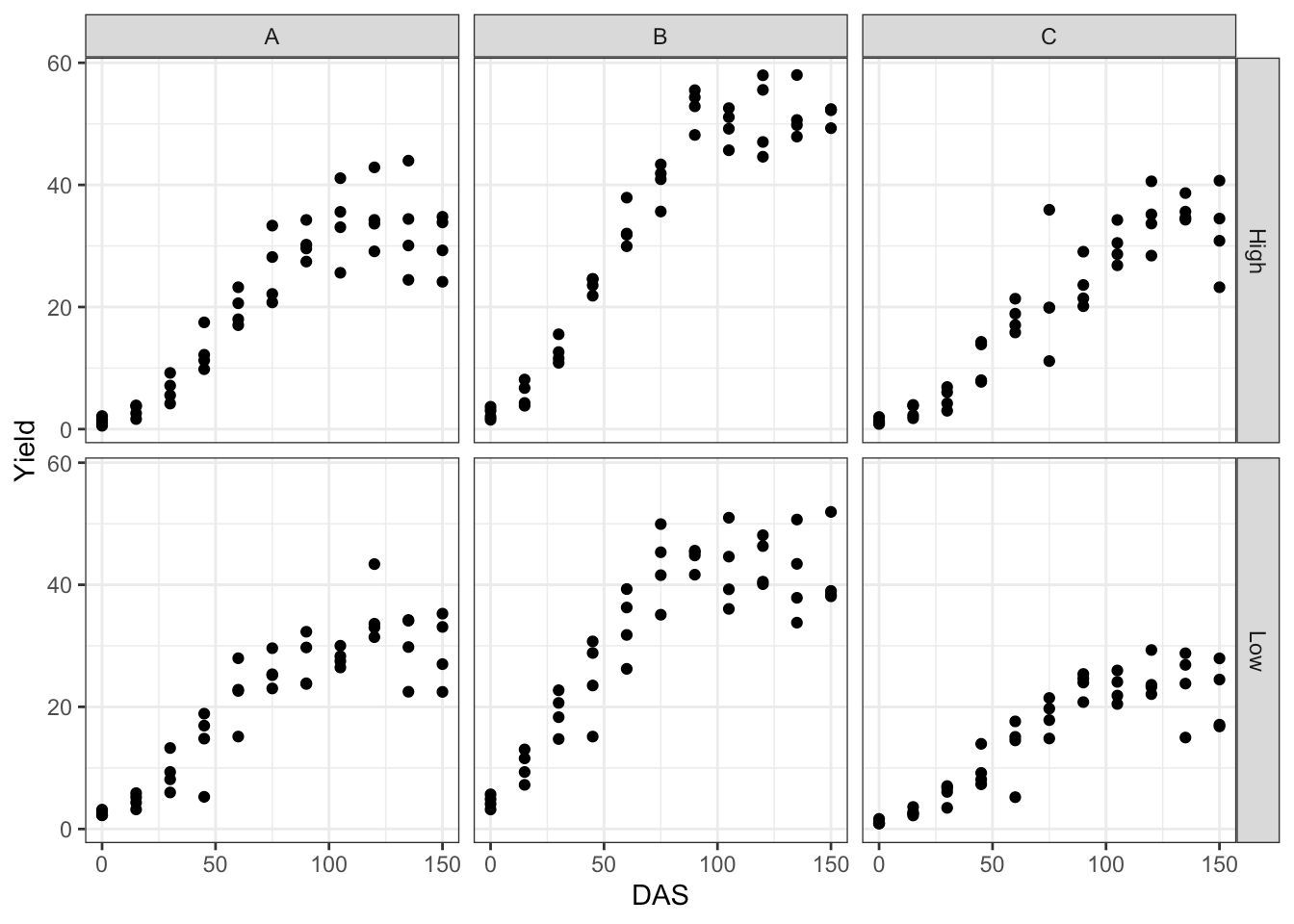
Bridging Biology and Statistics: Nonlinear Regression Interactions
By
–
Fixing the bridge between biologists and statisticians | Testing for interactions in nonlinear regression https://
buff.ly/AlCNiol
#AI #MachineLearning #DeepLearning #LLMs #DataScience -
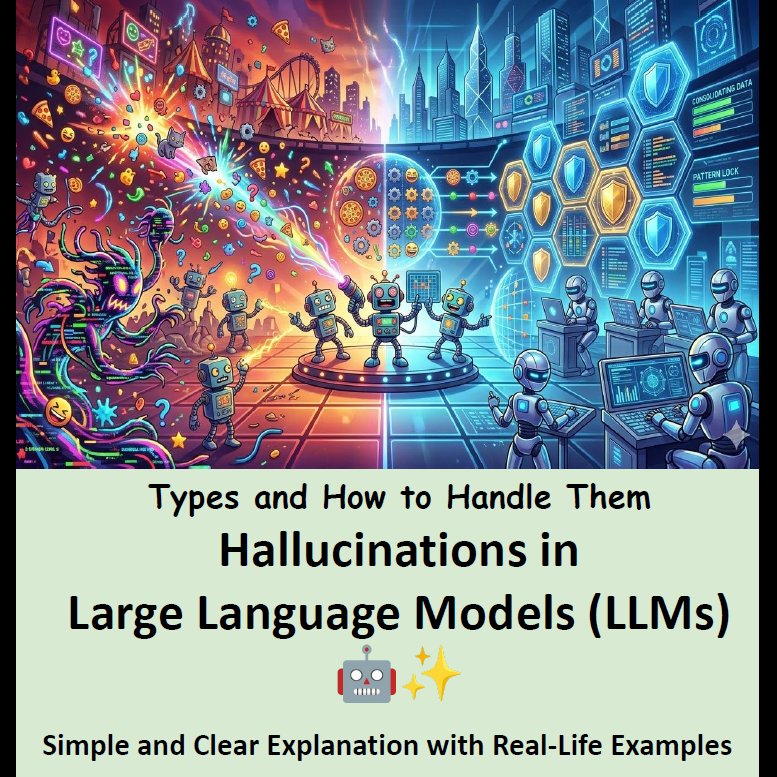
4700 Free Resources Available for X Subscribers Monthly
By
–
I continue adding more 𝐅𝐑𝐄𝐄 resources for my @X Subscribers to access: 𝗼𝘃𝗲𝗿 𝟒𝟕𝟎𝟎 𝗿𝗲𝘀𝗼𝘂𝗿𝗰𝗲𝘀 𝗮𝗿𝗲 𝗻𝗼𝘄 𝗮𝘃𝗮𝗶𝗹𝗮𝗯𝗹𝗲. Subscribe for only US$6/month #MachineLearning #ML #AI #DataScience #Python #Mathematics #Statistics #SQL #GenAI #AgenticAI
-
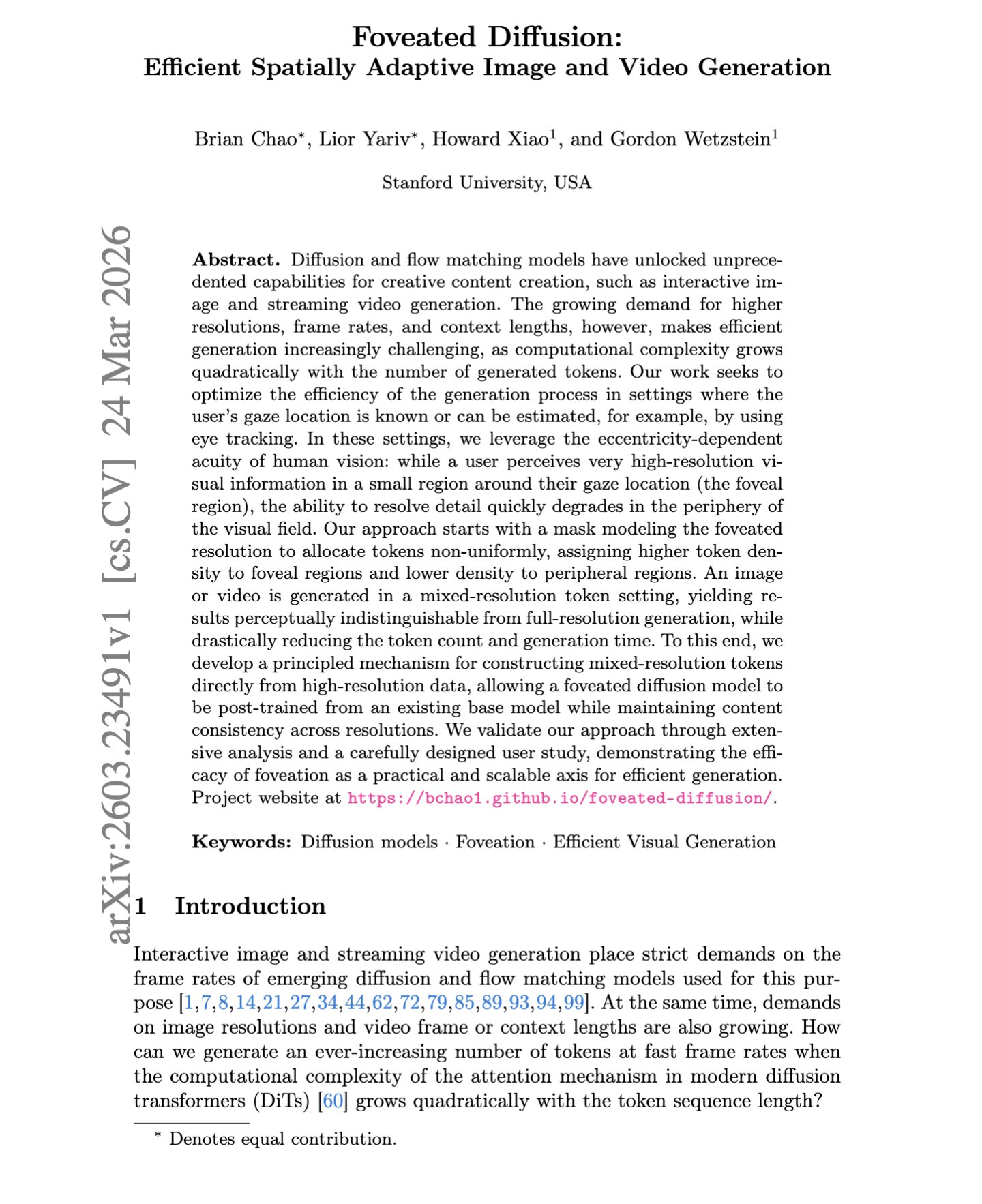
Foveated Diffusion: Efficient Spatially Adaptive Image Video Generation
By
–
"Foveated Diffusion: Efficient Spatially Adaptive Image and Generation" This paper introduces the logic of human vision to diffusion models, where you generate full detail only when the viewer is looking, and becomes low detail in the periphery. With this setup, you can
-
Day 83 GPU Programming: DeepSeek Multi-Head Latent Attention Optimization
By
–
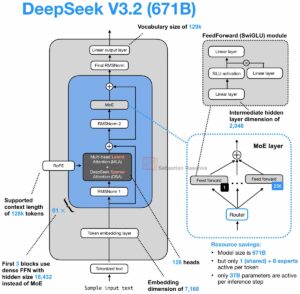
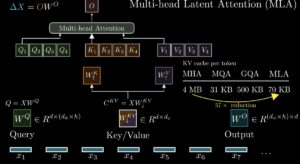
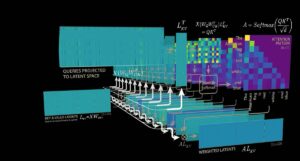
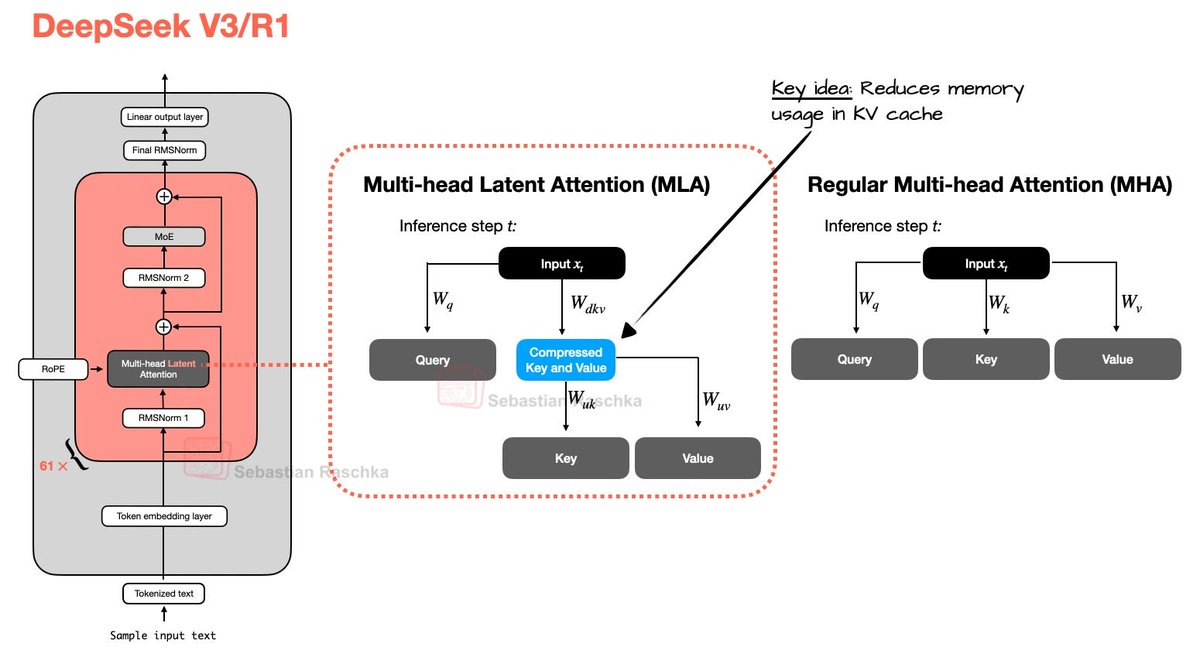
Day 83/365 of GPU Programming Looking at DeepSeek's Multi-Head Latent Attention today. The last part of the AMD challenge series is to optimize an MLA decode kernel for MI355X where the absorbed Q and compressed KV cache are given and your task is to do the attention computation. A resource that really helped internalize what MLA does was @rasbt's incredible visual guide to attention variants in LLMs (luckily he posted that last week!), which covers everything from MHA to GQA to MLA to SWA, et cetera. If there's one place to get a visual intuition for recent attention mechanisms, it's this blog post. @jbhuang0604's video on MQA, GQA,MLA and DSA was the best conceptual intro I found on the topic and progressively builds up the ideas from first principles. The Welch Labs analysis of MLA is a great watch as well. Beautiful visualization of the changes DeepSeek made for MLA. Tried out a few kernels once I had a basic understanding of MLA and I think I'm slowly getting more comfortable with at least analyzing kernels. levi (@levidiamode) Day 82/365 of GPU Programming Taking a closer look at Mixture of Experts today, so I can write better MoE kernels. Specifically, to optimize an MXFP4 MoE fused kernel for the GPU Mode challenge. I haven't had much prior exposure to MoEs, so lots of new concepts I learned today. Luckily I found the best intro to MoEs thanks to @MaartenGr visual overview of the topic. I then watched @tatsu_hashimoto's amazing Stanford CS336 lecture on MoEs, which added deeper context around why MoEs are gaining popularity, FLOPs, OLMoE, infra complexity, routing functions (mindblown this works so well…), expert sizes, training objectives, top k routing and DeepSeek variations. Once I had a basic understanding I started playing around with the some AITER kernels but progress there is tbd. Also had a nice chat with @juscallmevyom (who was kind enough to reach out!) about the AMD kernels and the challenge of materialization overhead. — https://nitter.net/levidiamode/status/2037297869518950430#m