AI Dynamics

Global AI News Aggregator

About

MACHINE LEARNING

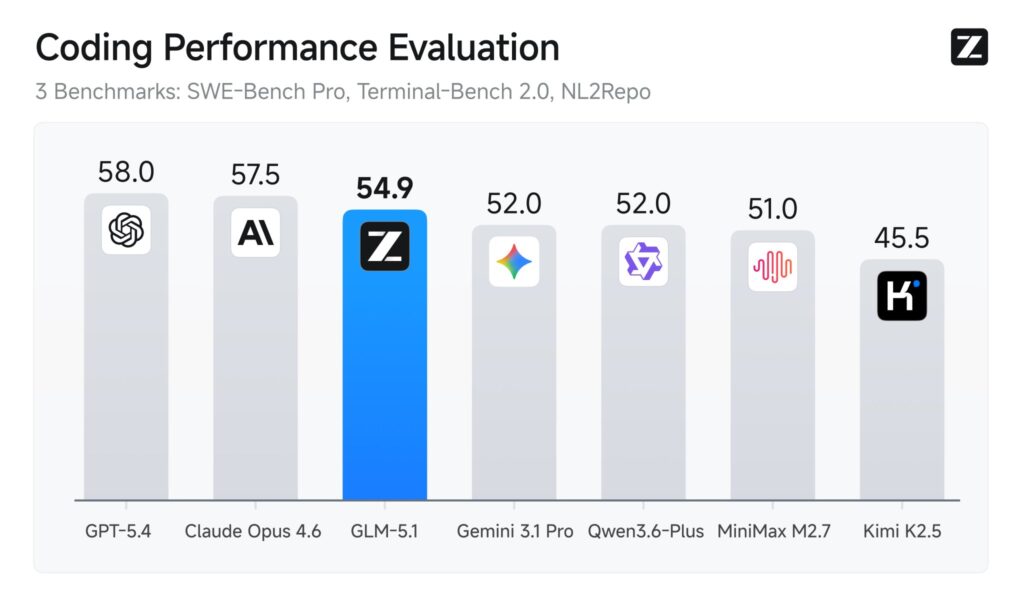
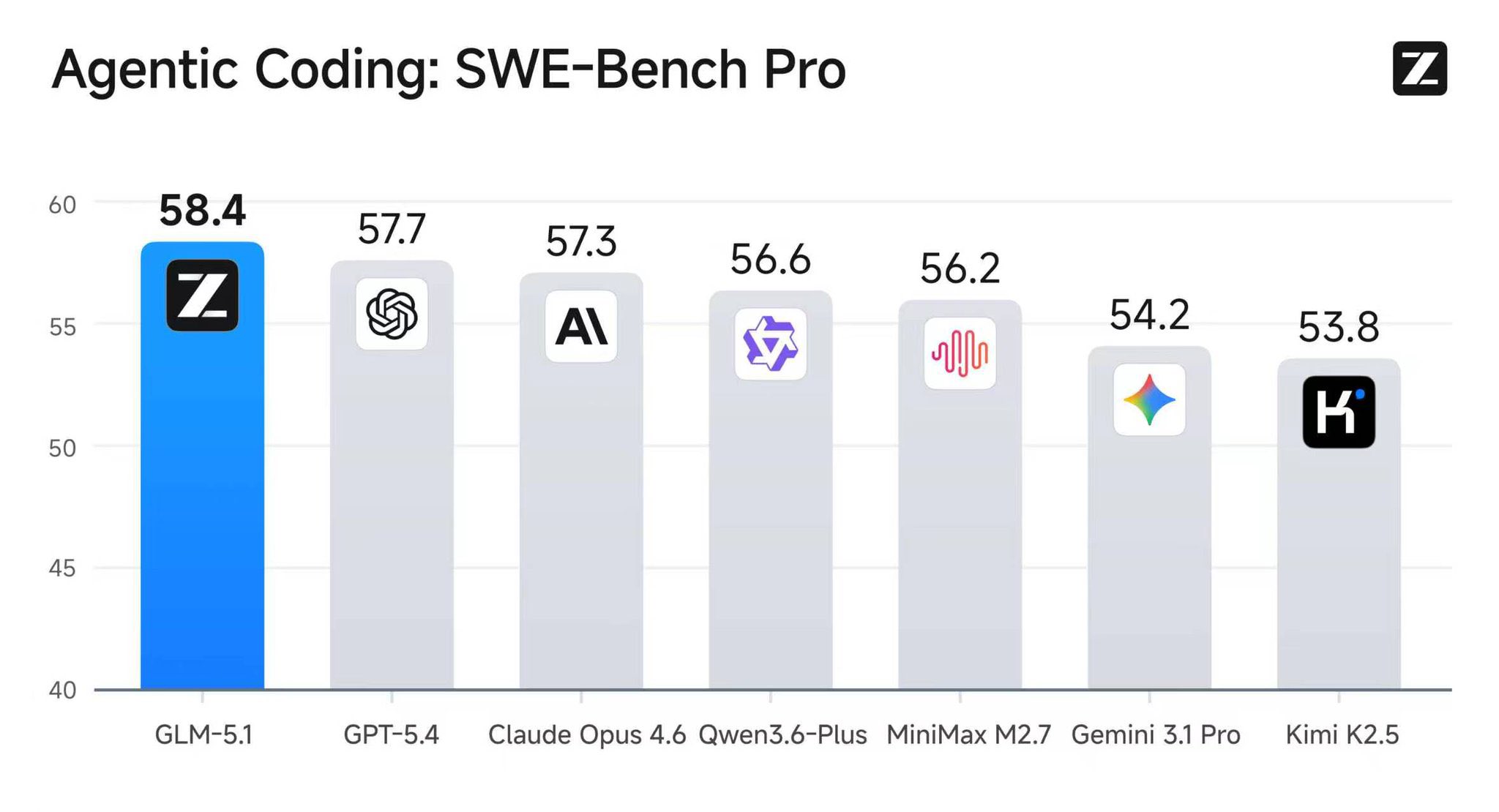
  • GLM-5.1: Open-Source AI Tops Coding Benchmarks
    GLM-5.1: Open-Source AI Tops Coding Benchmarks

    BREAKING : Z AI released GLM-5.1, an open-source model with top tier coding performance! “Number 1 in open source and number 3 globally across SWE-Bench Pro, Terminal-Bench, and NL2Repo.” “Runs autonomously for 8 hours, refining strategies through thousands of iterations.”

    → View original post on X — @testingcatalog

  • WildDet3D: Open Model for Monocular 3D Object Detection

    Today we're releasing WildDet3D—an open model for monocular 3D object detection in the wild. It works with text, clicks, or 2D boxes, and on zero-shot evals it nearly doubles the best prior scores. 🧵

    → View original post on X — @scobleizer, 2026-04-07 15:54 UTC

  • VLMs vs CNNs: When to Choose Each Approach

    When should you use a Vision Language Model instead of a traditional CNN? CNNs answer structured questions — is there a defect? Where's the pedestrian? VLMs answer open-ended questions using language. Both have their place. If your task is well-defined and repeatable, CNNs still win on speed, cost, and deployment simplicity.

    → View original post on X — @learnopencv

  • Open Source ML Team Pushes Bleeding Edge Innovation Forward

    love the work you and the team are doing! excited to support you as you push the bleeding edge of open source ML!

    → View original post on X — @reach_vb

  • Market Yourself Better Than Interview Performance for AI Jobs

    Don't Be the Best Interviewee. Be the Best Marketer. Most people prep for AI job interviews by practicing answers. That's sales — and by then, there's very little leverage left. The real game is marketing: your GitHub repos, your README files, your project results. If your marketing is strong, you can do a mediocre interview and still come out ahead. Here's how to flip the script before you even walk in. #AIJobs #MachineLearning #CareerAdvice #JobInterview #GitHub #ComputerVision #DeepLearning #TechCareers

    → View original post on X — @learnopencv

  • LeRobot Releases Robot Clothes Folding Project with Full Documentation

    Releasing the Unfolding Robotics blog! Time to unfold robotics: we trained a robot to fold clothes using 8 bimanual setups, 100+ hours of demonstrations, and 5k+ GPU hours. Flashy robot demos are everywhere. But you rarely see the real story: the data, the failures, the engineering. We’re sharing everything: code, data, and details in the blog → huggingface.co/spaces/lerobo…

    → View original post on X — @clementdelangue, 2026-04-07 15:45 UTC

  • AI Agents Discover Novel Bio-Inspired Resonator Design Autonomously

    Really cool: AI agents mapped resonators across biology, engineering, and music into a shared space, discovered an unexplored design gap, and autonomously created and validated a new bio-inspired structure to fill it. Markus J. Buehler (@ProfBuehlerMIT) A resonator is any structure that naturally prefers to vibrate at certain frequencies: a violin body, a bell, a drum skin, an acoustic filter, even many biological systems. Resonators matter because they govern how systems transmit sound, absorb or filter vibration, sense motion and perform mechanically. They are also notoriously hard to design as resonance does not depend on one property alone. It emerges from geometry, material composition, and the interplay of modes across scales. And because biology, music, and engineering usually explore very different regions of this design space, important possibilities remain hidden if you stay inside a single field. In a new study a shared representation across 39 resonators spanning biology, engineered metamaterials, musical instruments and Bach chorales was constructed. Thereby, a cricket wing harp membrane, a phononic crystal slab, and a four-voice chorale (and many others) were translated into one common map using features such as membrane character, structural periodicity, hierarchy, frequency range, damping, and modal coupling. That map revealed something important: not just how these systems relate, but where the landscape contains a gap. A region closer to biological resonators than to any known engineered material (unexplored by any field!). From that absence emerged a de novo design: a Hierarchical Ribbed Membrane Lattice. Candidate geometries were then validated with 3D finite-element analysis; the best design resonated at 2.116 kHz and exhibited nine elastic modes in the 2–8 kHz band, a regime relevant to acoustic filtering, vibration isolation, and bio-inspired sensing. Here is the mind blowing part: no human was involved…the cross-domain mapping, gap identification, design generation, and validation were carried out autonomously by AI agents in ScienceClaw × Infinite, our swarm for scientific discovery. The synthesis emerged through ArtifactReactor, a plannerless coordination mechanism in which agents broadcast unsatisfied research needs and other agents fulfill them through pressure-based matching. Each domain – biology, metamaterials, music – is a category of objects (resonators) and morphisms (physical relationships between them). The shared feature space is a functor that maps all three categories into a common target, and the gap identification is the recognition that the image of that functor is sparse where it need not be. The ArtifactReactor's schema-overlap matching behaves like a pullback: finding the universal object that connects independent diagrams through their shared structure. Autonomous agents mapped distant fields into a common representational space, identified a structure absent from any one of them, and turned that absence into a physically validated design. This is one of four case studies in the paper. More to come. @fwang108_, @leemmarom, @JaimeBerkovich, et al. (paper and code in comment). Supported by the U.S. Department of Energy Genesis Mission. — https://nitter.net/ProfBuehlerMIT/status/2041496767330435523#m

    → View original post on X — @kimmonismus, 2026-04-07 15:27 UTC
  • AlphaGenome: AI Decodes 98% of Genetic Mutations for CRISPR

    Demis Hassabis: CRISPR technology can target DNA, but identifying the exact genetic cause of diseases is tough, especially in non-coding regions. AI tools like AlphaGenome are decoding this 98%, predicting mutation impacts and paving the way for CRISPR to fix genetic diseases. [Translated from EN to English]

    → View original post on X — @kimmonismus, 2026-04-07 15:22 UTC

  • PokeeClaw: Enterprise AI Agent Platform That Actually Does the Work

    PokeeClaw is a different beast. Enterprise-grade AI agent platform. 1,000+ integrations. RL-powered tool selection. Secure sandbox. I test AI agents constantly for this newsletter. Most are demos. This one just… did the work.

    → View original post on X — @aibreakfast

  • On-Policy SFT Matches RL Generalization Without Sacrificing Efficiency

    Can we boost Supervised Fine-Tuning (SFT) to match Reinforcement Learning's (RL) generalization power, without sacrificing efficiency? Researchers from Southeast University, Microsoft Research Asia, and Shopee just dropped a game-changer! They introduce a "Distribution Discriminant Theory" to align training data with a model's own output, leading to two techniques: In-Distribution Finetuning and Hinted Decoding. This enables "On-Policy SFT" – effectively training SFT with data highly relevant to its current state, much like RL. The result? SFT that outperforms leading offline RL algorithms like DPO and SimPO in generalization, all while keeping SFT's renowned efficiency. This is a game-changer for domains where RL is too complex! Towards On-Policy SFT: Distribution Discriminant Theory and its Applications in LLM Training Paper: arxiv.org/abs/2602.12222 Code: github.com/zhangmiaosen2000/… Our report: mp.weixin.qq.com/s/vBtoBAsTe… 📬 #PapersAccepted by Jiqizhixin

    → View original post on X — @jiqizhixin