Xiaomi released MiMo-7B, a new language model optimized for reasoning tasks —Beats OpenAI's o1-mini and Alibaba's QwQ-32B-preview on multiple benchmarks
—Trained on 25T tokens using multi-token prediction
—Fully open-source under MIT License
MACHINE LEARNING
-

Xiaomi Releases MiMo-7B: Open-Source Reasoning Model Beats o1-mini
By
–
-
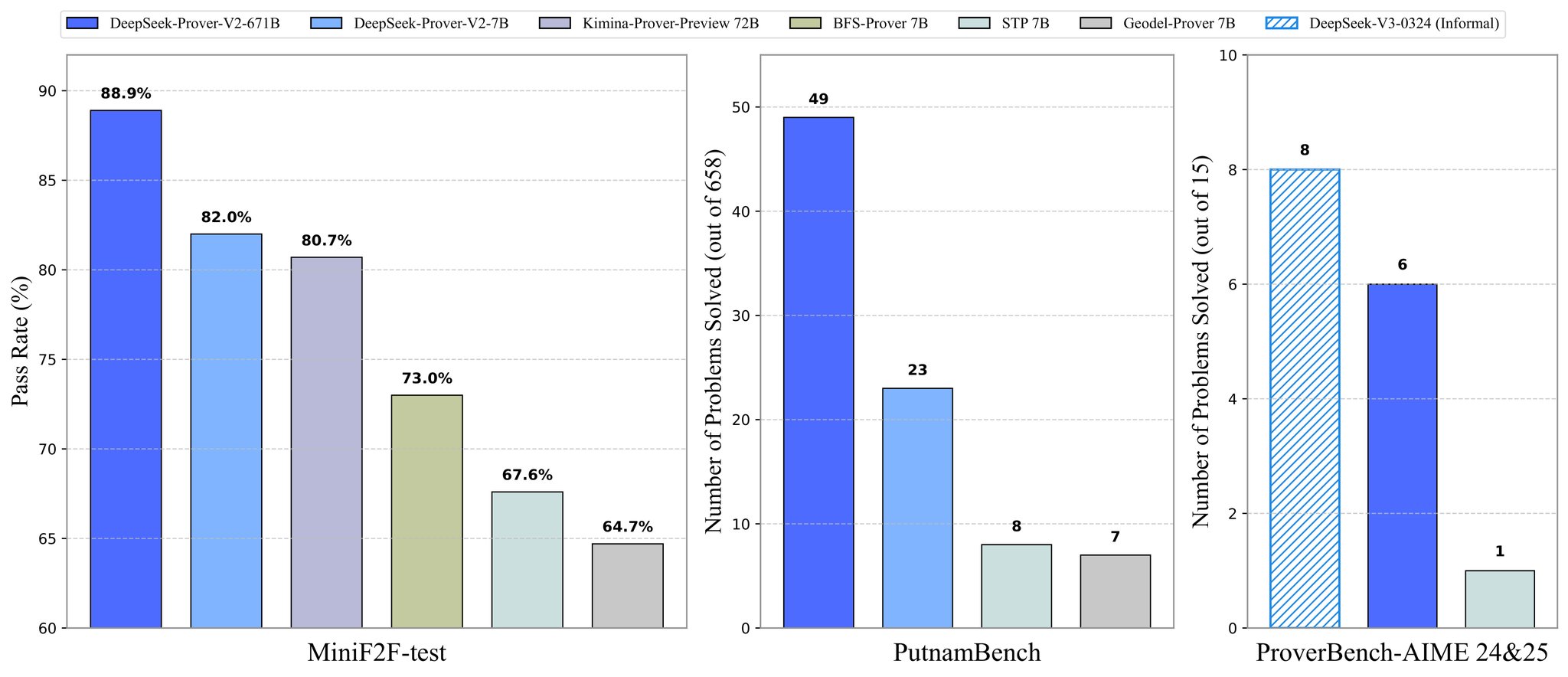
DeepSeek Releases Prover-V2: Open-Source AI for Mathematical Theorem Proving
By
–
DeepSeek quietly released Prover-V2, an open-source AI combining informal math reasoning with theorem proving —671B params
—Solves 88.9% of problems on MiniF2F
—Does 'cold-start' to break down complex proofs into subgoals before formal verification -
AI Agents in Video Games Transform Real-World Robotics
By
–
AI Agents Playing Games Will Transform Future Robots #AIAgents trained in #videogame environments are demonstrating a remarkable ability to transfer skills to new challenges, potentially revolutionizing how we build real-world #robots. This breakthrough approach could
-
CoRL Paper Deadline and Foundation Membership Invitation
By
–
Good luck to everyone finalizing papers on robot learning for the @corl_conf deadline tonight! BTW, anyone worldwide is welcome to join the Conference on Robot Learning (CoRL) Foundation member list. It's free and we won't share your info with anyone: https://
app.joinit.com/o/corl-foundat
ion/
… -
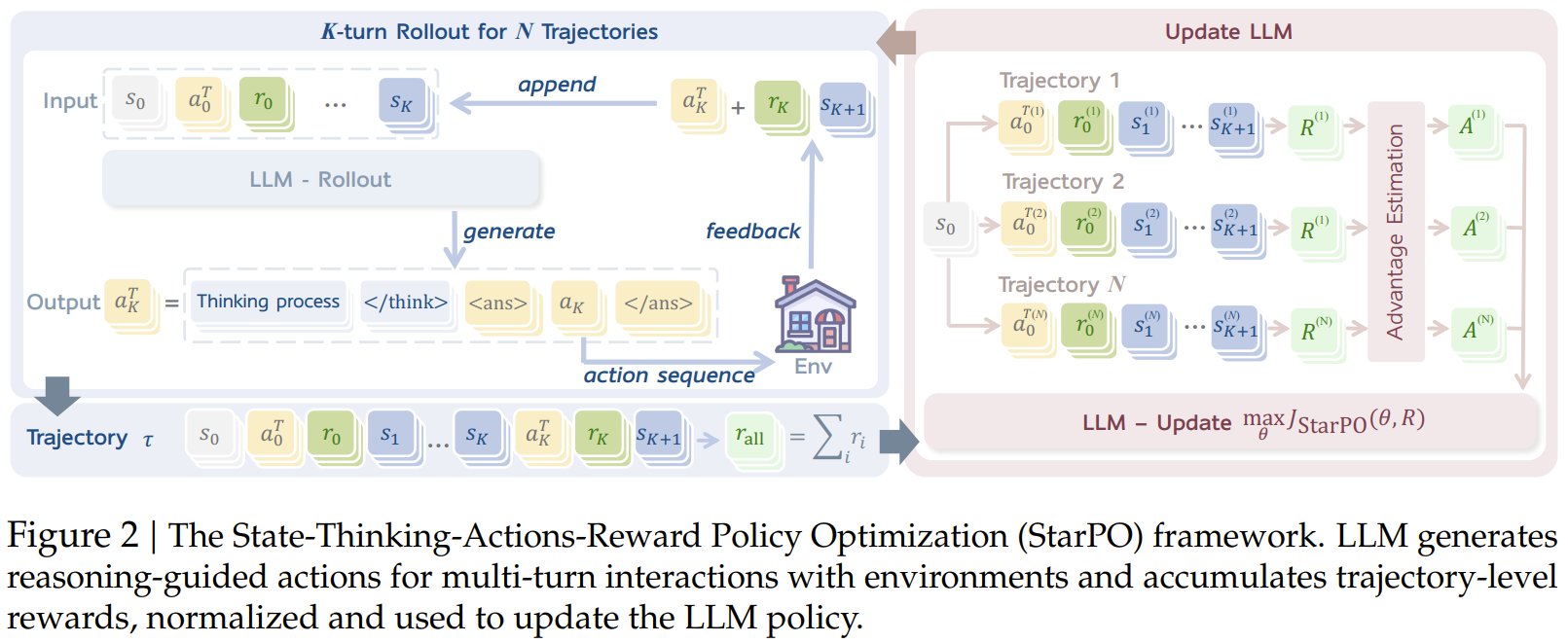
StarPO Fixes Echo Trap in Multi-Turn LLM Agent Training
By
–
Training LLM agents with RL sounds promising—until they fall into the Echo Trap.
New research shows how multi-turn training destabilizes fast, and how StarPO fixes it with better reward shaping and trajectory control.
Without it? Agents just hallucinate reasoning.
They also -
TRINDs: LLM Dataset for Tropical Infectious Disease
By
–
Today we announce TRINDs, a dataset and benchmarking pipeline that uses synthetic personas to train and optimize performance of LLMs for tropical and infectious diseases, which are out-of-distribution for most models. Learn more →https://t.co/R1PFhQ0c8R pic.twitter.com/DwYrrf7yIo
— Google AI (@GoogleAI) 30 avril 2025Today we announce TRINDs, a dataset and benchmarking pipeline that uses synthetic personas to train and optimize performance of LLMs for tropical and infectious diseases, which are out-of-distribution for most models. Learn more →
https://
goo.gle/4cTAZR4 -
AI Black Box Problem: We Deploy What We Don’t Understand
By
–
On a construit une bombe nucléaire en comprenant chaque atome.
— VISION IA (@vision_ia) 30 avril 2025
Mais l’IA ? On l’utilise à l’aveugle.
Entrée → boîte noire → réponse.
Même ses créateurs n’ont aucune idée claire de ce qu’il se passe dedans.
C’est la première fois dans l’histoire tech qu’on délègue autant…… pic.twitter.com/kb01fZDv3QOn a construit une bombe nucléaire en comprenant chaque atome. Mais l’IA ? On l’utilise à l’aveugle. Entrée → boîte noire → réponse. Même ses créateurs n’ont aucune idée claire de ce qu’il se passe dedans. C’est la première fois dans l’histoire tech qu’on délègue autant…
-
Comparing RL, SFT, and Self-Training for Model Training
By
–
Hi Lingesh, I added a section comparing RL, SFT and Self-Training to answer your question. SFT does not have a selection mechanism (R) and also it requires a supervised dataset. RL only requires the prompts 'o' as it generates the 'a's.
-

8K Real-Time Object Detection at Edge with 57% Compute Efficiency
By
–
Can you run 8K real-time object detection at the edge? We did—with 57% of compute, leaving plenty to spare. 380 overlapping tiles/sec YOLOv8l model 8K camera, no downscaling All powered by Metis + Voyager SDK Watch it in action https://
eu1.hubs.ly/H0jMJ080 -

Hugging Face’s smolagents: Tiny, focused agentic framework tackles complexity.
By
–
The agentic framework of @huggingface
, smolagents, is the tinyest ever. It has fewer features than other frameworks -> that's exactly its goal. The main issue among agentic frameworks is complexity : they tend to pile up abstractions, trying to solve everything rather than being