Some of the links:
– My slides as keynote: https://
drive.google.com/file/d/1a0h1mk
wfmV2PlekxDN8isMrDA5evc4wW/view?usp=sharing
…
– Software 2.0 blog post from 2017 https://
karpathy.medium.com/software-2-0-a
64152b37c35
…
– How LLMs flip the script on technology diffusion https://
karpathy.bearblog.dev/power-to-the-p
eople/
…
– Vibe coding MenuGen (retrospective) https://
karpathy.bearblog.dev/vibe-coding-me
nugen/
…
MACHINE LEARNING
-
Software 2.0: Keynote slides and resources on AI technology diffusion
By
–
-
AI Startup School: LLMs as New Programming Paradigm
By
–
Nice – my AI startup school talk is now up! Chapters:
— Andrej Karpathy (@karpathy) 19 juin 2025
0:00 Imo fair to say that software is changing quite fundamentally again. LLMs are a new kind of computer, and you program them *in English*. Hence I think they are well deserving of a major version upgrade in terms of… https://t.co/XCdh8EF4iNNice – my AI startup school talk is now up! Chapters: 0:00 Imo fair to say that software is changing quite fundamentally again. LLMs are a new kind of computer, and you program them *in English*. Hence I think they are well deserving of a major version upgrade in terms of
-
ML Competitions: Limitations for Large-Scale Systems Problems
By
–
ML competitions (with which I'm more familiar than pretty much anyone on the planet) are not generally the way to handle large systems problems. They need to be tightly defined, of reasonable scope, and readily scoreable using automated metrics.
-
AMD CUDA Mode Competition Strategy and MLPerf Prospects
By
–
AMD just worked closely, and to great effect, with the CUDA Mode competition, as highlighted recently by Lisa Su. I think AMD has basically gotten as much from this direction as they're gonna get, for now. It worked great, but I'm not sure it will get AMD to MLPerf.
-
AMD MLPerf strategy: confidentiality versus open source collaboration
By
–
If you get AMD on MLPerf, wouldn't they want as many people as possible to know about it? And wouldn't they love getting lots of help to get there from open source contributors? What is confidentiality getting them?!?
-
Description-Execution Gap: Key to AI Automation Potential
By
–
One way of thinking about what AI will automate first is via the “description-execution gap”: how much harder is it to describe the task than to actually do it? Tasks with large description-execution gaps will be ripe for automation because it’s easy to create training data and the value of automating them is huge, even if execution is non-trivial: – Fixing grammar mistakes in a long piece of writing – Submitting receipts for reimbursement – Training a model that achieves performance of X on a standard evaluation benchmark – Building an app where the UI is easy to check but requires a lot of moving parts in the backend Description-execution gaps tend to be small when the task is high-context and not technically challenging. The value of automating these is by definition smaller, and it’s harder to create data for them. For example: – Data processing scripts where the code to process the data is shorter and more precise than a natural language description – Running an ablation study in a high-context codebase that trains specialized models – Editing a video in a specific style (often easier to edit the video yourself than to describe how each little edit should be done) – Buying chinese groceries for my mom (she has very specific items and amounts, it's easier for her to go herself than to describe to me exactly the item, how to select the best fruit, etc) A bit similar to the discriminator-generator gap, but not exactly the same. Some things, like editing a video in a specific style, can have a large discriminator-generator gap but small description-execution gap
→ View original post on X — @_jasonwei, 2025-06-18 19:24 UTC
-
Chain of Thought Reasoning to Reach Simple Arithmetic Answer
By
–
Wow. It makes stuff in CoT just to arrive to 27!?
-
Preventing Emergent Misalignment in Language Models
By
–
Understanding and preventing misalignment generalization Recent work has shown that a language model trained to produce insecure computer code can become broadly “misaligned.” This surprising effect is called “emergent misalignment.” We studied why this happens. Through this
-
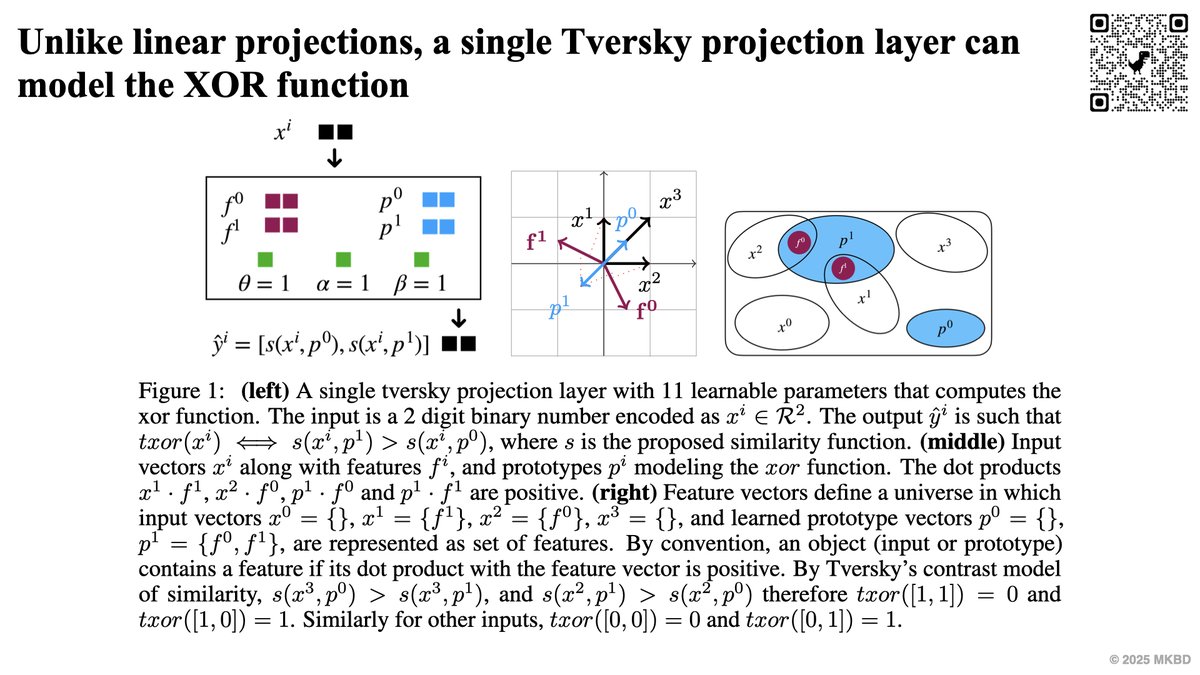
Tversky Neural Networks: Psychology-Based Deep Learning Model
By
–
New paper: What if neural networks assessed similarity like humans? We introduce Tversky Neural Networks, based on Tversky's (1977) psychological theory of similarity. These models enable efficient, interpretable, and psychologically plausible deep learning. (1/8)
-
LLM limitations, tool usage, and a specific Gemini 2.5 Pro failure
By
–
I think it would be a worse puzzle. A good LLM knows its limitations and uses tools. (Raw LLMs also can’t compute SHA1, which is why I used it.) In another reply in this thread, Gemini 2.5 Pro is seen failing at this task because it thinks the fifth letter of “Madrid” is d.