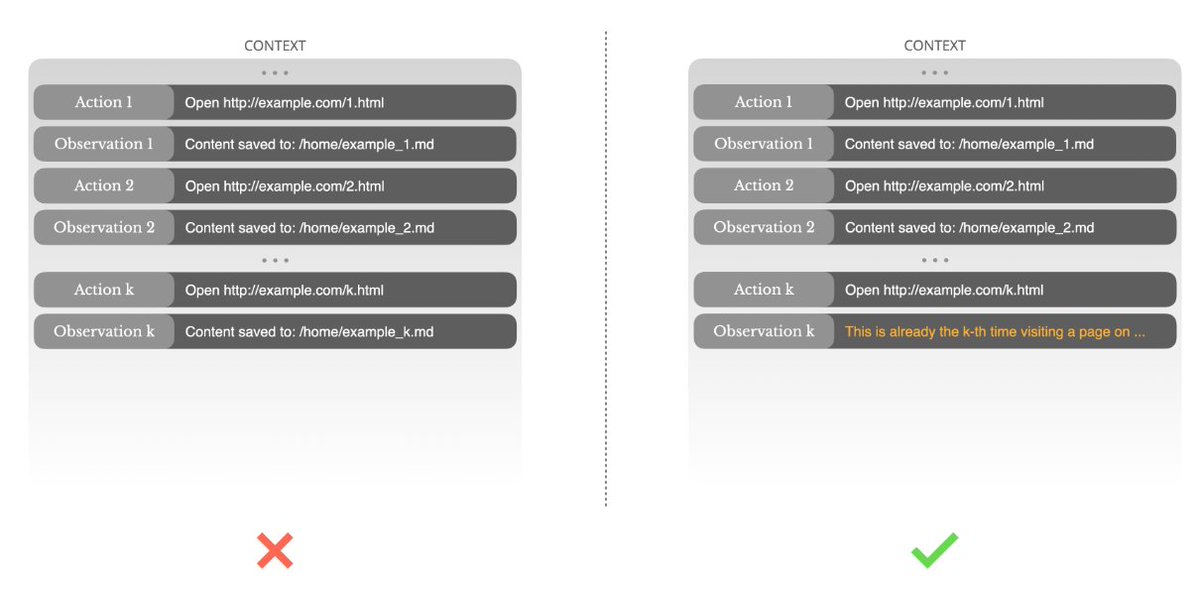
3. Dynamic few shot prompting They cautioned against using traditional few shot prompting for agents. Seeing the same few examples repeatedly will cause the agent to overfit to these examples. Ex: if you ask the agent to process a batch of 20 resumes, and one example in the prompt visits the job description, the agent might visit the same job description 20 times for these 20 resumes. Their solution is to introduce small structured variations each time an example is used: different phrasing, minor noise in formatting, etc. [Translated from EN to English]
MACHINE LEARNING
-
Tool Use in Agents: Managing Complexity and Forcing Tool Selection
By
–
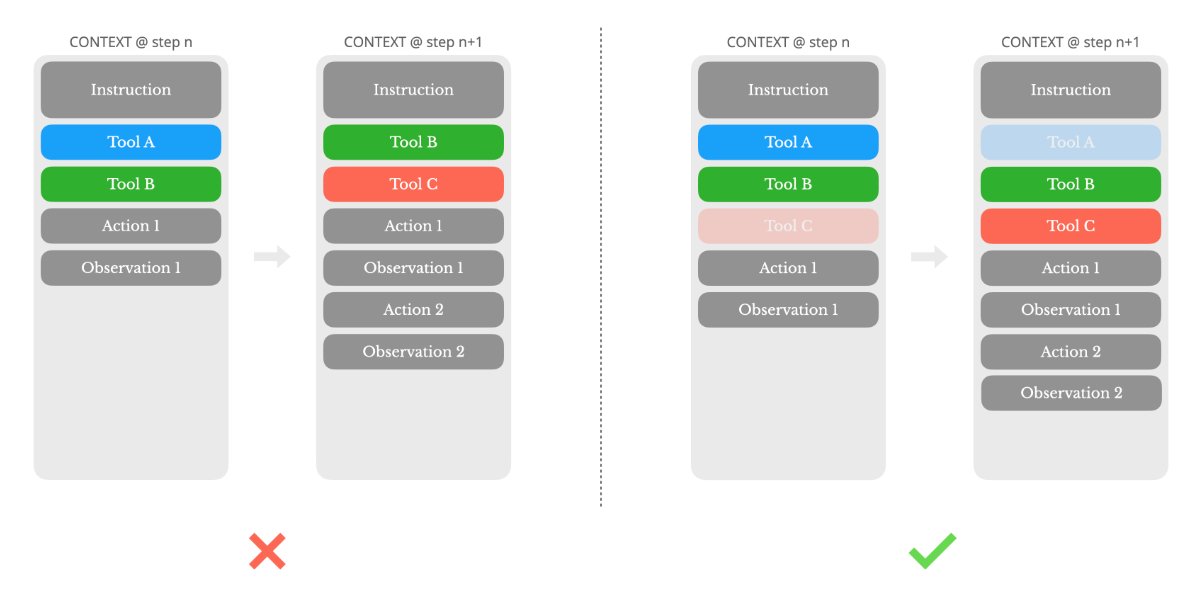
2. Tool use Given how easy it is to add new tools (e.g., with MCP servers), the number of tools a user adds to an agent can explode. Too many tools make it easier for the agent to choose the wrong action, making them dumber. They caution against removing tools mid-iteration. Instead, you can force an agent to choose certain tools with response prefilling. Ex: starting your response with <|im_start|>assistant<tool_call>{"name": “browser_ forces the agent to choose a browser. Name your tools so that related tools have the same prefix. Eg: browser tools should start with `browser_`, and command line tools should start with `shell_`
-
Context Engineering: Reversible Compact Summaries for Memory Management
By
–
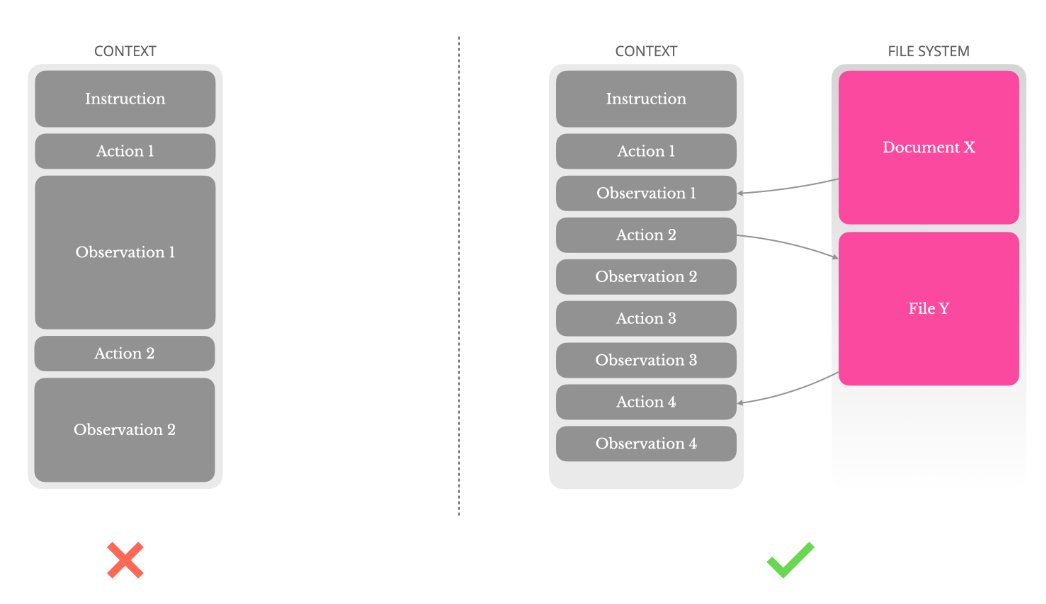
Very useful tips on tool use and memory from Manus's context engineering blog post. Key takeaways. 1. Reversible compact summary Most models allow 128K context, which can easily fill up after a few turns when working with data like PDFs or web pages. When the context gets full, they have to compact it. It’s important to compact the context so that it’s reversible. Eg, removing the content of a file/web page if the path/URL is kept.
-

SDK Design Impact on Edge AI Runtime Efficiency
By
–
In edge AI, SDK design can impact runtime efficiency as much as silicon. HotTech’s benchmarks show:
More manual stream handling → more CPU + less efficient inference (esp. on YOLOv8l). Inference scaffolding isn’t just convenience. It’s throughput. https://
eu1.hubs.ly/H0lZ_mq0: -

Kimi K2: Open-Source Trillion-Parameter MoE Model Released
By
–
Kimi K2 = Hype or Not?
— Louis-François Bouchard 🎥🤖 (@Whats_AI) 24 juillet 2025
It is the first open‑source trillion‑parameter MoE model
• 1 T total / 32 B active parameters → giant yet efficient
• Outscores GPT‑4.1 & Claude‑4 (65.8 % SWE‑Bench, 53.7 % LiveCodeBench)
• 128 k context, MIT‑licensed, no vision implemented…… pic.twitter.com/tiouZDLCScKimi K2 = Hype or Not? It is the first open‑source trillion‑parameter MoE model • 1 T total / 32 B active parameters → giant yet efficient
• Outscores GPT‑4.1 & Claude‑4 (65.8 % SWE‑Bench, 53.7 % LiveCodeBench)
• 128 k context, MIT‑licensed, no vision implemented… -
Humanity’s Last Exam Benchmark Flawed AI Measurement Concerns
By
–
This is bad for AI measurement. As other AI benchmarks have become saturated, model makers have turned to Humanity’s Last Exam as a good measure of AI ability. Except a careful review suggests many of the exam questions have incorrect “right” answers. Benchmarking is hard.
-

Gemini 2.5 Pro Achieves Gold-Winning IMO Performance
By
–
Gemini 2.5 Pro Capable of Winning Gold at IMO 2025 Yichen Huang, Lin F. Yang: https://
arxiv.org/abs/2507.15855
v2
… #ArtificialIntelligence #DeepLearning #MachineLearning -

Log-Linear Attention: Novel Approach to Transformer Efficiency
By
–
Log-Linear Attention Guo et al.: https://
arxiv.org/abs/2506.04761 #ArtificialIntelligence #DeepLearning #MachineLearning -

Ultra3D: Efficient High-Fidelity 3D Generation with Part Attention
By
–
Ultra3D Efficient and High-Fidelity 3D Generation with Part Attention
-

Pixels and Patterns: AI Vision Without Human Emotion
By
–
Pixels, Patterns, but No Poetry To See The World like Humans