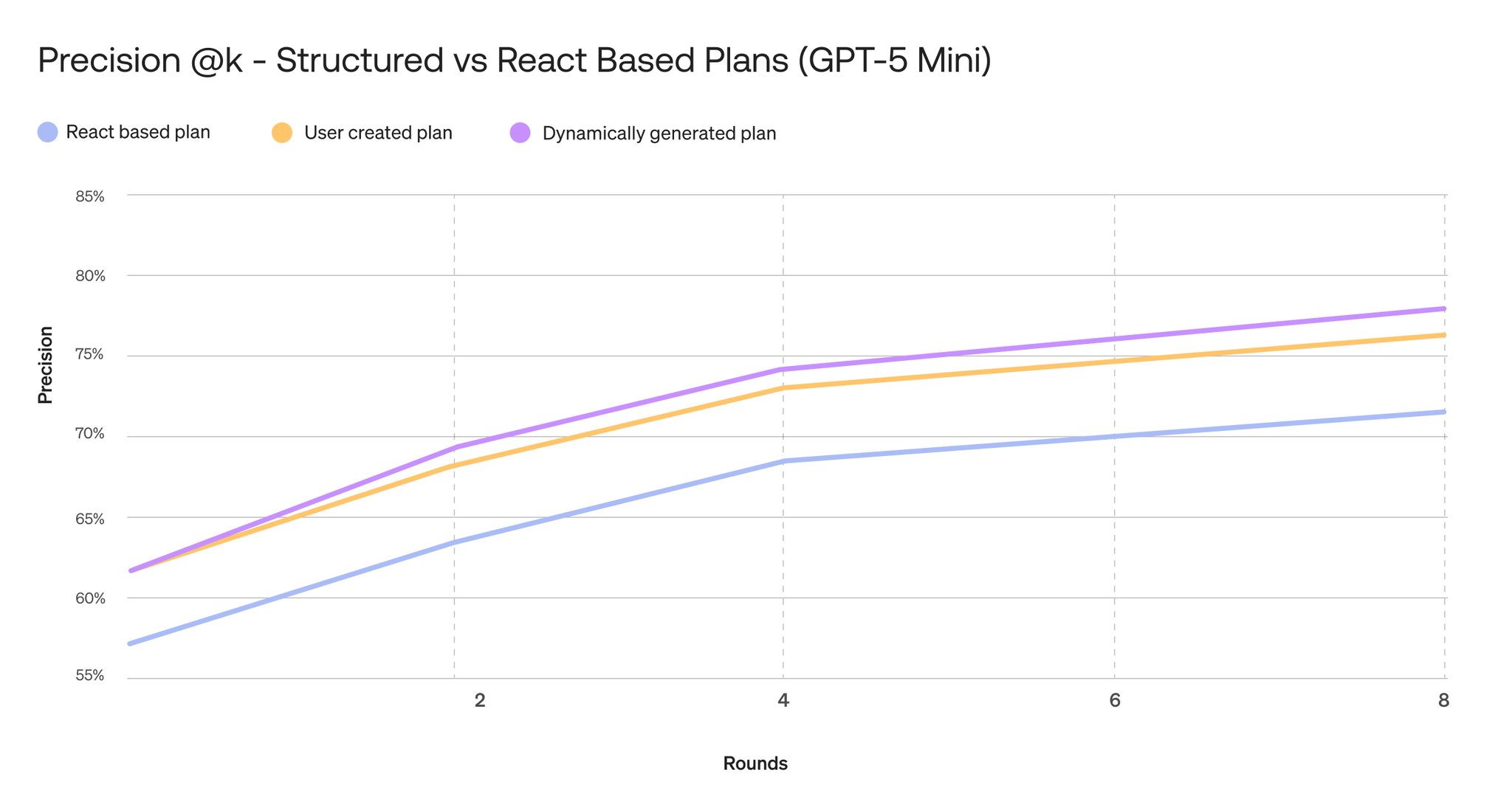
6/6 This is the core takeaway: With structured plans and decision-theoretic optimization techniques, you can get a lot more with the same models, tools and compute. And as you scale, the gap widens.
MACHINE LEARNING
-
ReAct Agents and High-Variance Execution in Long-Horizon Tasks
By
–
4/6 ReAct-style agents encode the entire plan in text, and only get evaluated at the very end. In long-horizon tasks, that turns execution into a high-variance gamble.
-

Test-Time Compute: Optimizing Where and When to Spend Resources
By
–
3/6 Once you treat execution as a test-time compute problem, the question changes. It’s no longer “which model should I use?” It’s “where should I spend compute, and when should I stop?”. That’s why multiple cheaper runs can win:
you’re buying optional paths, not just more -
Maestro: Optimizing Compute Through Agentic Framework Structure
By
–
2/6 SWE-bench is not the story. Maestro is not a dedicated SWE agent, it’s an agentic framework that optimizes based on structure and learned priors. ex: knowing that 4 runs of GPT-5 mini are cheaper and better than one GPT-5 run, leads to better use of the same compute –
-
Orchestrated Test-Time Compute Scaling for Long-Horizon Agentic Tasks
By
–
1/6 Long-horizon agentic tasks are breaking our mental models. More tokens, bigger models, and best-of-N only go so far. Orchestrated approach to test-time-compute scaling is what long-horizon tasks need. Here’s what we learned using SWE-bench as a test case. Read the blog for
-
PyTorch version preferred over TensorFlow edition
By
–
The one to the right is the PyTorch edition of the one to the left (which uses TensorFlow). Definitely would prefer that one.
-
Hinton: AI Can Tackle Math Autonomously as a Closed System
By
–
Le père de l'IA, Geoffrey Hinton, affirme que les mathématiques sont un système fermé, ce qui permet aux IA de les aborder comme un jeu.
— VISION IA (@vision_ia) 7 janvier 2026
Elles peuvent se poser leurs propres problèmes, tester des démonstrations et apprendre de ce qui fonctionne, sans dépendre d’exemples humains.… pic.twitter.com/TCciauPV22Le père de l'IA, Geoffrey Hinton, affirme que les mathématiques sont un système fermé, ce qui permet aux IA de les aborder comme un jeu. Elles peuvent se poser leurs propres problèmes, tester des démonstrations et apprendre de ce qui fonctionne, sans dépendre d’exemples humains.
-

Native Parallel Reasoner: LLMs Learn Multi-Path Problem Solving
By
–
What if an AI could truly think in parallel, not just fake it? Researchers at BIGAI introduce Native Parallel Reasoner (NPR), a new framework that teaches LLMs to break down and solve problems across multiple "thought" paths simultaneously, learning by trial and error. The
-
LFM2.5: Next Generation On-Device AI from Liquid AI
By
–
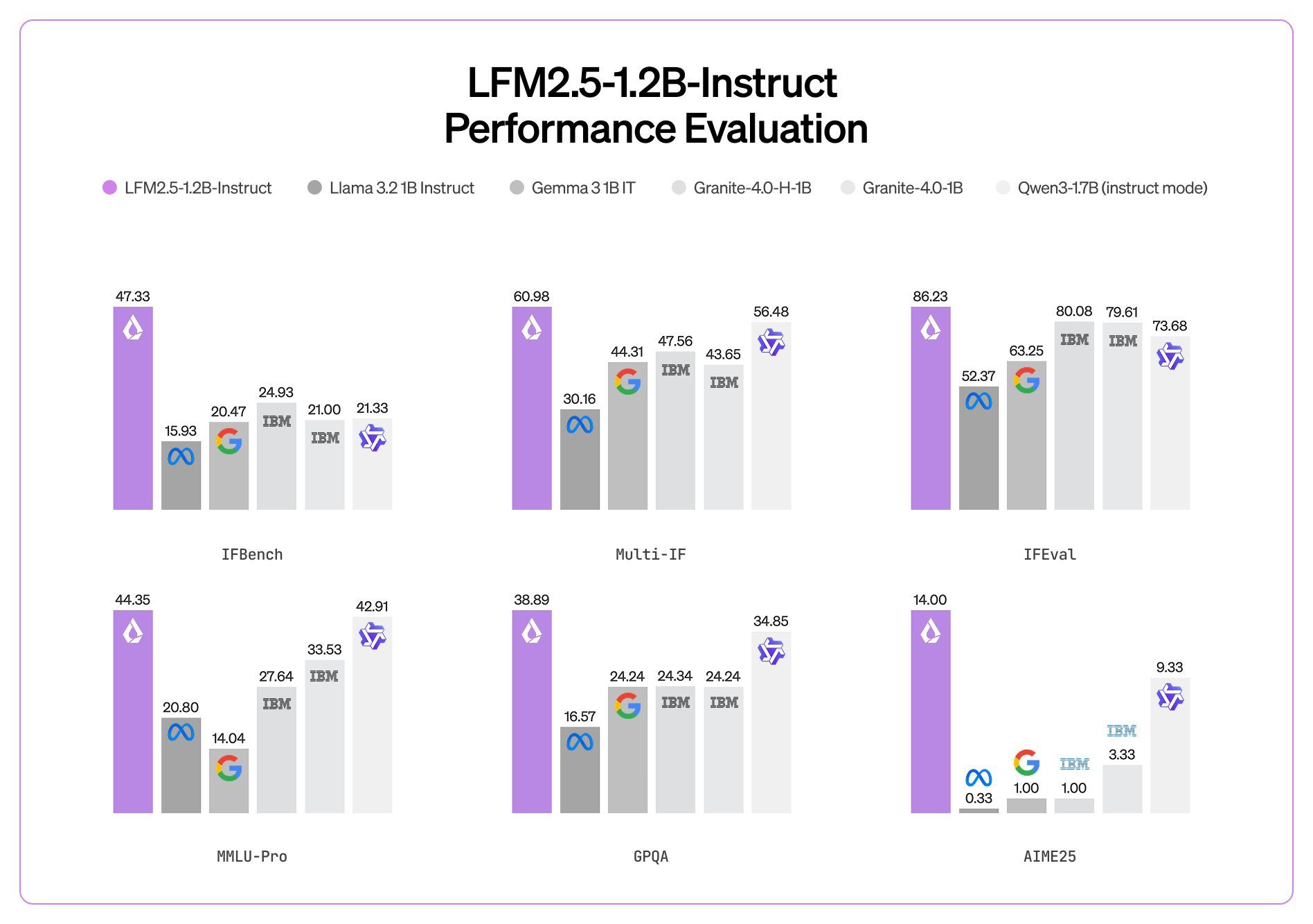
Introducing LFM2.5: The Next Generation of On-Device AI | Liquid AI https://
buff.ly/6x7JmPE
#AI #MachineLearning #DeepLearning #LLMs #DataScience -
Simulation Work Requires Understanding True Performance Gap
By
–
I still think most work should be done in simulation, but it is crucial to calibrate your understanding of the true gap!