The bigger point: you're paying for "Certainly!" and "I'd be happy to help with that" on every single response. Those tokens cost real money at scale. And they cost you time at every scale. Caveman mode isn't a hack. It's a correction. LLMs were trained on polite human text.
LLMS
-
Performance Benchmarks of AI Plugin Token Reduction
By
–
The actual benchmarks from the original plugin: → Average 65% output token reduction across 10 real prompts
→ Range: 22-87% depending on task type
→ Coding explanations saw the highest compression
→ Code blocks themselves stayed identical One tester ran it for 6 days on a -
Optimizing LLM Performance Through Brevity and Prompt Engineering
By
–
Why does talking like a caveman actually work? Three things happening at once: → LLMs spend 40-60% of output tokens on filler. Greetings, restatements, encouragement, transitions. You scroll past all of it. Caveman strips it. → A March 2026 paper found that brevity
-
Professor says transformers paper would fail his student
By
–
If the transformers paper was written by one of my students, I wouldn’t let him graduate until he did a better job.
-
Instruct vs Thinking Models: Cost, Speed, and Trade-offs
By
–
Instruct vs thinking models, in one line:
— Satya Mallick (@LearnOpenCV) 19 mai 2026
System 1 vs System 2 — with a 5–20x cost-and-speed gap.
If the task doesn't need planning or multi-step reasoning, the thinking model isn't smarter. Just slower, pricier, and more likely to hallucinate.
— Dr. Satya Mallick, CEO @ OpenCV… pic.twitter.com/QcHpeXyVHDInstruct vs thinking models, in one line:
System 1 vs System 2 — with a 5–20x cost-and-speed gap.
If the task doesn't need planning or multi-step reasoning, the thinking model isn't smarter. Just slower, pricier, and more likely to hallucinate.
— Dr. Satya Mallick, CEO @ OpenCV -
Technical Analysis of Optimal Mixture-of-Experts Model Configuration
By
–
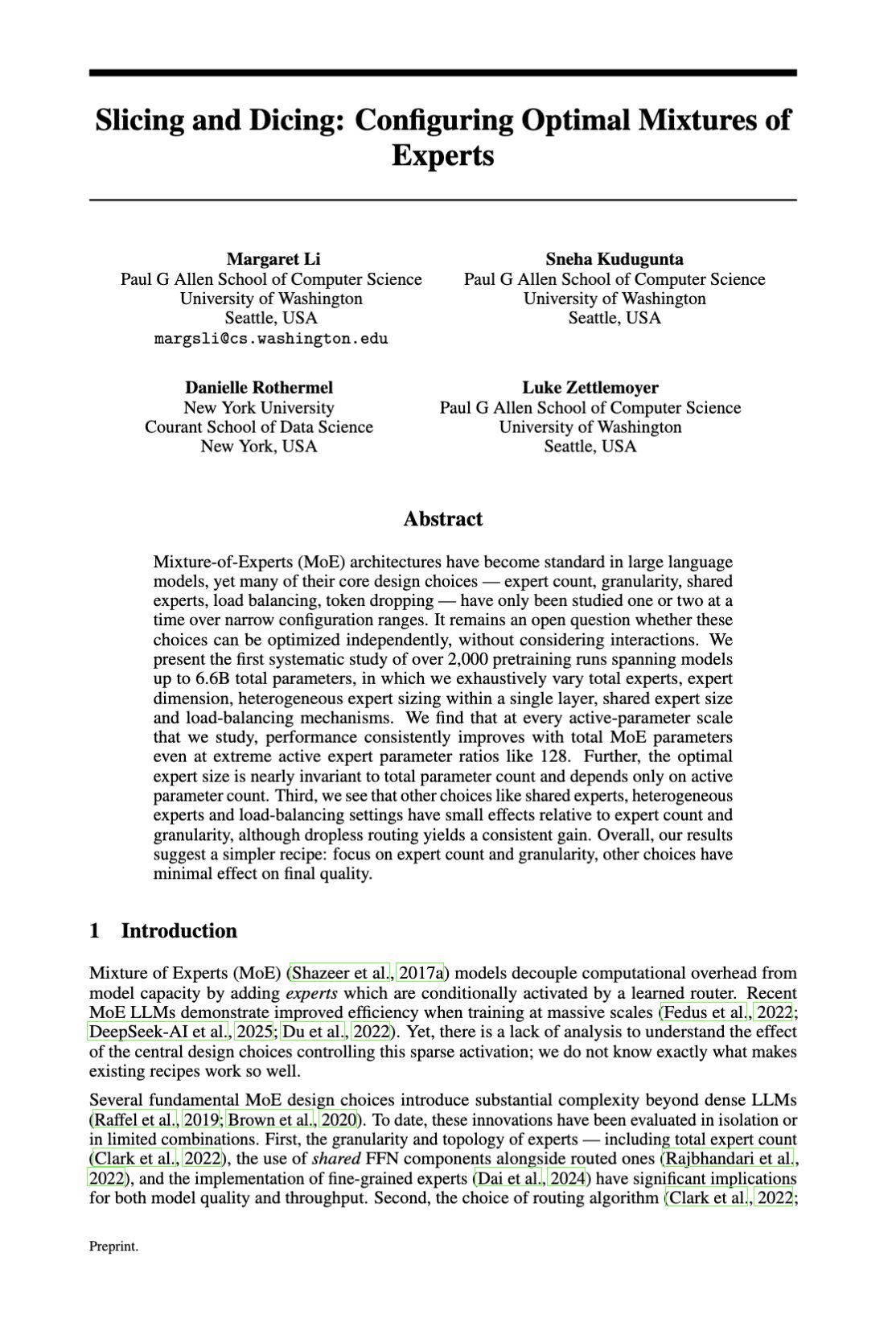
"Slicing and Dicing: Configuring Optimal MoE" MoE models have a huge design space, but most choices are overcomplicated. This paper runs 2,000+ pretraining runs up to 6.6B params and finds the key knobs are mostly expert count and expert granularity. Adding more inactive
-
Research on Steered LLM Activations and Manifold Reachability
By
–
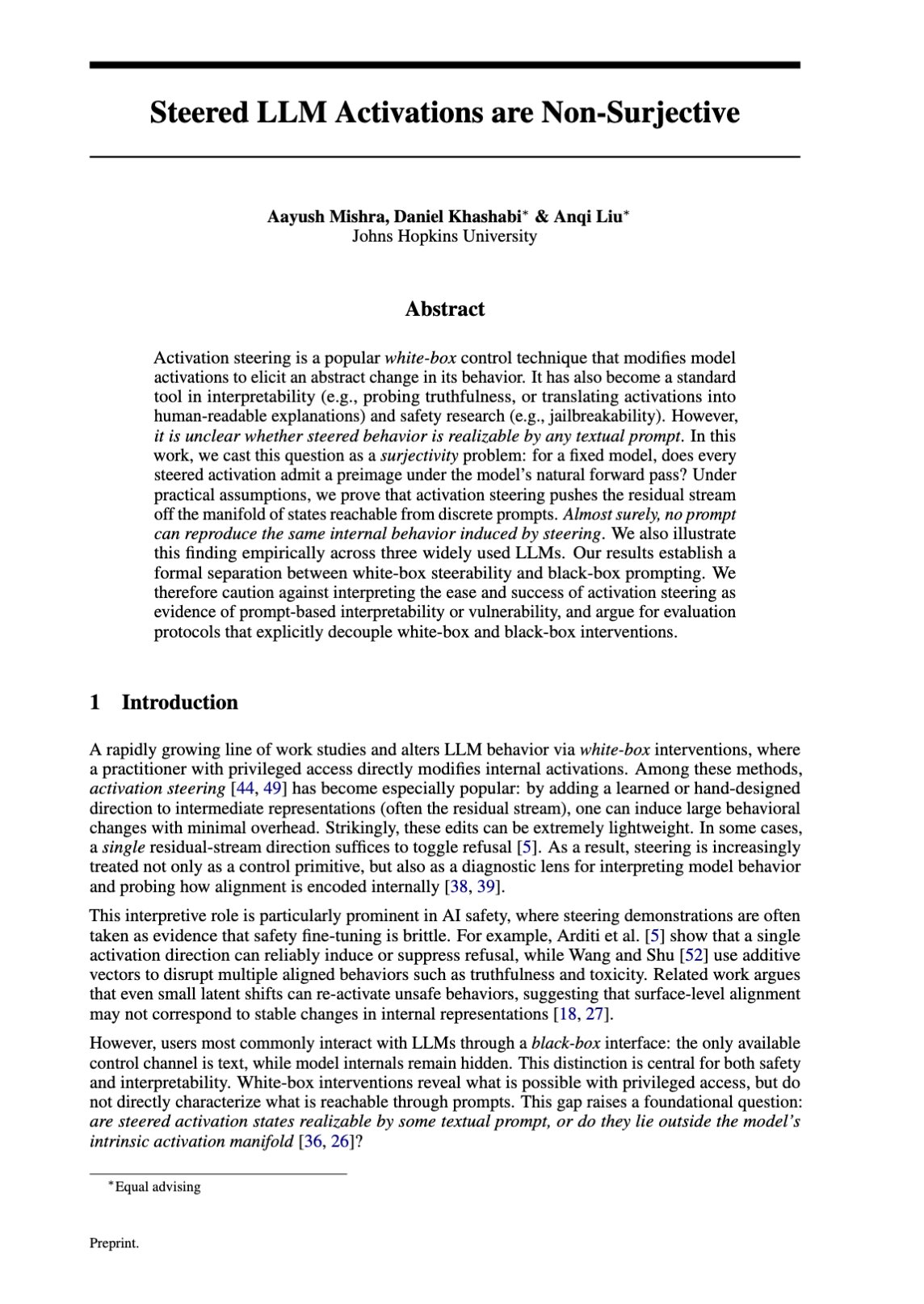
"Steered LLM Activations are Non-Surjective" Activation steering can make an LLM behave very differently, but that doesn't mean any prompt could have caused the same internal state. This paper shows steering pushes activations off the prompt-reachable manifold into
-
SmallCode: A Terminal-Native Coding Agent for Local AI Models
By
–
SmallCode is a terminal-native coding agent designed from the ground up to extract useful work from local models (7B-20B) running on consumer hardware.
-
Running local terminal AI agents with Ollama
By
–
It runs locally without any cost. SmallCode is not a model. It's a terminal agent. Here's Gemma 4 model on @ollama
: https://
ollama.com/library/gemma4 I'd suggest to read the post before commenting LOL -
Local AI coding agent workflow with Hermes orchestrator
By
–
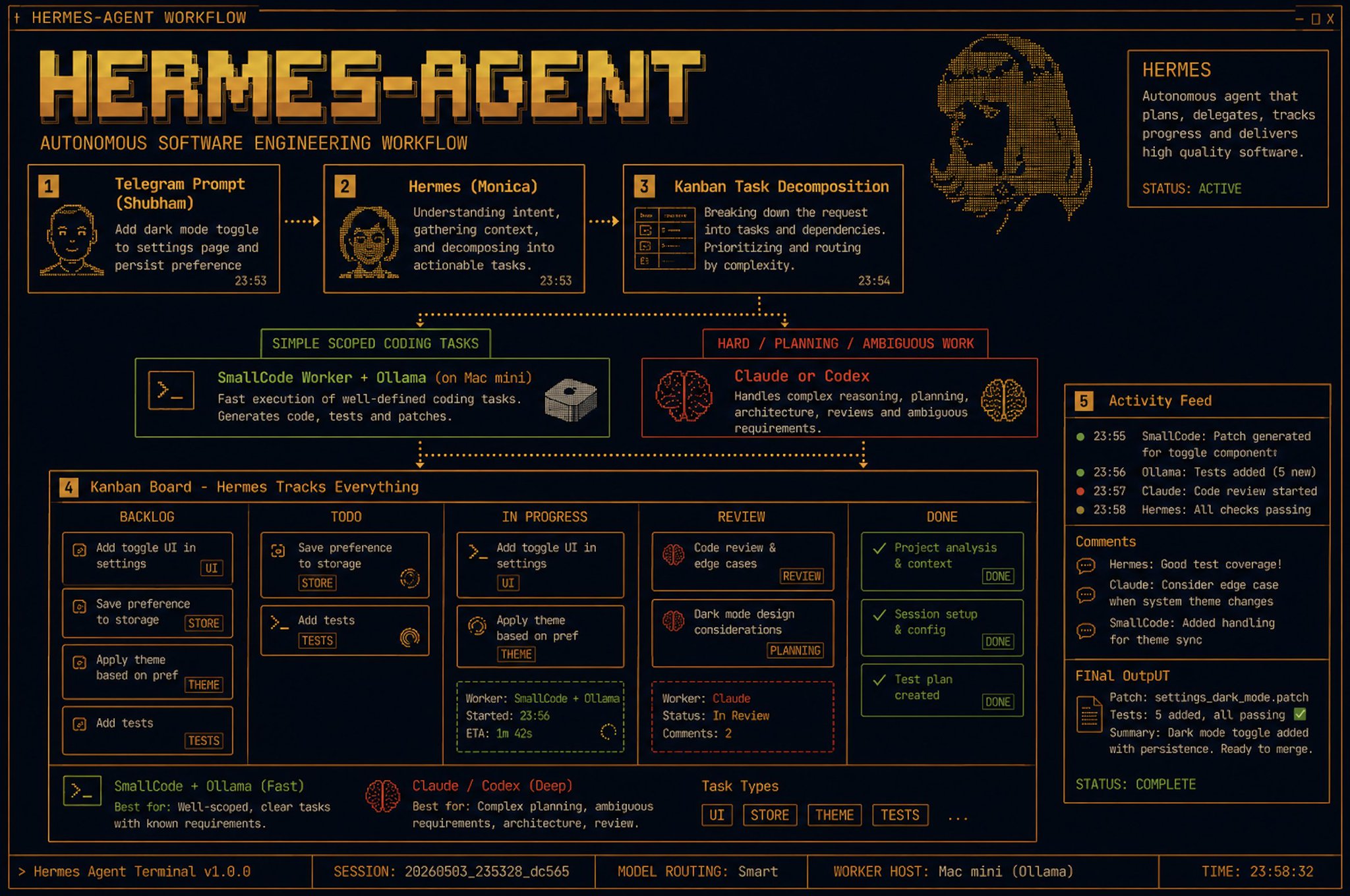
LOCAL AI coding agent finally make sense with Hermes orchestrator. Hermes routes work through Kanban. SmallCode uses Ollama models on a Mac mini for scoped patches, tests, and repo cleanup. Claude and Codex do the heavy lifting. All of it tracked in a single Kanban board.