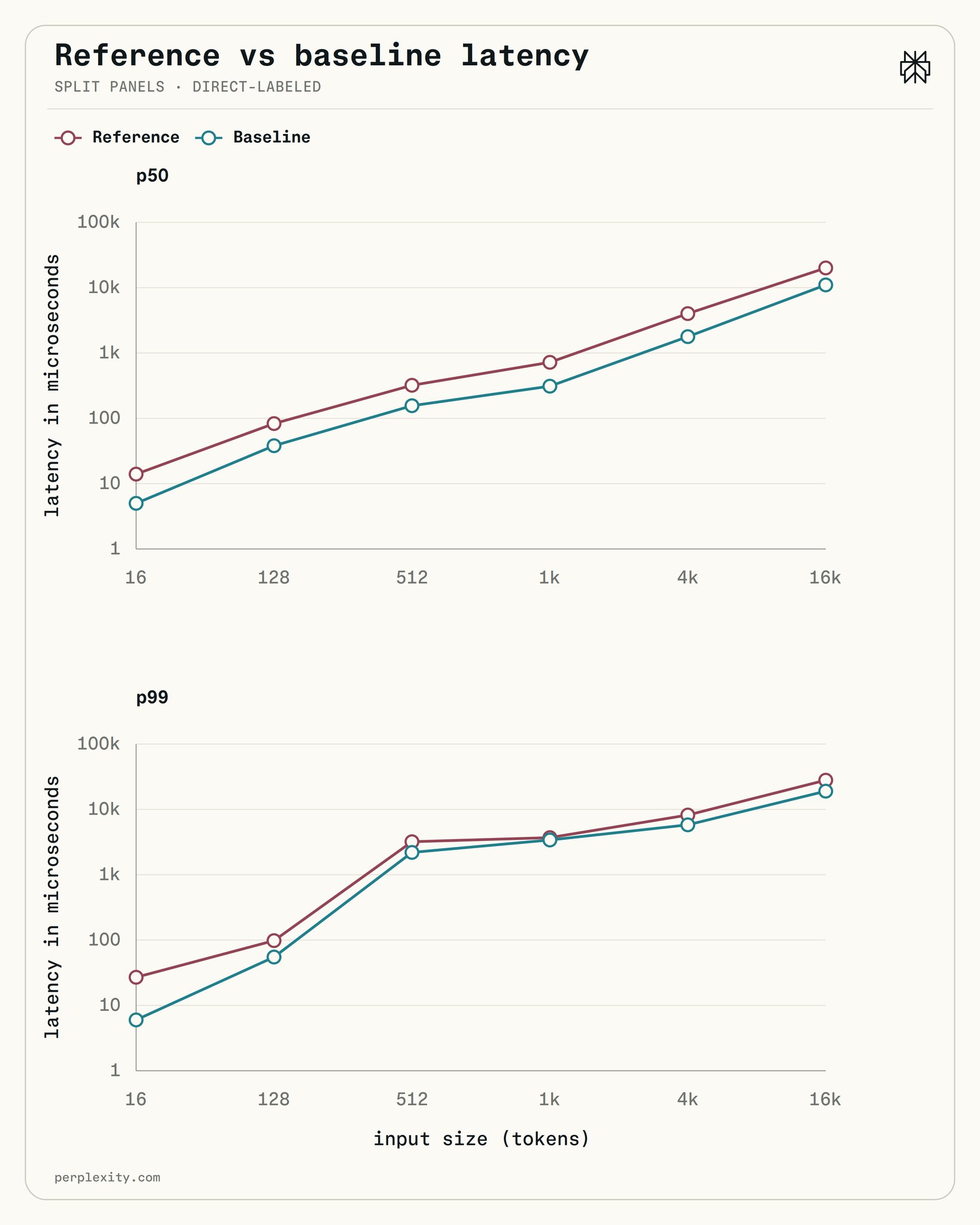
Every millisecond matters. We’re open sourcing the tokenizer we built and deployed on production; that’s far efficient than huggingface and sentencepiece.
LLMS
-
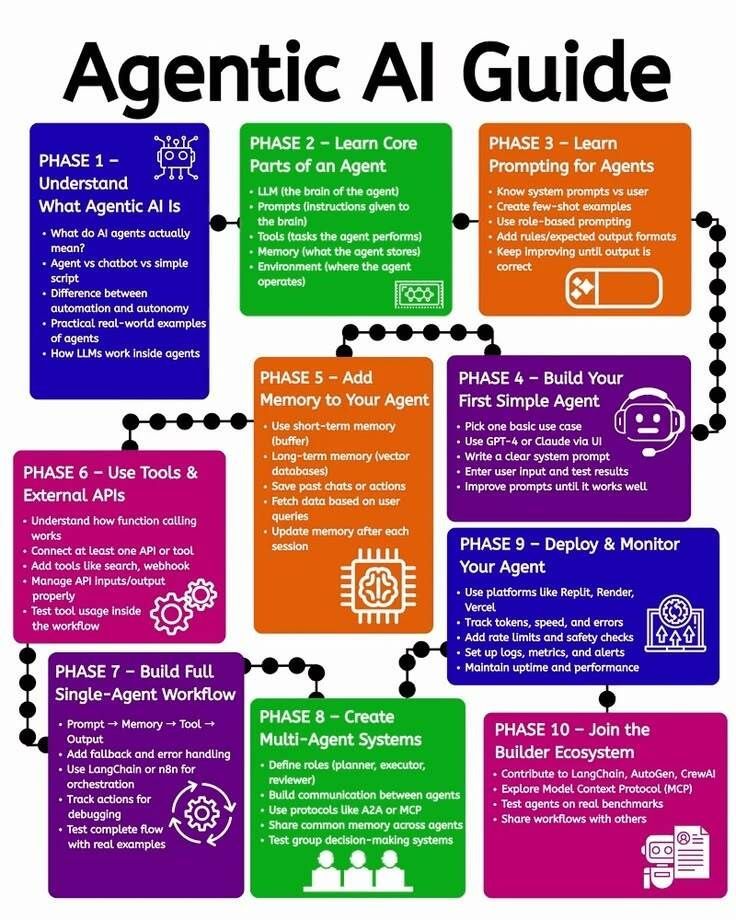
AI Agent Development Roadmap: From LLMs to Orchestration
By
–
The roadmap to building AI agents is becoming clearer Learn LLMs & prompting Add tools & APIs Implement memory Build workflows Orchestrate multi-agent systems Deploy, monitor, improve Great agents are not just intelligent.
They are connected, stateful, -
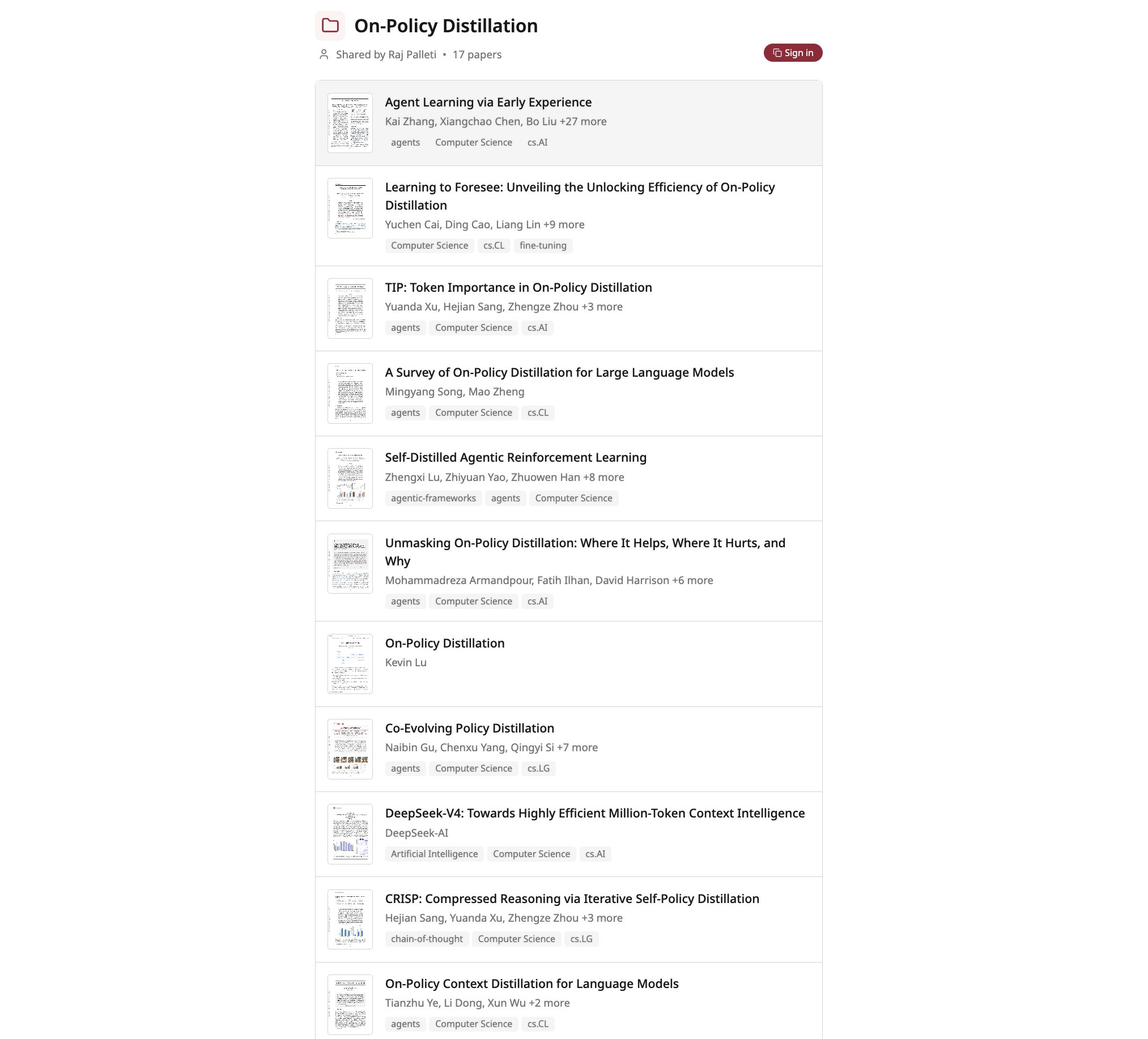
On-Policy Distillation: Emerging AI Post-Training Method
By
–
A new class of post-training method is emerging in 2026: On-Policy Distillation (OPD). It’s already showing up across frontier open-weight model releases, and it’s quickly becoming a technique worth understanding. To help you get up to speed, we’ve compiled a list of the most
-
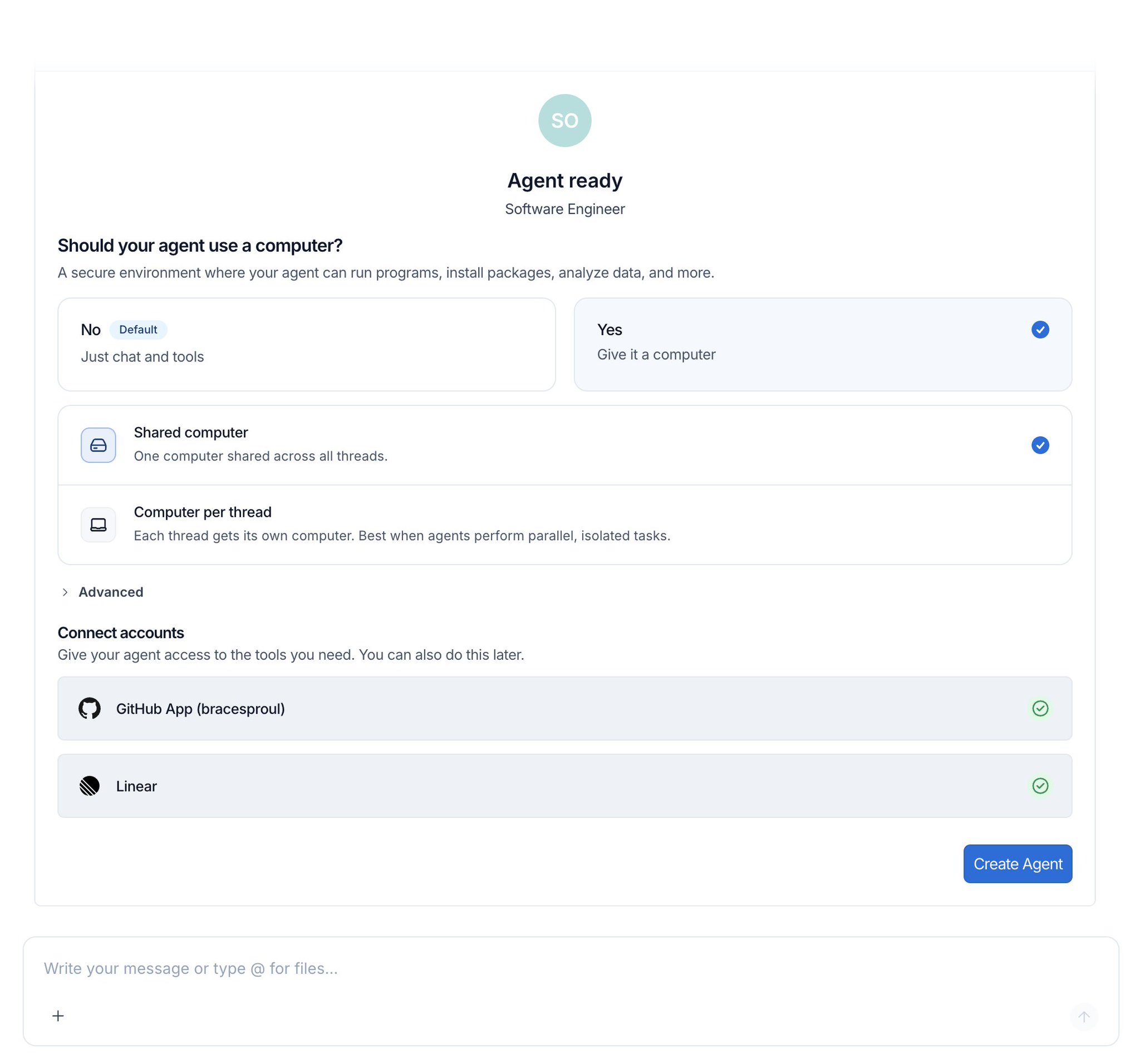
Fleet AI Agents Now Capable of Secure Code Execution and Analysis
By
–
Fleet agents can now securely write and run code. With computer use in LangSmith Fleet, agents get isolated execution environments. Analyze data, transform files, generate & write code, and run shell commands all within a secure virtual computer. Now in public beta.
-
API pricing doubled on latest models amid enterprise deals
By
–
2x API pricing on the latest models coinciding with enterprise deals locking big companies into those prices
-
Opus 4.7 degradation suggests imminent Anthropic model release
By
–
There must be another Anthropic model release coming out soon. Opus 4.7 has been performing noticeably poorly for 2 days now, and temporary model degradation has preceded a new Anthropic model release for several releases now.
-
April 2026: OpenAI and Anthropic achieve product-market fit
By
–
Given the recent burst of activity around enterprise pricing and contracts, I think April 2026 was the month when both OpenAI and Anthropic found product-market fit
-
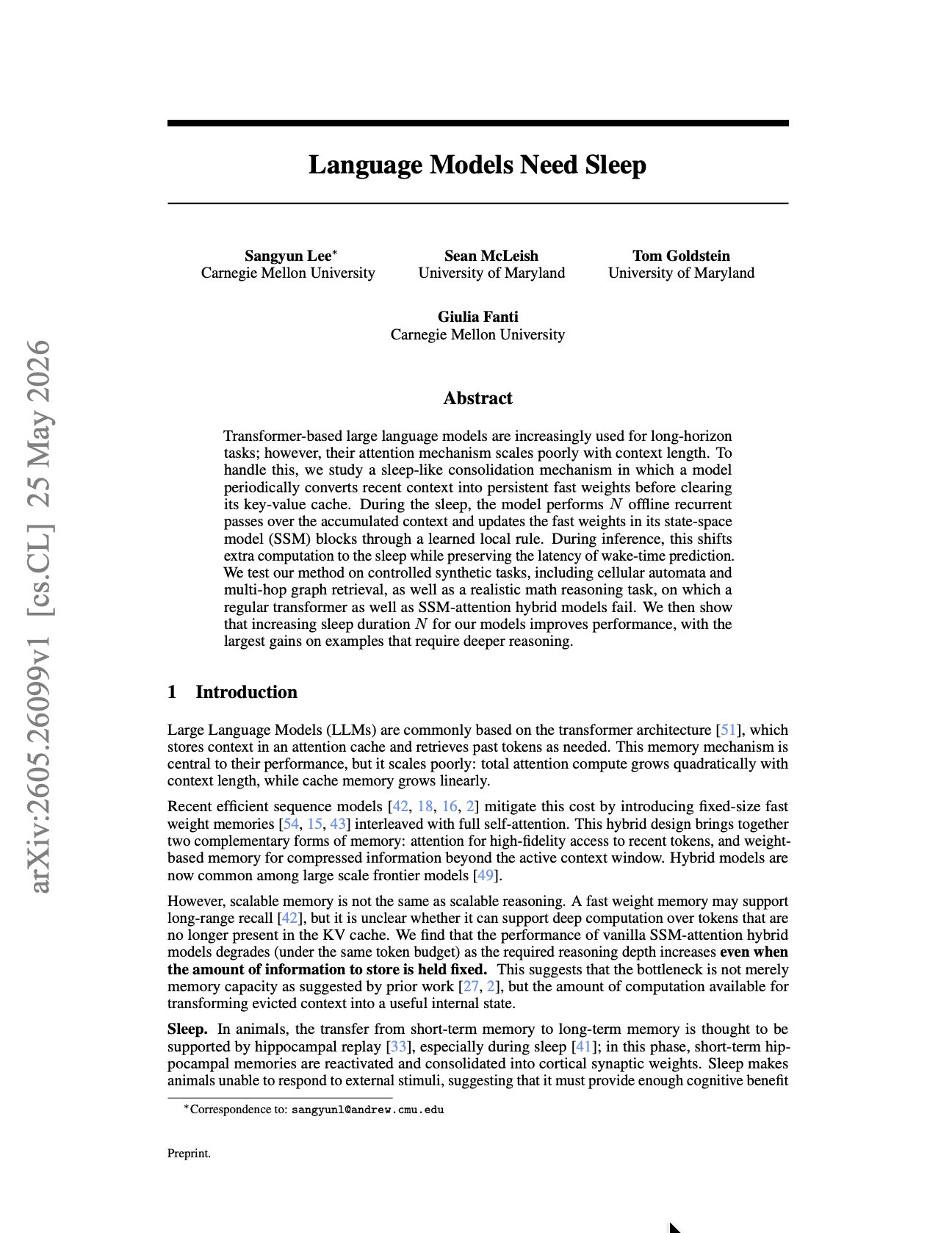
Paper proposes sleep-like memory consolidation for LMs
By
–
Language models may not need longer context. They may need sleep. A fascinating new paper by Sangyun Lee, Sean McLeish, Tom Goldstein, and Giulia Fanti proposes one of the most biologically resonant ideas in long-context AI: sleep-like memory consolidation. The problem is
-
Scalable Memory vs. Reasoning in AI Models
By
–
The key distinction: scalable memory ≠ scalable reasoning. A model can store evicted context in fixed-size fast weights and still fail if it has not spent enough computation transforming that context into a useful state. That is why the “sleep” phase is interesting: it moves
-
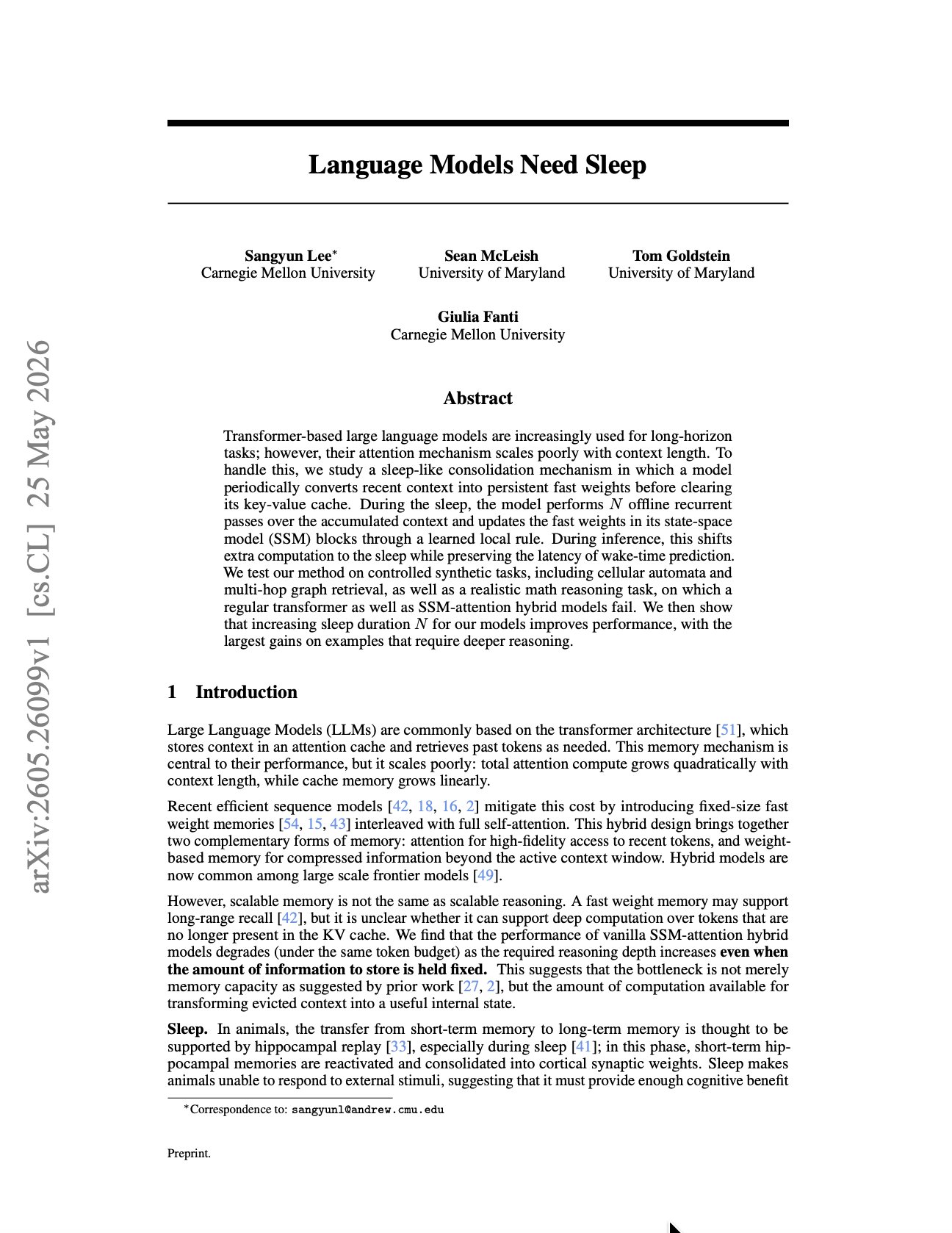
Sleep-like memory consolidation for AI models
By
–
Language models may not need longer context. They may need sleep. A fascinating new paper by Sangyun Lee, Sean McLeish, Tom Goldstein, and Giulia Fanti proposes one of the most biologically resonant ideas in long-context AI: sleep-like memory consolidation. The problem is