Does AI have imagination?
This seems to be the debate my original post has sparked. My take is: yes, but not in the way human beings imagine. I’m presenting the technical facts below. You can arrive at your own conclusion. When people say “AI has no imagination,” they’re
LLMS
-

Does AI Have Imagination? Technical Facts Explained
By
–
-
AI imagination debate: technical nuances and probabilistic generation
By
–
Since this is sparking a debate, and many people are claiming that AI has no imagination – here are some technical nuances. When people say “AI has no imagination,” they’re usually confusing experience with capability. Technically, AI generates stories using probabilistic
-
GPT Image 1.5 tops LM Arena
By
–
GPT Image 1.5 from OpenAI took the first spot on LM Arena in text to image category with a 29 points gap. Competition
-
GPT-1.5 vs Nano-Banana Pro: Performance and Prompt Engineering Comparison
By
–
My anecdotal impression of GPT-1.5 vs Nano-Banana Pro is that they are pretty neck & neck overall. I find GPT a lot easier to prompt, with NB, you often had to iterate several times before getting a good result, while with GPT you typically get what you ask for. But I think NB
-
Claude Opus 4.5 Shows 20% More Goal-Oriented Behavior
By
–
Claude Opus 4.5 feels 20% more goal-oriented. Two examples from today: I dictated a long client email, it drafted the email and say something like "yeah i went ahead and removed these 2 points because they don't support your point as much." I dictated train options to a
-
GPT-5 Adds Conversational Image Generation and Editing
By
–
We are adding conversational image gen and editing support to the GPT 5 family of bots later today! (2/3)
-

DTV Math Model: CPU-First Approach vs Symbolic Specialization
By
–
The DTV paper[1] from 2024 uses a 62B model specialized in math and reasoning, building up from 48.6% baseline by putting more emphasis on the symbolic side. What if we did the opposite, matching the baseline with specialized system on CPU and adding more parameters to improve?
-
Users Switch Between Different Models for Different Tasks Frequently
By
–
People switch models inside ChatLLM more often than expected. Different tasks really do need different models.
-
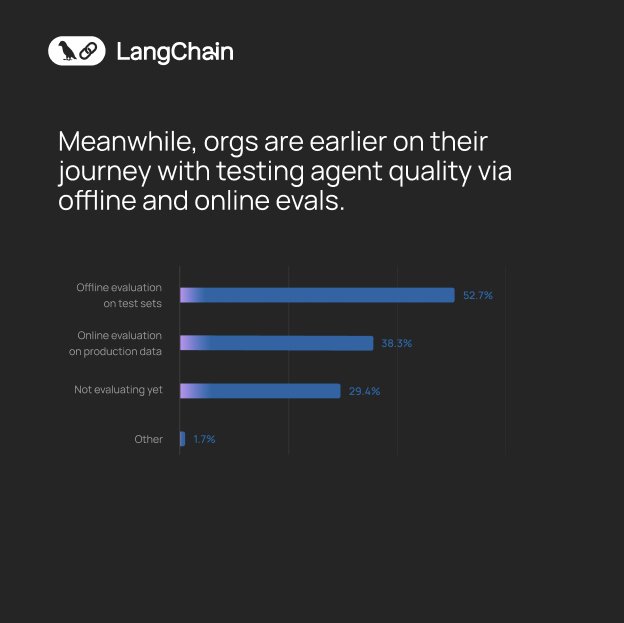
Organizations Still Early in Adoption of Evaluation Methods for LLMs
By
–
Meanwhile, orgs are earlier in their evals usage, with around half of respondents running offline evals on test sets and just over one-third running online evals on production data.
-
Advanced AI Benchmarks Reveal Model Progress and Development Needs
By
–
Combining harder benchmarks like FrontierScience with real-world lab evaluations gives us a clearer map of where models are effective today and where further development is needed. We see strong early promise, alongside well-defined limitations, and we’ll continue iterating