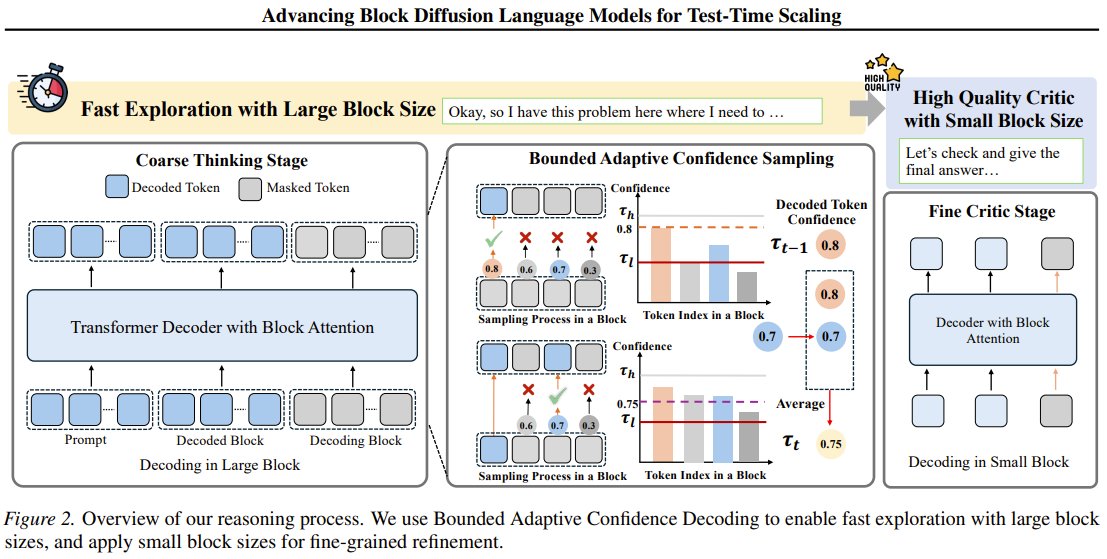
What if your AI could reason smarter AND faster, especially on complex tasks? A collaboration from Fudan University, Peking University, and Meituan LongCat Team just made it happen! They've developed a new framework for Block Diffusion Language Models (BDLMs) that lets the AI
GENERATIVE AI
-
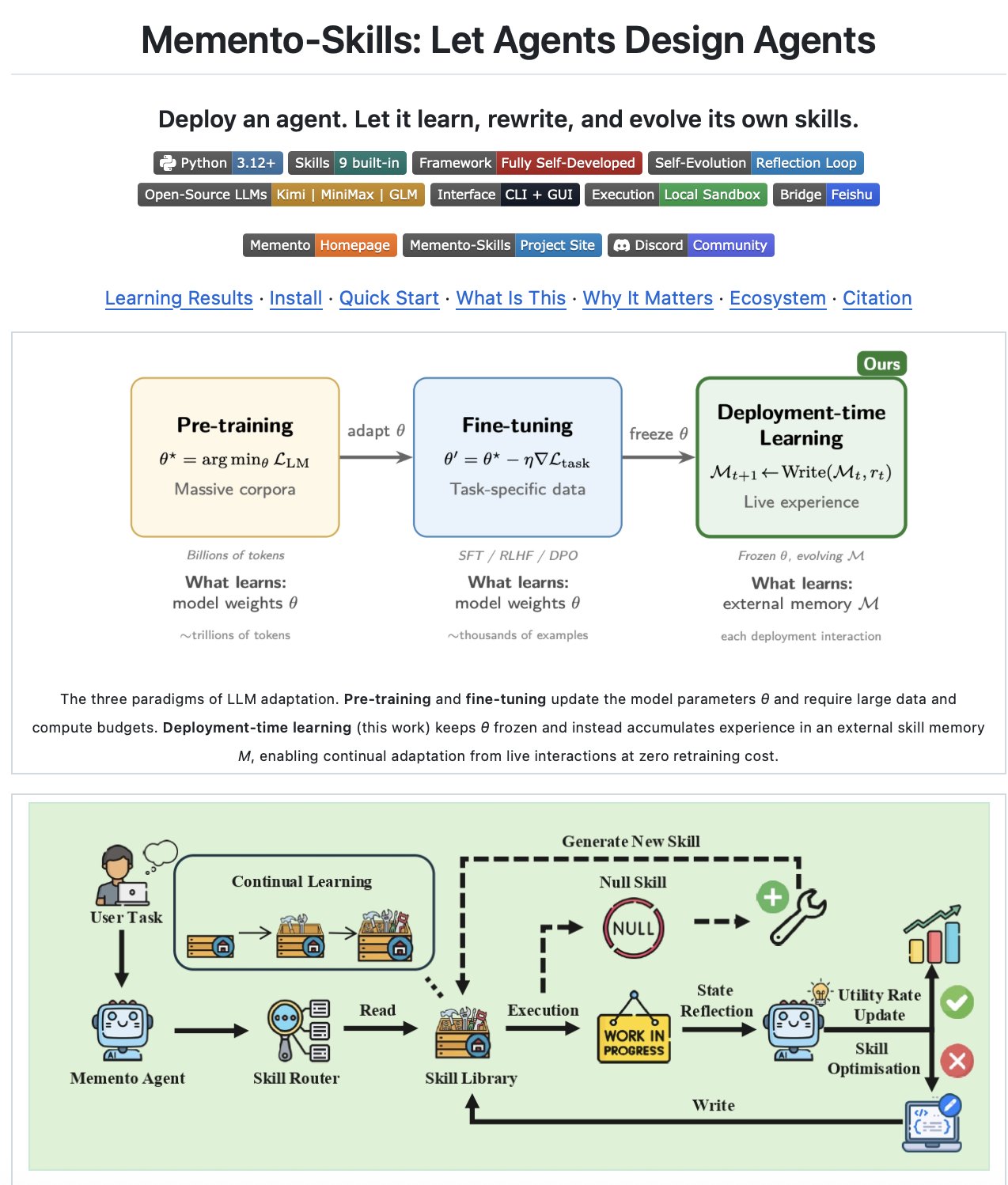
Self-Evolving Agent Framework Learn Failures Rewrite Skills
By
–
Let Agents Design Agents Memento-Skills is a self-evolving agent framework where agents learn from failures and rewrite their own skills. Most agent frameworks treat skills as static. You write them once, load them into context, and hope they work. When they fail, you debug
-

Runway’s Big Ad Contest: Win $100K for AI Product Ads
By
–
Make any ad for your chance to win up to $100K. With Runway's Big Ad Contest for Products That Don't Exist.
— Runway (@runwayml) 25 mars 2026
Enter today. Submissions close April 1st. Learn more at the link below.#RunwayBigAdContest pic.twitter.com/QhpBthVzwpMake any ad for your chance to win up to $100K. With Runway's Big Ad Contest for Products That Don't Exist. Enter today. Submissions close April 1st. Learn more at the link below. #RunwayBigAdContest
-
Supporting Codex: Building AI Projects with Community Feedback
By
–
Lets gooo! excited to support you as your build with codex! keep the feedback coming!
-
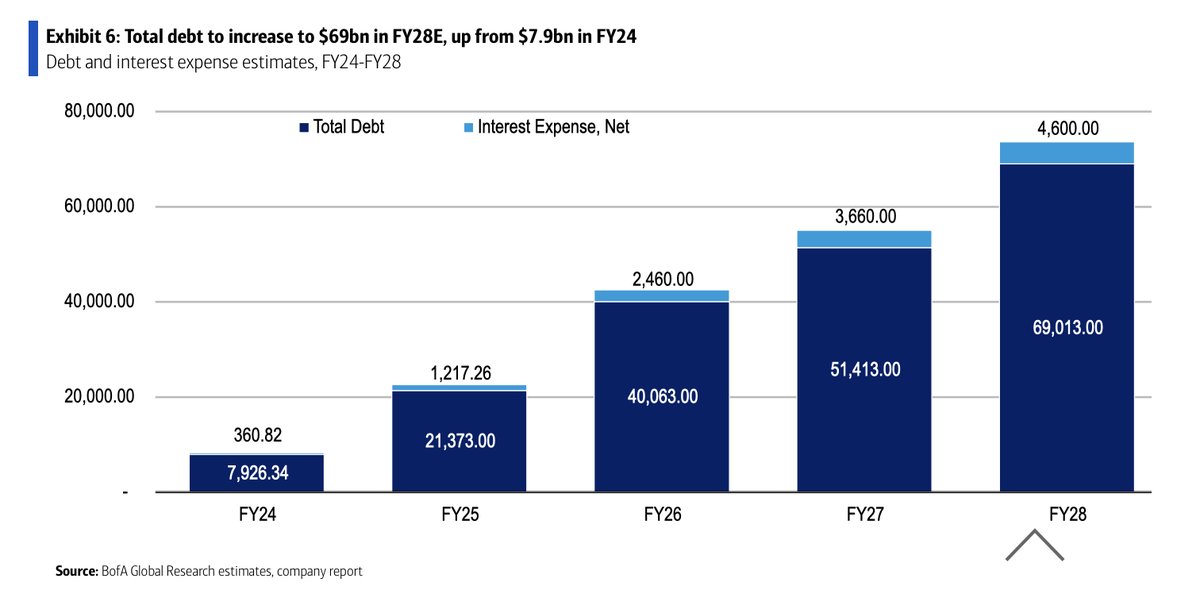
CoreWeave’s Path: From Hardware Debt to Software Focus
By
–
Pushed into massive spending — $69 billion in debt come 2028, says Merrill — is a kind of enslavement. Maybe there’s a way out… CoreWeave may end up just a software vendor CoreWeave’s “core” strength is software to manage clusters of chips. The company has been pushed into massive borrowing by the urgency of the AI giants. As their support wanes over time, and as the inference market erodes the value in the service, CoreWeave may shed the money-losing part to focus on its software expertise. That would be a good outcome for the company. thetechnologyletter.com $CRWV
→ View original post on X — @tiernanraytech, 2026-03-25 13:43 UTC
-

Agentic AI Intelligence Explosion Through Socially Aggregated Cognition
By
–
Our new essay is out in Science: "Agentic AI and the Next Intelligence Explosion" For decades, the AI "singularity" has been imagined as a single, godlike mind bootstrapping itself to omniscience. In this piece with the inimitable Benjamin Bratton (@bratton) and Blaise Agüera y Arcas (@blaiseaguera), we argue this vision is wrong in its most fundamental assumption. Every prior intelligence explosion—primate sociality, human language, writing, institutions—wasn't an upgrade to individual cognitive hardware. It was the emergence of a new socially aggregated unit of cognition. AI is extending this sequence, not breaking from it. The evidence is already inside the models themselves. In recent work, we showed that frontier reasoning models like DeepSeek-R1 don't improve by "thinking longer"—they spontaneously simulate internal multi-agent debates, what we call a "society of thought" (lnkd.in/guNfRtXh). Reinforcement learning for accuracy alone causes models to rediscover what epistemology and cognitive science have long suggested: robust reasoning is a social process, even within a single mind. This opens a vast design space. A century of research on team composition, hierarchy, role differentiation, and structured disagreement has barely been brought to bear on AI reasoning. The toolkits of organizational science become blueprints for next-generation AI. Outside the model, we've entered the era of human-AI centaurs—composite actors that are neither purely human nor purely machine. Agents that fork, differentiate, recombine. Recursive societies of thought that expand when complexity demands and collapse when problems resolve. The scaling frontier isn't just bigger models. It's richer social systems—and the institutions to govern them. Just as human societies rely on persistent institutional templates (courtrooms, markets, bureaucracies), scalable AI ecosystems will need digital equivalents. The Founders would have recognized the logic: no single concentration of intelligence should regulate itself. The intelligence explosion is already here. Not as a singular ascending mind, but as a combinatorial society complexifying—intelligence growing like a city. The question is whether we'll build the social infrastructure worthy of what it's becoming. No mind is an island. Read it here in Science (science.org/doi/10.1126/scie…) or free on the arXiv (arxiv.org/abs/2603.20639)
-

Claude’s Global Adoption: USA, Europe Lead While China Lags
By
–
Claude's use in the USA is no surprise. But apparently, Europe has also developed above-average use of Claude. China lags far behind. At least officially, there is no use of Claude (although we know that distillation was a significant part of its production). Funnily enough:
-
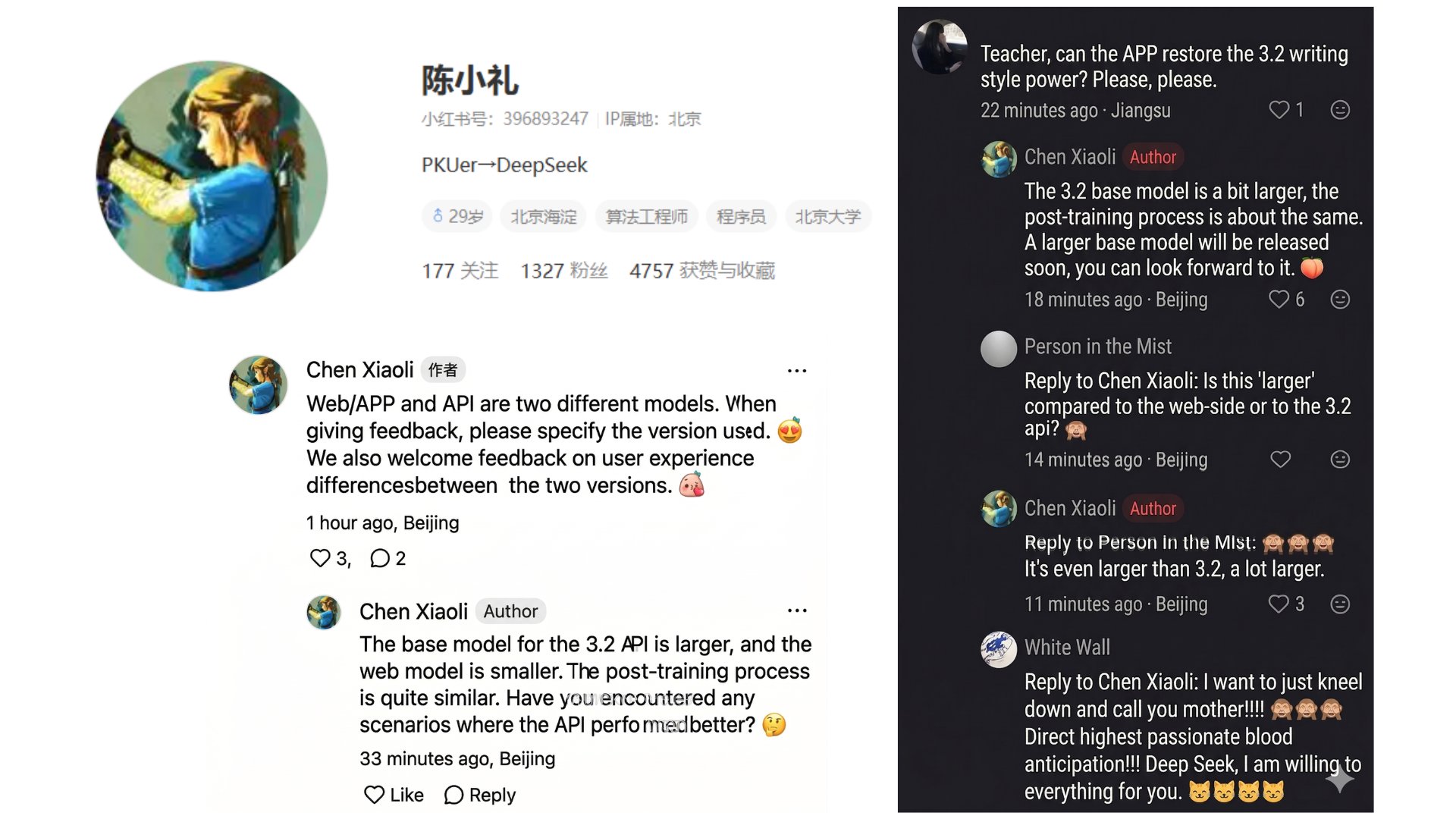
DeepSeek Releases Larger Base Model Amid Training Silence
By
–
"A new, much larger (DeepSeek) base model will be released soon", from DeepSeek staff. I'm currently wondering why there's been so much silence surrounding DeepSeek. The last report stated that they attempted to train on Huawei chips but failed ("DeepSeek AI model failed to
-
Google’s TurboQuant Algorithm Enables Local Execution of Large LLMs
By
–
Esta es potencialmente la noticia más importante del año.
— SONIA (@S0N_IA_) 25 mars 2026
Google acaba de lanzar TurboQuant. Un algoritmo que hace que los modelos LLM sean más pequeños y rápidos, sin perder calidad.
Esto significa que ahora un Mac Mini de 16 GB puede ejecutar modelos de IA INCREÍBLES.… https://t.co/O271fYGWxUThis is potentially the most important news of the year. Google has just launched TurboQuant. An algorithm that makes LLM models smaller and faster, without losing quality. This means that now a 16 GB Mac Mini can run INCREDIBLE AI models. Completely local, free, and secure.
-
Late Interaction Models Elasticsearch RAG Document Processing
By
–
Late interaction models in Elasticsearch is huge for document-heavy RAG pipelines. Searching by visual layout instead of just text opens up so many use cases for messy PDFs and scanned docs.