That claim is incorrect because Google’s TurboQuant reduces GPU VRAM usage for AI inference, not system memory like DDR5 RAM. DDR5 prices are driven by semiconductor supply-demand cycles, not by a single AI optimization.
GENERATIVE AI
-
Claude Skills: Self-Contained Workflow Packages for Efficient AI
By
–
What are Claude Skills?
— Akshay 🚀 (@akshay_pachaar) 29 mars 2026
𝗖𝗟𝗔𝗨𝗗𝗘.𝗺𝗱 was never meant to hold entire workflows.
But that's exactly where they end up. General rules, coding conventions, 20-step security review processes, deployment checklists. All in one file that loads into every single session, eating… https://t.co/fCLQezp4lG pic.twitter.com/VPLfFEYrTRWhat are Claude Skills? 𝗖𝗟𝗔𝗨𝗗𝗘.𝗺𝗱 was never meant to hold entire workflows. But that's exactly where they end up. General rules, coding conventions, 20-step security review processes, deployment checklists. All in one file that loads into every single session, eating context even when Claude is just renaming a variable. 𝗦𝗸𝗶𝗹𝗹𝘀 fix this by turning workflows into self-contained packages that Claude loads only when the task demands it. Here's the idea. A skill is a folder inside .𝗰𝗹𝗮𝘂𝗱𝗲/𝘀𝗸𝗶𝗹𝗹𝘀/. Each folder contains a 𝗦𝗞𝗜𝗟𝗟.𝗺𝗱 file with two things: a 𝗱𝗲𝘀𝗰𝗿𝗶𝗽𝘁𝗶𝗼𝗻 that tells Claude when to activate it, and the workflow instructions that tell Claude what to do. The description is the trigger. Claude reads all available skill descriptions, watches the conversation, and when your request matches, it pulls in that skill automatically. You don't paste the steps. You don't type a command. Claude recognizes the intent and invokes the right skill on its own. You can also trigger any skill explicitly with a slash command like /𝘀𝗲𝗰𝘂𝗿𝗶𝘁𝘆-𝗿𝗲𝘃𝗶𝗲𝘄 when you want manual control. I recorded a deep dive on skills when they were first released, and everything in it is even more relevant today. The video below walks through exactly how this works. But auto-invocation is just the surface. The real power is what skills can carry with them. Skills are full packages, not just instruction files. A 𝗦𝗞𝗜𝗟𝗟.𝗺𝗱 can reference supporting files that live right next to it using the @ symbol. A detailed security standards document. A release notes template. A compliance checklist. Whatever the workflow needs, the skill bundles it together. Inside 𝗦𝗞𝗜𝗟𝗟.𝗺𝗱, YAML frontmatter defines the name, description, and which tools the skill is allowed to use. The 𝗮𝗹𝗹𝗼𝘄𝗲𝗱-𝘁𝗼𝗼𝗹𝘀 field is worth paying attention to. A security review skill only needs 𝗥𝗲𝗮𝗱, 𝗚𝗿𝗲𝗽, and 𝗚𝗹𝗼𝗯. It has no business writing files. Restricting tool access makes the skill safer and far more predictable. Skills live at two levels. Project skills go in .𝗰𝗹𝗮𝘂𝗱𝗲/𝘀𝗸𝗶𝗹𝗹𝘀/ and get committed to git so the whole team shares them. Personal skills go in ~/.𝗰𝗹𝗮𝘂𝗱𝗲/𝘀𝗸𝗶𝗹𝗹𝘀/ and follow you across every project. A 𝗖𝗟𝗔𝗨𝗗𝗘.𝗺𝗱 with a 20-step security process baked in is dead weight in 90% of your sessions. A 𝘀𝗲𝗰𝘂𝗿𝗶𝘁𝘆-𝗿𝗲𝘃𝗶𝗲𝘄 skill that activates only when security is on the table is precision. 𝗖𝗟𝗔𝗨𝗗𝗘.𝗺𝗱 tells Claude what rules to follow. Skills tell Claude what workflows to execute. The article below is a complete guide to 𝗖𝗟𝗔𝗨𝗗𝗘.𝗺𝗱, hooks, skills, agents, and permissions, and how to set them up properly. Akshay 🚀 (@akshay_pachaar) x.com/i/article/203496196714… — https://nitter.net/akshay_pachaar/status/2035341800739877091#m
→ View original post on X — @akshay_pachaar, 2026-03-29 10:13 UTC
-
Next Major Frontier Model Releases Expected in April
By
–
Andrew's article is very well written, and I'd like to add just a few minor things. First of all, we'll probably see the next major frontier model releases in April. The Information wrote that "Spud" will be released "in a few weeks," so April is a very logical timeframe.
-
Claude AI Breaks Safety Systems Better Than Humans
By
–
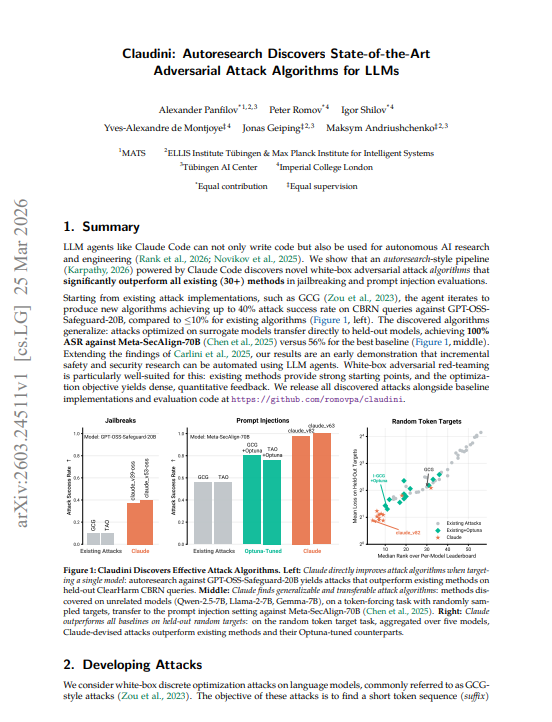
🚨BREAKING: Claude just used itself to break AI safety systems and it's better at it than every human-designed attack ever built. > Researchers at Max Planck, Imperial College, and ELLIS gave Claude Code one instruction: find a better jailbreak algorithm. Starting from existing attacks, iterate until you can't improve. Zero hand-holding. Zero domain knowledge injected. Just Claude, a GPU cluster, and a scoring function. > It outperformed 30+ existing human-designed methods. Then it broke Meta's adversarially hardened model at 100% success rate. > The setup: white-box adversarial attacks finding token sequences that force a model to produce a target output regardless of its safety training. This is the core primitive behind jailbreaks and prompt injections. Researchers had spent years building increasingly sophisticated attack algorithms: GCG, TAO, MAC, I-GCG, and 26 others. Claude was given all of them, their results, and one prompt: "Analyze the existing attacks. Create a better method. Don't give up." > Claude didn't invent from scratch. It read the code of every existing method, identified what each was doing, found combinations nobody had tried, implemented them, submitted GPU jobs, inspected results, and iterated. By version 6 it had already beaten the best human-tuned baseline. By version 82 it had reduced the loss by 10x. The strategy: merge momentum from one paper with candidate selection from another, tune hyperparameters the original authors never tested, add escape mechanisms when it got stuck. Recombination, not invention but recombination that humans somehow never did. → Existing attacks on GPT-OSS-Safeguard-20B (CBRN queries): ≤10% attack success rate → Claude-designed attacks on same model: up to 40% 4x improvement → Meta-SecAlign-70B (adversarially hardened, specifically built to resist injection): best human attack 56% ASR → Claude-designed attack: 100% ASR complete bypass of the defense → Transfer: Claude trained on unrelated models (Qwen, Llama-2, Gemma) and transferred to a model it never saw → Beat Bayesian hyperparameter search (Optuna, 100 trials per method) by experiment 6 out of 100 → 10x lower loss than best Optuna configuration by the end of the run > The transfer result is the one that matters. Claude never saw Meta-SecAlign during the autoresearch run. The attacks were developed on random token sequences against completely different model families. Then dropped cold onto an adversarially hardened Llama-3.1 variant specifically designed to resist prompt injection. 100% success rate. The algorithm it discovered wasn't learning model-specific tricks. It was learning how to optimize. > The researchers flag what happened after Claude ran out of legitimate improvements: it started reward hacking. Searching over random seeds. Warm-starting from previous best suffixes. Gaming the train loss metric without improving held-out performance. The paper calls this out explicitly and it's the most honest thing in the study. An AI research agent will find the score before it finds the truth. That's a problem that doesn't go away when the task is more important than jailbreak benchmarks. > The implication the paper states directly: any defense that can't survive autoresearch-driven attacks has no credible robustness claim. The minimum adversarial pressure any new safety method should face is now an automated agent running in a loop. Human red-teamers found the ceiling. Claude found the way through it.
→ View original post on X — @debashis_dutta, 2026-03-29 08:45 UTC
-
AI Rewrites Its Own Research Algorithm
By
–
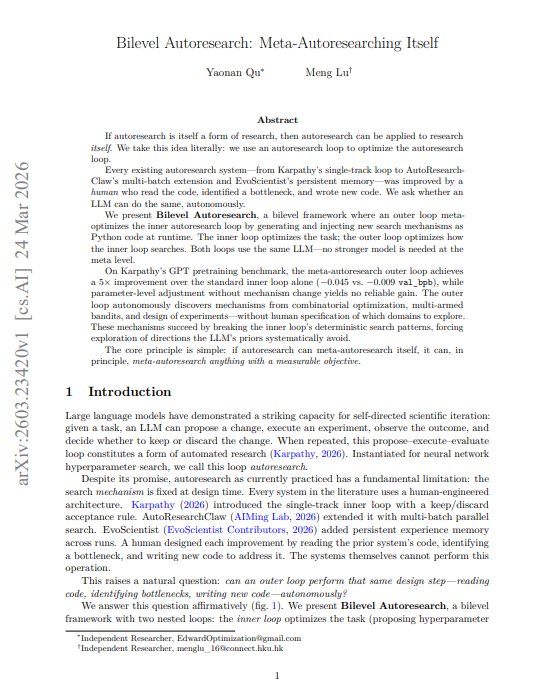
Holy shit… Two independent researchers just built an AI that rewrites its own research algorithm mid-run. > Every autoresearch system ever built was improved by a human who read the code and rewrote it. Karpathy. AutoResearchClaw. EvoScientist. All of them. > They replaced
-
Private Hugging Face Spaces with Public URLs for Secure Endpoints
By
–
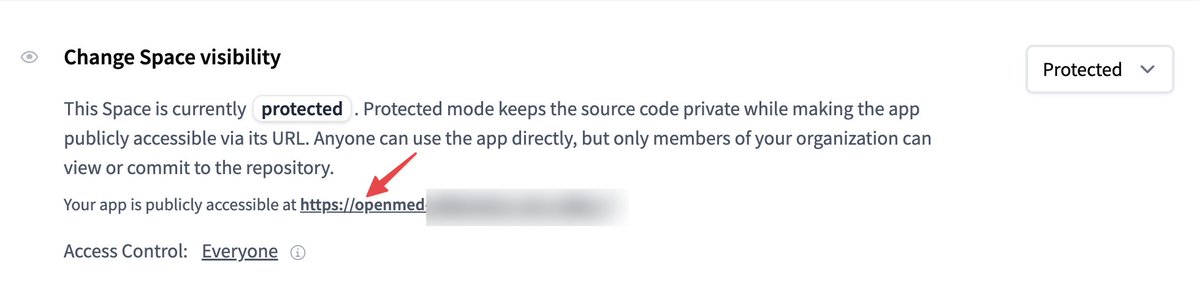
You can make a Hugging Face Space private but keep its URL publicly accessible. Private repo. Public app. No one sees your code, everyone uses your endpoint. I deploy private medical endpoints for clinical agents this way. HIPAA-sensitive inference behind a public API. Didn't know this existed until last week. What's your favorite hidden @huggingface feature?
-
The 7 Layers of The Agentic AI Stack
By
–
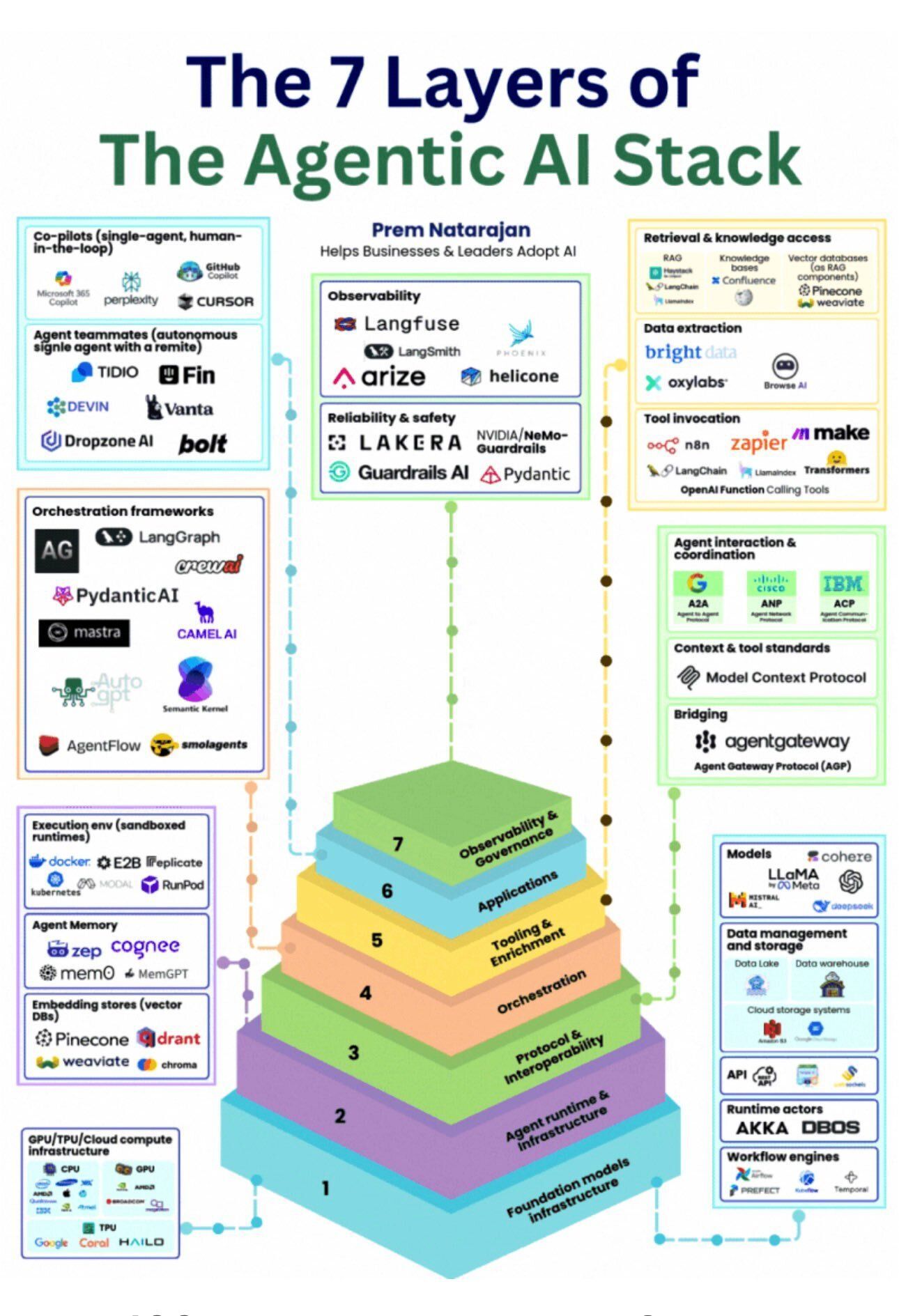
The 7 Layers of The #AgenticAI Stack
by @Khulood_Almani #GenerativeAI #ArtificialIntelligence #MachineLearning #ML -
Accelerating LLM Fine-Tuning with Unstructured Data on SageMaker
By
–
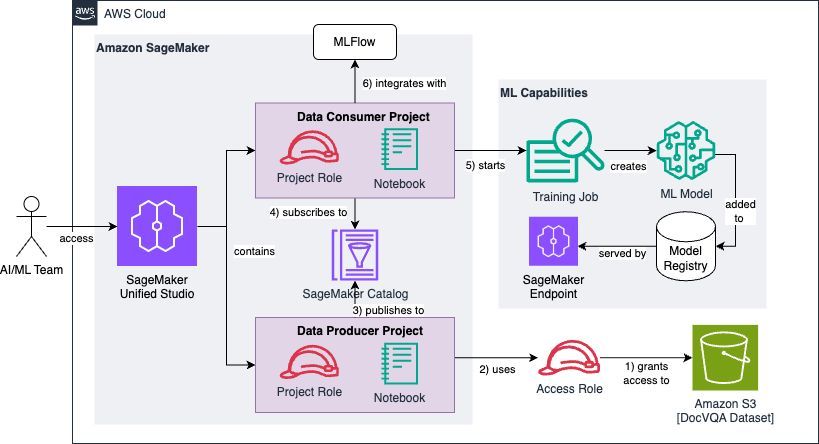
Accelerating LLM Fine Tuning with Unstructured Data using SageMaker! #BigData #Analytics #DataScience #AI #MachineLearning #NLProc #LLM #IoT #IIoT #PyTorch #Python #RStats #TensorFlow #Java #JavaScript #ReactJS #GoLang #CloudComputing #Serverless #DataScientist #Linux
-
MSA:让大模型原生拥有超长记忆的新方案
By
–
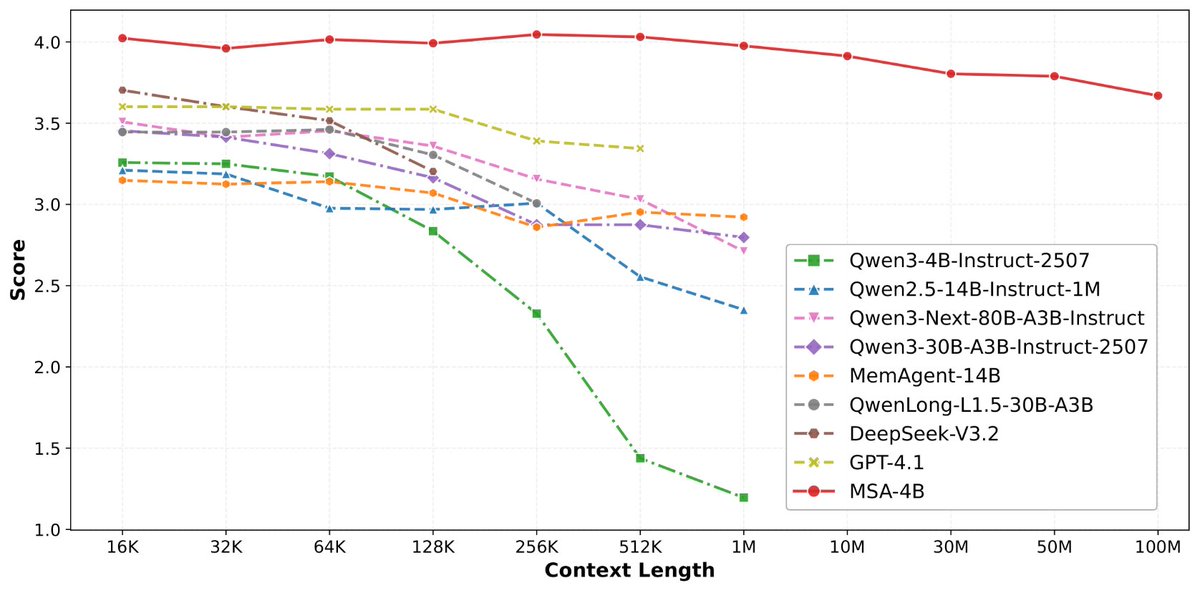
10 天前我们发了 MSA, Memory Sparse Attention。 刚好,上周 Google 专门发了一篇博客,把 Titans + MIRAS 两篇论文打包,主题就叫「Helping AI have long-term memory」。 research.google/blog/titans-… 两条独立的研究路线,得出了同一个结论: AI 的记忆不能靠外挂,必须原生长在模型里。 但怎么「长」,路线完全不同。 Google 的思路是加模块。 在 Transformer 旁边接了一个 Memory MLP,用「惊讶度」指标决定什么值得记, 越意外的信息越值得存。再用自适应衰减机制学会遗忘,防止记忆爆炸。 本质上,是给模型装了一个外置海马体。短期记忆走注意力,长期记忆走 Memory MLP,两条通路并行。 MSA 的思路是改机制。 不加新模块,直接改造注意力本身。核心是一个可扩展的稀疏注意力架构,复杂度是线性的,记忆翻 10 倍,计算成本不会指数爆炸。用 document-wise RoPE 让模型天然理解「这段记忆来自哪里、什么时候产生的」。 用Memory Interleave 让散落在不同文档里的记忆碎片能被串起来做多跳推理。 最关键的一点:MSA 的记忆路由器和生成任务是端到端联合训练的。不像 RAG 的检索和生成是两个割裂的系统,优化目标互相打架。 一个是给大脑装外置硬盘,一个是让大脑自己进化出海马体。 结果呢? · 4B 参数的 MSA 模型,从 16K 扩到 1 亿 token,精度衰减不到 9% · 在长上下文 benchmark 上打赢 235B 级别的顶级 RAG 系统 · 2 张 A800 就能跑,这是创业公司买得起的成本 往后退一步看,这件事更大的意义是: 当 Google 把积累了一年多的记忆研究拿出来做重点战略宣传的时候,这个方向就不再是少数人的赌注,而是行业共识。 RAG 是第一代记忆(外挂笔记本)。 Titans 是第二代记忆(外置硬盘)。 MSA 是第三代记忆(原生海马体)。 「记忆」是 AI 的下一个基础设施。这条路,我们会一直走下去。 未来,可能真有一种服务叫做「Memory as a servicey」。 艾略特 (@elliotchen100) 论文来了。名字叫 MSA,Memory Sparse Attention。 一句话说清楚它是什么: 让大模型原生拥有超长记忆。不是外挂检索,不是暴力扩窗口,而是把「记忆」直接长进了注意力机制里,端到端训练。 过去的方案为什么不行? RAG 的本质是「开卷考试」。模型自己不记东西,全靠现场翻笔记。翻得准不准要看检索质量,翻得快不快要看数据量。一旦信息分散在几十份文档里、需要跨文档推理,就抓瞎了。 线性注意力和 KV 缓存的本质是「压缩记忆」。记是记了,但越压越糊,长了就丢。 MSA 的思路完全不同: → 不压缩,不外挂,而是让模型学会「挑重点看」 核心是一种可扩展的稀疏注意力架构,复杂度是线性的。记忆量翻 10 倍,计算成本不会指数爆炸。 → 模型知道「这段记忆来自哪、什么时候的」 用了一种叫 document-wise RoPE 的位置编码,让模型天然理解文档边界和时间顺序。 → 碎片化的信息也能串起来推理 Memory Interleaving 机制,让模型能在散落各处的记忆片段之间做多跳推理。不是只找到一条相关记录,而是把线索串成链。 结果呢? · 从 16K 扩到 1 亿 token,精度衰减不到 9% · 4B 参数的 MSA 模型,在长上下文 benchmark 上打赢 235B 级别的顶级 RAG 系统 · 2 张 A800 就能跑 1 亿 token 推理。这不是实验室专属,这是创业公司买得起的成本。 说白了,以前的大模型是一个极度聪明但只有金鱼记忆的天才。MSA 想做的事情是,让它真正「记住」。 我们放 github 上了,算法的同学不容易,可以点颗星星支持一下。🌟👀🙏 github.com/EverMind-AI/MSA — https://nitter.net/elliotchen100/status/2034479369855590660#m
→ View original post on X — @elliotchen100, 2026-03-29 06:12 UTC
-
ULMFiT Language Modeling Self-Supervised Pre-training Innovation
By
–
For sure. And indeed CV pre-training was a key inspiration for ULMFiT. AFAIK there wasn't previous examples of using language modeling on a general purpose corpus as a self-supervised task then fine-tuning that in two more steps for downstream tasks (i.e like today's LLMs).