Searching through unstructured data, such as scans of handwritten and typed declassified documents, can be challenging. However, with Cohere Compass, it becomes possible because it is designed to process and retrieve information from even the most complex documents. This includes the Compass Visual feature.
DATA
-
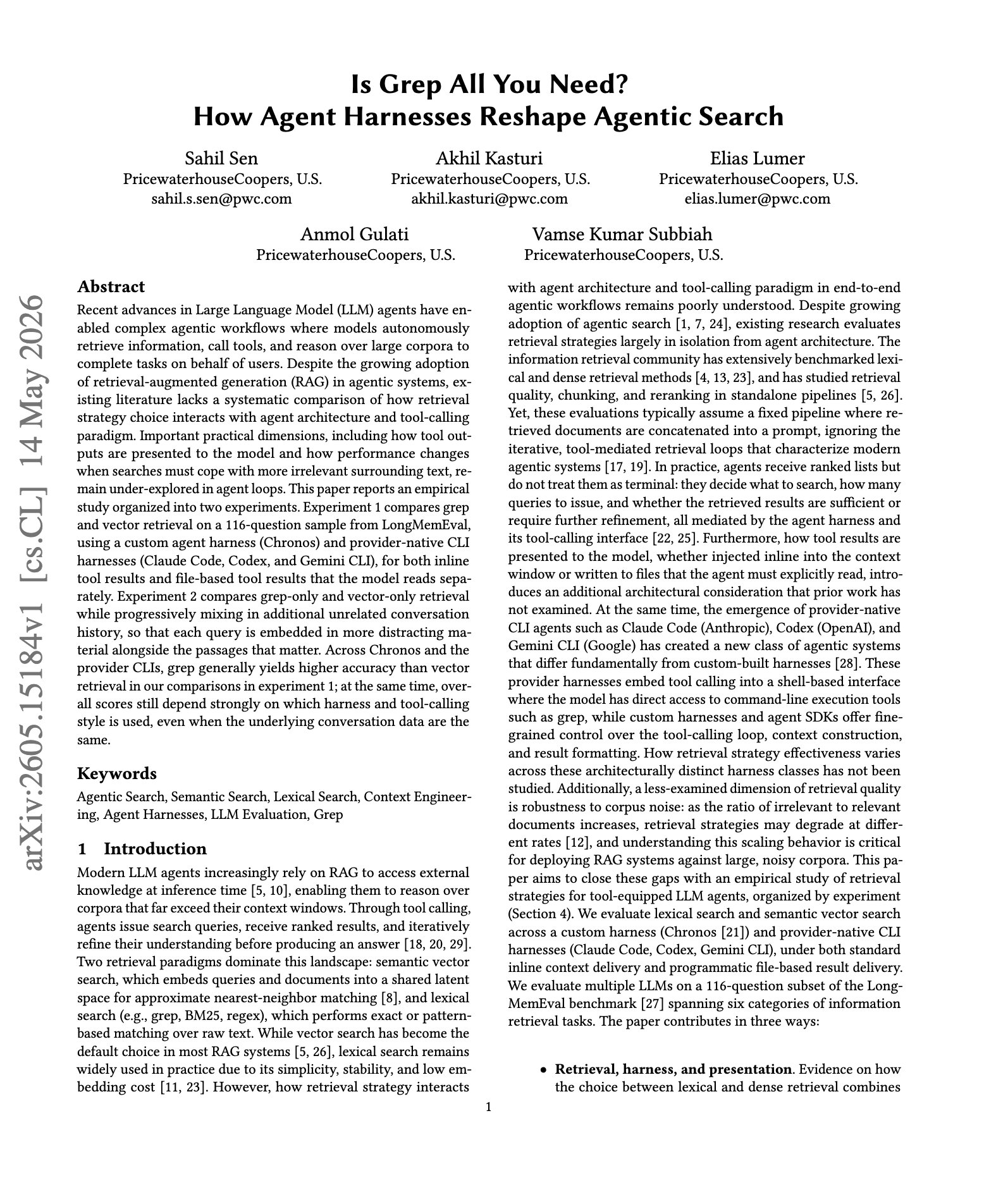
Comparison of Agentic Search vs. Vector Search
By
–
Great paper discussing agentic search vs. vector search.
-
AI Storage: No Trade-Offs Between Cost and Workflow
By
–
AI teams shouldn’t have to choose between costly object storage and cumbersome git workflows. @huggingface
Storage is designed for model weights, datasets, checkpoints, and artifacts:
– simple per-TB pricing
– built-in CDN
– Xet deduplication
– private by default when needed Store -
Claude Cowork’s Federated MCP Performance Benchmark
By
–
Claude Cowork just got 10x more powerful!
— Sumanth (@Sumanth_077) 15 mai 2026
Glean benchmarked centralized vs federated MCP in Claude Cowork. Same harness, same model, same queries, different context layer.
The federated approach: Each data source (Gmail, Slack, Drive, Salesforce) has its own MCP server. Claude… pic.twitter.com/0lSWyHsKriClaude Cowork just got 10x more powerful! Glean benchmarked centralized vs federated MCP in Claude Cowork. Same harness, same model, same queries, different context layer. The federated approach: Each data source (Gmail, Slack, Drive, Salesforce) has its own MCP server. Claude
-

Predicting Traffic Congestion with GeoAI and Machine Learning
By
–
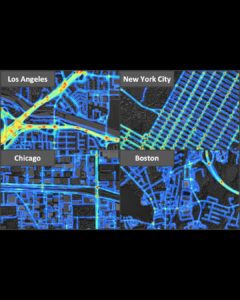
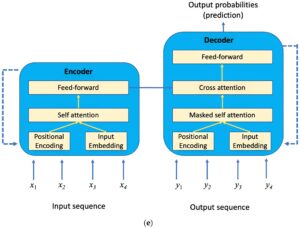
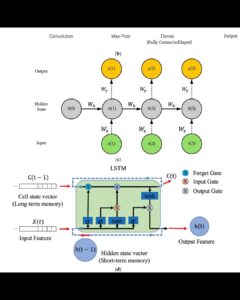
GeoAI! #MachineLearning Help Predict Traffic Carmageddon! by @rachelevagordon. #BigData #Analytics #DataScience #AI #MachineLearning #IoT #IIoT #PyTorch #Python #RStats #TensorFlow #Java #JavaScript #ReactJS #GoLang #CloudComputing #Serverless #DataScientist #GeoSpatial #Linux
-
Training AI Models on Amazon Reviews Using Python and NLP Libraries
By
–
Training AI on Amazon Electronic Reviews Using #Python for Natural Language! – by – @gp_pulipaka
! JupyterLab/Jupyter Notebook WordNet, Lexical Semantic Relation Analyzer
Thesaurus, 155,000 Words
Synset 115,000, 205,000 word-Sense Pair. NLTK Library, spaCy, TextBlob -
Introduction to Latent Dirichlet Allocation for Topic Modeling
By
–
Latent Dirichlet Allocation! by @gp_pulipaka
! #BigData #Analytics #DataScience #AI #MachineLearning #NLProc #IoT #IIoT #PyTorch #Python #RStats #TensorFlow #Java #JavaScript #ReactJS #GoLang #CloudComputing #Serverless #DataScientist #Linux #Programming #Coding #100DaysofCode -
Understanding Linear Mixed Models in Data Science
By
–
How Linear Mixed Model Works! #BigData #Analytics #AI #MachineLearning #DataScience #IoT #IIoT #Python #RStats #TensorFlow #JavaScript #ReactJS #CloudComputing #Serverless #DataScientist #Linux #Programming #Coding #100DaysofCode https://t.co/Jt3Gkd62iI pic.twitter.com/4g8wPOc4E4
— Dr. Ganapathi Pulipaka 🇺🇸 (@gp_pulipaka) 15 mai 2026How Linear Mixed Model Works! #BigData #Analytics #AI #MachineLearning #DataScience #IoT #IIoT #Python #RStats #TensorFlow #JavaScript #ReactJS #CloudComputing #Serverless #DataScientist #Linux #Programming #Coding #100DaysofCode https://
geni.us/Linear-Mixed-M
odel
… -
Building an AI-Native Geospatial and World Simulation System
By
–
"We're working with Google and @SnorkelAI to build a geospatial, deep-research, AI-native system. And along with that…we're building a world simulation system to simulate impacts for large infrastructure projects." — Rezaur Rahman, CIO / CISO / CAIO, @usachp
— Snorkel AI (@SnorkelAI) 14 mai 2026
Full conversation… pic.twitter.com/4QhdGYXsmx"We're working with Google and @SnorkelAI to build a geospatial, deep-research, AI-native system. And along with that…we're building a world simulation system to simulate impacts for large infrastructure projects." — Rezaur Rahman, CIO / CISO / CAIO, @usachp Full conversation
-

Effective scaling laws for time series foundation models
By
–
Are scaling laws finally effective for time series foundation models? Today, @datadoghq is releasing Toto 2.0 weights under Apache 2.0 on @huggingface. It's a family of open-weights TSFMs ranging from 4M to 2.5B parameters, where each size outperforms the previous one from a single hyperparameter configuration.