Vector Databases Explained in 3 Levels of Difficulty https://
machinelearningmastery.com/vector-databas
es-explained-in-3-levels-of-difficulty/?utm_source=dlvr.it&utm_medium=twitter
…
DATA
-
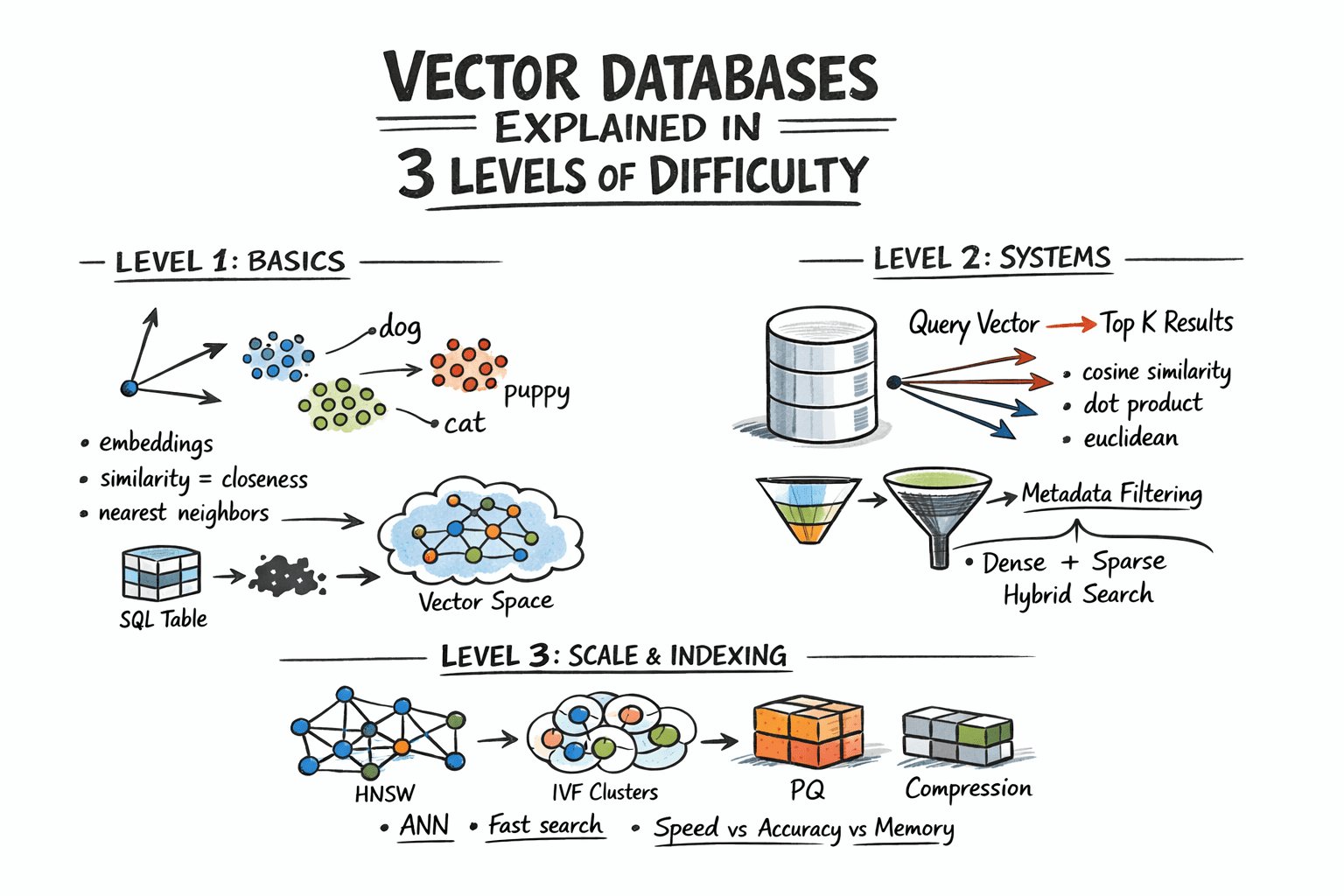
Vector Databases Explained in Three Levels Difficulty
By
–
-

Fix RAG hallucinations by protecting tables and structured content
By
–
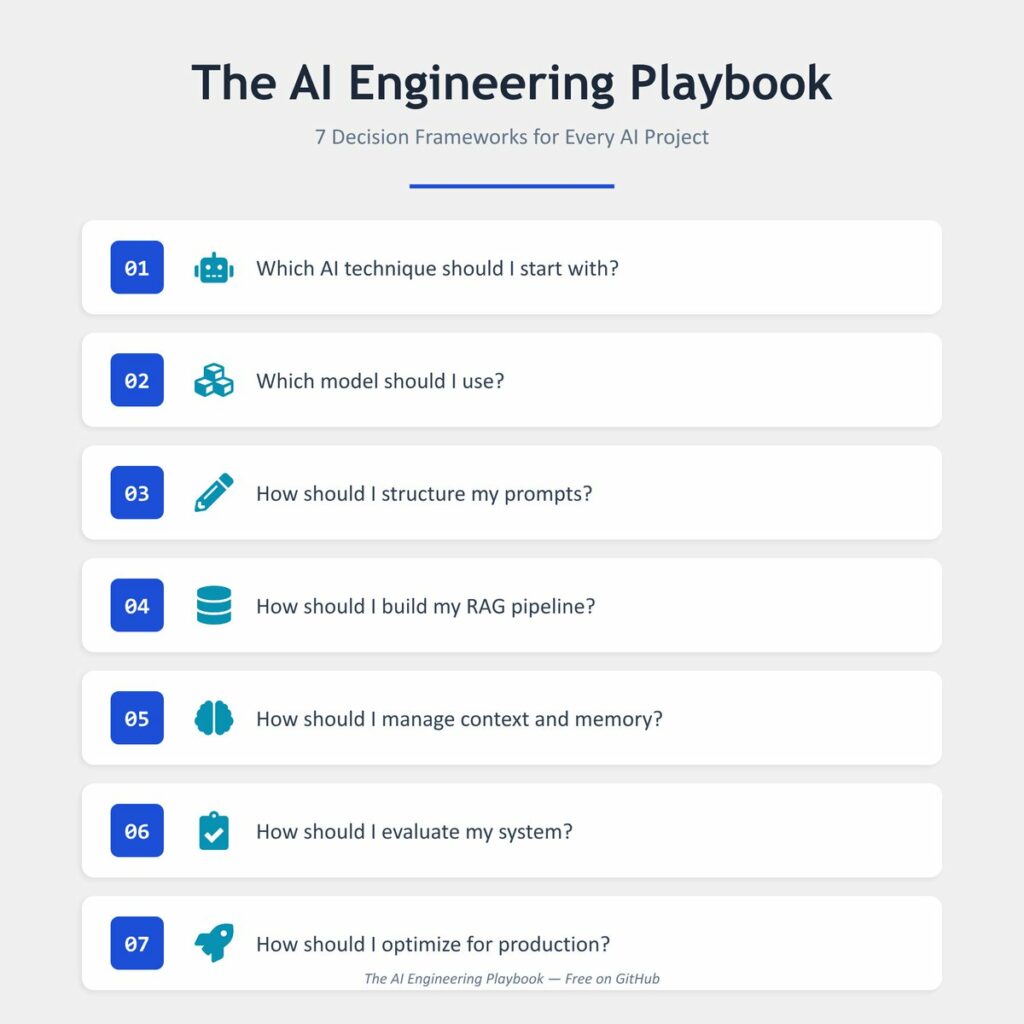
Your RAG pipeline answers everything correctly. Except anything from a table. Pricing data. Comparison charts. Structured specs. Ask about any of these and the answer is either wrong or completely made up. The model isn't hallucinating because it's bad. It's hallucinating because it never saw the full table. When you chunk documents, you split them by a fixed token count. The splitter doesn't understand what it's cutting through. It just counts and splits. So your pricing table gets sliced in the middle. Half the rows in one chunk, half in another. The model receives an incomplete table and fills in the blanks on its own. Same thing happens with code blocks and any structured content. The moment you start treating tables and code as protected blocks and never let the chunker split through them, the accuracy on structured questions jumps. Same documents. Same model. Same prompt. Just keep structured content whole. I wrote a free playbook (its on git, no email wall or anything) that covers this decision framework (and 6 others like model selection, evaluation, and production optimization) as simple find-your-situation, follow-the-row tables. Link in the first comment.
-

Amazon Retail Stores Operating as Cloud Systems
By
–
Amazon’s retail stores are starting to run like cloud systems https://
cloudcomputing-news.net/news/amazon-re
tail-stores-are-starting-to-run-like-cloud-systems/?utm_source=dlvr.it&utm_medium=twitter
… #Cloud #Automation #Data #Innovation #DataPlatforms #CIO #BusinessStrategy #MLOps -
LLM Training Without Massive Human-Labeled Datasets Analysis
By
–
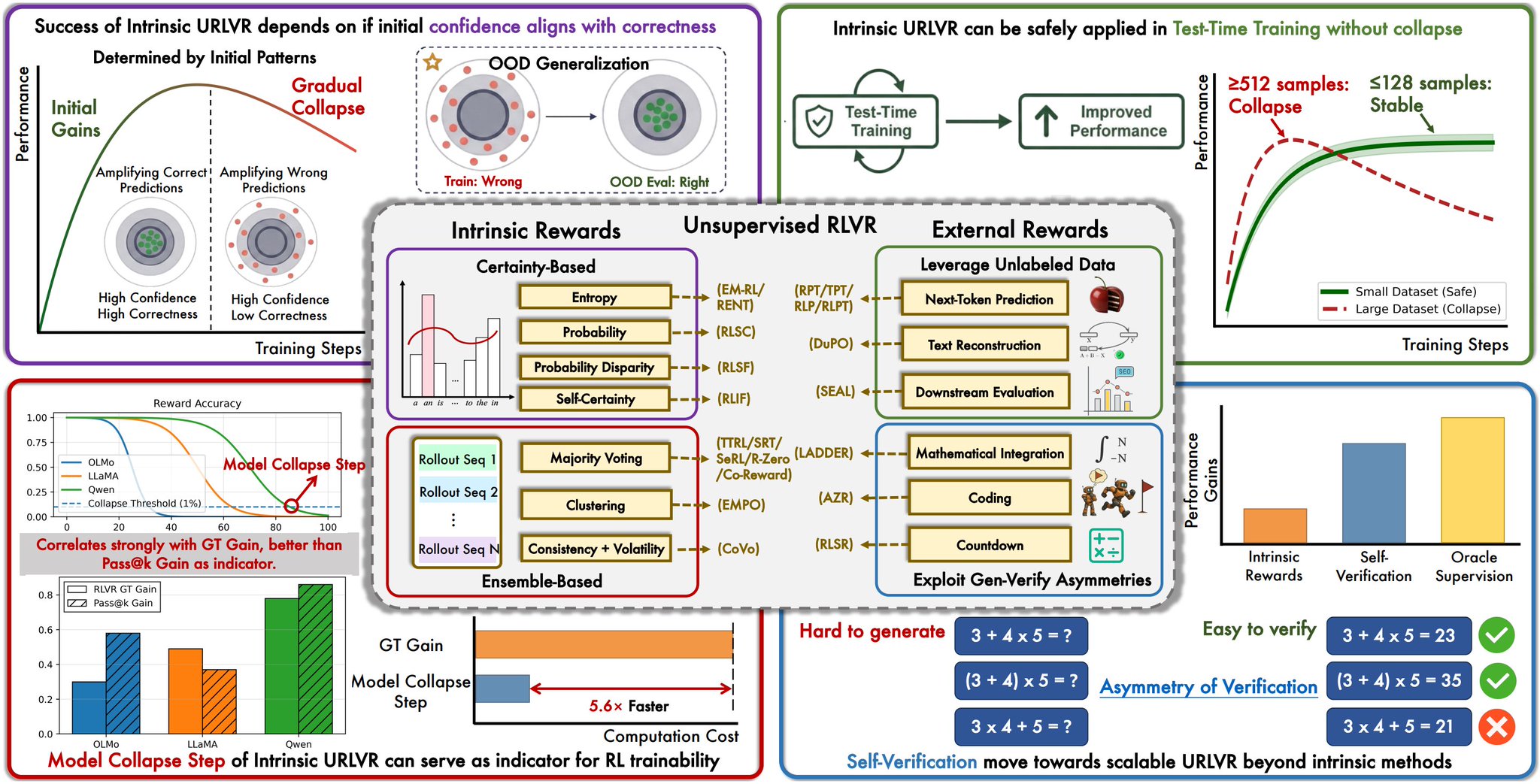
How far can we push LLM training without relying on massive human-labeled datasets? A collaborative effort from Tsinghua University, Shanghai AI Lab, UIUC, and other leading institutions provides crucial insights. They conducted a comprehensive analysis of Unsupervised
-

AI Factories: Scaling Intelligence as Industrial Capability
By
–
AI is becoming something companies can produce at scale. That is the idea behind AI factories, a concept that is quickly moving into the mainstream of business and technology. In this video, I explain what an AI factory actually is, how it differs from a traditional data center, and why it matters. At its core, an AI factory turns data, software, and computing power into intelligence, including predictions, recommendations, decisions, digital assistants, and AI agents. I also explore why this matters for business leaders, from customer service and fraud detection to drug discovery and supply chain optimization. The bigger point is clear. Intelligence is increasingly becoming an industrial capability, and the organizations building the strongest AI infrastructure today could have a major influence on the future. How important do you think AI factories will become for business over the next few years?
→ View original post on X — @bernardmarr, 2026-03-30 08:27 UTC
-
MongoDB Vector Search Lexical Prefilters for Precise Forgiving Search
By
–
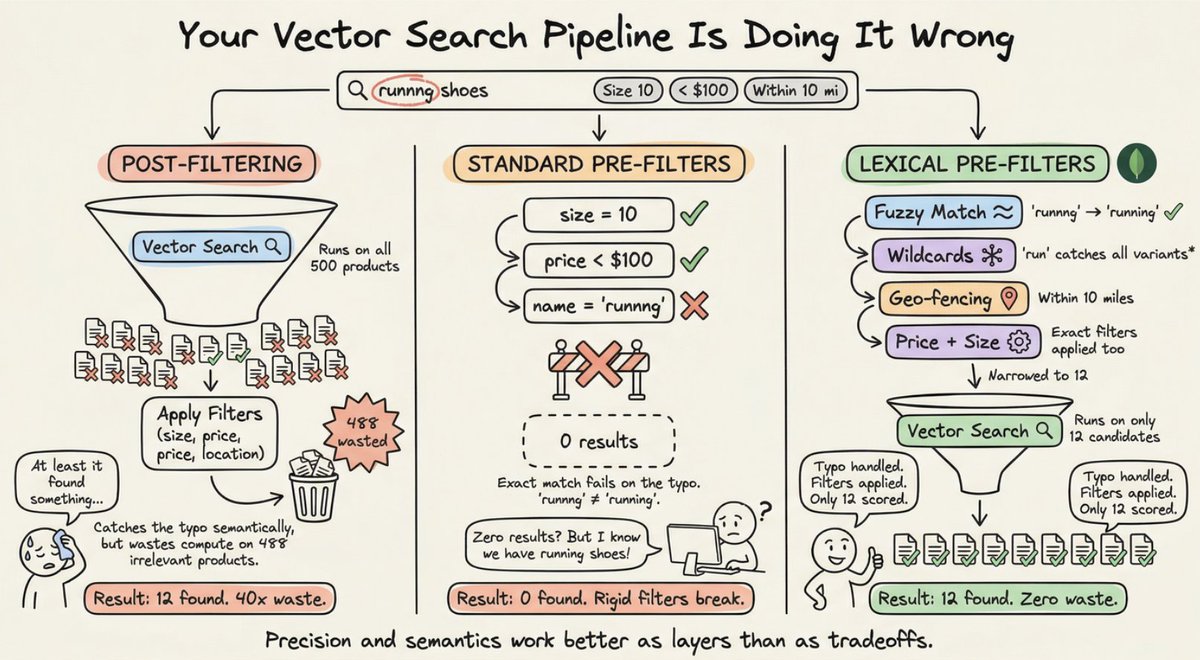
Learn more about #MongoDB Vector Search: fandf.co/4qyyKcb It makes sure everything we discussed is executed before the vector math, so you only run similarity scoring on relevant candidates. If you're building anything where users make typos, need location-based results, or expect your search to be both precise and forgiving at the same time, Lexical Prefilters solve it. It's part of the vectorSearch operator (inside the $search stage) in Atlas – so if you're still on knnBeta, this is what's next. Thank you MongoDB for working with me on this one.
→ View original post on X — @akshay_pachaar, 2026-03-30 07:37 UTC
-
Vector Search 10x Cheaper with Intelligent Lexical Filtering
By
–
A simple technique can make your vector search 10x cheaper. And you probably haven't heard of it yet. Consider this: A user searches "runnng shoes" (yes, misspelled) looking for size 10, within 10 miles, under $100. Vector search runs on 500 products, then the filters apply – and only 12 match the size, location and price. That's 500 similarity calculations to surface 12 results. And if the typo didn't get caught? Those 12 might not even include what the user wanted. Standard pre-filters would return ZERO results for "runnng" – it's not an exact match. Post-filtering catches the typo semantically but wastes compute on 488 irrelevant products first. This is how search pipelines typically work. Most teams have accepted this as normal – run vector search first to get semantically relevant results, then apply filters afterward. Standard vector search does support basic pre-filters (like "price < $100" or "size = 10"), but those filters are rigid, only handling exact matches and simple comparisons. They can't handle typos, wildcards, or complex text analysis. So you're stuck: use exact-match pre-filters and get zero results for typos, or post-filter massive datasets and waste compute. What you actually need is filtering that handles precision and fuzziness together – precise enough for "size 10" and "under $100," flexible enough to match "runnng to running," and smart enough to handle complex geospatial queries like "within 10 miles." And it needs to happen before vector search runs, not after. But the bigger point is this: – Post-filter: search everything, hope for the best.
– Pre-filter with lexical intelligence: search only what matters, get it right. Precision and semantics work better as layers than as tradeoffs. Now that you see the problem, let me show you what the fix actually looks like in practice 👇 This is ex [Translated from EN to English]→ View original post on X — @akshay_pachaar, 2026-03-30 07:36 UTC
-

IndiaAI Mission NIELIT Collaboration Offers Advanced AI Training Programs
By
–
Through the collaboration between IndiaAI Mission & NIELIT, learners can access: Advanced AI labs Recognized certification programs Hands-on training Expert mentorship Courses include:
• Fundamentals of Data Annotation using Python (120 Hours)
• Fundamentals -
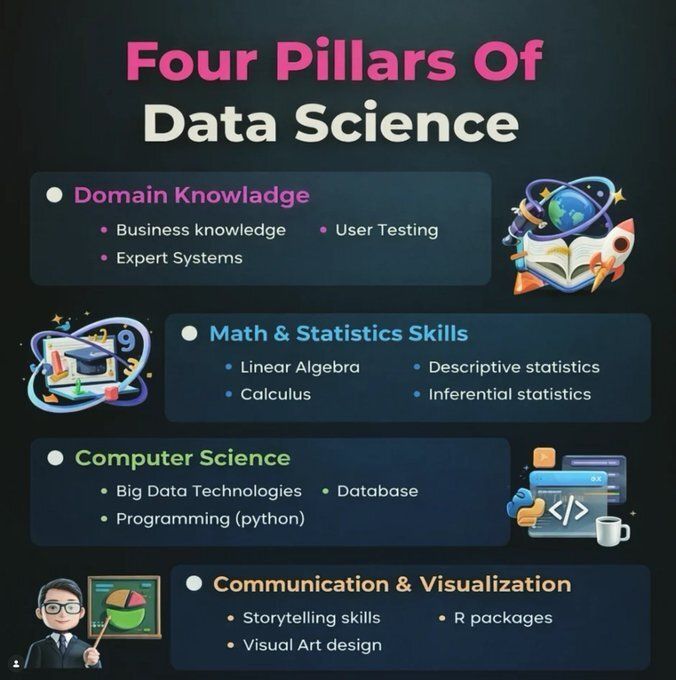
Four Pillars Of Data Science In Big Data
By
–
Four Pillars Of #DataScience
by @Python_Dv #BigData #DataScientist -
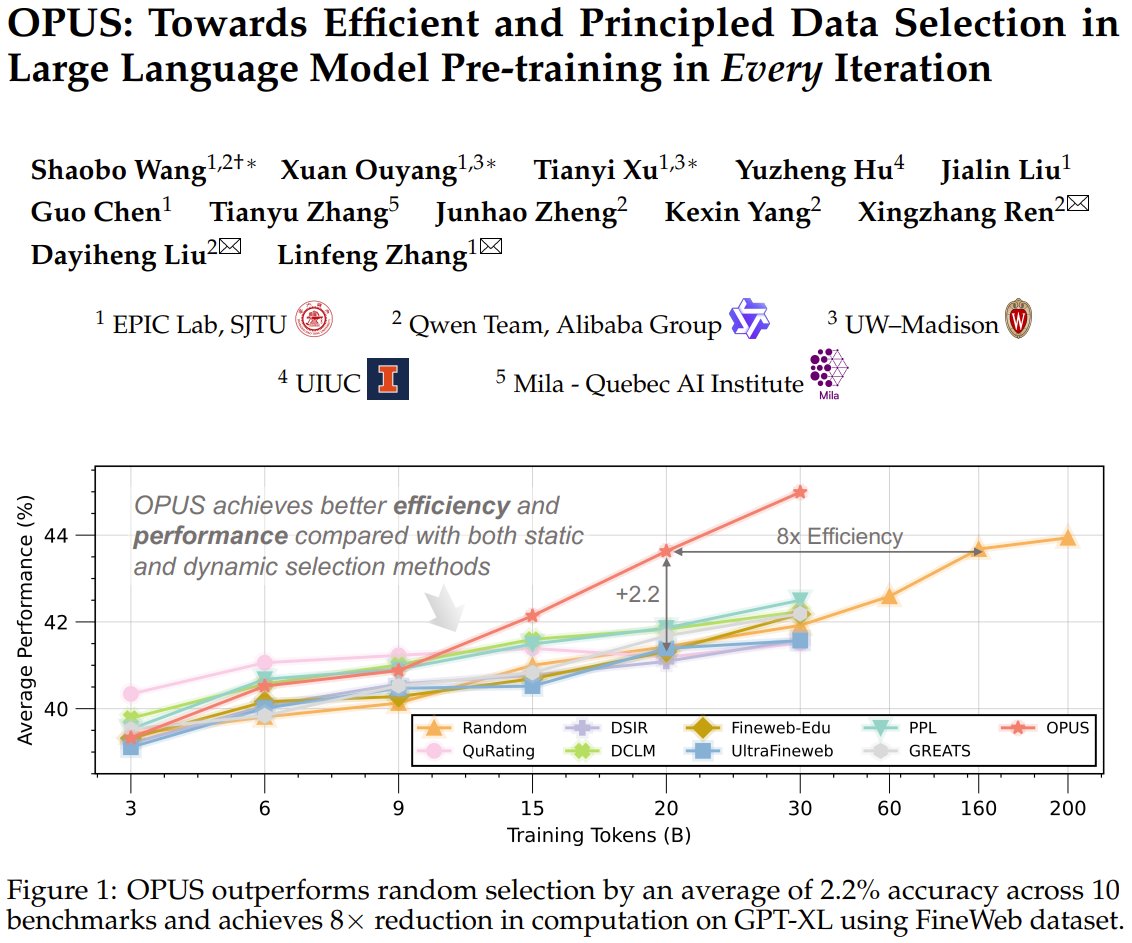
OPUS: Intelligent Data Selection for LLM Pre-training
By
–
Is there a smarter way to pick data for training Large Language Models? Researchers from multiple institutions, led by Shaobo Wang, introduce OPUS. This novel method dynamically and intelligently selects the most impactful data for LLM pre-training in every single training