AI Dynamics

Global AI News Aggregator

About

DATA

  • Personal Wikipedia: User-Controlled AI Personalization via Files

    Farzapedia, personal wikipedia of Farza, good example following my Wiki LLM tweet. I really like this approach to personalization in a number of ways, compared to "status quo" of an AI that allegedly gets better the more you use it or something: 1. Explicit. The memory artifact is explicit and navigable (the wiki), you can see exactly what the AI does and does not know and you can inspect and manage this artifact, even if you don't do the direct text writing (the LLM does). The knowledge of you is not implicit and unknown, it's explicit and viewable. 2. Yours. Your data is yours, on your local computer, it's not in some particular AI provider's system without the ability to extract it. You're in control of your information. 3. File over app. The memory here is a simple collection of files in universal formats (images, markdown). This means the data is interoperable: you can use a very large collection of tools/CLIs or whatever you want over this information because it's just files. The agents can apply the entire Unix toolkit over them. They can natively read and understand them. Any kind of data can be imported into files as input, and any kind of interface can be used to view them as the output. E.g. you can use Obsidian to view them or vibe code something of your own. Search "File over app" for an article on this philosophy. 4. BYOAI. You can use whatever AI you want to "plug into" this information – Claude, Codex, OpenCode, whatever. You can even think about taking an open source AI and finetuning it on your wiki – in principle, this AI could "know" you in its weights, not just attend over your data. So this approach to personalization puts *you* in full control. The data is yours. In Universal formats. Explicit and inspectable. Use whatever AI you want over it, keep the AI companies on their toes! 🙂 Certainly this is not the simplest way to get an AI to know you – it does require you to manage file directories and so on, but agents also make it quite simple and they can help you a lot. I imagine a number of products might come out to make this all easier, but imo "agent proficiency" is a CORE SKILL of the 21st century. These are extremely powerful tools – they speak English and they do all the computer stuff for you. Try this opportunity to play with one. Farza 🇵🇰🇺🇸 (@FarzaTV) This is Farzapedia. I had an LLM take 2,500 entries from my diary, Apple Notes, and some iMessage convos to create a personal Wikipedia for me. It made 400 detailed articles for my friends, my startups, research areas, and even my favorite animes and their impact on me complete with backlinks. But, this Wiki was not built for me! I built it for my agent! The structure of the wiki files and how it's all backlinked is very easily crawlable by any agent + makes it a truly useful knowledge base. I can spin up Claude Code on the wiki and starting at index.md (a catalog of all my articles) the agent does a really good job at drilling into the specific pages on my wiki it needs context on when I have a query. For example, when trying to cook up a new landing page I may ask: "I'm trying to design this landing page for a new idea I have. Please look into the images and films that inspired me recently and give me ideas for new copy and aesthetics". In my diary I kept track of everything from: learnings, people, inspo, interesting links, images. So the agent reads my wiki and pulls up my "Philosophy" articles from notes on a Studio Ghibli documentary, "Competitor" articles with YC companies whose landing pages I screenshotted, and pics of 1970s Beatles merch I saved years ago. And it delivers a great answer. I built a similar system to this a year ago with RAG but it was ass. A knowledge base that lets an agent find what it needs via a file system it actually understands just works better. The most magical thing now is as I add new things to my wiki (articles, images of inspo, meeting notes) the system will likely update 2-3 different articles where it feels that context belongs, or, just creates a new article. It's like this super genius librarian for your brain that's always filing stuff for your perfectly and also let's you easily query the knowledge for tasks useful to you (ex. design, product, writing, etc) and it never gets tired. I might spend next week productizing this, if that's of interest to you DM me + tell me your usecase! — https://nitter.net/FarzaTV/status/2040563939797504467#m

    → View original post on X — @karpathy, 2026-04-04 23:28 UTC

  • Data Integration Democratization Transforms Manufacturing Engineers into Data Engineers

    When data integration becomes as easy as configuring an HMI, every plant engineer becomes a data engineer.
    The bottleneck shifts from IT skills to manufacturing insight.
    Partner content with @HighbyteInc
    . #highbyte_iiot.

    → View original post on X — @fogoros

  • AI Empowering Citizens to Increase Government Transparency and Accountability
    AI Empowering Citizens to Increase Government Transparency and Accountability

    Something I've been thinking about – I am bullish on people (empowered by AI) increasing the visibility, legibility and accountability of their governments. Historically, it is the governments that act to make society legible (e.g. "Seeing like a state" is the common reference), but with AI, society can dramatically improve its ability to do this in reverse. Government accountability has not been constrained by access (the various branches of government publish an enormous amount of data), it has been constrained by intelligence – the ability to process a lot of raw data, combine it with domain expertise and derive insights. As an example, the 4000-page omnibus bill is "transparent" in principle and in a legal sense, but certainly not in a practical sense for most people. There's a lot more like it: laws, spending bills, federal budgets, freedom of information act responses, lobbying disclosures… Only a few highly trained professionals (investigative journalists) could historically process this information. This bottleneck might dissolve – not only are the professionals further empowered, but a lot more people can participate. Some examples to be precise: Detailed accounting of spending and budgets, diff tracking of legislation, individual voting trends w.r.t. stated positions or speeches, lobbying and influence (e.g. graph of lobbyist -> firm -> client -> legislator -> committee -> vote -> regulation), procurement and contracting, regulatory capture warning lights, judicial and legal patterns, campaign finance… Local governments might be even more interesting because the governed population is smaller so there is less national coverage: city council meetings, decisions around zoning, policing, schools, utilities… Certainly, the same tools can easily cut the other way and it's worth being very mindful of that, but I lean optimistic overall that added participation, transparency and accountability will improve democratic, free societies. (the quoted tweet is half-ish related, but inspired me to post some recent thoughts) Harry Rushworth (@Hrushworth) The British Government is a complicated beast. Dozens of departments, hundreds of public bodies, more corporations than one can count… Such is its complexity that there isn't an org chart for it. Well, there wasn't… Introducing ⚙️Machinery of Government⚙️ — https://nitter.net/Hrushworth/status/2040406616806179001#m

    → View original post on X — @karpathy, 2026-04-04 21:57 UTC

  • Data Depth Versus Energy Consumption Trade-off in AI

    That data depth vs energy trade-off is real.

    → View original post on X — @fogoros

  • Ukraine Leverages AI-Guided Warfare for Asymmetric Advantage

    Ukraine showing how AI-guided war leads to asymmetric advantage. This has a lot to do with @PalantirTech
    ’s Project Maven.

    → View original post on X — @ninadschick

  • Databricks Releases New Foundation Models and Platform Updates
    Databricks Releases New Foundation Models and Platform Updates

    Nick Karpov and Holly Smith walk through some of the latest Databricks features – and how they work together under a single architecture. Our R&D teams have been busy. Recent updates include:
    – Three new foundation models in Databricks Foundation Model API support
    – Stateless

    → View original post on X — @databricks

  • Hidden Gems: Underrated Datasets on Hugging Face Hub

    Huggingface hub has so many underrated datasets ngl ! This is one among them, best part it can be used for both SFT and RL (if used properly) huggingface.co/datasets/jupy… Any other such underrated datasets/models/envs, drop them below

    → View original post on X — @clementdelangue, 2026-04-04 17:38 UTC

  • Do Predictive Models Need to Be Causal?
    Do Predictive Models Need to Be Causal?

    Do predictive models need to be causal? – Biased and Inefficient buff.ly/tu50XsN #AI #MachineLearning #DeepLearning #LLMs #DataScience

    → View original post on X — @miketamir, 2026-04-04 16:40 UTC

  • Factory Design Meets Automotive Simulation: Which Manufacturers Adapt First?

    When factory design gets the automotive simulation treatment, which manufacturers will adapt first? @IIoT_World @CRudinschi @agentic_factory

    → View original post on X — @fogoros

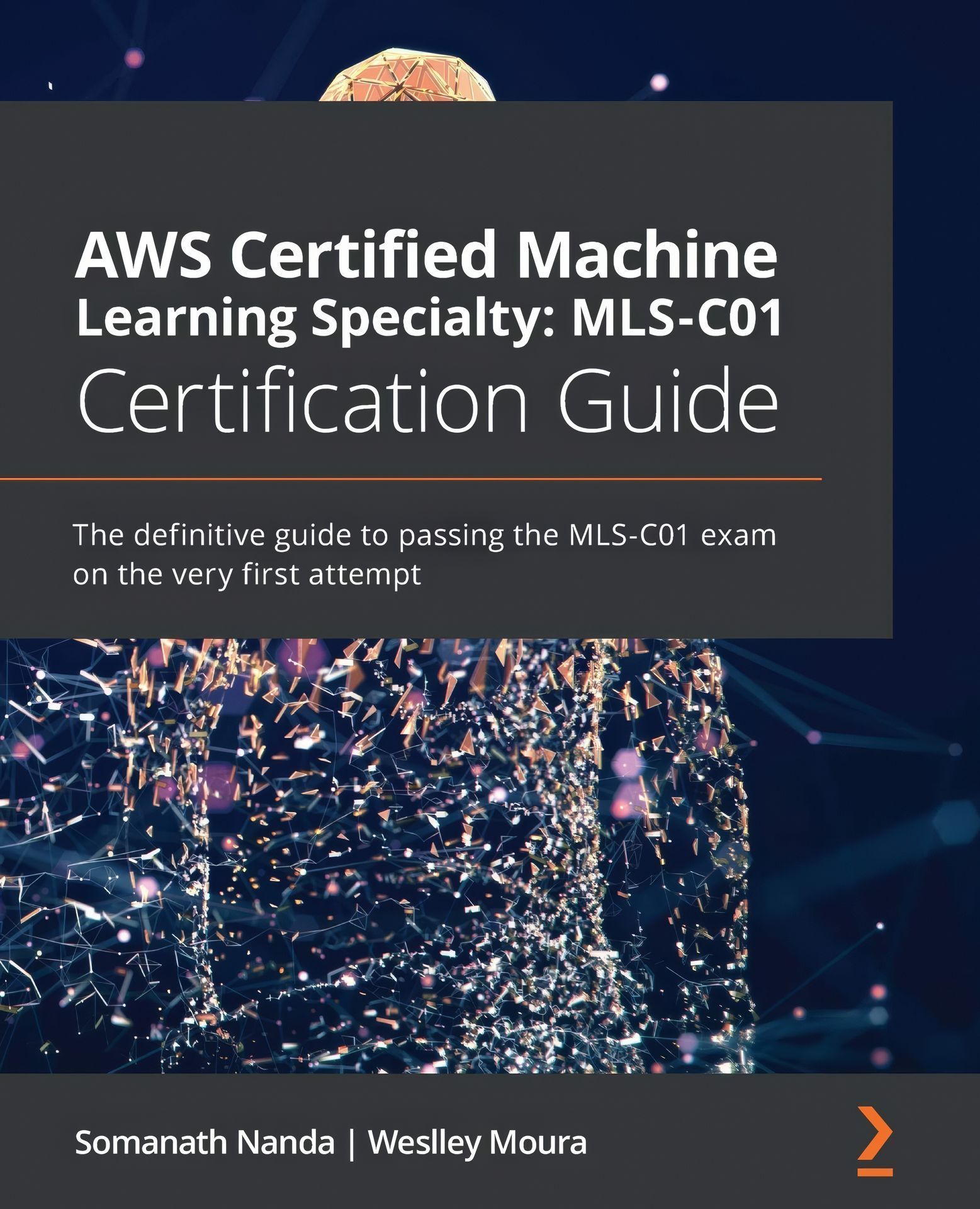
  • AWS Machine Learning Certification Achievement in Data Science
    AWS Machine Learning Certification Achievement in Data Science

    #MachineLearning Certified in #AWS Platform! #BigData #Analytics #DataScience #AI #IoT #IIoT #PyTorch #Python #RStats #TensorFlow #Java #JavaScript #ReactJS #GoLang #CloudComputing #Serverless #DataScientist #Linux #Programming #Coding #100DaysofCode https://
    geni.us/AWS-ML-S

    → View original post on X — @gp_pulipaka