@andrewwhite01 of @EdisonSci is cofounder and head of science at @FutureHouseSF
, known for many things incl ChemCrow (first LLM chemistry agent), ether0 (first reasoning model in a scientific domain), and paperqa (first superhuman literature agent).
CODE
-
Andrew White: ChemCrow, ether0, PaperQA AI Breakthroughs
By
–
-
Practical AI-Driven Coding Workflow and Tooling Setup
By
–
pretty happy with my current coding setup: – gpt-5.2-codex
– xhigh for planning
– medium for implementation
– background terminal (parallel jobs)
– /fork conversations to explore multiple variations of a problem
– codex web via slack for quick async validation/ simple changes
– -
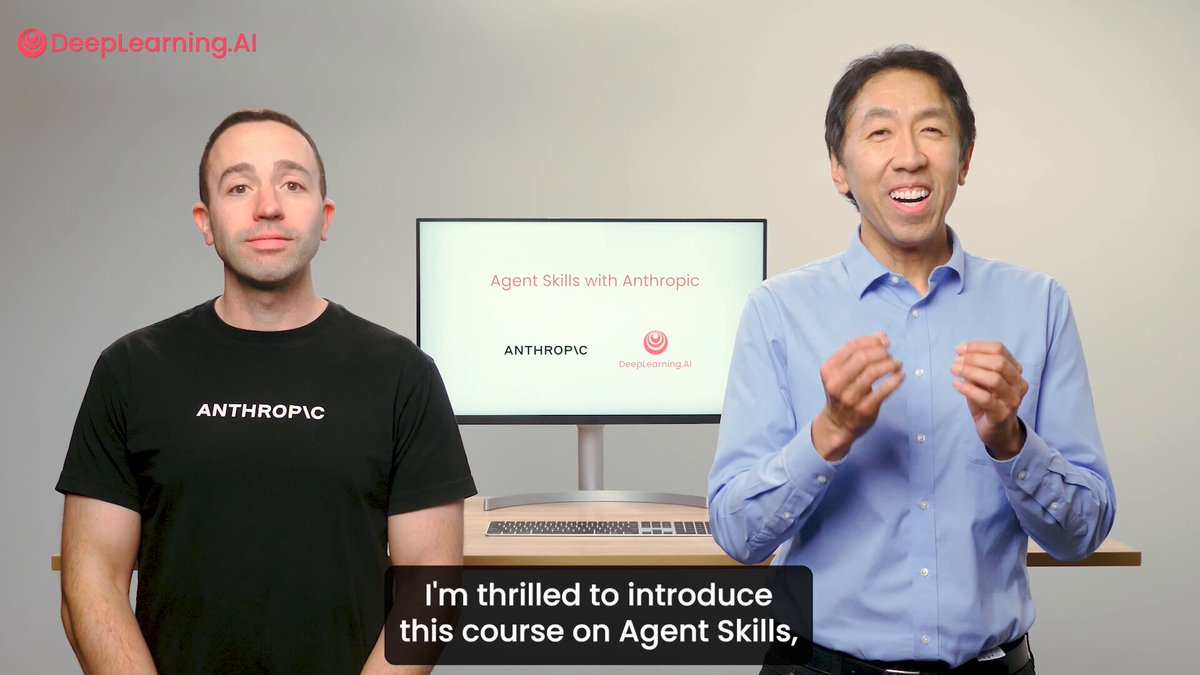
New Course: Agent Skills with Anthropic and Claude
By
–
Important new course: Agent Skills with Anthropic, built with @AnthropicAI and taught by @eschoppik!
— Andrew Ng (@AndrewYNg) 28 janvier 2026
Skills are constructed as folders of instructions that equip agents with on-demand knowledge and workflows. This short course teaches you how to create them following best… pic.twitter.com/70UOSyqR7YImportant new course: Agent Skills with Anthropic, built with @AnthropicAI and taught by @eschoppik! Skills are constructed as folders of instructions that equip agents with on-demand knowledge and workflows. This short course teaches you how to create them following best practices. Because skills follow an open standard format, you can build them once and deploy across any skills-compatible agent, like Claude Code. What you'll learn: – Create custom skills for code generation and review, data analysis, and research – Build complex workflows using Anthropic's pre-built skills (Excel, PowerPoint, skill creation) and custom skills – Combine skills with MCP and subagents to create agentic systems with specialized knowledge – Deploy the same skills across Claude.ai, Claude Code, the Claude API, and the Claude Agent SDK Join and learn to equip agents with the specialized knowledge they need for reliable, repeatable workflows. deeplearning.ai/short-course…
→ View original post on X — @andrewyng, 2026-01-28 17:31 UTC
-

CooperBench: AI Agents Perform 50% Worse in Teams
By
–

Introducing the curse of coordination. Agents perform 50% worse in teams than working alone. People building human-AI collaboration today don't realize why current LLMs fail to be good teammates. We built CooperBench to study this. For humans, we recognize that teamwork isn't just the sum of individual capability. Communication and coordination often outweigh raw skill. But for AI? We're only hill-climbing benchmarks that evaluate solo technical abilities. CooperBench A benchmark to evaluate agent cooperation in realistic software teamwork tasks. The setup is intuitive: two agents, two tasks, two VMs, one chat channel (agents can send over arbitrary text, even the entire patch they wrote). We evaluate whether the merged solution from both agents passes the requirements of both tasks. The curse of coordination The most striking result: agents perform 50% worse in teams (black line) than working alone (blue line). Why is this happening? Is it because they can't use the communication tool? No. They spent 20% of their time sending messages. The problem? Those messages were repetitive, vague, ignored questions, or straight-up hallucinated. But bad communication is only part of the story. We found two deeper failures: Commitment: Agents don't do what they promised. Expectations: Agents don't expect others to keep promises either. Without these, cooperation collapses. However, there is a silver lining We also find emergent coordination behaviors, e.g. role division, resource division, and negotiation, which gives us hope that we can use reinforcement learning to improve coordination. What's next? It is true that highly-engineered multi-agent orchestration could largely sidestep the coordination problem. However, we care more about the AI's capability: if we truly want AI to be our teammates, we need them to be natively capable of effective communicating and coordinating. Two agents on software tasks is just the beginning. The real goal: agents that can cooperate with us well enough to actually empower us. CooperBench is our first step. If you're working on this too, let's talk.
-
Best Healthcare AI Tools: AlphaFold and AI CoScientist Guide
By
–
List all the best tools for healthcare, alphafold, ai coscientist ? what's your best tools list ? then create skills, and ask for a goal
-
Training Student LLMs to Fix Sloppy Code Reimplementations
By
–
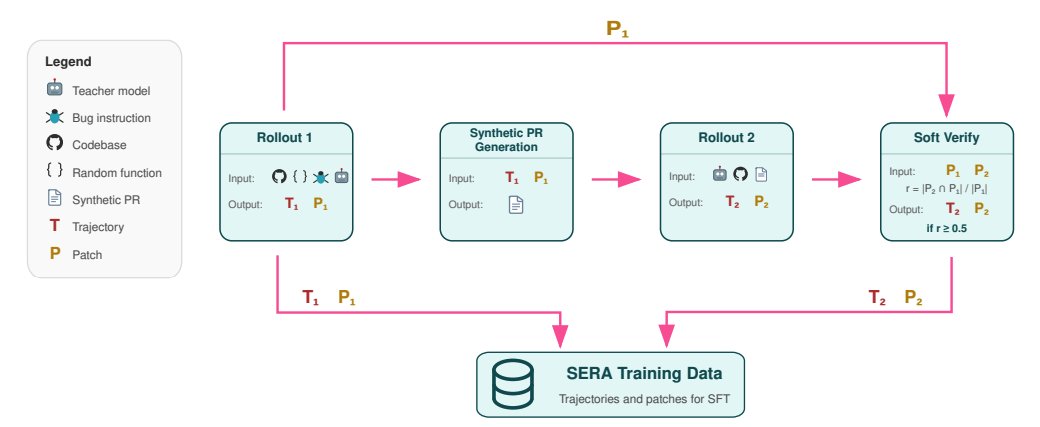
FREE IDEA! Take a human-authored codebase from <2022, have teacher LLM create a "sloppy" reimplementation of a single feature, then train student LLM to undo the slop. Should bias away from broad exceptions, blank returns, attribute/type checking, or low-q defensive coding.
-
Cohere launches Model Vault for secure AI model deployment
By
–
Today we’re launching Model Vault — a dedicated, fully managed platform to run Cohere models securely and at scale.
— Cohere (@cohere) 28 janvier 2026
Model Vault delivers the control and isolation of self-hosting, without the operational burden:
🔒 Dedicated, isolated VPC
⚡ No noisy neighbors or rate limits
🔁… pic.twitter.com/ESkpISB99QToday we’re launching Model Vault — a dedicated, fully managed platform to run Cohere models securely and at scale. Model Vault delivers the control and isolation of self-hosting, without the operational burden: Dedicated, isolated VPC No noisy neighbors or rate limits
-
Abacus AI Deep Agent: Autonomous AI with Infinite Memory
By
–
Abacus AI Deep Agent actually does the work.
— Abacus.AI (@abacusai) 28 janvier 2026
Give it a task → it builds the app.
Needs a database → it connects and uses it.
Needs recurring logic → it schedules itself.
Needs context tomorrow → it remembers.
Autonomous agents with infinite memory, backed by a persistent AI… pic.twitter.com/ouQqhZaJiDAbacus AI Deep Agent actually does the work. Give it a task → it builds the app.
Needs a database → it connects and uses it.
Needs recurring logic → it schedules itself.
Needs context tomorrow → it remembers. Autonomous agents with infinite memory, backed by a persistent AI -
AI Models Improving Code Generation and Digital Content Creation
By
–
Happy to answer. Andrej's comment was wider than Boris' – he mentioned socials and content and all digital media. Boris refuted the statement but only provided code getting better as the reasoning. So yes, it does have to do with content. And AI models creating better code does
-
Learning the Model Context Protocol for Building AI Agentic Systems
By
–
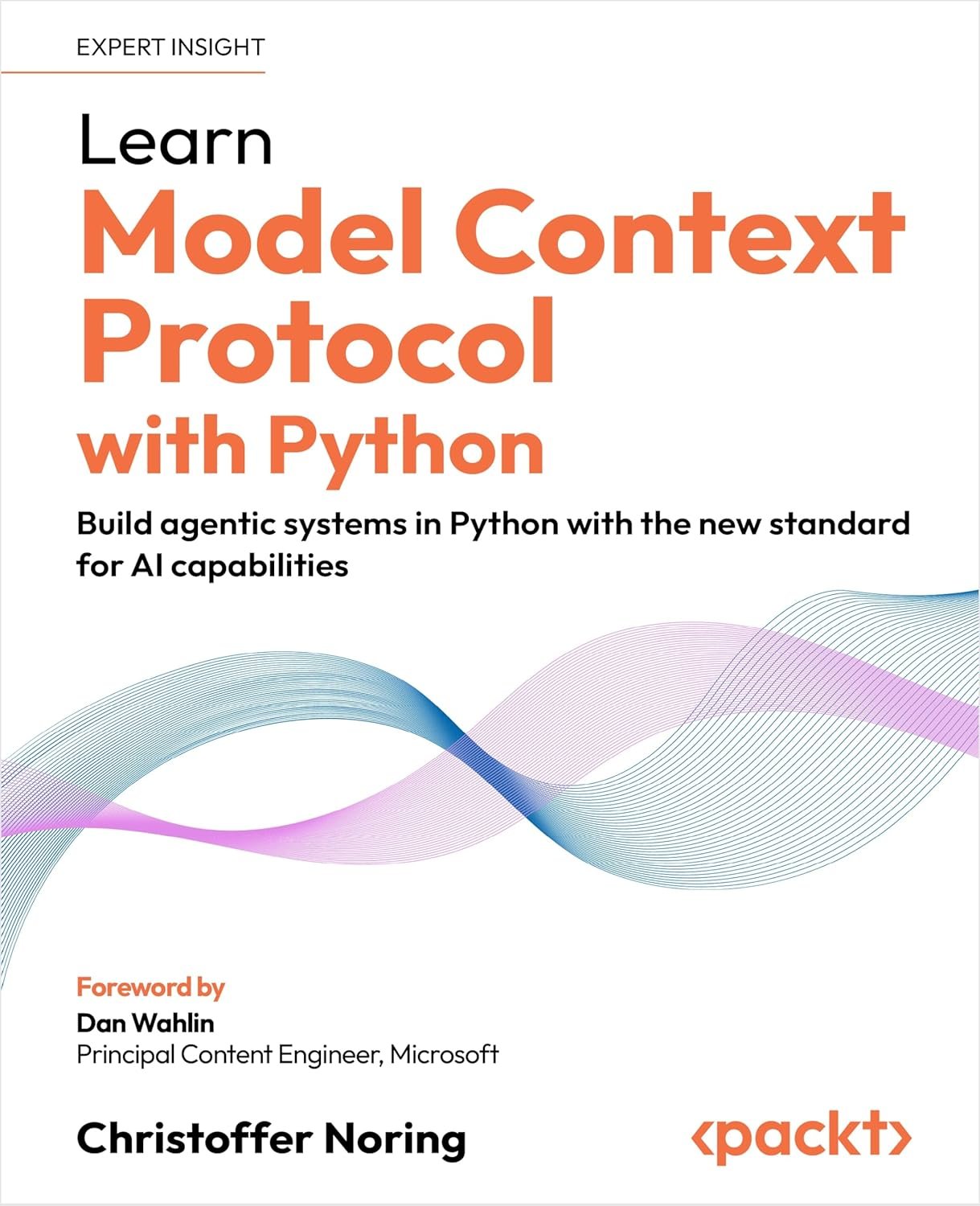
Learn Model Context Protocol [MCP] with Python — Build Agentic Systems in Python with the new standard for AI Capabilities: https://
amzn.to/4njfsVM by @chris_noring v/ @PacktDataML 𝓦𝓱𝓪𝓽 𝓨𝓸𝓾 𝓦𝓲𝓵𝓵 𝓛𝓮𝓪𝓻𝓷:
Understand the MCP protocol and its core components