
Turn messy PDFs into production-ready RAG systems! RAGFlow is an open-source RAG engine that handles the parts most frameworks skip. Most RAG tools treat document parsing as solved. Upload a PDF, chunk it, done. But real documents are messy – scanned copies, complex layouts,
CODE
-
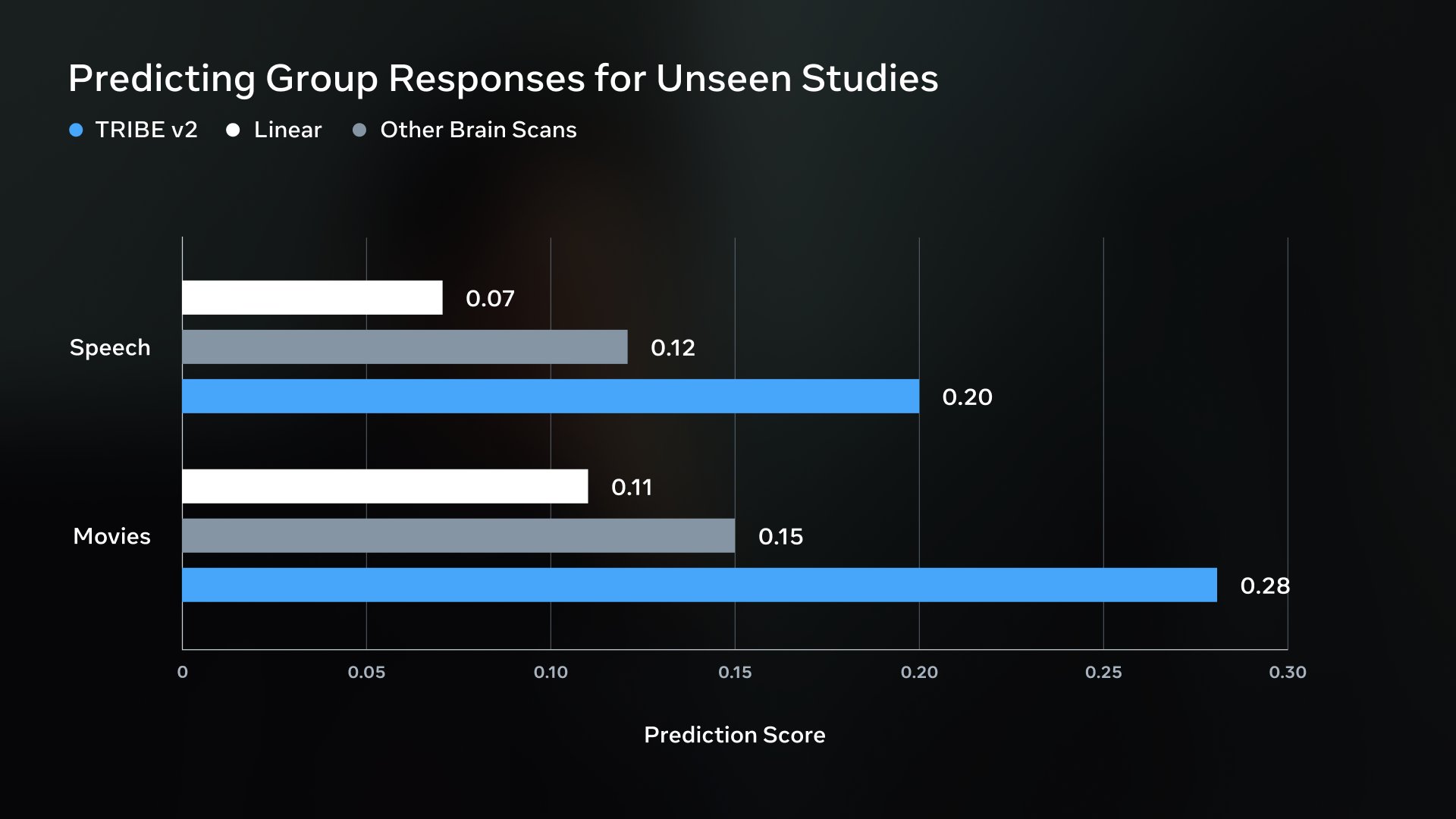
TRIBE v2 Predicts Brain Responses Without Retraining
By
–
Without any retraining, TRIBE v2 can reliably predict the brain responses of individuals it has never seen before, achieving a nearly 2-3x improvement over previous methods for both movies and audiobooks We’re releasing the model, codebase, paper, and demo to help researchers
-
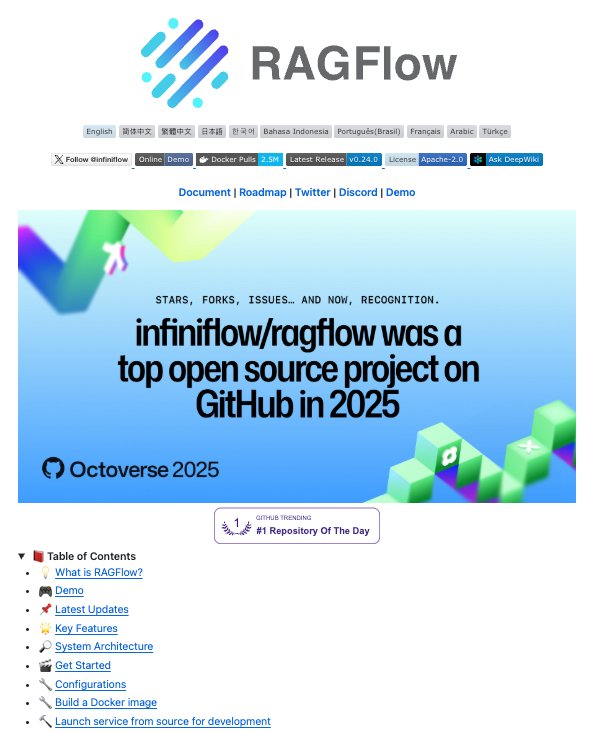
RAGFlow: Open-Source RAG Platform by Infiniflow
By
–
Here is the link to the repo:
→ https://
github.com/infiniflow/rag
flow
… They also have a really cool website:
→ https://
ragflow.io Shoutout to @infiniflowai for building this and making it 100% open-source for the community! Don't forget to drop a on to help boost its visibility. -
RAGFlow: Visual Open-Source Engine for Document Processing
By
–
Building RAG is easy. Parsing real, unstructured data is the hard part.
— Charly Wargnier (@DataChaz) 26 mars 2026
Most tools fail when documents get complicated.
RAGFlow by @infiniflowai makes the entire process visual and flawless 🔥
It is an (open-source!) engine built specifically to find the exact needle in a data… pic.twitter.com/1dSAyWhizYBuilding RAG is easy. Parsing real, unstructured data is the hard part. Most tools fail when documents get complicated. RAGFlow by @infiniflowai makes the entire process visual and flawless It is an (open-source!) engine built specifically to find the exact needle in a data
-
Sonnet 3.5 Model Quality and Research Applications Comparison
By
–
Yes I agree it is, but that's what makes it bad, it doesn't mean that there's no human who could use them for research, same like you could probably build decent software with Sonnet 3.5 – but it was still a bad model vs what we have now
-
AI code prediction: hype or solid reality, adoption is key
By
–
Two notes from this year-old prediction:
— Ethan Mollick (@emollick) 26 mars 2026
1) You can either view this as hype (100% of code is not written by AI) or a startlingly solid prediction (Claude Code didn’t exist then, but now writes a remarkably high percentage of code)
2) Adoption is more of a barrier than technology https://t.co/z7kG2be8hfTwo notes from this year-old prediction:
1) You can either view this as hype (100% of code is not written by AI) or a startlingly solid prediction (Claude Code didn’t exist then, but now writes a remarkably high percentage of code)
2) Adoption is more of a barrier than technology -
AI Tool Development: Managing Parallel Feature Dependencies
By
–
C'est une bonne pratique de pouvoir génerer le pré-prompt pour savoir ce que l'outil sais faire, et de comment il le fait. Bravo. Le truc qui me fait toujours peurs, c'est qu'il parte en parrallèle pour créer des fonctionnalités, et que t'as dépendances entre elles et qu'il n'a
-
Integer Overflow Bug Fix in vLLM: uint32_t to size_t
By
–
4/4 The fix upstream? Two characters, basically:uint32_t → size_t Weeks of debugging for one tiny type-width bug. Great reminder that in RL infra, the hardest part is often finding the right boundary around the failure. 👉Blog with the full investigation + the upstream vLLM PR: ai21.com/blog/vllm-cuda-inte…
-
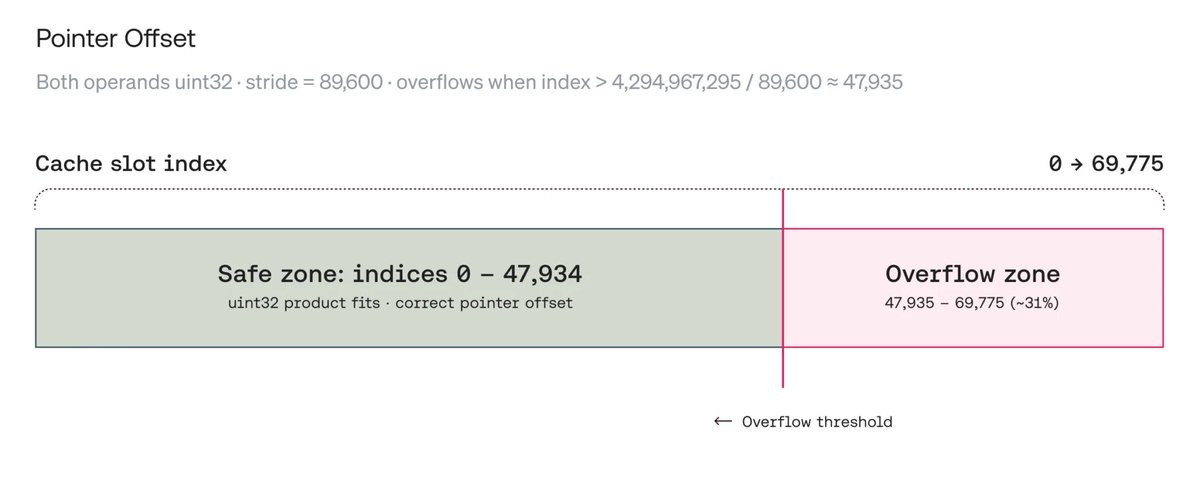
Silent 32-bit Integer Overflow in vLLM Mamba-1 CUDA Kernel
By
–
3/4 Root cause: a silent 32-bit integer overflow inside a vLLM CUDA kernel for Mamba-1 selective scan forward kernel. cache_index * ssm_states_batch_stride overflowed once cache slots got large enough, corrupting writes with no crash and no warning.
-

Discovery of a Structured Bug in Periodic Rollouts
By
–
2/4 The weird part: the spikes were periodic. When we increased rollouts per prompt, the spike pattern moved with them. That was the clue that this wasn't "training instability", it was a structured rollout-path bug. [Translated from EN to English]