It’s far more effective to run AI locally where it can read and edit your config, so we suggest that in the docs instead.
CODE
-

Top AI Stories: Anthropic Leak, ChatGPT Codex, New Tools
By
–
Top stories in AI today: – Anthropic accidentally leaks ‘Mythos’ AI details
– The Rundown Roundtable: Our AI use cases
– Create Skills in ChatGPT with Codex
– The personal war behind OpenAI and Anthropic
– 4 new AI tools, community workflows, and more -
Open Source Project Credits and Support Offer
By
–
what are you building? if it’s open source happy to grant some credits 🙂
-
Open-source models for agent tools over closed APIs
By
–
It’s time for open-source agent tools to rely primarily on open-source models, instead of closed-source APIs that send all your data to the cloud and ultimately will get hacked and/or shut down
-
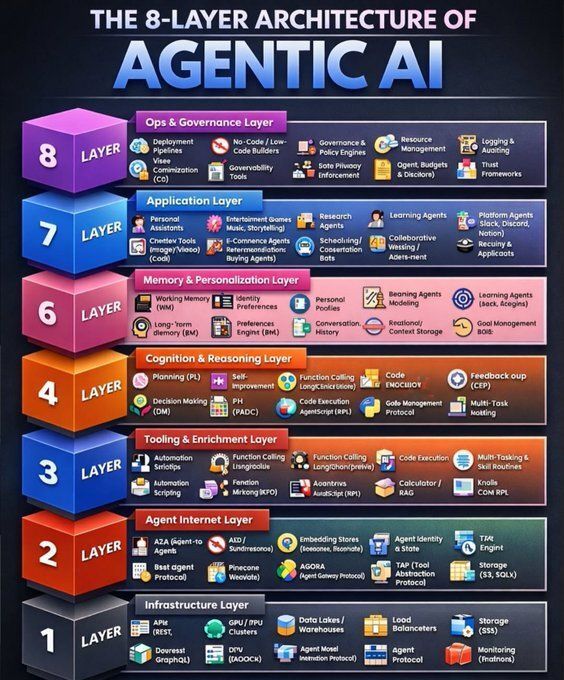
8-Layer Architecture of Agentic AI Systems
By
–
The 8-Layer Architecture of #AgenticAI
by @Python_Dv #AI #LLM #ArtificialIntelligence #MachineLearning #ML -
MongoDB Vector Search Lexical Prefilters for Precise Forgiving Search
By
–
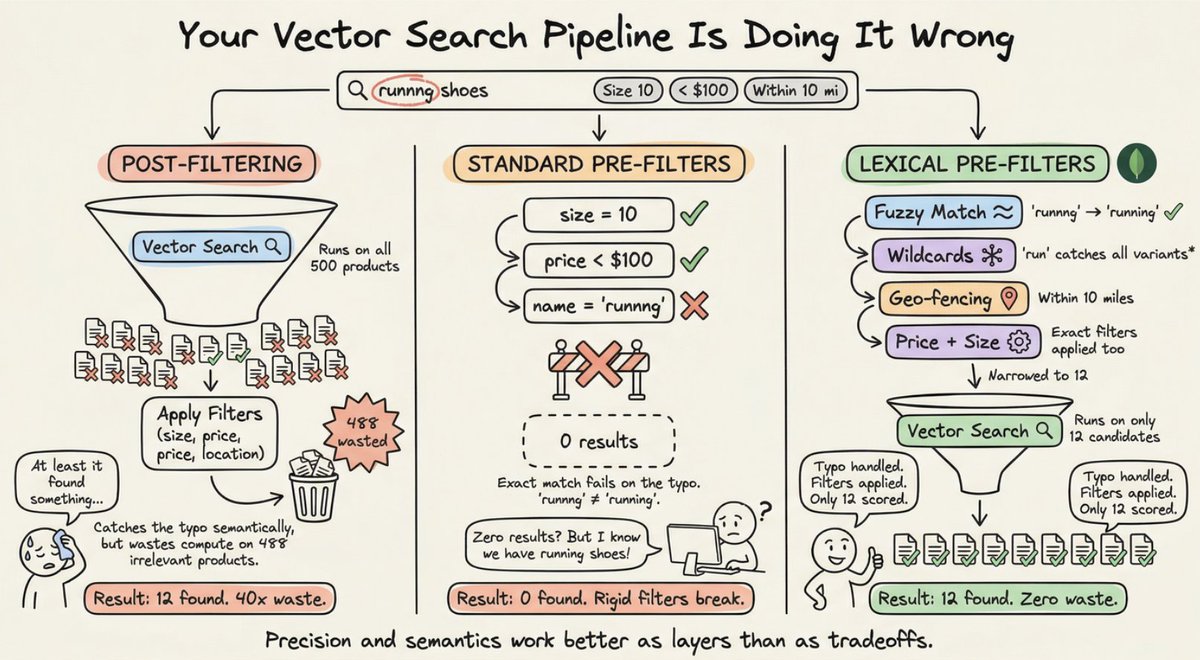
Learn more about #MongoDB Vector Search: fandf.co/4qyyKcb It makes sure everything we discussed is executed before the vector math, so you only run similarity scoring on relevant candidates. If you're building anything where users make typos, need location-based results, or expect your search to be both precise and forgiving at the same time, Lexical Prefilters solve it. It's part of the vectorSearch operator (inside the $search stage) in Atlas – so if you're still on knnBeta, this is what's next. Thank you MongoDB for working with me on this one.
→ View original post on X — @akshay_pachaar, 2026-03-30 07:37 UTC
-
Vector Search 10x Cheaper with Intelligent Lexical Filtering
By
–
A simple technique can make your vector search 10x cheaper. And you probably haven't heard of it yet. Consider this: A user searches "runnng shoes" (yes, misspelled) looking for size 10, within 10 miles, under $100. Vector search runs on 500 products, then the filters apply – and only 12 match the size, location and price. That's 500 similarity calculations to surface 12 results. And if the typo didn't get caught? Those 12 might not even include what the user wanted. Standard pre-filters would return ZERO results for "runnng" – it's not an exact match. Post-filtering catches the typo semantically but wastes compute on 488 irrelevant products first. This is how search pipelines typically work. Most teams have accepted this as normal – run vector search first to get semantically relevant results, then apply filters afterward. Standard vector search does support basic pre-filters (like "price < $100" or "size = 10"), but those filters are rigid, only handling exact matches and simple comparisons. They can't handle typos, wildcards, or complex text analysis. So you're stuck: use exact-match pre-filters and get zero results for typos, or post-filter massive datasets and waste compute. What you actually need is filtering that handles precision and fuzziness together – precise enough for "size 10" and "under $100," flexible enough to match "runnng to running," and smart enough to handle complex geospatial queries like "within 10 miles." And it needs to happen before vector search runs, not after. But the bigger point is this: – Post-filter: search everything, hope for the best.
– Pre-filter with lexical intelligence: search only what matters, get it right. Precision and semantics work better as layers than as tradeoffs. Now that you see the problem, let me show you what the fix actually looks like in practice 👇 This is ex [Translated from EN to English]→ View original post on X — @akshay_pachaar, 2026-03-30 07:36 UTC
-
Automatic Translation of Japanese and English Posts Needed
By
–
traduction des post japonais automatiquement en français. Il devrait le faire pour l'anglais aussi…
-
Delightful AIs Shelved for Coding and Enterprise SaaS
By
–
the most delightful AIs of our time
— swyx 🐣 (@swyx) 30 mars 2026
shelved to do koding and enterprise saas https://t.co/OtrYwwp12kthe most delightful AIs of our time shelved to do koding and enterprise saas
-
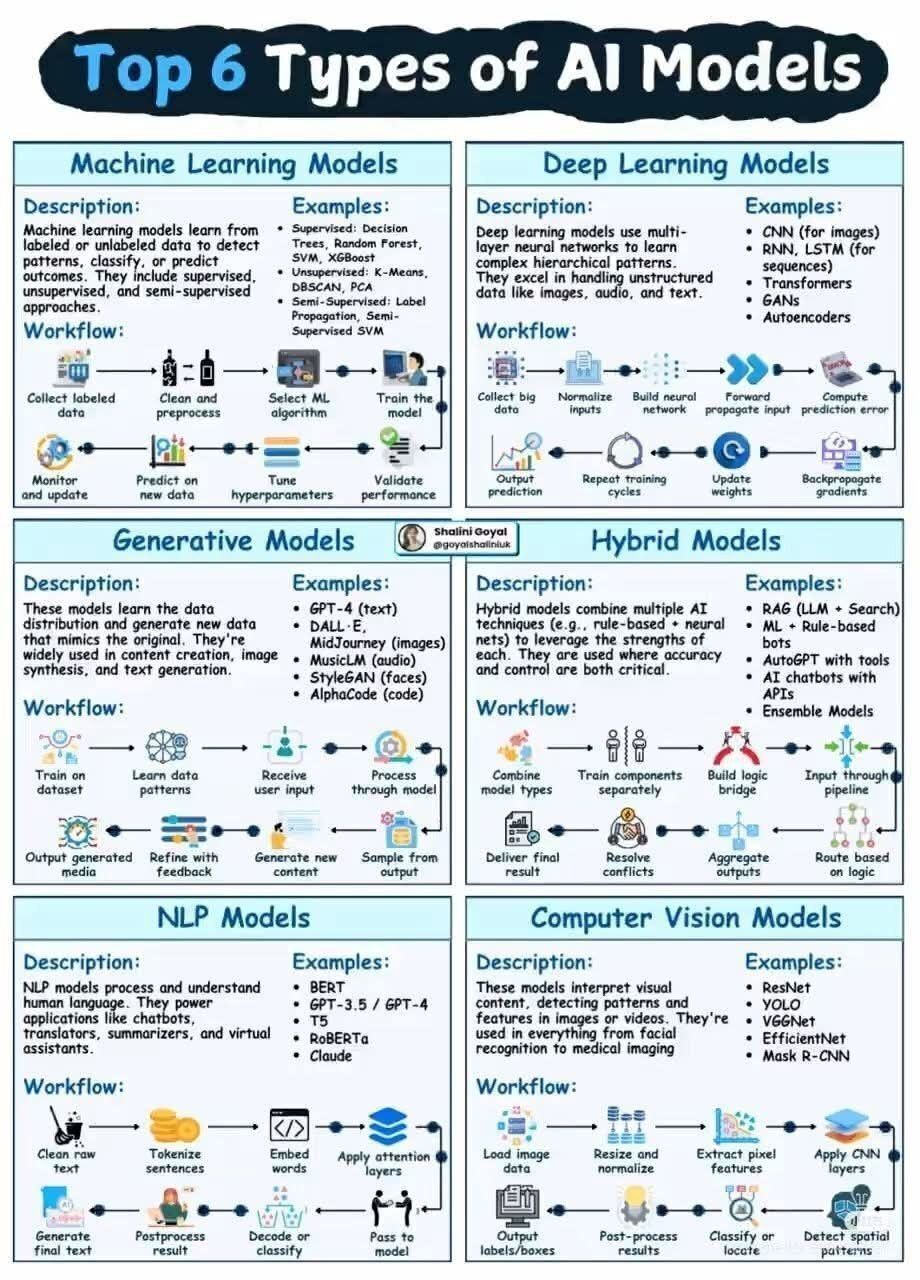
Six Types of AI Models in Machine Learning
By
–
6 Types of #AI Models
by @PythonPr #ArtificialIntelligence #MachineLearning #ML