AI Dynamics

Global AI News Aggregator

About

CODE

  • Dark Factory Pattern: The Next Leap in AI Software Engineering

    I asked @simonw what the next leap in AI software engineering is likely to be. He explained the "dark factory" pattern where teams don't write any code or even look at their code.

    → View original post on X — @lennysan

  • METR Study Shows Mixed Results on AI Model Capabilities

    most recent, somewhat mixed METR study below (and Claude Code may change things):

    → View original post on X — @garymarcus

  • Business Professionals Build First AI Agents in Mastermind Course
    Business Professionals Build First AI Agents in Mastermind Course

    I just helped hundreds of business professionals build their first AI agents in my AI Agent Mastermind. Here are five built by people who had never opened a terminal before this week: 1️⃣ A personalized morning brief. She took my original morning brief setup, remixed it with global news, local news from Sweden, a Linear ticket queue, a joke of the day for the family breakfast table, and a motivation quote based on business needs. 2️⃣ Someone who had never touched a command window used PowerShell and natural language to solve a screenshot clipping issue they had been working around for months. 3️⃣ A Spanish learning app called Vamanos, built on a "carefully negotiated token schedule" so it does not eat into her consulting work. Cultural context profiles for herself and her husband, token alerts so Claude can parent her if she goes off the rails, and Easter eggs with advice from my course sprinkled throughout. She built it for a trip she is taking next year. Sorry Duolingo. 4️⃣ A Google Commute Agent. Built because Google Calendar has no built-in way to book meetings back to back with distance awareness. It scans for events with physical addresses, calculates real drive time via Google Maps API, and automatically adds commute and parking buffer blocks around each one. 5️⃣ A weekly research briefing delivered to Gmail, connected to Perplexity for live web research, with a clickable macOS desktop app for whenever she wants to run it outside the schedule. These are all solving problems that had been annoying someone for months or years, or ways to show up more fully in their lives. It’s weirdly addictive to watch. We’re opening a second cohort soon. Enrollment will be extremely limited, and it’ll only be open to people on the waitlist. Join the waitlist here: joinaiagentmastermind.com

    → View original post on X — @alliekmiller, 2026-04-03 16:28 UTC

  • LLM Knowledge Bases: Building Personal Research Wiki Systems
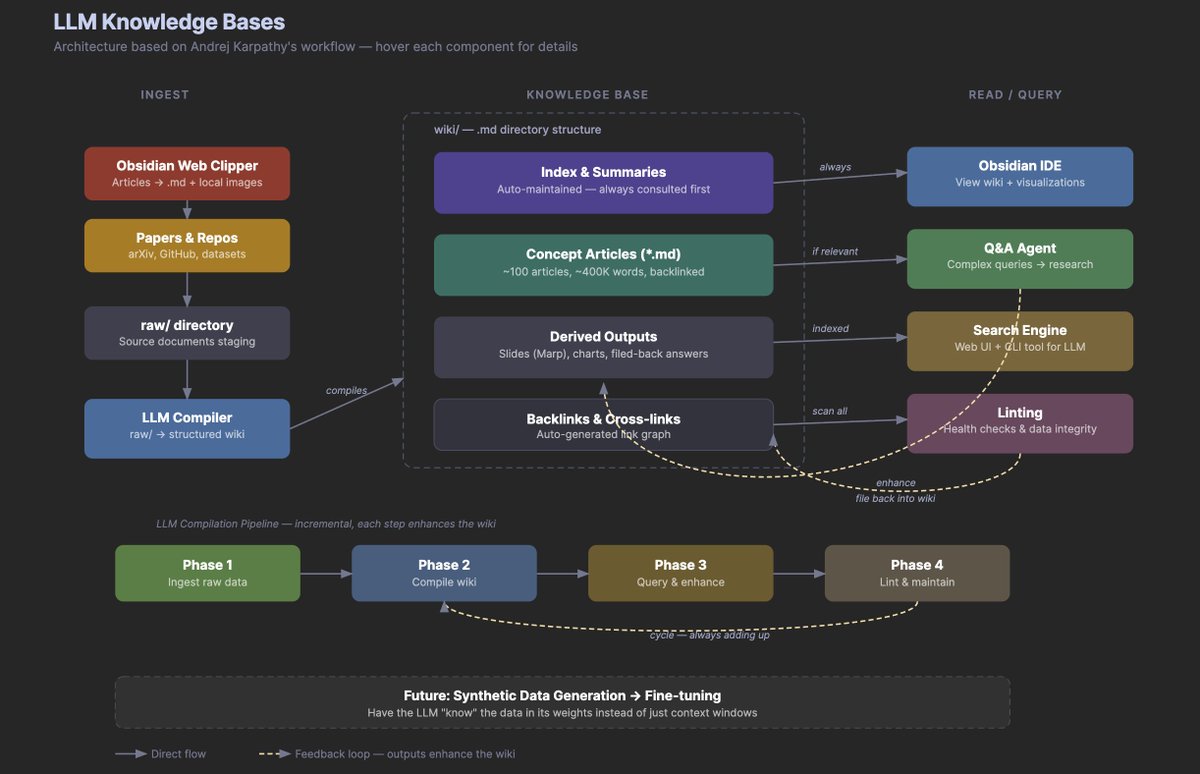
    LLM Knowledge Bases: Building Personal Research Wiki Systems

    Diagram of the LLM Knowledge Base system. Feed this to your favorite agent and get your own LLM knowledge base going. Andrej Karpathy (@karpathy) LLM Knowledge Bases Something I'm finding very useful recently: using LLMs to build personal knowledge bases for various topics of research interest. In this way, a large fraction of my recent token throughput is going less into manipulating code, and more into manipulating knowledge (stored as markdown and images). The latest LLMs are quite good at it. So: Data ingest: I index source documents (articles, papers, repos, datasets, images, etc.) into a raw/ directory, then I use an LLM to incrementally "compile" a wiki, which is just a collection of .md files in a directory structure. The wiki includes summaries of all the data in raw/, backlinks, and then it categorizes data into concepts, writes articles for them, and links them all. To convert web articles into .md files I like to use the Obsidian Web Clipper extension, and then I also use a hotkey to download all the related images to local so that my LLM can easily reference them. IDE: I use Obsidian as the IDE "frontend" where I can view the raw data, the the compiled wiki, and the derived visualizations. Important to note that the LLM writes and maintains all of the data of the wiki, I rarely touch it directly. I've played with a few Obsidian plugins to render and view data in other ways (e.g. Marp for slides). Q&A: Where things get interesting is that once your wiki is big enough (e.g. mine on some recent research is ~100 articles and ~400K words), you can ask your LLM agent all kinds of complex questions against the wiki, and it will go off, research the answers, etc. I thought I had to reach for fancy RAG, but the LLM has been pretty good about auto-maintaining index files and brief summaries of all the documents and it reads all the important related data fairly easily at this ~small scale. Output: Instead of getting answers in text/terminal, I like to have it render markdown files for me, or slide shows (Marp format), or matplotlib images, all of which I then view again in Obsidian. You can imagine many other visual output formats depending on the query. Often, I end up "filing" the outputs back into the wiki to enhance it for further queries. So my own explorations and queries always "add up" in the knowledge base. Linting: I've run some LLM "health checks" over the wiki to e.g. find inconsistent data, impute missing data (with web searchers), find interesting connections for new article candidates, etc., to incrementally clean up the wiki and enhance its overall data integrity. The LLMs are quite good at suggesting further questions to ask and look into. Extra tools: I find myself developing additional tools to process the data, e.g. I vibe coded a small and naive search engine over the wiki, which I both use directly (in a web ui), but more often I want to hand it off to an LLM via CLI as a tool for larger queries. Further explorations: As the repo grows, the natural desire is to also think about synthetic data generation + finetuning to have your LLM "know" the data in its weights instead of just context windows. TLDR: raw data from a given number of sources is collected, then compiled by an LLM into a .md wiki, then operated on by various CLIs by the LLM to do Q&A and to incrementally enhance the wiki, and all of it viewable in Obsidian. You rarely ever write or edit the wiki manually, it's the domain of the LLM. I think there is room here for an incredible new product instead of a hacky collection of scripts. — https://nitter.net/karpathy/status/2039805659525644595#m

    → View original post on X — @dair_ai, 2026-04-03 16:11 UTC

  • Visual Guide to Gemma 4: Exploring Google DeepMind’s New Models
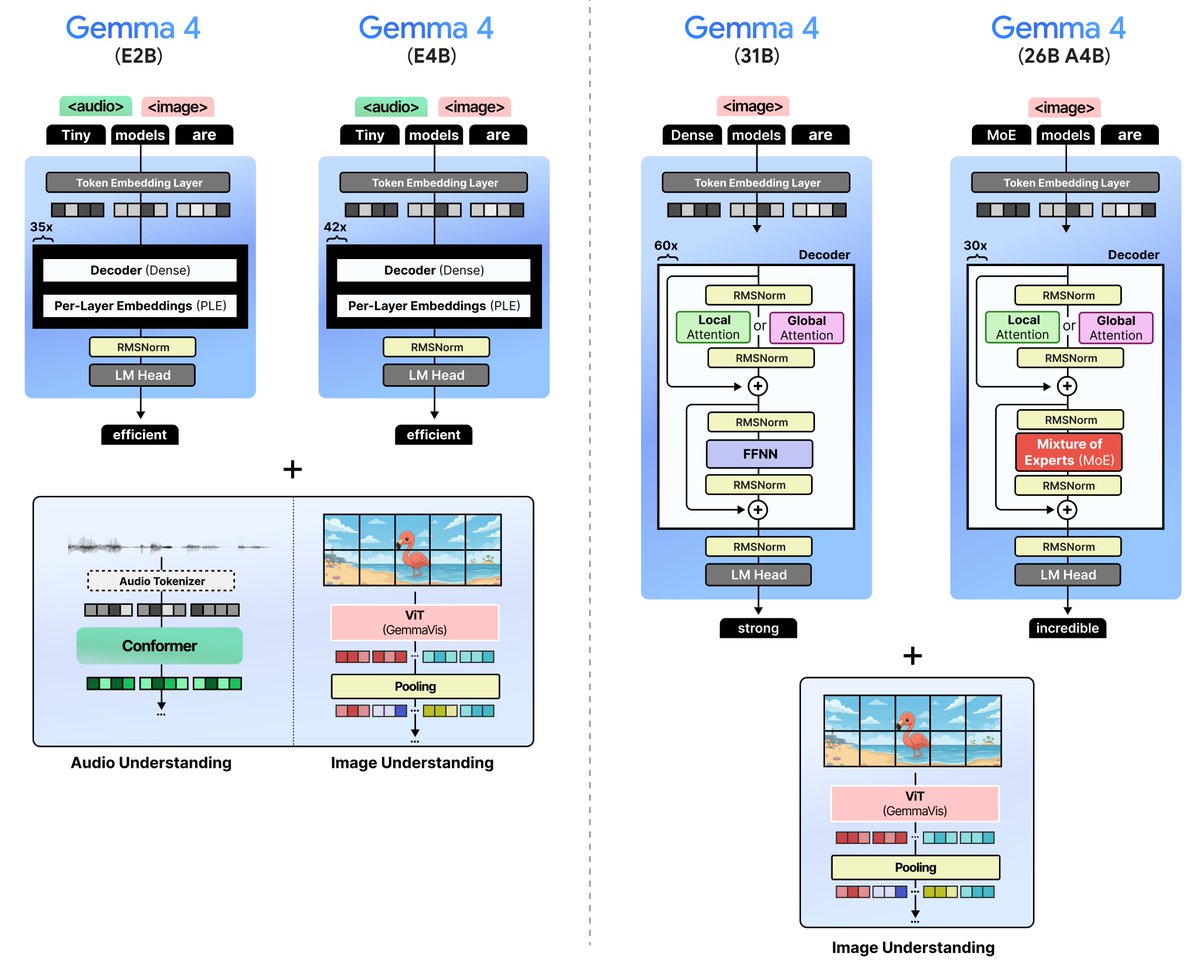
    Visual Guide to Gemma 4: Exploring Google DeepMind’s New Models

    A Visual Guide to Gemma 4 With almost 40 (!) custom visuals, explore the new models from Google DeepMind. We explore various techniques, ranging from Mixture of Experts and the Vision Encoder all the way up to Per-Layer Embeddings and the Audio Encoder. Link below 👇

    → View original post on X — @jeremyphoward, 2026-04-03 16:10 UTC

  • Exporting channels to JSON database for agent queries

    yes, I export all the channels to raw json and media, and I also put all that into a database so the agent can run queries if needed

    → View original post on X — @genekogan

  • AI Tools May Reduce Coder Productivity Despite User Perception

    Interesting take, consistent with the surprising @METR_Evals study that showed coders using AI tools took a hit on productivity even they imagined otherwise.

    → View original post on X — @garymarcus

  • Codex GitHub and Graph API Integration Technical Approach

    dunno how that would work? codex does a mix of gh and direct graph API access.

    → View original post on X — @steipete

  • LangChain Harness Engineering Day 5: Tool Setup and Teardown
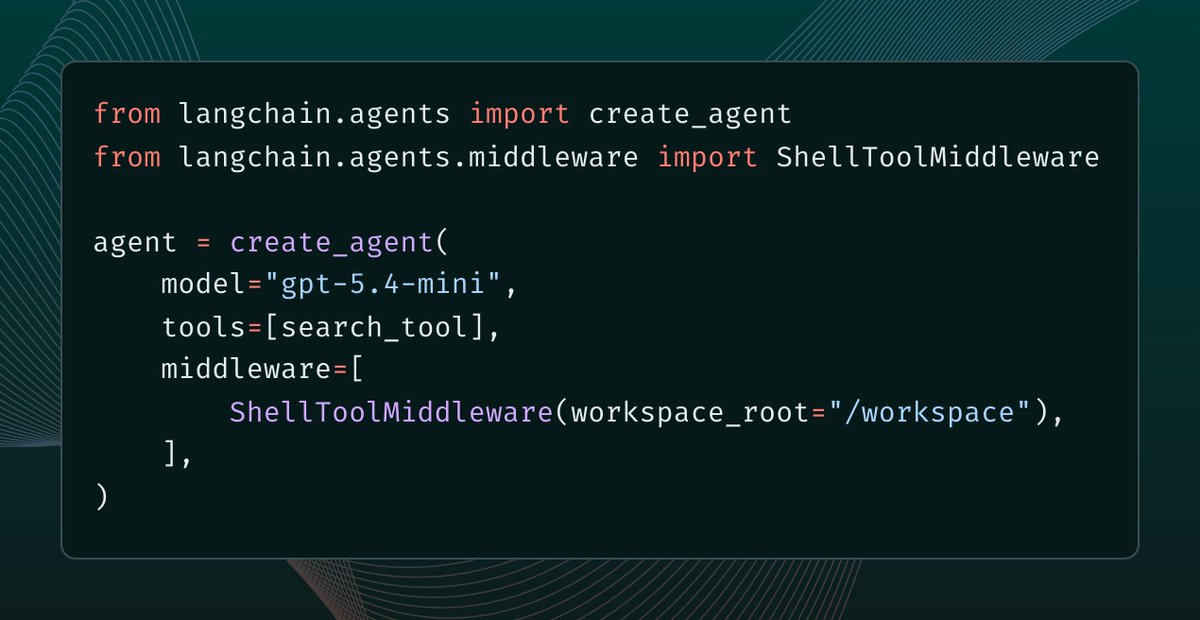
    LangChain Harness Engineering Day 5: Tool Setup and Teardown

    harness eng day 5: toolsets some tools need setup and teardown around the agent loop, like connecting to a tool server or spinning up a sandbox for example, @langchain's ShellToolMiddleware handles init and cleanup, and injects the shell tool into your agent's tool registry!

    → View original post on X — @langchain, 2026-04-03 15:48 UTC

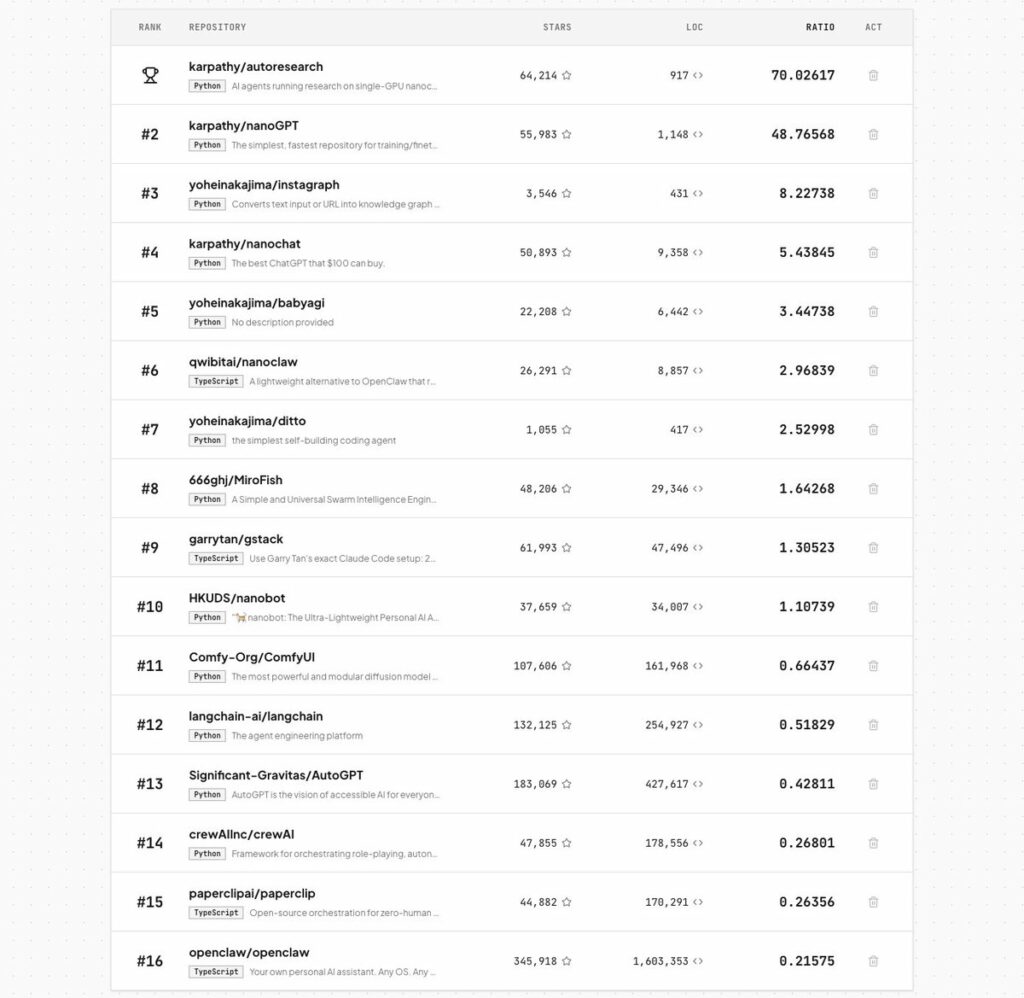
  • Tool comparing GitHub star-to-LOC ratio, Karpathy leads
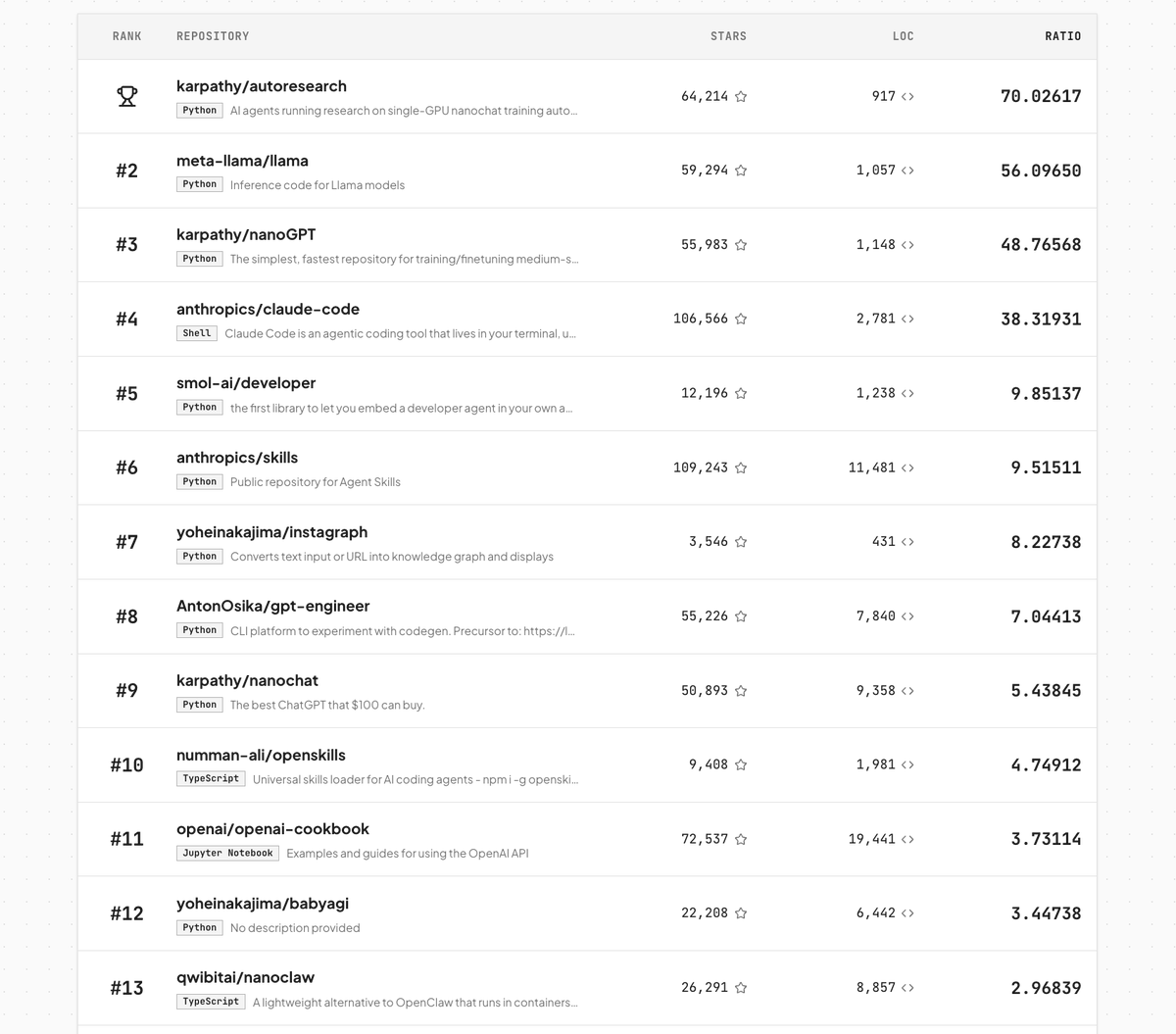
    Tool comparing GitHub star-to-LOC ratio, Karpathy leads

    found a few more with solid ratios last night, though couldn't find many new recent ones LOCratio.replit.app Yohei (@yoheinakajima) made a tool to compare star-to-LOC ratio on github cuz i thought i would do well, but @karpathy is 👑 any others i should try? — https://nitter.net/yoheinakajima/status/2039790077489086569#m

    → View original post on X — @yoheinakajima, 2026-04-03 15:32 UTC