Tried this in VS Code today, instant suggestions that actually understand context. Feels like pair programming with a genius
CODE
-

Claude Code Now Available for Pro Plan Subscribers
By
–
Claude Code is now included in the Claude Pro plan which means Pro plan subscribers can use their rate limits for Claude apps and Claude Code! To celebrate, here's a conversation with Claude Code's founding engineer, Boris Cherny, on:
– how we use Claude Code at Anthropic
– -
AI-Assisted Coding Workflow: Structuring for Reduced Verification
By
–
Related tweet from earlier where I was describing my own (developing) workflow of "AI Assisted coding" where among other things I try really hard to structure it to decrease verification.
-
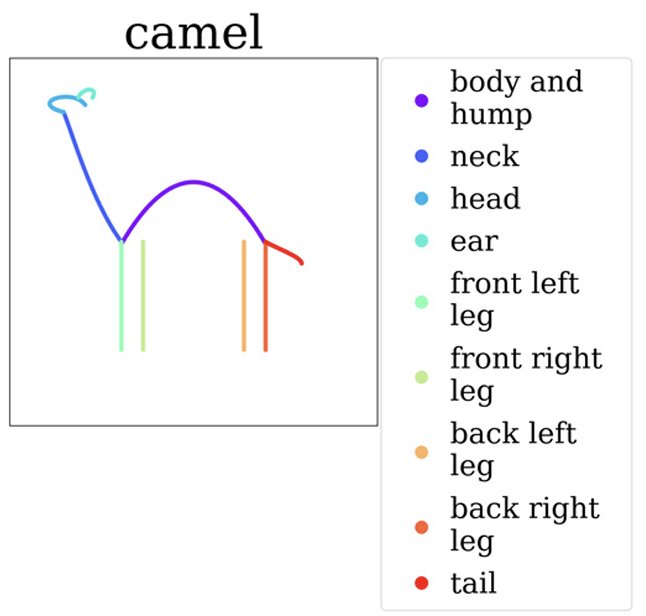
SketchAgent: LLM-Powered Stroke-by-Stroke Drawing Without Training
By
–
SketchAgent leverages an off-the-shelf LLM to draw stroke-by-stroke w/o training on any data — instead, the researchers developed a "sketching language" in which a sketch is translated into a numbered sequence of strokes on a grid. SketchAgent also provides textual annotations
-
Researcher Asked to Share Experimental Code Source
By
–
Really nice work, thanks for sharing! Out of curiosity, do you intend to release the code used for these experiments as well?
-
Optimizing coding workflows with AI developer tools
By
–
AI dev tooling isn’t about writing more code. It’s about writing better code, faster. CodeRabbit + Cursor nails that loop.
-
DSPy: Build and Optimize Agentic Apps Short Course
By
–
New short course: DSPy: Build and Optimize Agentic Apps
— Andrew Ng (@AndrewYNg) 4 juin 2025
DSPy is a powerful open-source framework for automatically tuning prompts for GenAI applications. In this course, you'll learn to use DSPy, together with MLflow. This is built in partnership with @databricks and taught by… pic.twitter.com/1KRz7XvxXeNew short course: DSPy: Build and Optimize Agentic Apps DSPy is a powerful open-source framework for automatically tuning prompts for GenAI applications. In this course, you'll learn to use DSPy, together with MLflow. This is built in partnership with @databricks and taught by