Exactly. The extraction step decides everything downstream, and most systems leave it completely unguided. The moment you add typed entities and constrained edges, the graph stops behaving like a vector store and starts being queryable. Schema should be step one, not an
AI
-

Karnataka Builds Integrated AI Governance Ecosystem
By
–
“Karnataka is building AI not as isolated projects, but as an integrated governance ecosystem powered by shared infrastructure, reusable AI services, and scalable digital public systems.” At the AI-CoE Stakeholder Consultation under the IndiaAI Mission, Shri @iaspankajpandey
, -
Man spells strawberry while counter tracks number of Rs
By
–
Omni: A man spells out strawberry while a counter keeps track of the number of Rs he says. pic.twitter.com/SxwJcJusMo
— fofr (@fofrAI) 26 mai 2026Omni: A man spells out strawberry while a counter keeps track of the number of Rs he says.
-
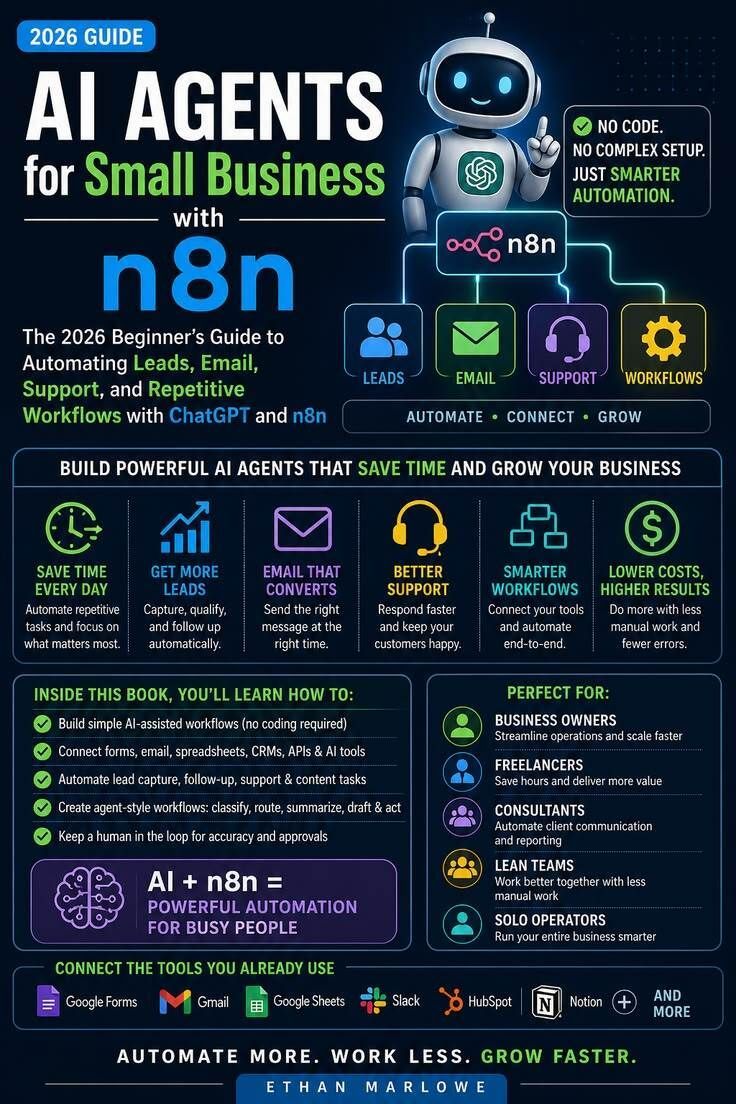
AI Agents for Small Business Automation with n8n
By
–
AI agents for small business • Automate leads
• Automate email
• Automate support
• Connect workflows
• Reduce manual work AI + n8n = scalable automation without complex coding. Via Giuliano Liguori (
@ingliguori
) #AI #Automation #n8n -
Graphiti hybrid ontology: prescribed and learned schema discovery
By
–
Graphiti supports both prescribed and learned ontology, so it can discover new types alongside your defined schema. The sweet spot is a hybrid, fixed schema for core domain, system proposes new types for patterns outside that boundary. Full auto-schema loops back to the
-
Ontology-Constrained Memory as Reasoning Boundary for Agents
By
–
Ontology-constrained memory is a great way to frame it. The key insight that clicked for me is that the schema is not just a filter on what gets stored, it is also a reasoning boundary. What the agent cannot represent, it cannot hallucinate connections about.
-
LLM Multi-Hop Retrieval: Schema vs Sequential Queries
By
–
That works when the graph is small and the hops are predictable. At scale, sequential LLM queries for every multi-hop retrieval add latency and token cost per question. The schema lets you answer it in one structured traversal instead of chaining open-ended lookups. Not
-
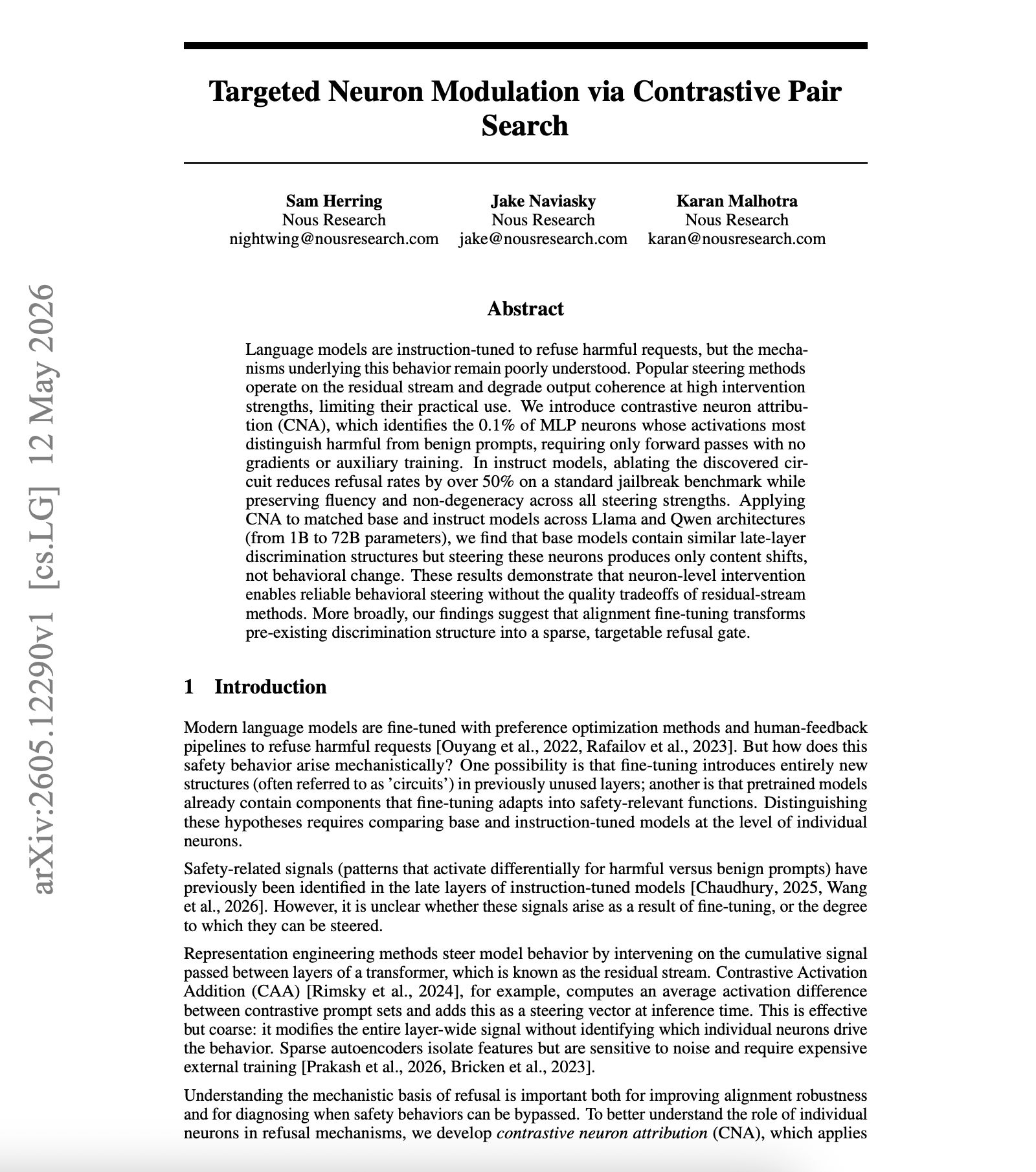
Researchers Identify Neurons Behind AI Safety Refusals
By
–
Someone just found the exact neurons that make AI say "no." Language models refuse harmful prompts, but nobody knows how that refusal works inside. Most steering methods edit the residual stream and wreck output quality. A new paper proposes a sharper fix: Contrastive Neuron
-

From Stack Overflow bug to autonomous features in 5 years
By
–
How did we go from opening Stack Overflow to solve one bug, to agents writing entire features on their own? That didn’t happen overnight, but in slow progress in about 5 years. And today, I want to walk you through the full story. The timeline, the tools, the tweets, the
-
Training Agents with Failures as Optimization Signal
By
–
The trick in our case is treating failures as training signal, which only works with a reliable verifier and a held-out gate. Open-ended agent work without success metrics is the hardest case to optimize this way.