AI Dynamics

Global AI News Aggregator

About

AI

  • Claude vs Claude Code vs Cowork: Which Tool to Use When

    Claude vs. Claude Code vs. Cowork. If you've been confused about which one to use and when, this post will clear that up in under two minutes. Anthropic now offers three distinct ways to interact with Claude, and each one targets a fundamentally different workflow. Think of it as: Chat for thinking, Code for building, and Cowork for doing. Here's a quick breakdown: 1️⃣ Claude Chat This is the conversational AI assistant most people already know. You type a prompt, Claude responds, and you iterate together. – Turn rough ideas into structured plans through conversation – Write emails, reports, essays, and long-form content – Research and summarize complex topics in minutes – Analyze documents, PDFs, and images – Build interactive prototypes through Artifacts The key here is that everything happens through conversation. You're thinking with Claude, not delegating work to it. It's available on every device, has a free tier, and supports persistent memory across sessions. The tradeoff is that it has no direct access to your local files (upload only), and it can't generate raster images natively. 2️⃣ Claude Code This is a terminal-native coding agent. You describe what you want in plain English, and Claude reads your codebase, writes code, runs tests, fixes errors, and ships the result. – Build and debug entire features across the full codebase – Write, run, and fix tests automatically – Manage git workflows and create pull requests – Spawn multiple parallel agents working on different parts of a task simultaneously It handles the full development cycle end to end, from planning to execution to testing. With the CLAUDE(.)md configuration file, you can teach it your project's conventions, patterns, and constraints so it writes code the way your team expects. The tradeoff is a steeper learning curve compared to Chat, and token costs can add up during heavy sessions. 3️⃣ Claude Cowork This is the newest addition. Anthropic describes it as Claude Code for the rest of your work. It's an agentic desktop assistant that automates file management and repetitive tasks through a GUI. You describe an outcome, and Claude plans, executes, and delivers finished work: formatted documents, organized file systems, spreadsheets with working formulas, and synthesized research. – Direct local file access and editing (no upload/download cycle) – Schedule recurring tasks automatically – Assign tasks remotely via Dispatch from your phone – Computer Use lets Claude control your screen directly It runs inside a sandboxed virtual machine on your computer, so Claude can only access folders you explicitly grant. You don't need to know how to code to use it. The tradeoff is that your computer must stay awake for tasks to run, and it's still in research preview. Here's how to think about choosing between them: → If you need to think through a problem or get writing/research help, use Chat → If you're building software and want an autonomous coding partner, use Code → If you have a clearly defined deliverable that involves local files and desktop workflows, use Cowork All three are included in the same subscription starting at $20/month, which makes it one of the highest-leverage subscriptions in productivity software right now. I've put together a visual below that maps the workflow of each product side by side. If you want to go deeper into Claude Code specifically, I wrote a detailed article covering the anatomy of the .claude/ folder, a complete guide to CLAUDE(.)md, custom commands, skills, agents, and permissions, and how to set them all up properly. Link in the next tweet.

    → View original post on X — @akshay_pachaar, 2026-03-30 13:15 UTC

  • Yoav Shoham Named AAAS Fellow for Agentic AI Contributions
    Yoav Shoham Named AAAS Fellow for Agentic AI Contributions

    Congratulations to our Co-founder and Co-CEO @yshoham, named an @aaas Fellow for pioneering contributions to agentic AI. 28 years as a professor at @Stanford, now building the future of enterprise AI at @AI21Labs. Read the full story: news.stanford.edu/stories/20…

    → View original post on X — @ai21labs, 2026-03-30 13:03 UTC

  • Scott Kupor on Building America: OPM and US Tech Force

    Episode #1 of Building America with @skupor about his work at OPM and with @USTechForce is here: nitter.net/NathanLands/status/202… Nathan Lands (@NathanLands) Sat down with @skupor, Director of OPM and former a16z managing partner, about why he left a comfy VC job to work in Gov and what he's building with @USTechForce. (00:00) His wife's reaction to leaving a16z (04:00) How this Trump admin is different for tech (09:00) What is OPM and the federal talent gap (16:00) Where DOGE stands now (18:00) $250B on employees vs $750B on contractors (22:00) The 1981 hiring law nobody touched for 44 years (28:00) What is US Tech Force (36:00) AI in government today (44:30) His pitch on why engineers should work for government — https://nitter.net/NathanLands/status/2024804782142300246#m

    → View original post on X — @nathanlands, 2026-03-30 13:02 UTC

  • Cary Volpert on Government Waste, DOGE, and AI Transparency

    Sat down with Cary Volpert the founder of @tarlywaste who led @DOGE's work at the VA. The federal deficit is one of the biggest threats to America's future. We got into what it actually takes to fix government waste and much more. (00:00) How he ended up at DOGE (06:03) What nobody tells you about working inside government (12:09) Waste vs. fraud — why the distinction matters (21:01) Who's actually accountable for taxpayer money (35:03) How AI changes government accountability (39:00) AI and national sovereignty (42:55) Who should control AI — and who shouldn't (55:59) Bitcoin, AI, and the future of sovereignty (01:08:59) How government contracts actually work (01:14:58) What Tarly is building for transparency (disclosure: I'm an investor in Tarly)

    → View original post on X — @nathanlands, 2026-03-30 13:02 UTC

  • Vector Databases Explained in Three Levels Difficulty
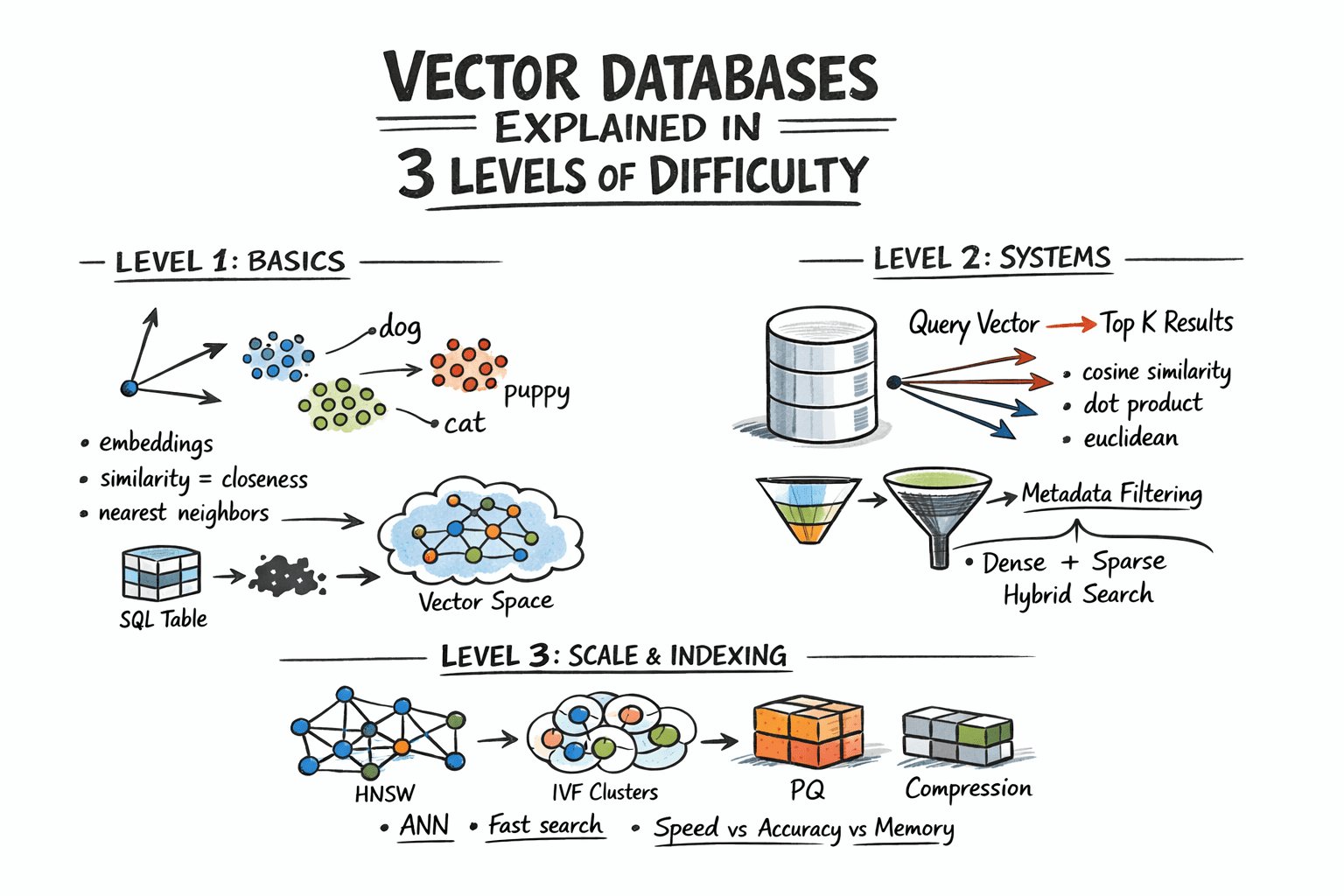
    Vector Databases Explained in Three Levels Difficulty

    Vector Databases Explained in 3 Levels of Difficulty https://
    machinelearningmastery.com/vector-databas
    es-explained-in-3-levels-of-difficulty/?utm_source=dlvr.it&utm_medium=twitter

    → View original post on X — @craigbrownphd

  • Scene Generation Technology: Applications in Robotics, Gaming, VR

    this is really interesting! does this mean it builds a scene "meter by meter" (tokens as splats done over distance)? if yes there is tons of usecases for this – eg worldmodels for robotics, interactive games, VR, or simply generation of scenes, etc etc all combined with

    → View original post on X — @andreasklinger

  • AI Agents Accelerating GLP-1 Drug Development at Novo Nordisk
    AI Agents Accelerating GLP-1 Drug Development at Novo Nordisk

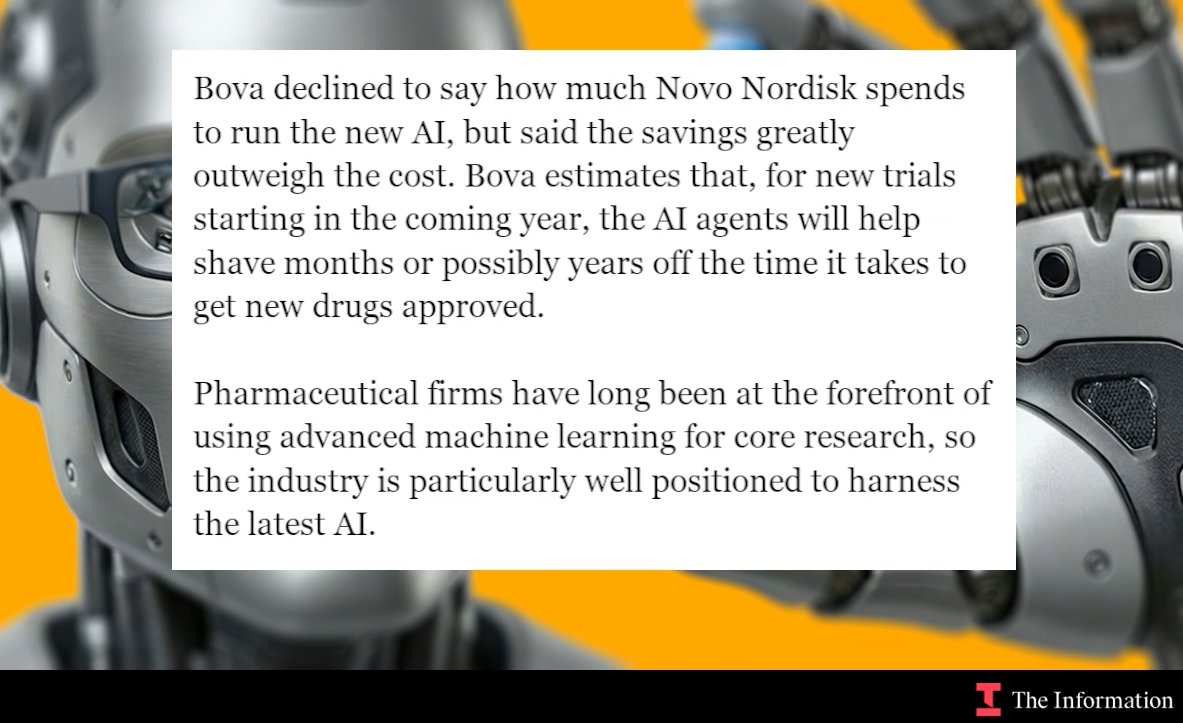
    Do you want to understand how AI is already changing medicine? Novo Nordisk is using AI agents to accelerate its GLP-1 drug pipeline, shaving *weeks to months* off clinical trials, potentially worth hundreds of millions in faster time-to-market. The Ozempic maker uses agents

    → View original post on X — @kimmonismus

  • China’s Autonomous Bus Operating 24/7 Without Driver

    No Driver, No Breaks: China’s #Autonomous Bus Runs 24/7
    by @jacksonhinklle #SelfDrivingCars #AutonomousVehicles #ArtificialIntelligence #Automation #Automotive #Transport

    → View original post on X — @ronald_vanloon

  • Huawei showcases 115 industrial intelligence applications at MWC2026
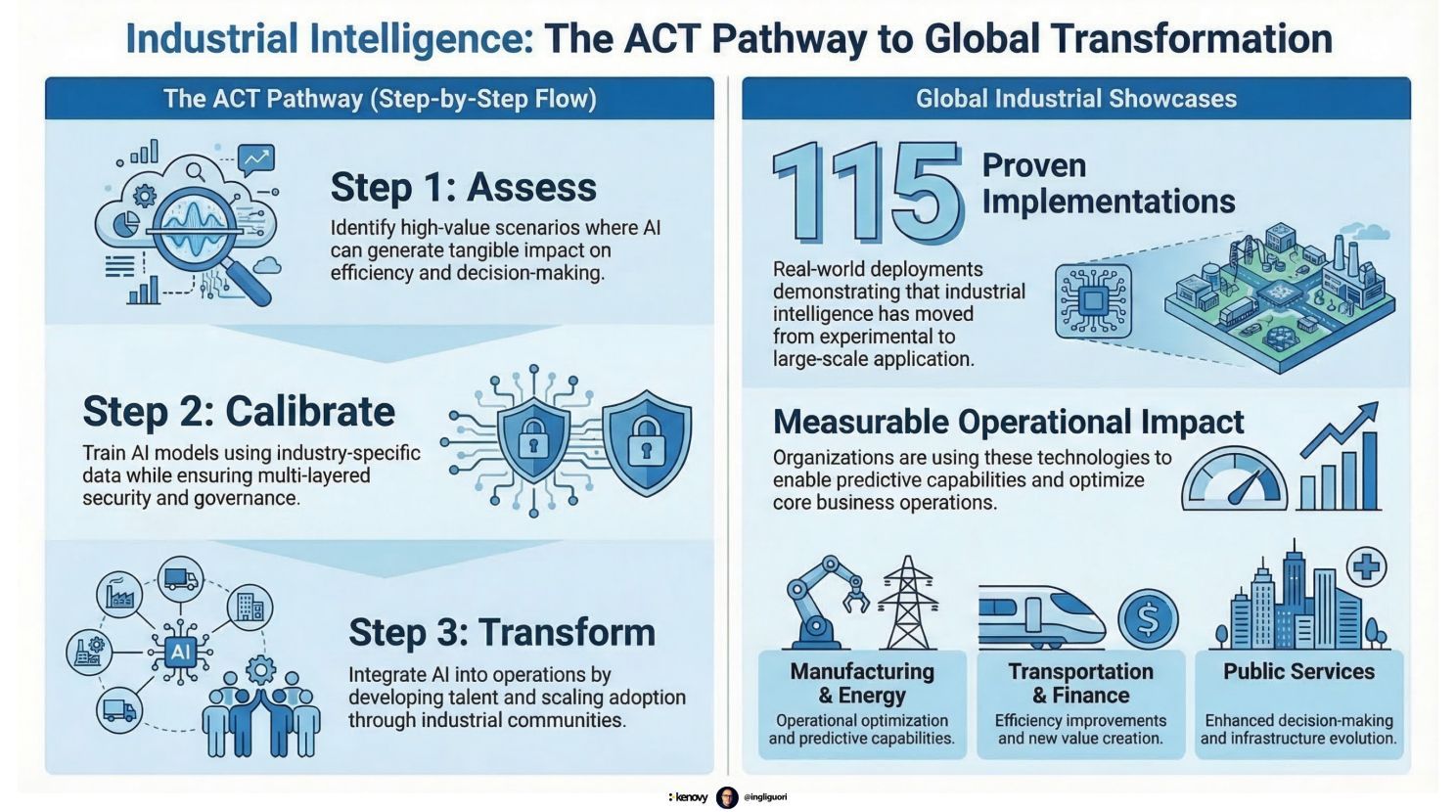
    Huawei showcases 115 industrial intelligence applications at MWC2026

    At #MWC2026, Huawei and its customers released 115 industrial intelligence showcases, demonstrating how AI and digital infrastructure are being applied in real operational environments. My latest article explores key insights from the Industrial Digital and Intelligent

    → View original post on X — @ingliguori