We are in the recursive era of AI.
Faster inference => faster AI development.
Our take on this from a hardware perspective:
https://cerebras.ai/blog/why-the-ai-race-shifted-to-speed
…
AI HARDWARE
-
The Recursive Era of AI: Fast Inference and Accelerated Development per Cerebras
By
–
-
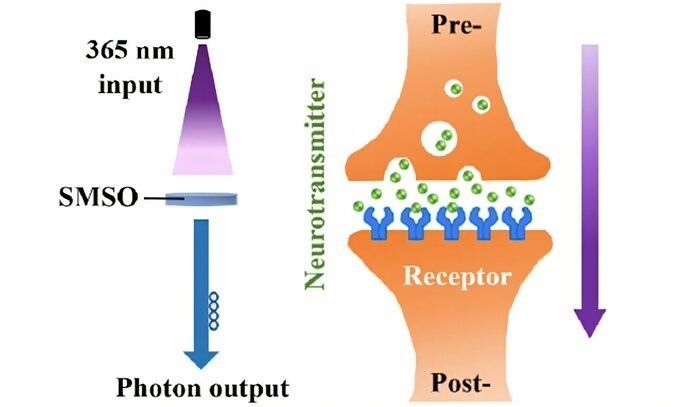
Photon-driven synapse boosts low-power neuromorphic systems
By
–
Photon-driven synapse advances low-power neuromorphic systems
by SPIE @TechXplore_com Learn more: https://
bit.ly/4vj71Ov #EmergingTech #FutureTech #Innovation -
AI Performance as a System-Level Challenge: Optimizing Chips and Software
By
–
The enterprise takeaway is simple: AI performance is now a system-level challenge. The winners will optimize chips, memory, interconnects, software, and architecture together. Less latency means faster intelligence.
Less movement means lower cost.
Less waste means AI that can -

AI’s next bottleneck: time, not compute
By
–
AI’s next bottleneck is not just compute. It is time. Time lost moving data.
Time lost coordinating chips.
Time lost waiting on memory, interconnects, and software layers to catch up. That shift changes how we should think about AI infrastructure. A thread… #HuaweiPartner -
The latest Gemma runs on a PC with 8 GB of RAM
By
–
the latest Gemma can run on a computer with 8 GB of RAM
-
Researchers propose CODA to keep data on chip longer for AI training
By
–
Can AI training be fixed by keeping data on the chip longer? Researchers from MIT, Princeton, Together AI, and Meta introduce CODA — a new way to rewrite Transformer building blocks as GEMM-plus-epilogue programs. Instead of moving large intermediate tensors back and forth to
-
Abacus AI: Build, Host, Run Cloud Services with LLMs & AI Models
By
–
🚨 Abacus AI SuperComputer – Build, Host and Run Any Cloud Service!
— Abacus.AI (@abacusai) 4 juin 2026
– 24/7 cloud computer
– spin up local LLMs, agents and databases
– access 100+ AI models
– use Claude, Codex or AntiGravity
– run OpenClaw or Hermes
– host servers, APIs or run scheduled tasks
– prompt ->… pic.twitter.com/VLxLCtwH9kAbacus AI SuperComputer – Build, Host and Run Any Cloud Service! – 24/7 cloud computer
– spin up local LLMs, agents and databases
– access 100+ AI models
– use Claude, Codex or AntiGravity
– run OpenClaw or Hermes
– host servers, APIs or run scheduled tasks
– prompt -> -
Colocating memory avoids costly transfers during inference
By
–
"If you can co-locate your memory, you're getting a lot more bang for your buck because you're avoiding this costly memory transfer."@sarahookr (author of The Hardware Lottery, founder of @adaptionlabs ) on why inference is forcing a new chip paradigm – one that wafer-scale was… pic.twitter.com/tTfu19zUWU
— Cerebras (@cerebras) 4 juin 2026“If you can colocate your memory, you get much more value for your money because you avoid that costly memory transfer.” @sarahookr (author of The Hardware Lottery, founder of @adaptionlabs) on why inference forces a new paradigm
-
User keeps 8GB RTX 3060 for RAG instead of streaming
By
–
heck, I am keeping my 8gb 3060 that I used to stream on for RAG purposes
-
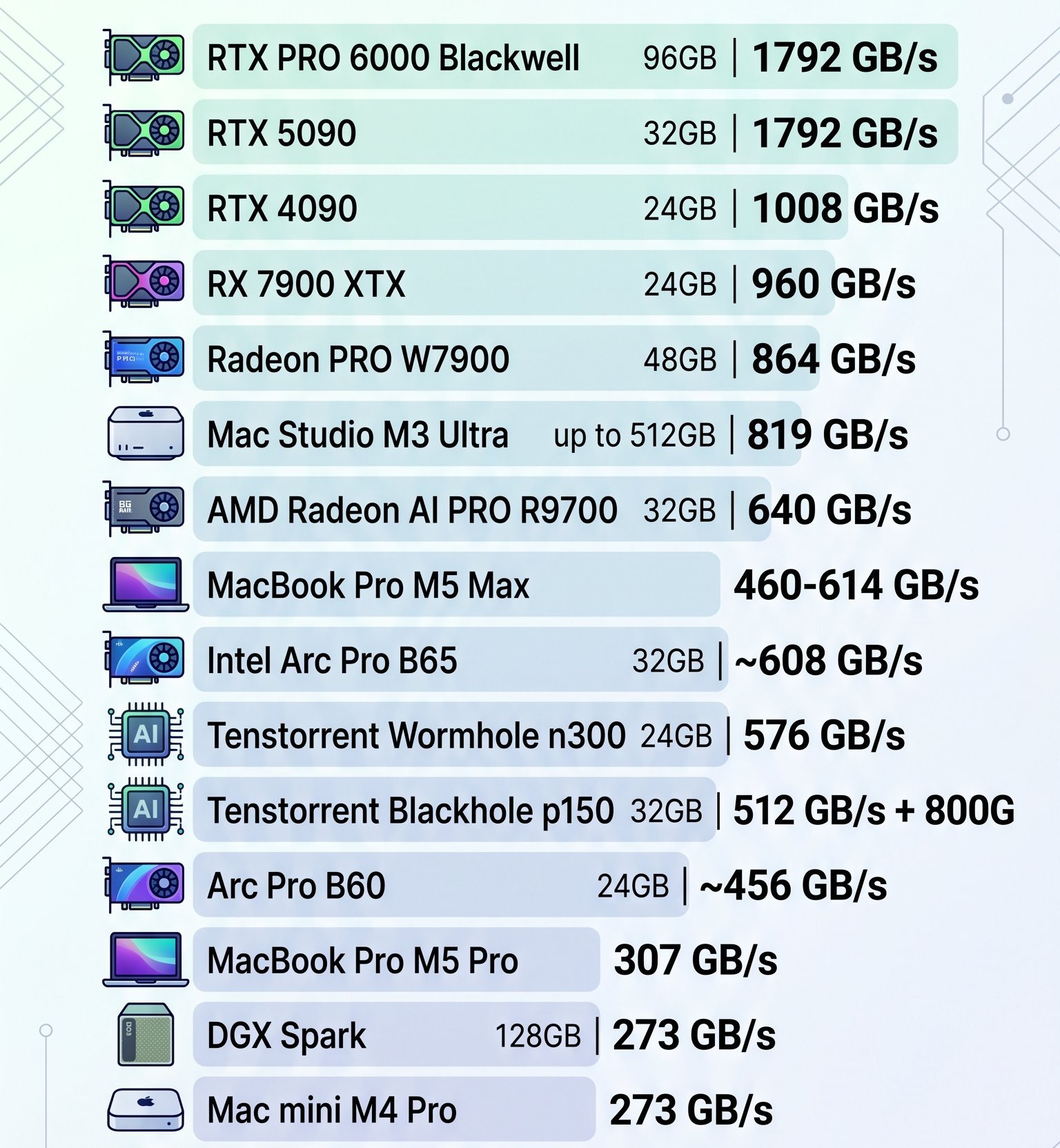
Local AI hardware: capacity, bandwidth, and software stack
By
–
Local AI hardware = capacity × bandwidth × software stack – Capacity tells you what fits
– Bandwidth tells you how hard the box can breathe
– The software stack tells you how much of the spec sheet you can actually cash out. Hardware by Memory Bandwidth
– Mac Studio M3 Ultra: