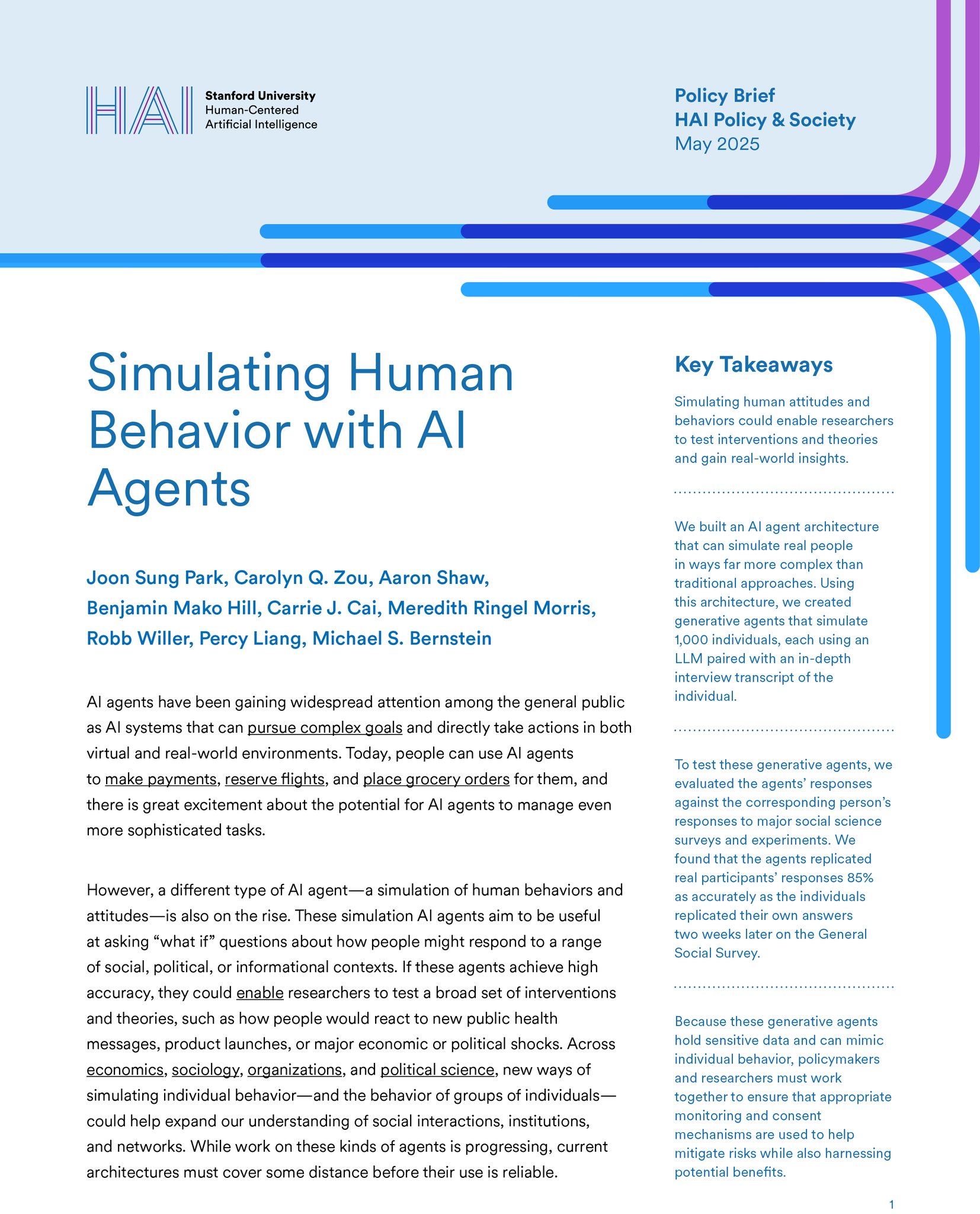
New policy brief: AI agents that can simulate human behaviors and attitudes can help test ideas in social science. Our latest brief introduces a generative AI agent architecture that simulates the attitudes of 1,000+ real people. Learn more: https://
hai.stanford.edu/policy/simulat
ing-human-behavior-with-ai-agents
…
@stanfordhai
-
AI Agents Simulate Human Behavior for Social Science Research
By
–
-
AI Assessment Framework Prioritizes Performance and Safety
By
–
HAI Senior Fellow @aiprof_mykel and his team at @SISLaboratory aim to transform how AI systems are assessed, promoting a more systematic approach to validation that prioritizes both performance and safety.
-
LLMs Digital Divide: Bridging Language Gap for Billions
By
–
Most major LLMs are trained using English data, making it ineffective for the approximately 5 billion people who don't speak English. Here, @StanfordHAI Faculty Affiliate @sanmikoyejo discusses the risks of this digital divide and how to close it.
-

AI Reshaping Global Work Dynamics in Developing Nations
By
–
This week, join us and @StanfordKingCtr for a thought-provoking discussion on how AI is reshaping global work dynamics, with a special focus on low- and middle-income countries. Learn more and register here: https://
kingcenter.stanford.edu/events/lecture
s-discussions/speaker-series-artificial-intelligence-reshaping-global-work
… -
Co-founder Honored with Lifetime Achievement Award
By
–
Congratulations to our co-founder @drfeifei for being honored with the @TheWebbyAwards Lifetime Achievement award! Last week, she was recognized alongside the Internet's top technologists, creators, and artists who are redefining what it means to create good work online.👏 https://t.co/e6Eu7DvYPR
— Stanford HAI (@StanfordHAI) 17 mai 2025Congratulations to our co-founder @drfeifei for being honored with the @TheWebbyAwards Lifetime Achievement award! Last week, she was recognized alongside the Internet's top technologists, creators, and artists who are redefining what it means to create good work online.
-
Third-party framework flags AI model flaws and bias issues
By
–
Flaws in AI models — from hallucinations to biased training data — often manifest only when systems are live. Experts propose a new framework for third-party reporting to allow external evaluators to identify and flag these issues effectively.
-
European AI Policy Priorities with EU Commission Vice President
By
–
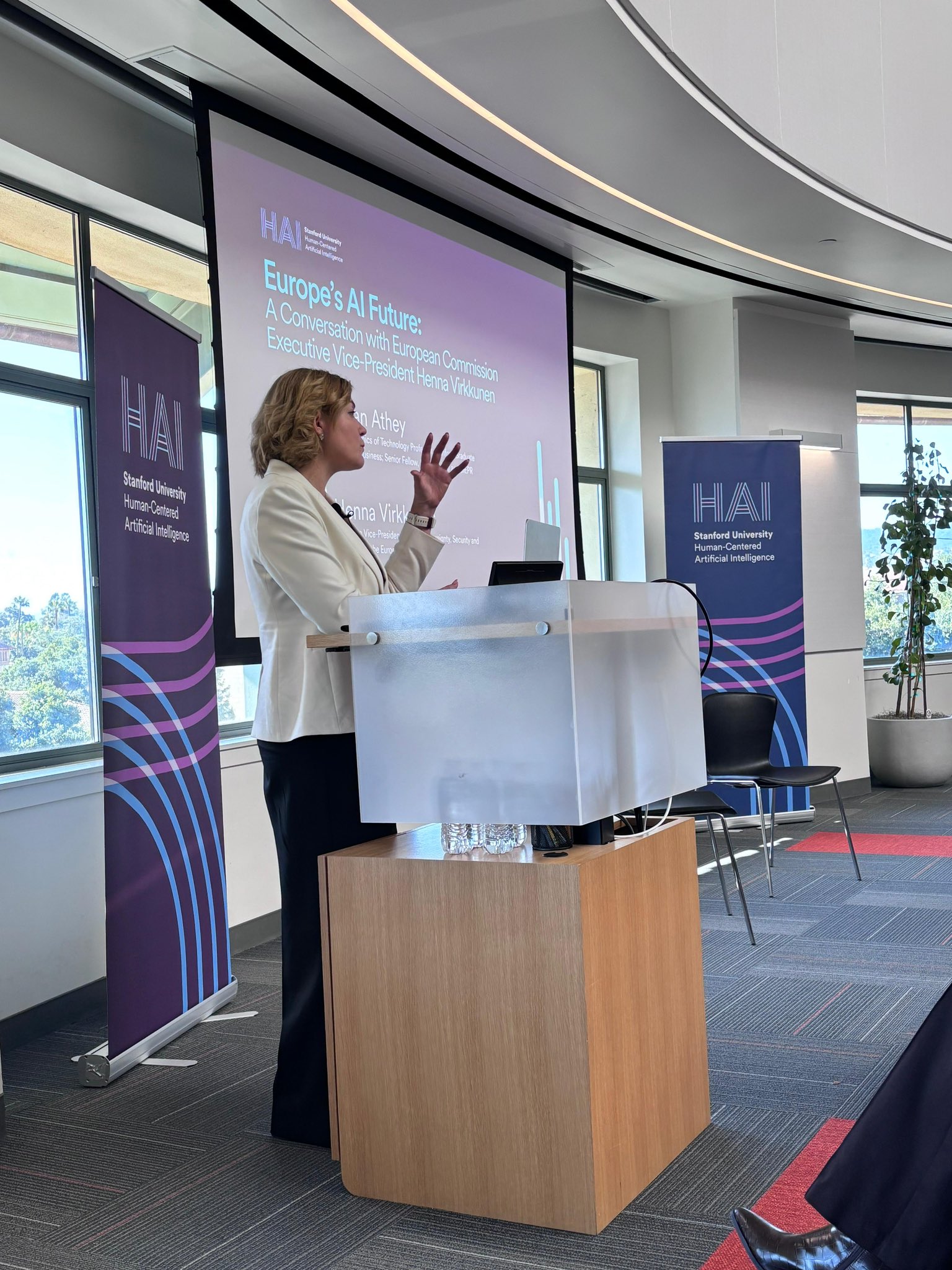
How do global policymakers envision the future of AI? This week, we hosted Executive Vice President of the European Commission @HennaVirkkunen for a fireside chat with HAI Senior Fellow Susan Athey to explore Europe’s key AI policy priorities.
-
AI detects early cognitive decline signals through ambient intelligence
By
–
Through ambient intelligence, AI and computational neuroscientist @eadeli
’s research offers a solution for catching early signals of cognitive decline before it's too late. Learn more about this work supported by @stanfordhai -

AI Impact on Productivity and Jobs in Low-Middle Income Countries
By
–
How is AI changing productivity and jobs in low- and middle-income countries? Join @StanfordKingCtr and @StanfordHAI as we explore empirical evidence, focusing on both the challenges and opportunities these nations face. Register here: https://
bit.ly/4j4zwJq -
AI Model Performance Gap Narrows to 0.7% in 2025
By
–
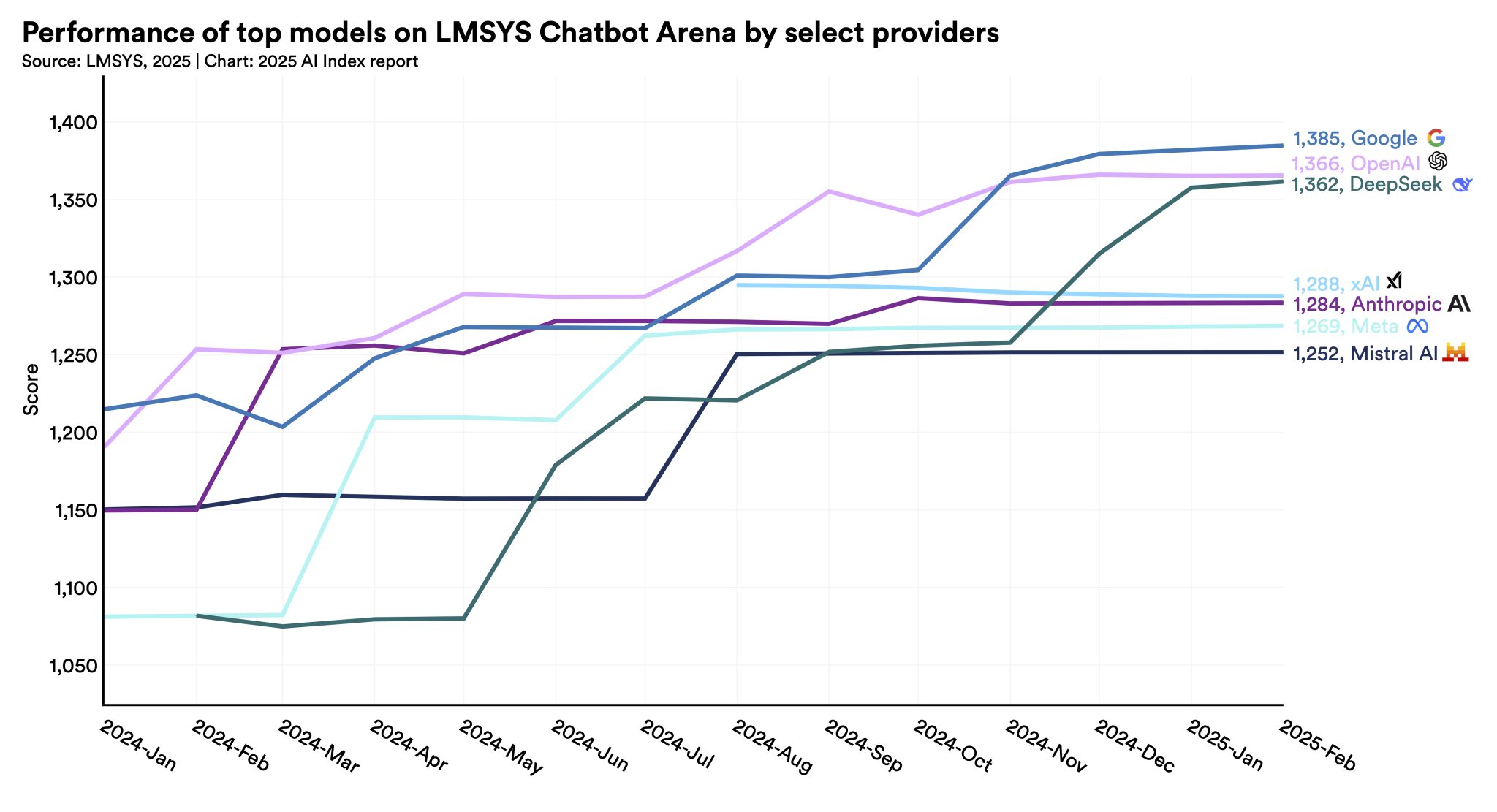
The frontier of AI development is increasingly crowded and competitive, with performance gaps shrinking rapidly. According to the #AIIndex2025, only 0.7% separates the top-performing model from the 10th-ranked model. Check out more AI data and takeaways: https://
stanford.io/434y597