
Faculty Affiliate @sanmikoyejo addressed opportunities and risks in generative and agentic AI—from misuse to governance. He emphasized the need for improved evaluation methods and mitigation strategies to support more reliable and responsible deployment.
@stanfordhai
-

Embodied AI Panel Explores Healthcare and Logistics Applications
By
–
Faculty Affiliate @jiajunwu_cs joined the panel on Embodied AI to examine how AI systems that can perceive and act in the physical world may contribute to sectors like healthcare and logistics—while addressing challenges in safety and trust. Watch here: https://
atxsummitvp.com/i-robot-future
-of-embodied-ai/
… -

Stanford HAI researchers discuss generative and embodied AI governance
By
–
Stanford HAI faculty @YejinChoinka
, @jiajunwu_cs
, and @sanmikoyejo joined @AsiaTechxSG in Singapore to discuss recent research on generative AI, embodied AI, and AI governance. They also met with Minister Josephine Teo to discuss emerging opportunities and challenges. Thread : -

Smart Scaling for Efficient Language Models and Democratized AI
By
–
Senior Fellow @YejinChoinka discussed alternatives to brute-force scaling in her talk, Mission Impossible. She proposed “smart scaling” to build smaller, efficient language models that broaden access to generative AI. Watch her talk here: https://
atxsummitvp.com/mission-imposs
ible-democratising-generative-ai-by-transcending-scaling-laws/
… -
Stanford Researchers Improve Domain Generalization AI Benchmarks
By
–
With support from @StanfordHAI
, a team of Stanford researchers investigates when and why current domain generalization benchmarks fall short and how they might be improved: https://
stanford.io/4kTMQl3 -

Ambient Intelligence Detects Early Cognitive Decline Signs
By
–
Early signs of cognitive decline are often invisible to healthcare providers. @StanfordHAI Faculty Affiliate @eadeli
's research offers a solution using ambient intelligence, enabling timely interventions. https://
stanford.io/43sJI9Y -
AI Safety Research Emphasizes Need for Rigorous Evaluation Methods
By
–
HAI Senior Fellow @aiprof_mykel
's AI safety research underscores a critical gap in AI development, highlighting the need to prioritize developing rigorous evaluation methods to ensure AI systems deliver intended societal benefits. https://
stanford.io/43LAsN8 -
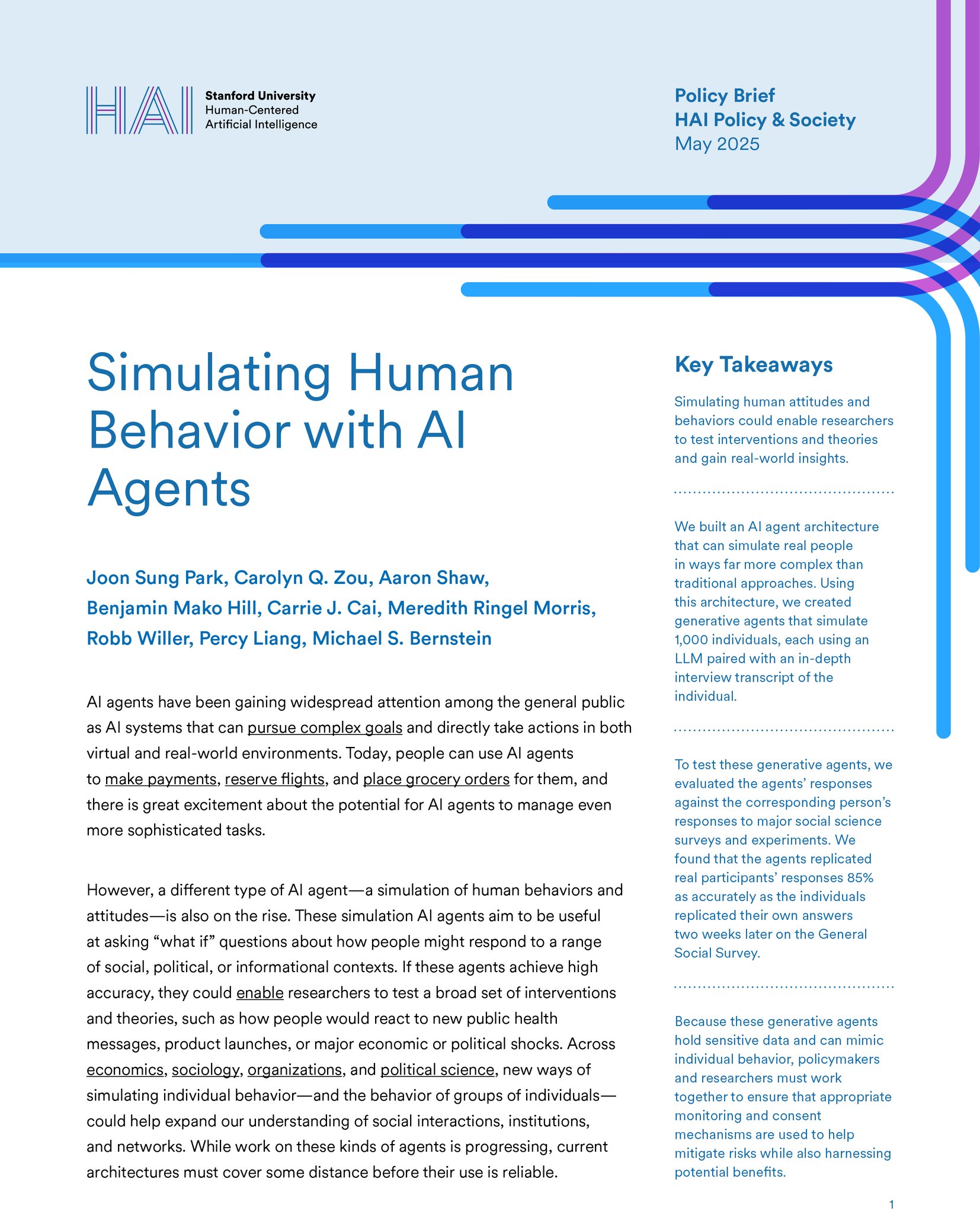
AI Agents Simulate Human Behavior for Research Insights
By
–
While AI agents promise to streamline everyday tasks like payments and flight reservations, another use case is emerging: Simulating human attitudes and behaviors could enable researchers to test interventions and theories and gain real-world insights. https://
stanford.io/4dJDd5U -

Stanford Program Addresses Human Impact of AI Solutions
By
–
Too often, AI solutions are built without a deep understanding of the human impact, leading to unintended consequences. This program by @StanfordHAI and @stanforddschool aims to nurture a community of informed civil society leaders to address this gap: https://
stanford.io/3SA6kPG -
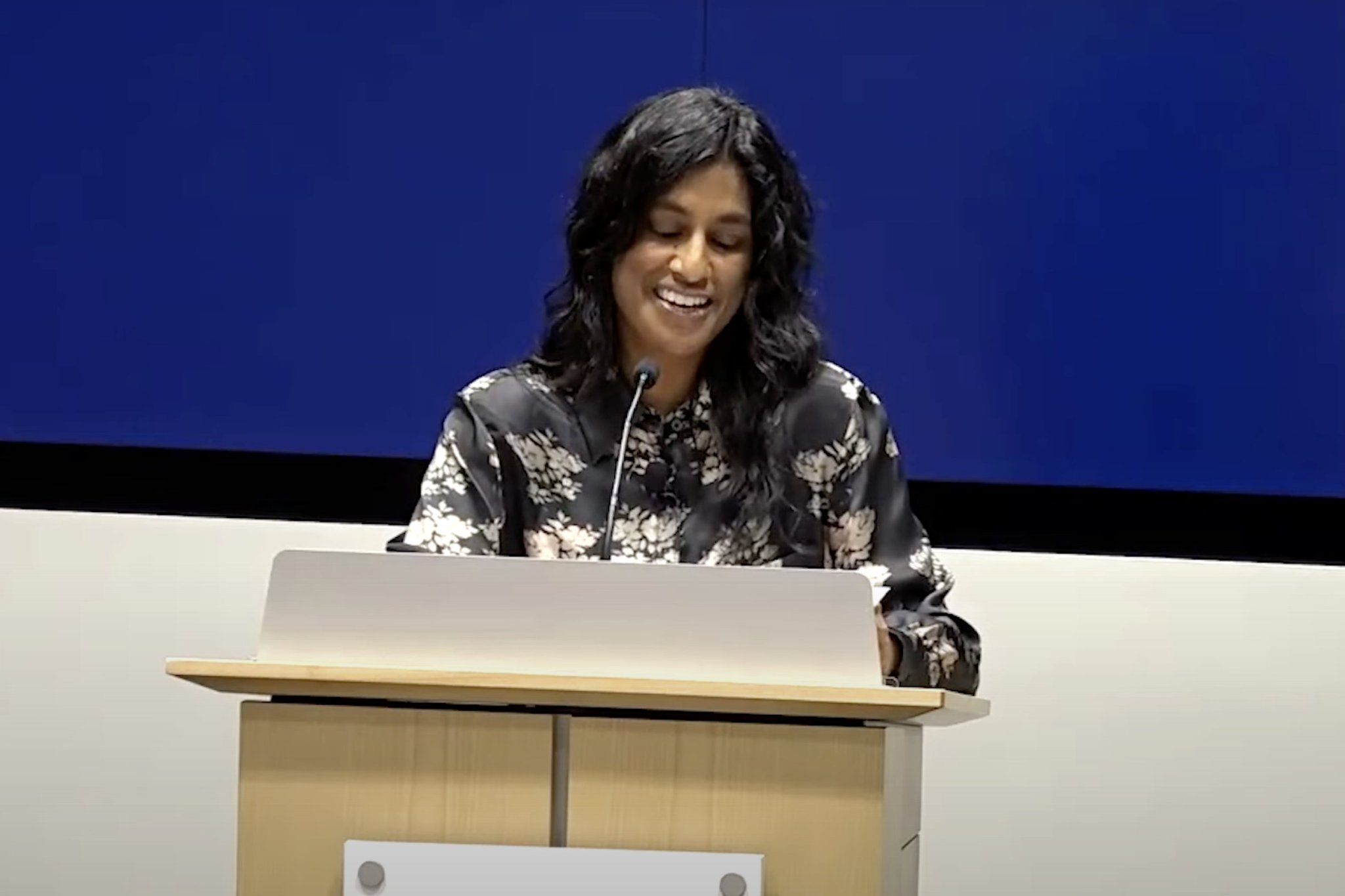
AI’s Impact on Human Communication and Writing Explored
By
–
ICYMI: At a recent @StanfordHAI seminar, novelist and journalist Vauhini Vara explored the difference between human- and AI-produced text and how AI could change the way all of us, writers or not, communicate. Watch the recording here: https://
bit.ly/45zvjtP