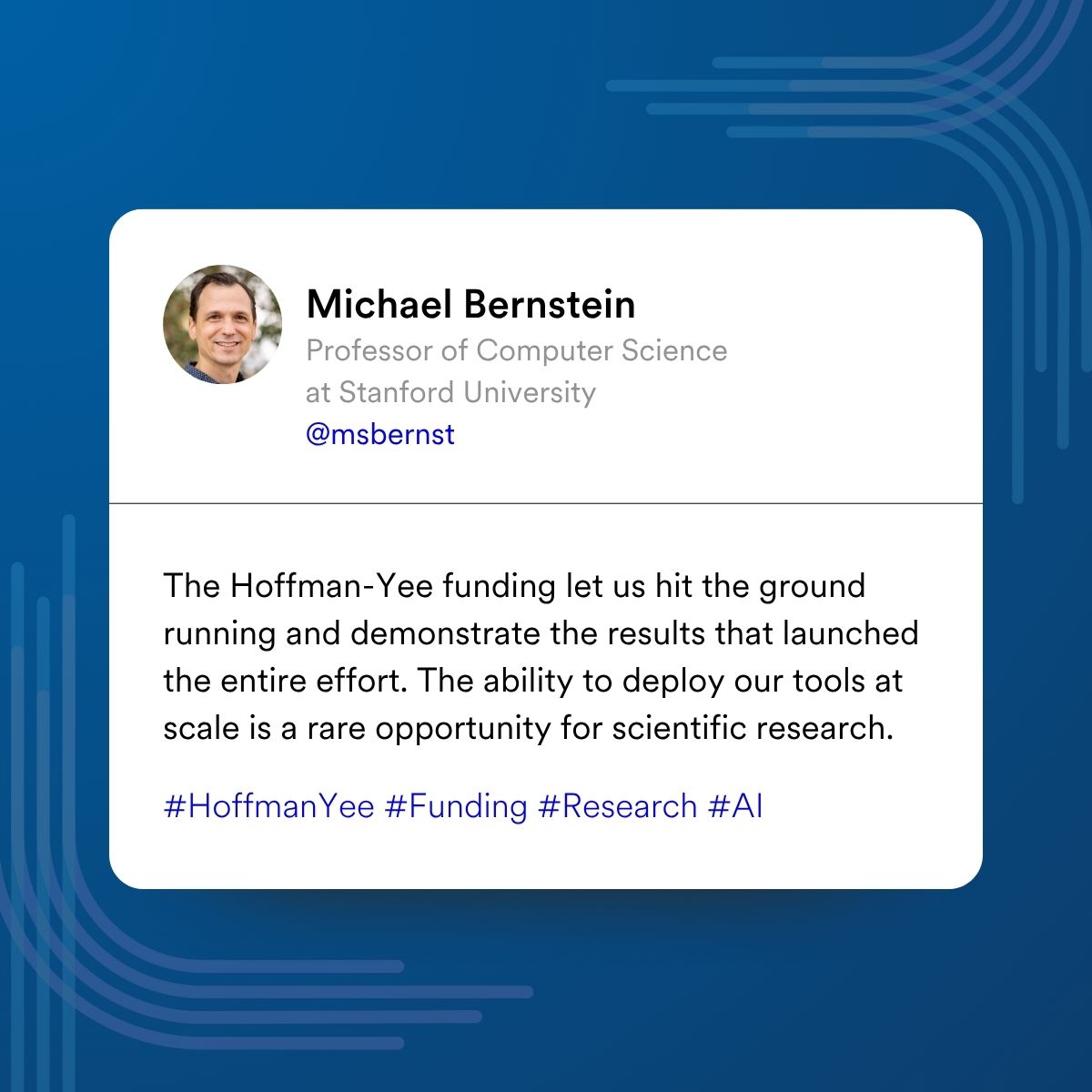
Since 2018, @StanfordHAI has been making a significant impact in advancing research at Stanford. One of its mechanisms is through the Hoffman-Yee Research Grants, designed to launch “asteroid shot” ideas that address some of our biggest challenges. https://
hai.stanford.edu/news/stanford-
ai-scholars-find-support-for-innovation-in-a-time-of-uncertainty
…
@stanfordhai
-
Stanford HAI Grants Fund Innovative AI Research Projects
By
–
-

Stanford AI Training Program for Civil Society Organizations
By
–
Seeking to understand how AI can support your organization’s mission? Our program with @stanforddschool is a unique opportunity to explore AI's role in creating meaningful, human-centered interventions. Applications are still open: https://
hai.stanford.edu/education/civi
l-society-and-non-profit-ai-training
… -

Stanford Study Warns About Risks of AI Therapy Chatbots
By
–
Low-cost AI therapy chatbots may seem like a perfect solution for many seeking mental health help. But a recent Stanford study raises some red flags: https://
hai.stanford.edu/news/exploring
-the-dangers-of-ai-in-mental-health-care
… -

RadGPT: LLM Helps Patients Understand Radiology Reports
By
–
A new large language model called “RadGPT” can help patients understand their radiology reports. Learn how a team of Stanford researchers developed the model: https://
hai.stanford.edu/news/new-large
-language-model-helps-patients-understand-their-radiology-reports
… -
AI Index 2025 Report Discussion with USC ISI
By
–
Join us for an insightful discussion on the #AIIndex2025 report in a special event co-hosted with @USC_ISI
. Delve into the key findings from the latest report, followed by a networking social. RSVP here: -
Stanford HAI secures resources for groundbreaking AI research initiatives
By
–
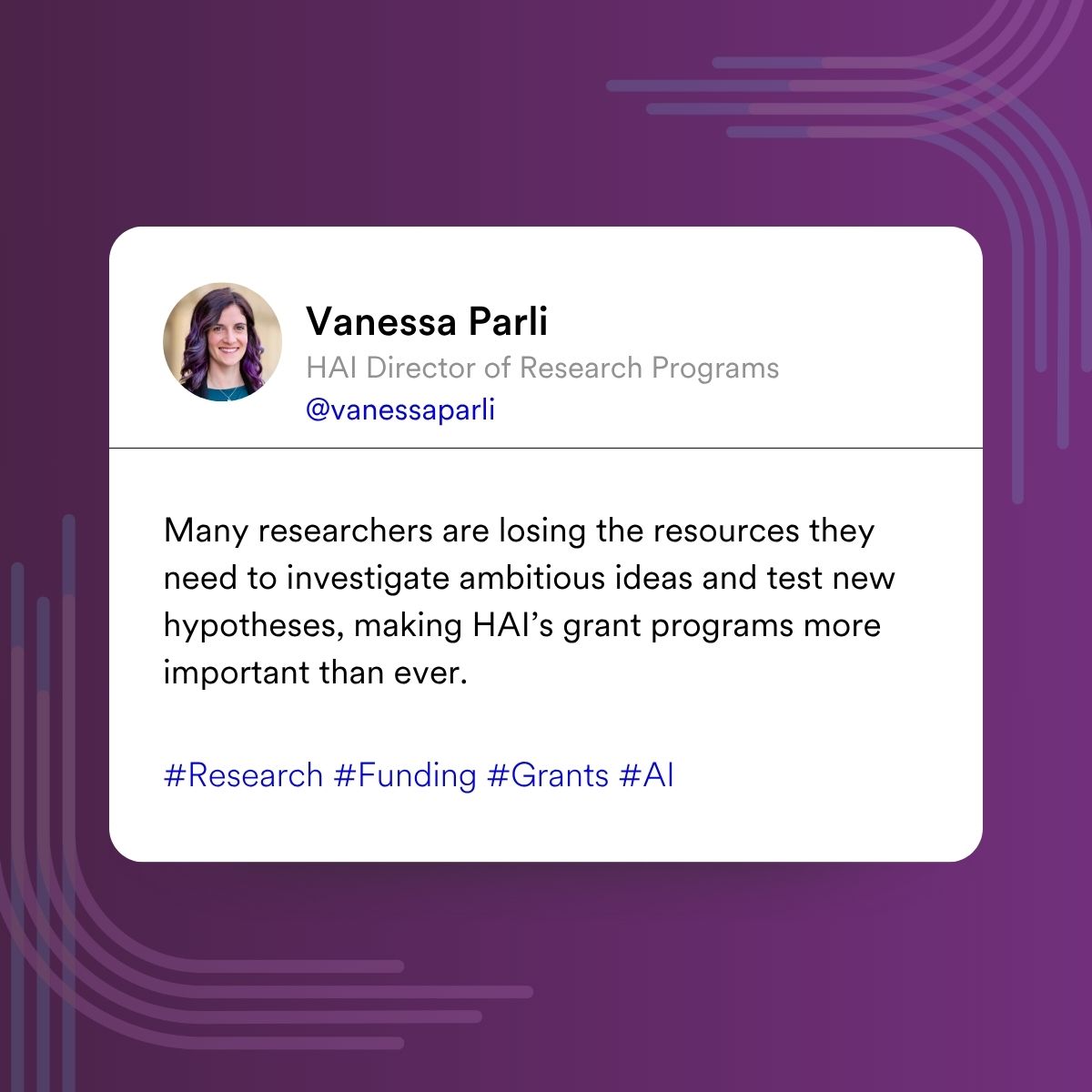
Amid a challenging funding landscape, @StanfordHAI is dedicated to providing crucial resources for @Stanford faculty and students to pursue groundbreaking AI research. http://
bit.ly/4lwVOF5 -
AI Adverse Event Reporting Systems: Policy Recommendations
By
–
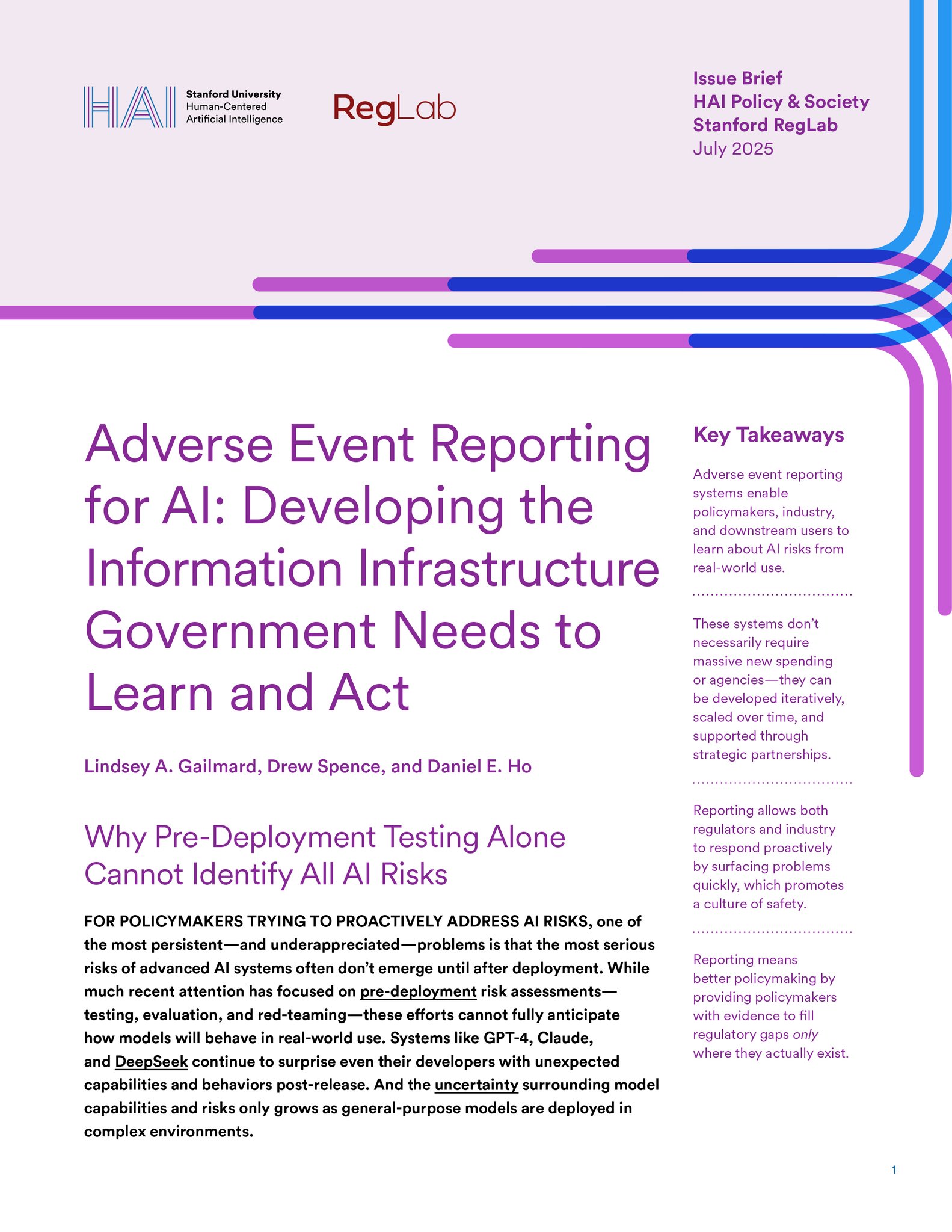
New issue brief: The most serious risks of advanced AI systems often don’t emerge until after deployment. Our latest brief with scholars from RegLab provides policy recommendations for adverse event reporting systems for AI. https://
hai.stanford.edu/policy/adverse
-event-reporting-for-ai-developing-the-information-infrastructure-government-needs-to-learn-and-act
… -
Stanford Expert on AI Use in Academic Settings
By
–
How are Stanford experts using AI? In this new @Stanford series, @StanfordHAI Senior Fellow @Rbaltman explains why he permits AI in classes, rejects it for recommendation letters, and feels both cautious and optimistic about its future:
-

Human-Centered AI Design Focuses on User and Community Needs
By
–
Building truly human-centered AI demands a thoughtful design process, said our co-director @landay during his keynote at TNW in Amsterdam last week. By focusing on user, community, and societal needs, we can create technology that truly benefits the people who need them most.
-

AI Agents Automated Negotiation Between Consumers and Merchants
By
–
What happens when both consumers and merchants have AI agents acting on their behalf? Scholars, including Stanford @DigEconLab faculty lead Prof. @alex_pentland and Postdoctoral Fellow @jiaxin_pei
, explore the art of the automated negotiation. https://
hai.stanford.edu/news/the-art-o
f-the-automated-negotiation
…