There are clinical interventions that can improve outcomes for individuals with autism spectrum disorder, but these solutions are often costly or not widely available. Stanford scholars are investigating whether AI can fill this gap.
@stanfordhai
-
Congressional staffers join AI boot camp for governance training
By
–
This week, 25 congressional staffers join our boot camp on AI to gain technical understanding and research insights essential for informing the future of AI innovation and governance. Learn more about our boot camp now in its 5th year:
-
AI Maps Optimize Beaver Reintroduction for Watershed Management
By
–
Better maps could help watershed managers choose the best areas for beaver reintroduction that could bring benefits for both humans and nature. Could AI help? A study led by @StanfordHAI postdoc fellow Luwen Wan reveals a promising research direction:
-
AI-Driven Virtual Labs Enable Interdisciplinary Scientific Collaboration
By
–
“Good science happens when we have deep, interdisciplinary collaborations, and often that’s one of the main bottlenecks and challenging parts of research,” said @james_y_zou who led a study on AI-driven virtual labs:
-
AI Workshop Demonstrates Public Sector Value and Societal Benefits
By
–
“The workshop showed how AI can support the public sector, proving it to be a valuable tool rather than something to fear,” said Lily Fraser from @StanfordHAI and @stanforddschool
's first civil society program. This year, we are bringing it back: -
AI Investment Boom: Questioning Equitable Economic Benefits Distribution
By
–
“We are investing so much in driving the capabilities for hundreds of billions of dollars, and we're investing very little in thinking about how we make sure that leads to widely shared prosperity,” says @DigEconLab
's @erikbryn in @NPR Morning Edition: -
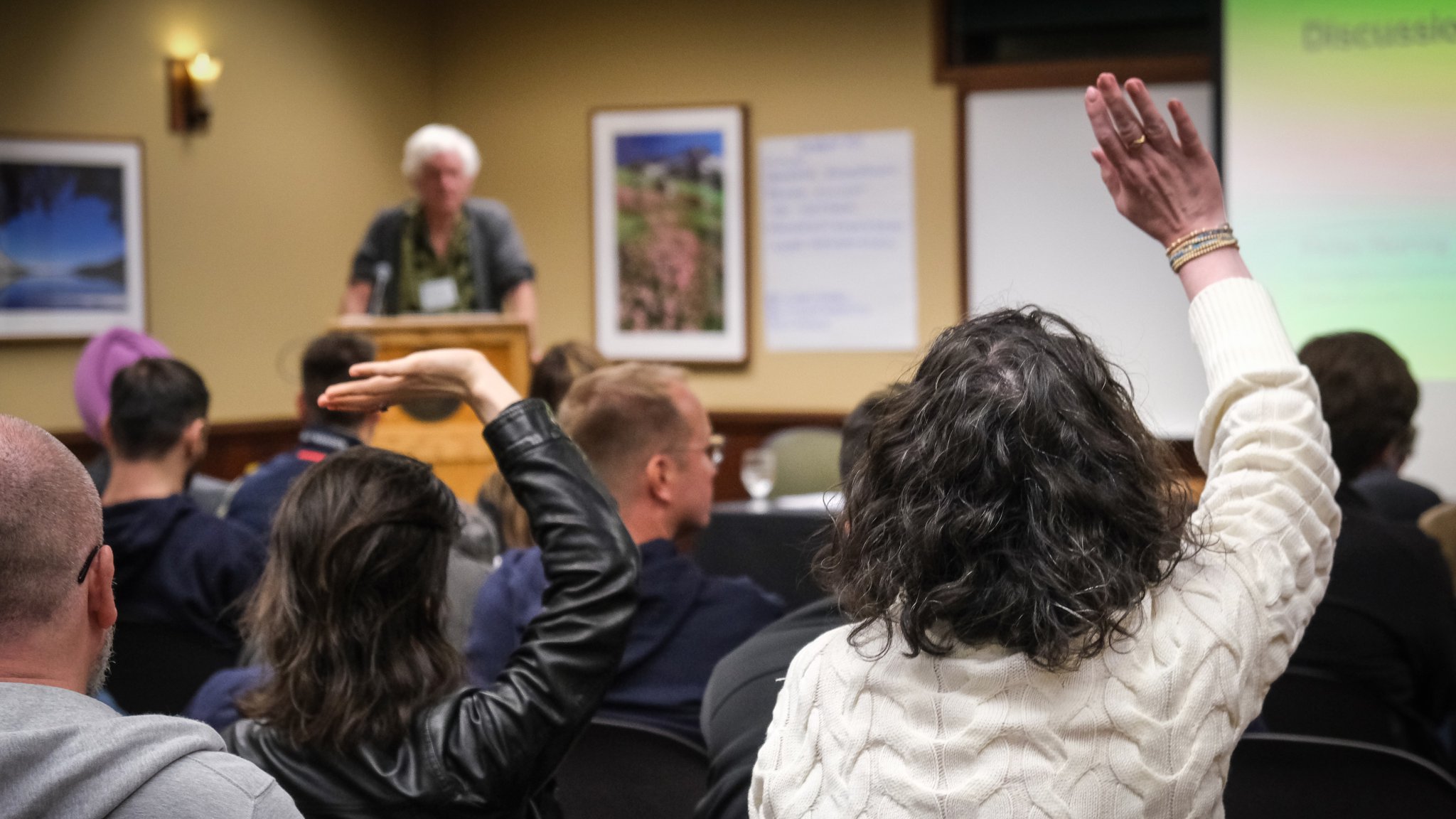
Executive Education Programs for Evolving AI Technologies
By
–
How do you prepare executives for a technology that's evolving daily? AI is dynamic, complex, and constantly changing, so leaders need education that's equally adaptive. Learn more about our custom executive education program: https://
hai.stanford.edu/education/cust
om-executive-education
… -

Stanford HAI Interdisciplinary Culture Harnesses AI Potential
By
–
The true impact of @StanfordHAI reaches far beyond numbers. It's in our interdisciplinary culture that is needed to fully harness AI's potential in benefiting humanity. @JEichstaedt https://
hai.stanford.edu/news/stanford-
ai-scholars-find-support-for-innovation-in-a-time-of-uncertainty
… -
Leading Scholars Urge Evidence-Based AI Policy Approach
By
–
In a new Science paper, top scholars from @Stanford
, @UCBerkeley
, @Princeton
, and other leading institutions urge policymakers to adopt an evidence-based approach to AI policy. Lead author @RishiBommasani explains what it entails and why it matters: -
DeepSeek builds self-sufficient AI talent pipeline amid US-China competition
By
–
This @WSJ piece on China/US AI competition highlights research from @StanfordHAI Senior Fellow @AmyZegart and other scholars examining DeepSeek's increasingly self-sufficient pipeline of homegrown AI talent.