A recent @Stanford research highlights the potential of LLMs as vital tools for middle school math teachers to enhance the learning experience for students across diverse skill levels.
@stanfordhai
-
Stanford’s NNetNav: Privacy-Preserving AI Web Agent
By
–
Today's AI agents promise to streamline web tasks, but they also raise serious privacy concerns. @Stanford scholars developed NNetNav, an open-source AI agent that learns by interacting directly with websites. Learn how this approach preserves privacy:
-
Filmmakers and AI Researchers Explore How Stories Shape AI Perceptions
By
–
At a workshop last summer, filmmakers and AI researchers collaborated to explore how stories shape perceptions and policies about AI. In this Q&A, participants discussed how this workshop reshaped their understanding of AI and creativity:
-
Why EdTech Revolution Failed: Stanford Students Analyze ChatGPT Impact
By
–
Over two years since the release of ChatGPT, the anticipated “EdTech Revolution” has yet to happen. Stanford students share their reflections as to why, prompted by questions about who it is being designed for, who is involved, and who bears the risks:
-
Video-STaR Enables AI Self-Training on Video Content
By
–
The limitations of traditional labeling methods in video analysis have long stifled AI’s potential. A team of researchers aims to address this with Video-STaR, which enables models to self-train on video content.
-
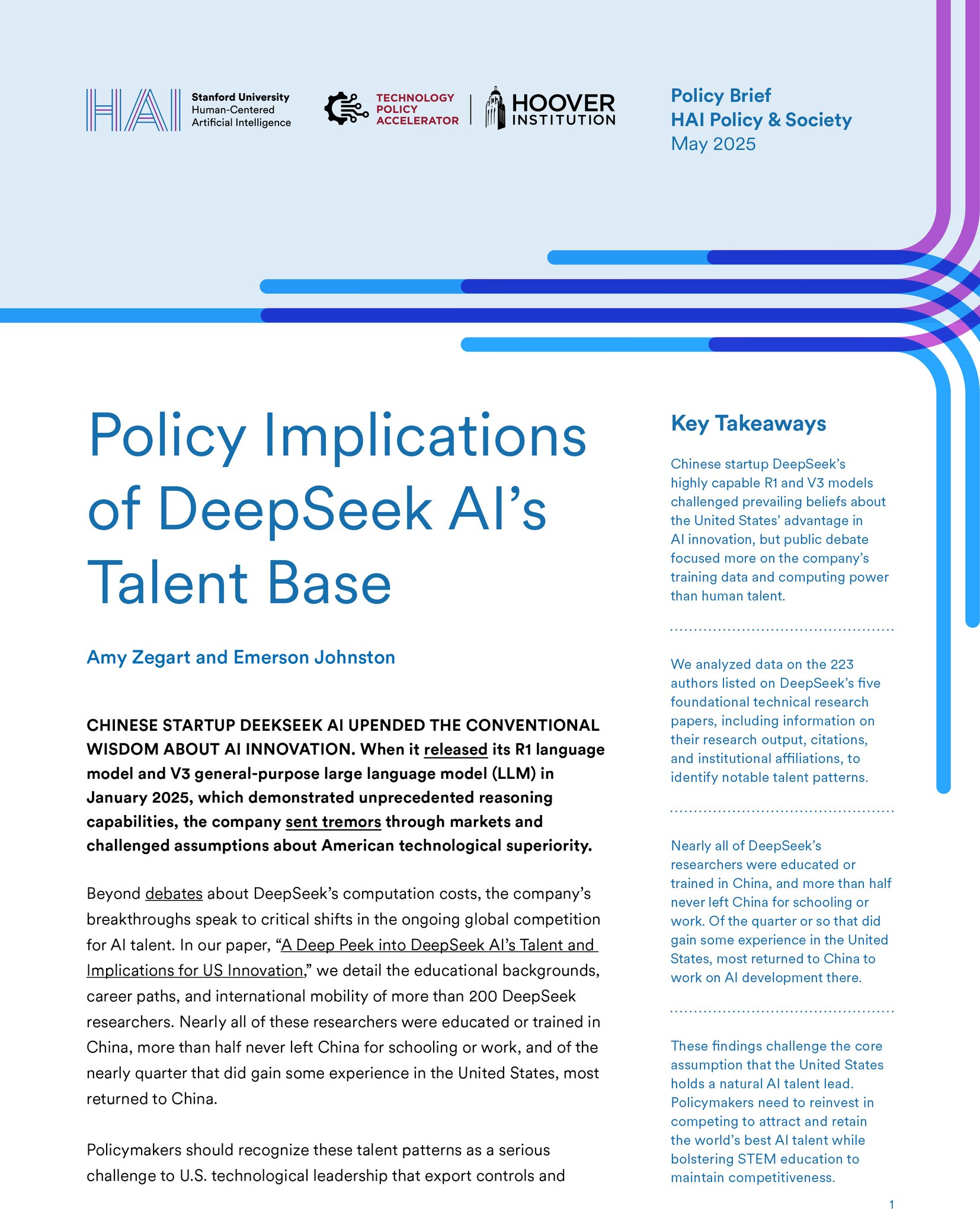
DeepSeek’s Rise: What It Reveals About Global AI Talent
By
–
What does #DeepSeek’s rise say about AI talent? Scholars @AmyZegart and @idenarch analyzed data on the 233 authors listed on DeepSeek’s research papers. Nearly all were educated or trained in China; half have never left China for school or work; and most of those who trained in
-
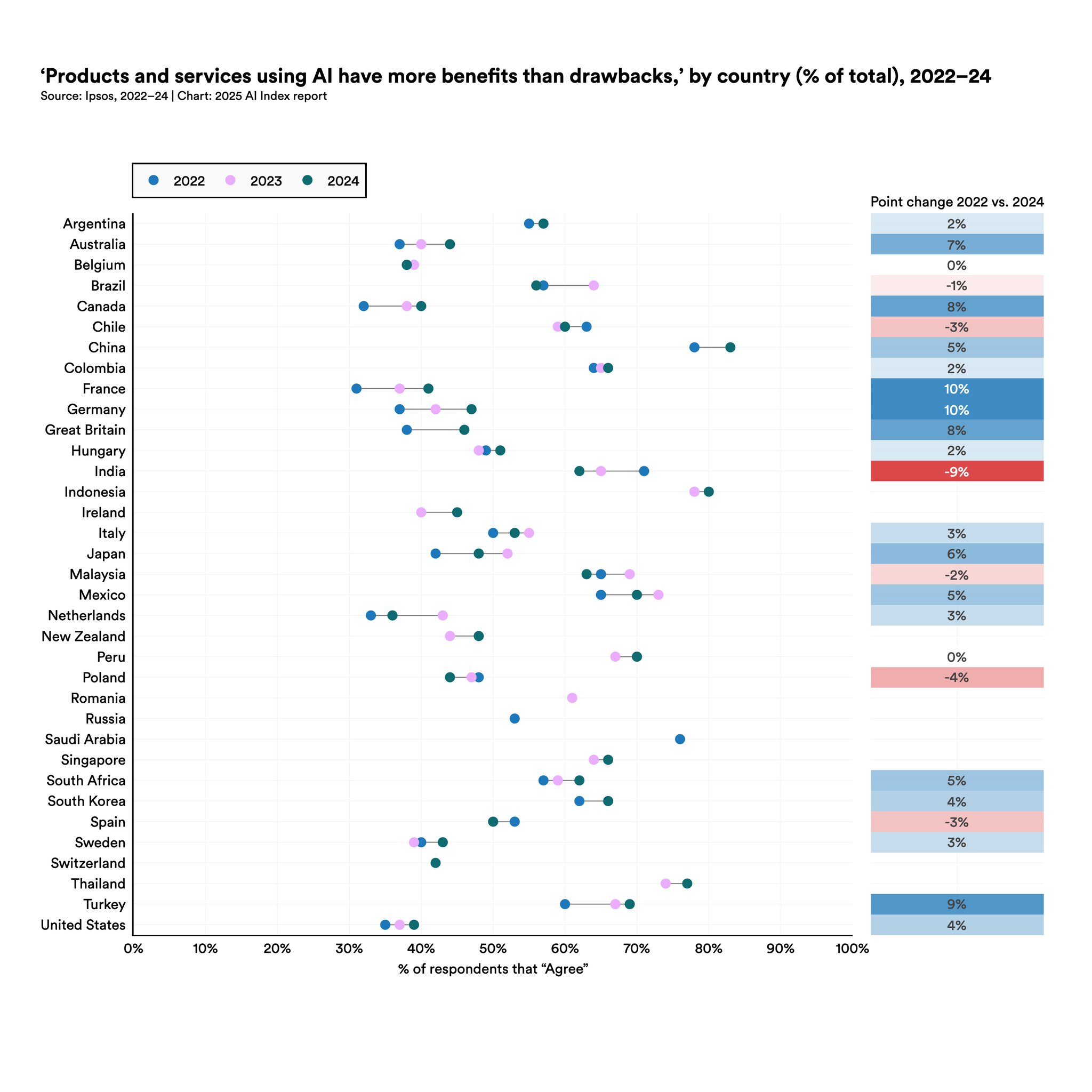
AI Benefits and Drawbacks: Regional Sentiment Shifts Optimistic
By
–
Does AI deliver more benefits or drawbacks? The answer depends on where you are. In many regions, sentiment is shifting from skepticism toward optimism. Dive into the details presented in the #AIIndex2025 report: https://
stanford.io/4jayYBP -
Machine Learning Predicts Student Success From Early Educational Software Interactions
By
–
Early indicators of academic success could be valuable for determining effective educational interventions. A recent study harnesses machine learning to predict student performance based on initial interactions with educational software:
-
Stanford consortium addresses AI risks in biomedical research
By
–
Emerging from @Stanford
's AI ethics review process, a consortium of scholars is producing a series of papers focused on the best ways to manage the risks in AI-powered biomedical research: -
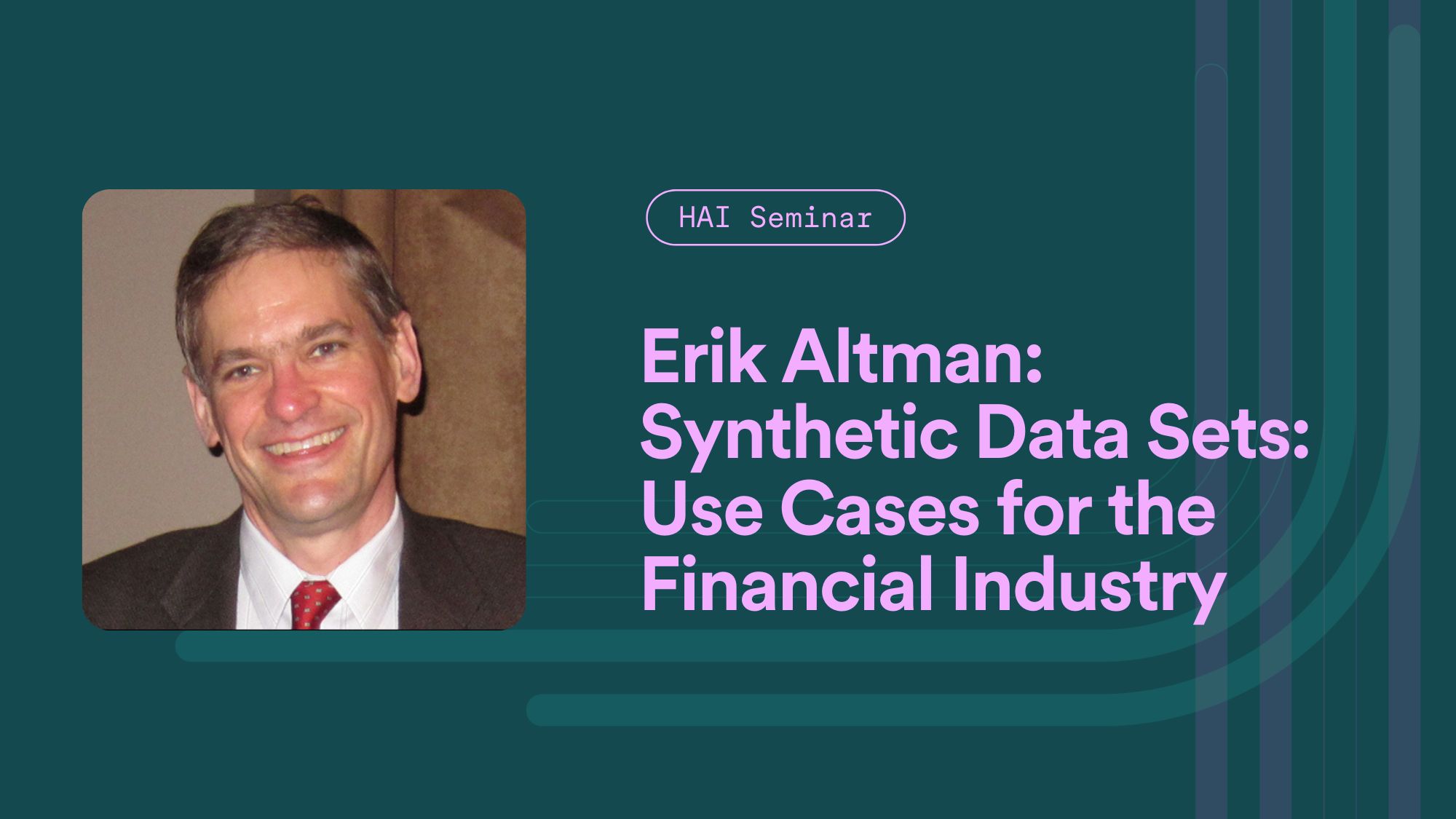
Synthetic Data for AI Fraud Detection: Stanford HAI Seminar
By
–
Join us for this week's @StanfordHAI seminar with IBM Researcher Erik Altman, where we will explore use cases for synthetic data sets (SDS), designed to train AI to detect fraud and other criminal activities. https://
stanford.io/43hXsEb