Canada just launched AI for All. The mission is clear: access alone will not be enough. Canada now needs AI leverage people can trust — systems that make AI useful, reusable, efficient, and provable. LLMs made intelligence accessible.
The next wave makes intelligence
@montreal_ai
-

Canada launches AI for All focusing on trustworthy, efficient AI systems
By
–
-

AEP-001 GoalOS Proof-of-Evolution Constitution Standard
By
–
New standard for the agent era: AEP-001 — GoalOS Proof-of-Evolution Constitution Commit → Execute → Prove → Evolve. No proof, no evolution.
No eval, no propagation.
No rollback, no release. This is Proof-Carrying Intelligence. https://
montrealai.github.io/proof-gradient
/standards/AEP-001/
… #GoalOS -
Capabilities learned not inherited: building from ground up
By
–
The phrase “capabilities should be learned, not inherited” is doing a lot of work here. It draws a clear line between imitating intelligence through distillation and building the internal machinery to generate, evaluate, and improve capabilities from the ground up. That
-
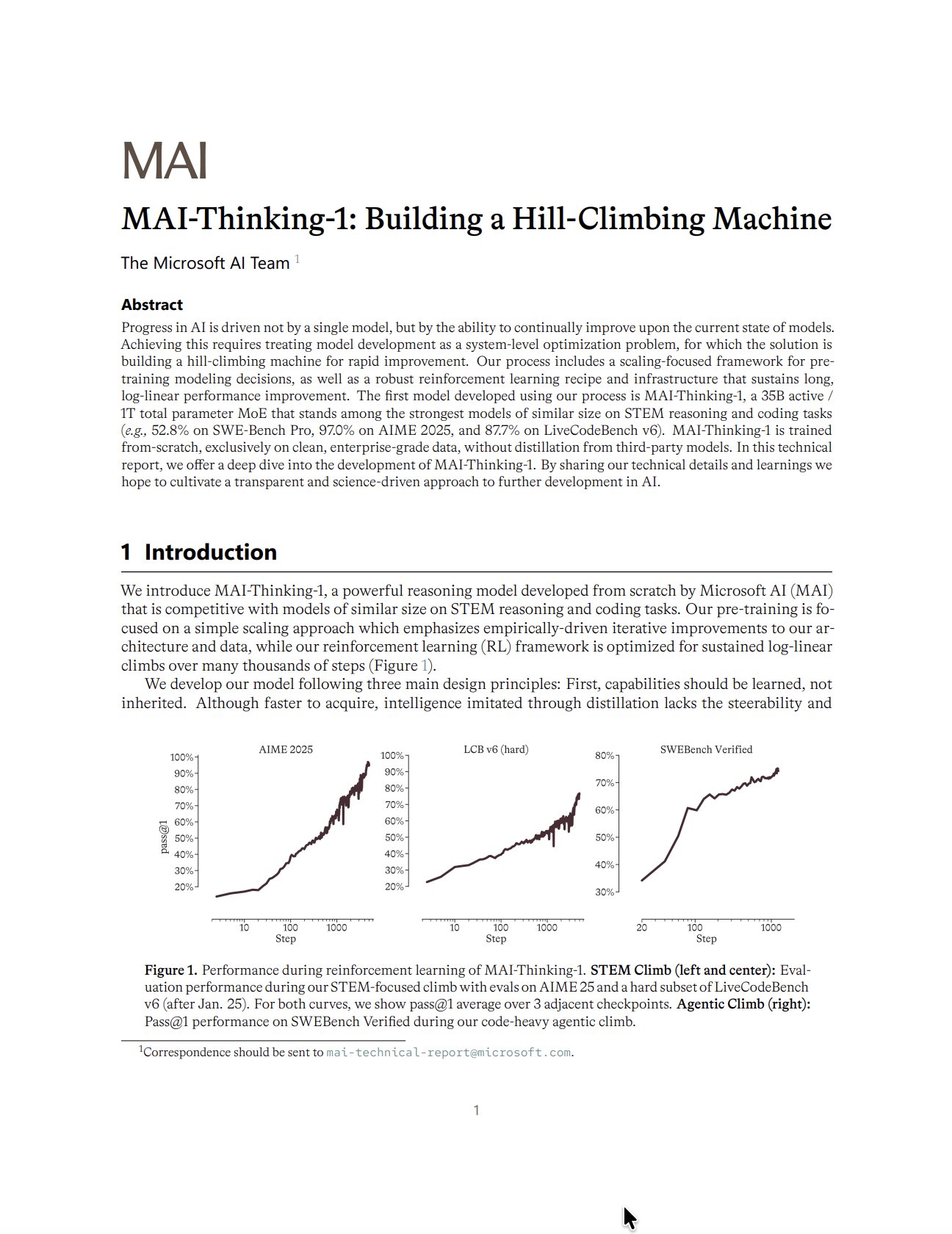
Microsoft AI’s MAI-Thinking-1: Progress is a model-improving machine
By
–
AI progress is not a model. It is a machine that keeps improving models. That is the core idea behind Microsoft AI’s new technical report: MAI-Thinking-1: Building a Hill-Climbing Machine This is not just a model release. It is a blueprint for turning frontier model
-
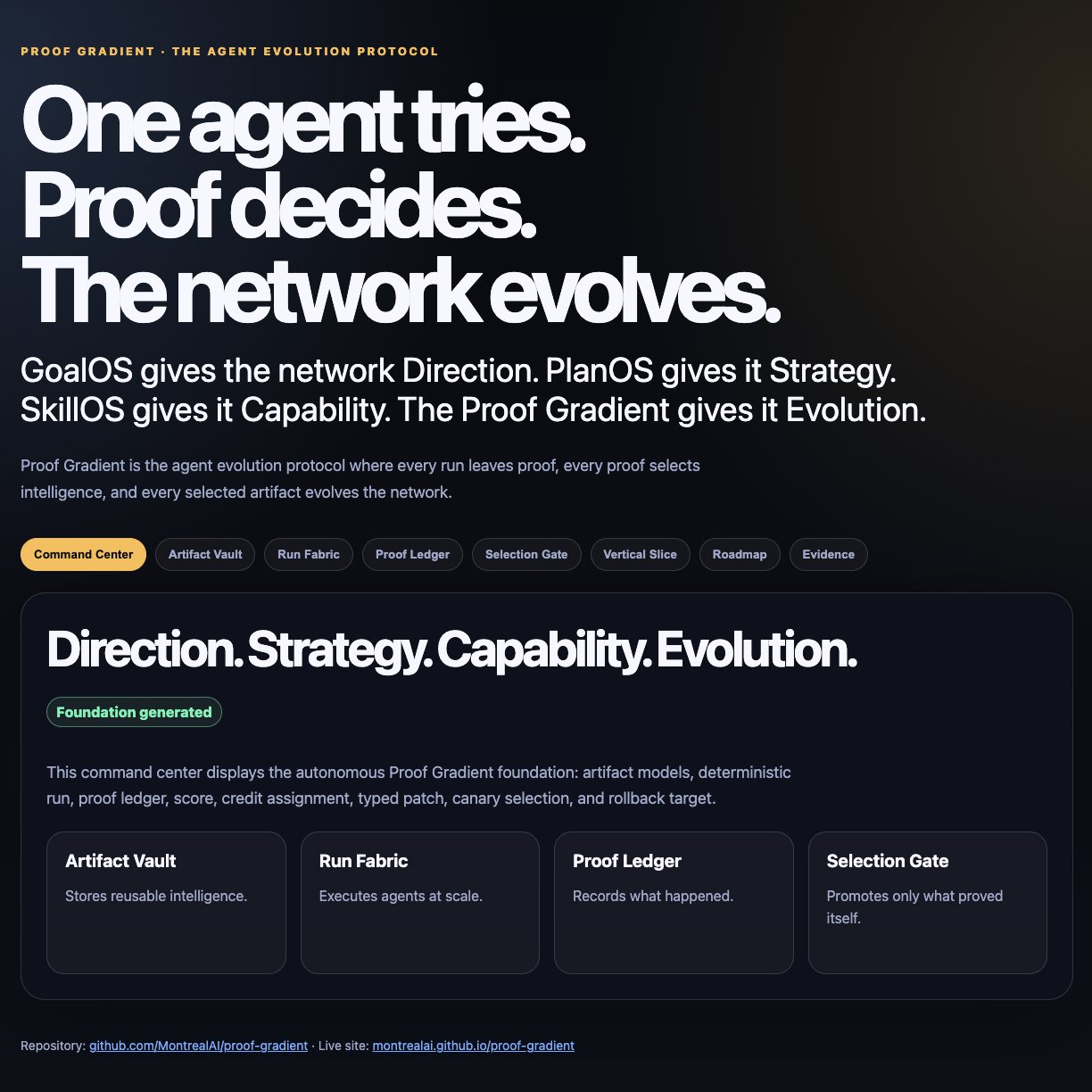
Proof Gradient: The Agent Evolution Protocol for AI Agents
By
–
Proof Gradient · The Agent Evolution Protocol One agent tries.
Proof decides.
The network evolves. GoalOS gives the network Direction.
PlanOS gives it Strategy.
SkillOS gives it Capability.
The Proof Gradient gives it Evolution. https://
montrealai.github.io/proof-gradient/ #AGIALPHA #Jobs -
Token-level SSL vs Latent Prediction: Climbing Abstraction Hierarchies
By
–
The key distinction: Token-level SSL asks the model to recover the hidden tree through the leaves. Latent prediction lets the model climb the tree. Once one abstraction level is learned, it becomes the substrate for learning the next.
-
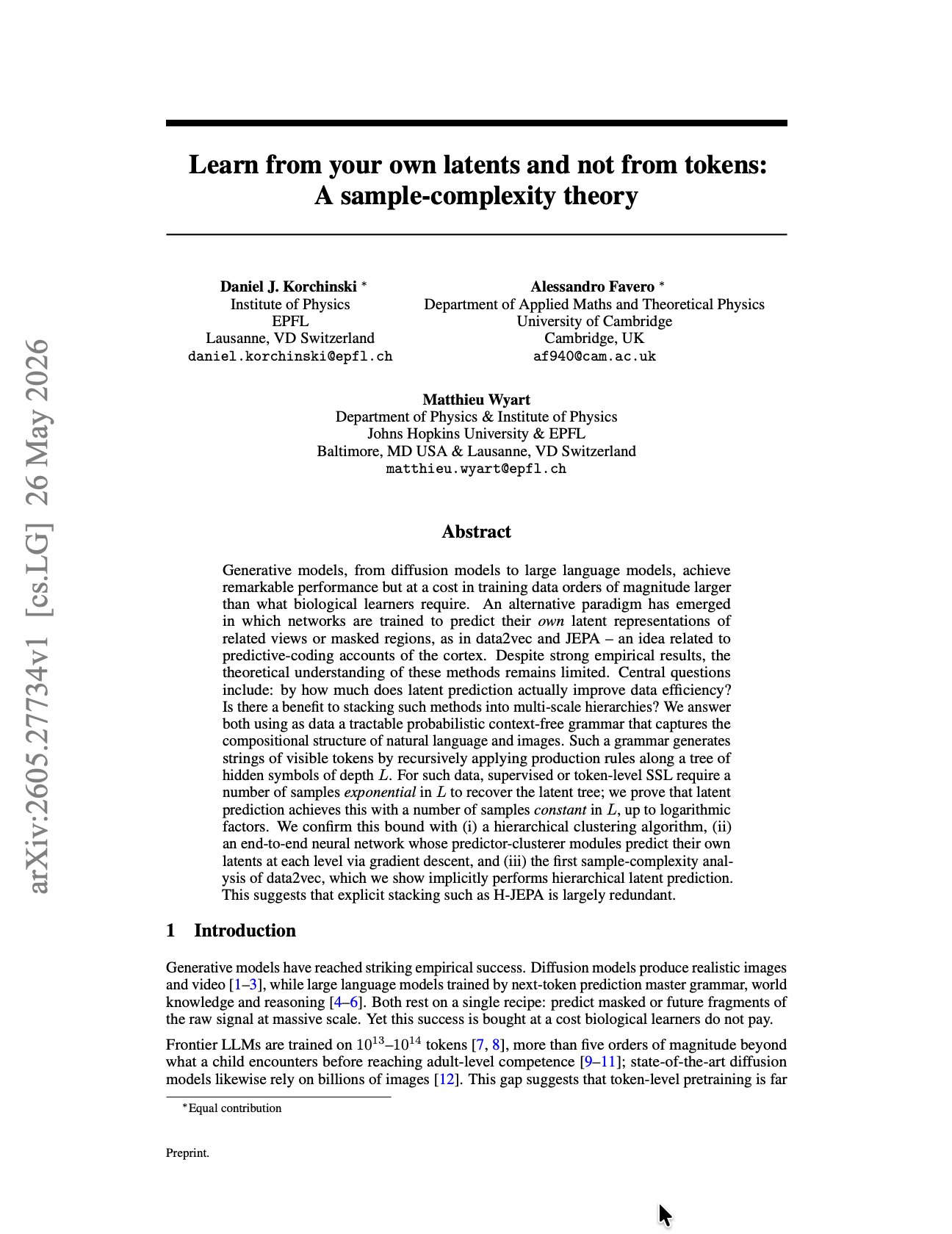
New paper on sample-complexity theory for data-efficiency gap
By
–
The data-efficiency gap between machines and children may not be solved by “more tokens.” It may be solved by changing what the model is asked to predict. A beautiful new paper by Daniel J. Korchinski, Alessandro Favero, and Matthieu Wyart gives a sample-complexity theory for a
-
Raw compute vs EFC: key distinction for agent learning updates
By
–
The key distinction: raw compute measures activity. EFC measures useful closed-loop learning inside the trace. That difference matters enormously for agents, because two runs with the same token count and tool calls can differ completely in whether the agent actually updates
-
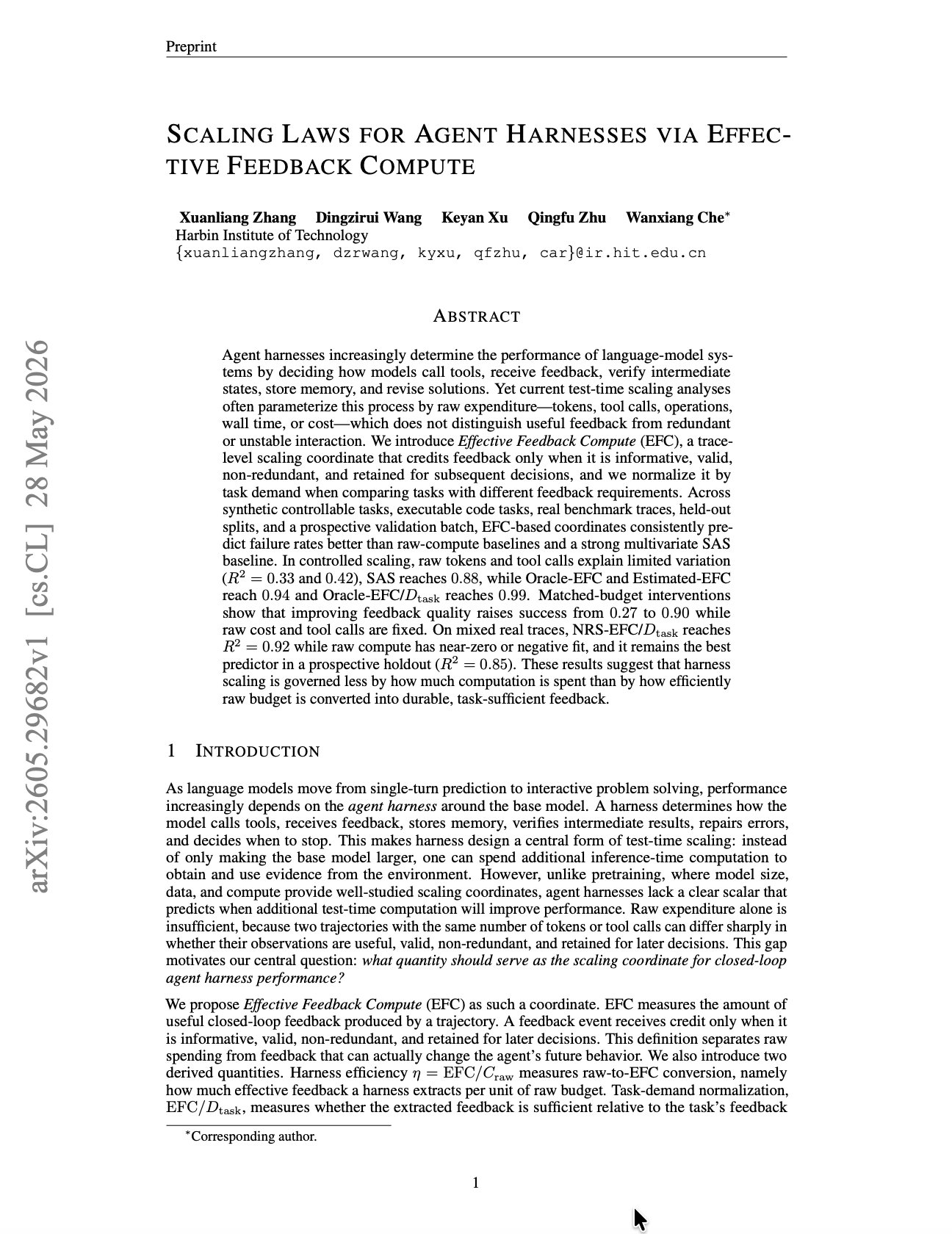
New Preprint on Scaling Laws for Agent Harnesses
By
–
Agents do not scale because they spend more compute. They scale because they turn interaction into usable feedback. A sharp new preprint by Xuanliang Zhang, Dingzirui Wang, Keyan Xu, Qingfu Zhu, and Wanxiang Che introduces: Scaling Laws for Agent Harnesses via Effective
-
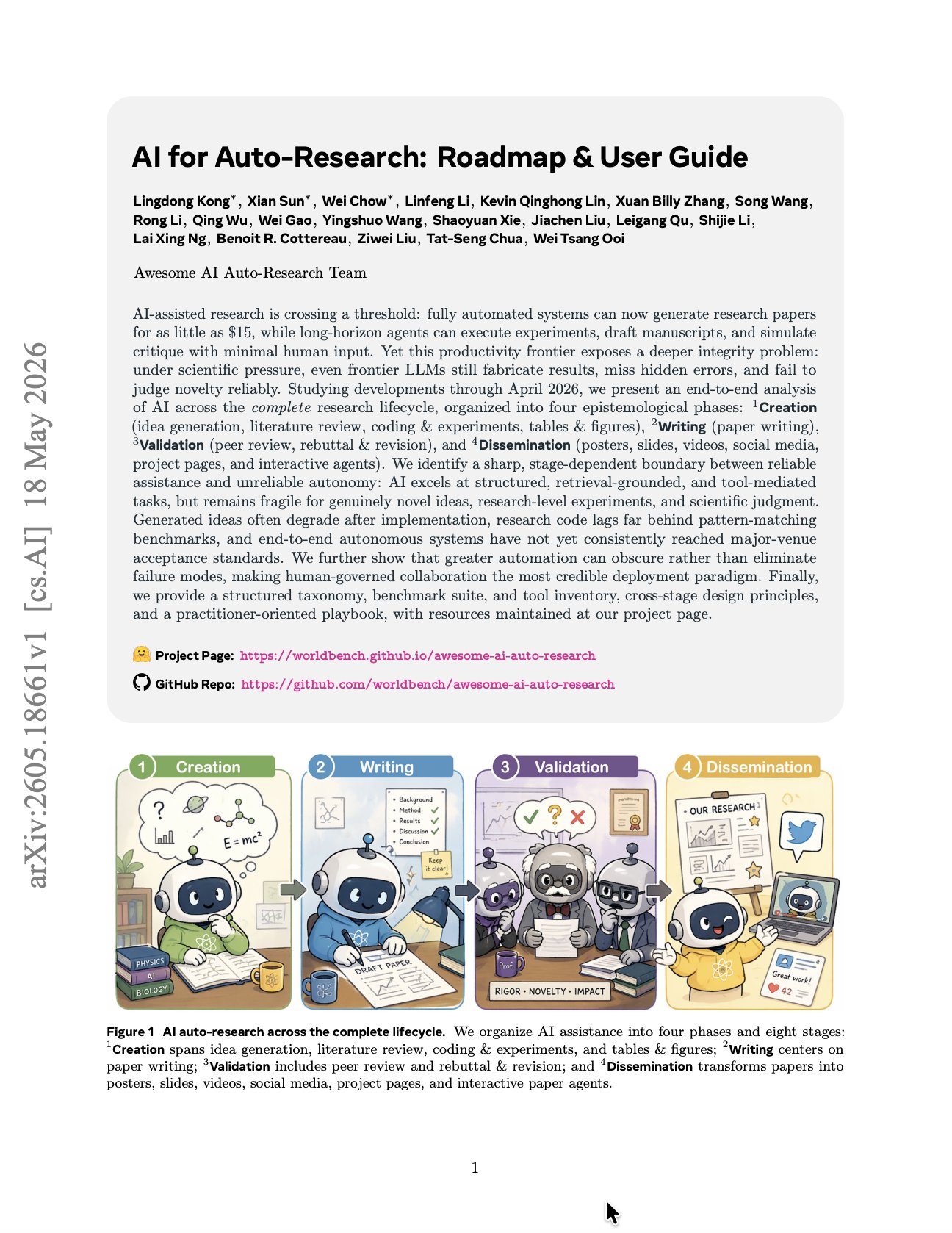
AI Research Automation and Scientific Integrity
By
–
AI research automation is crossing a threshold. But the real question is not: Can AI produce papers? It can. The harder question is: Can it preserve the substance of science? A new paper from the Awesome AI Auto-Research Team offers one of the most useful maps I’ve seen of